 Blaine Siding
 Deck Building in Lynden: Working Where We're Based
Lynden is home turf for our crew, not a stop on a route sheet. We're out here regularly, on decks, siding, roofing, and windows alike, which means we've watched a lot of Lynden decks age over their first several winters — some of them well, some of them not. Whatcom County's climate doesn't spare a deck the way it might spare a sheltered inland town in a drier part of the state. Salt-laden air drifting in off the coast, driving rain that doesn't just fall straight down but gets pushed sideways by wind, and a moss season that can run most of the year on shaded boards all put real, ongoing stress on outdoor structures. A deck built without those conditions in mind tends to show it early — soft boards, slippery surfaces, corroding hardware — while one built correctly for this climate holds up the way it's supposed to.
This page is specifically about deck building for Lynden homes. We build siding, roofs, and windows too, but a deck is its own trade with its own failure points, and it deserves its own explanation rather than a generic add-on paragraph at the bottom of a services list.
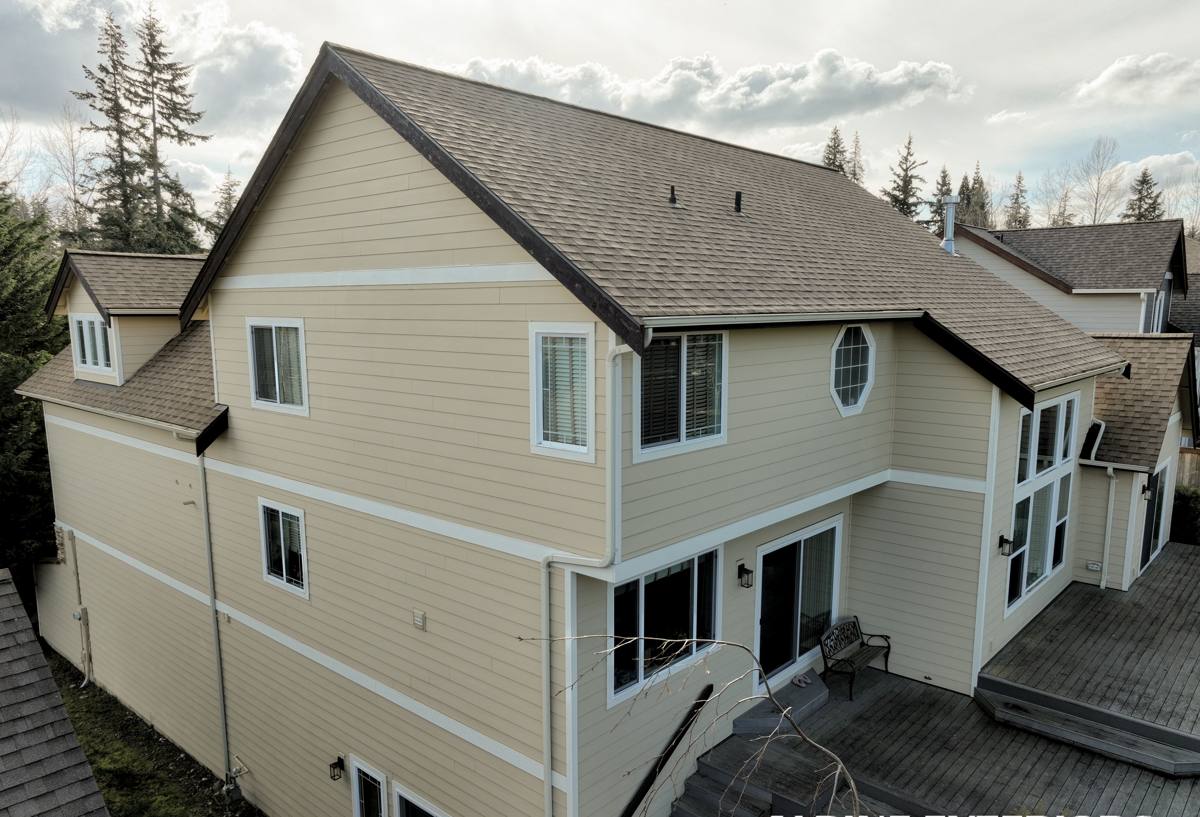
What Lynden's Climate Does to a Deck
Salt Air
Lynden sits inland from the immediate coastline, but Whatcom County as a whole still carries more salt-influenced moisture in the air than towns further from Puget Sound and the Strait of Georgia. Salt accelerates corrosion on fasteners, hidden connectors, and any exposed metal hardware, which matters more on a deck than almost anywhere else on a house because a deck's structural connections are constantly wet, then dry, then wet again. Cheap or mismatched fasteners are one of the more common things we find failing early on decks we're called out to repair.
Driving Rain
Storm systems moving through Whatcom County regularly bring wind-driven rain, not just straight-down rainfall. On a deck, that means water gets pushed into ledger connections, under railing posts, and into any gap between boards that isn't spaced or flashed correctly. A horizontal surface like a deck doesn't shed water the way a vertical wall does — it has to be built to drain, or the water simply sits there until it finds a way in.
A Long Moss Season
Mild temperatures combined with near-constant moisture give moss and algae a long growing season on shaded or north-facing surfaces, and a deck under trees or on the shady side of a house is a prime target. Beyond looking bad, moss holds moisture against the board surface and turns a deck slippery and genuinely unsafe underfoot, especially on stairs. Board choice, gap spacing, and how much airflow gets underneath the deck all affect how fast moss takes hold.
What a Correctly Built Deck Involves
A deck that holds up in this climate isn't about any one magic material — it's about a handful of structural and drainage details done right, consistently, on every deck we build.
- Proper footings: Footings sized and set below frost depth so the structure doesn't shift as the ground freezes and thaws through a wet Whatcom County winter.
- Correctly flashed ledger board: The ledger, where the deck attaches to the house, is one of the most common failure points on any deck. It needs proper flashing to keep water from tracking behind it into the house's wall framing.
- Corrosion-resistant fasteners and hardware: Hot-dip galvanized or stainless hardware rated for the treated lumber or composite being used, not whatever fastener happens to be cheapest at the time.
- Board spacing for drainage: Deliberate gapping between boards so water passes through rather than pooling on the surface or wicking into end grain.
- Adequate airflow underneath: Enough clearance and ventilation below the deck that the framing can actually dry out between storms instead of staying damp for weeks at a time.
- Joist spacing matched to the decking material: Composite and lumber decking have different span requirements, and undersized joist spacing is a common shortcut that shows up later as bounce or sag.
None of this is unusual or expensive to get right the first time. It's the difference between a deck that needs board replacement and hardware repair in five years and one that's still solid in twenty.
Decking Material Comparison
| Material | Moisture Behavior in This Climate | Maintenance | Typical Lifespan |
|---|---|---|---|
| Pressure-treated lumber | Resists rot when properly sealed and maintained; end grain and cut edges are vulnerable if not treated | Needs re-staining or sealing every 1-3 years | 15-25 years with upkeep |
| Cedar | Naturally rot-resistant but softer and more prone to surface checking under constant wet-dry cycling | Regular sealing or staining to hold color and resist moss | 15-20 years with upkeep |
| Composite decking | Doesn't absorb water or rot, but poor drainage design underneath can still trap moisture in the framing below | Occasional cleaning; no staining or sealing required | 25-30+ years, warranty-backed |
Each of these has a place. What matters more than which one a homeowner picks is whether the framing, flashing, and drainage underneath are built correctly, because a poor structure will undermine even the best decking material over time.
Our Deck Building Process
- On-site assessment: We walk the property, look at grade, sun and shade exposure, drainage, and how the deck will tie into the house, before talking specifics on design or material.
- Design and material discussion: We go over size, layout, railing style, and material options, along with the honest trade-offs of each given the site conditions.
- Permitting: Most deck projects in Whatcom County require a permit depending on size and height; we handle that process as part of the job rather than leaving it to the homeowner.
- Footings and framing: Footings are set to proper depth, and framing goes in with correctly spaced joists and a properly flashed ledger connection.
- Decking and railing installation: Boards are laid with drainage-appropriate spacing, and railings are installed to current code requirements for height and baluster spacing.
- Final walkthrough: We walk the finished deck with the homeowner, cover basic maintenance expectations for the material chosen, and answer any questions before calling the job done.
Cost Factors for a Lynden Deck
| Factor | What Drives It | Climate Consideration |
|---|---|---|
| Size and layout | Square footage, number of levels, stairs | Larger surfaces need more attention to drainage planning |
| Framing material | Pressure-treated lumber vs. engineered framing | Corrosion-resistant hardware adds modest cost but protects the structure |
| Decking material | Pressure-treated lumber, cedar, or composite | Composite costs more upfront but needs less upkeep against moss and moisture |
| Railing style | Wood, metal, cable, or composite railing systems | Metal hardware and connectors should be rated for coastal-influenced moisture |
| Site conditions | Slope, existing structure tie-in, access for equipment | Poor drainage sites may need additional grading or footing work |
These are general drivers, not a quote. Every Lynden property has a different footprint, grade, and amount of shade, so we walk the site before putting a real number on a project. That on-site look is also where we catch things — like an old deck's hidden rot or a drainage problem — that a phone estimate would miss entirely.
Maintaining a Deck in Whatcom County
Even a well-built deck needs some regular attention in this climate to get its full lifespan. The schedule below is a general guide, not a strict rule, since sun exposure, tree cover, and material all shift the timing.
- Sweep debris and standing leaves off the surface regularly, especially in fall, so moisture and organic matter don't sit against the boards
- Check for moss buildup on shaded areas and stairs and clean it before it gets slippery or takes hold in the wood grain
- Inspect fasteners and hardware yearly for rust or corrosion, particularly on older decks with lower-grade hardware
- Re-seal or re-stain wood decking on the manufacturer's recommended schedule, generally every one to three years
- Check the ledger board connection and flashing periodically for signs of water staining or separation from the house
- Confirm underneath airflow isn't blocked by stored items, plants, or debris that trap moisture against the framing
Why a Local Crew Matters for a Lynden Deck
Building decks in the same area, year after year, means seeing how they actually perform through real Whatcom County winters rather than just how a material performs on a spec sheet. That experience shapes decisions that matter on install day — where extra flashing attention pays off, which framing details keep moss from taking hold underneath, and which hardware is worth the small extra cost given how much moisture a deck around here actually sees. Because we're based in Lynden, we're also not a crew that disappears after the job is done; if something needs a look a year or two down the road, we're still local and still reachable.
Get a Free, No-Pressure Estimate
If you're planning a new deck in Lynden or want an honest look at whether an existing one is holding up the way it should, we're glad to come take a look. Reach out using the form below to schedule a free estimate — no pressure, no upsell script.