 Blaine Siding
 Why Grandview Decks Wear Out Faster Than Homeowners Expect
Decks in the Grandview area take a different kind of beating than decks in drier parts of the country. Blaine sits right up against Semiahmoo Bay and the Strait of Georgia, and that proximity to salt water means airborne salt is a constant, quiet corrosive on anything metal — nails, screws, joist hangers, railing brackets. Add in Whatcom County's long stretch of driving rain each fall and winter, plus a moss season that can run from October well into spring, and you have three separate stressors working on the same structure at once.
None of this means a deck is doomed. It means the wear pattern is predictable, and a repair that doesn't account for salt air, standing moisture, and moss growth is a repair that will need to be redone in a few years. We've built our approach around what actually happens to decks in this specific environment, not a generic checklist.
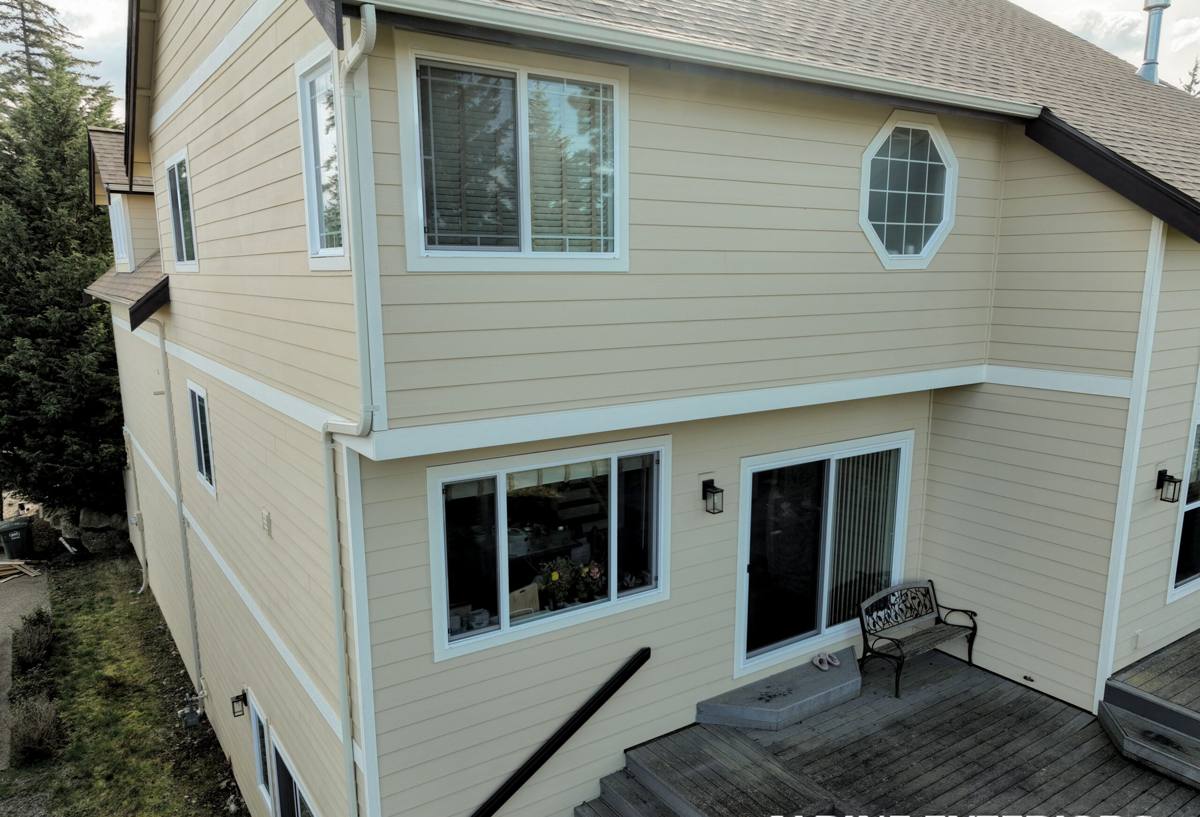
Warning Signs Worth Taking Seriously
Most deck problems in Grandview homes show up gradually, and it's easy to write off early signs as cosmetic. A few of these are worth a closer look before they become structural:
- Soft or spongy spots underfoot, especially near the house or at board ends
- Green or black staining that keeps coming back within weeks of cleaning
- Rust streaks bleeding out from screw heads or metal connectors
- Gaps opening up between boards, or boards that have started to cup or crown
- Railings or stairs that feel looser than they used to
- Visible daylight or water staining where the deck ledger meets the house
- A musty smell coming from underneath the deck
Any one of these on its own might be minor. Two or three together, especially the ledger area and soft spots, usually mean moisture has been getting into the framing longer than the surface lets on.
What Correct Deck Repair Actually Involves
The Framing You Can't See
A deck's surface boards are the easy part to judge — anyone can see cupped or discolored decking. The framing underneath is where real problems hide, and it's also where a lot of shortcut repairs go wrong. Joists, beams, and especially the ledger board (the piece that attaches the deck to the house) need to be checked for rot, not just replaced where it's obviously soft. Rot spreads along the grain, so a joist that looks fine six inches from a bad spot can still be compromised. We probe suspect framing with an awl rather than guessing from appearance alone, and we replace back to solid wood, not just the visibly damaged section.
Decking, Fasteners, and Surface Work
Fasteners matter more here than in a lot of climates. Standard galvanized screws can start showing corrosion within a few seasons this close to salt water, which leads to staining, weakened holding power, and eventually pop-ups or loose boards. We use stainless steel or coated fasteners rated for coastal exposure on connections that matter — ledger bolts, joist hangers, and structural screws — even when it costs a bit more up front, because refastening a deck twice is more expensive than doing it right once.
Moisture Management
A repair that ignores drainage is a repair that fails again. That means proper flashing where the ledger meets the house siding, gapping between boards so water sheds instead of pooling, and grading or venting under low-clearance decks so moisture doesn't just sit there through the wet months. On decks with structures underneath — a patio, storage, or living space — we also look at whether the current under-deck drainage is doing its job or just funneling water toward the foundation.
Repair or Replace? How We Help You Decide
Not every deck problem calls for full replacement, and not every deck is worth patching. The honest answer usually comes down to how much of the framing is still sound. Here's roughly how we think through it:
| Condition | Likely Approach | Why |
|---|---|---|
| Surface boards worn or stained, framing solid | Board replacement or resurfacing | Structure is fine; only the wearing surface has failed |
| Isolated rot at ledger or a few joists | Targeted structural repair | Localized damage can be cut out and rebuilt without touching the whole deck |
| Widespread soft framing, multiple failed joists | Full or near-full rebuild | Patching isolated spots won't address framing that's failing broadly |
| Deck is structurally sound but undersized or poorly laid out | Repair now, discuss expansion later | No reason to rebuild a sound structure just to change its footprint |
| Footings or posts showing movement or heaving | Foundation-level repair, sometimes full rebuild | Footing problems affect the entire structure, not just the section above them |
We'll walk you through which category your deck falls into and why, including what happens if you delay a repair versus tackling it now. A deck that's borderline between repair and rebuild is a legitimate judgment call, and we'd rather explain the tradeoffs than push toward the bigger job by default.
Decking Materials That Hold Up in This Climate
When we're replacing boards as part of a repair, material choice matters more in Grandview's climate than it would somewhere drier. Each option has real tradeoffs — there's no single "best" material, just the right fit for your deck, budget, and how much upkeep you're willing to do.
| Material | Moss & Moisture Behavior | Maintenance | Notes for This Area |
|---|---|---|---|
| Pressure-treated wood | Absorbs moisture; needs sealing to resist rot and moss staining | Annual cleaning and periodic sealing | Lowest upfront cost, but salt air accelerates fastener corrosion if hardware isn't upgraded |
| Cedar | Naturally rot-resistant but still needs finish maintenance | Regular cleaning, refinishing every few years | Good appearance, but softer surface can show wear faster in heavy rain exposure |
| Composite decking | Doesn't absorb water like wood, but can still grow moss/algae on the surface | Periodic washing, no sealing needed | Higher upfront cost, longer service life; good fit for low-maintenance preference |
Whichever material a homeowner chooses, we're consistent on one point: the fasteners and structural hardware get upgraded to corrosion-resistant grades regardless of what's on the surface, because that's the part that's hardest to fix later.
Our Deck Repair Process for Grandview Homes
Inspection and Assessment
We start underneath the deck, not on top of it. That means checking the ledger connection, probing joists and beams for soft spots, and looking at footings and post bases for movement or rot at ground contact. We'll show you what we find and explain it in plain terms — what's cosmetic, what's structural, and what's somewhere in between.
The Repair Itself
Once we agree on scope, we remove and replace only what actually needs it, tying new framing into sound existing material with proper hardware. Any moisture-related root cause — bad flashing, poor drainage, a low spot that collects water — gets addressed as part of the job, not left for the next repair. We use fasteners and connectors rated for the corrosion this area's salt air causes over time.
Cleanup and Walkthrough
We haul away old decking and framing debris, sweep and clean the work area, and walk the finished repair with you before we consider the job done. If there's a maintenance step on your end — resealing wood, a cleaning schedule — we'll tell you plainly instead of leaving you to guess.
Why Local Experience in Grandview Matters
A deck repair crew that mostly works inland doesn't always think about salt air corrosion or moss-driven surface failure as a default consideration — it's an afterthought if it comes up at all. Working regularly in the Grandview area and around Blaine means we're used to seeing decks fail in the specific ways this climate causes: hardware corrosion before wood failure, moss taking hold on north-facing or shaded sections faster than elsewhere, and ledger rot from driving rain that hits the house at an angle most of the year. That local pattern recognition shapes what we check first and what we upgrade by default, rather than treating every deck as a generic repair.
Keeping a Repaired Deck in Good Shape Through Moss Season
A good repair buys you years, but a little seasonal upkeep buys you more. A few habits make a real difference here:
- Sweep leaves and debris off the deck surface before wet weather sets in each fall
- Rinse or lightly scrub moss and algae off the surface before it gets a foothold, rather than after it's established
- Keep gutters and downspouts clear so runoff isn't dumping extra water directly onto or under the deck
- Check railings and stair connections once a year for looseness, since that's often the first sign of fastener corrosion
- Reseal wood decking on the schedule appropriate to the product, rather than waiting until it visibly grays
None of this requires special equipment or a big time commitment — it's mostly about not letting moisture and moss sit undisturbed through the wettest months.
If your deck in Grandview is showing any of these signs, or you just want an honest read on its condition, we're happy to take a look. The estimate is free, there's no pressure to commit to anything, and you'll get a straight answer about what your deck actually needs — use the form below to get started.