 Blaine Siding
 Siding Installation in Ferndale: What the Local Climate Actually Demands
Ferndale sits close enough to the water and low enough in the Nooksack valley that its homes take on a specific mix of punishment: salt-tinged marine air drifting in off the Strait, long stretches of driving rain through fall and winter, and a moss season that can run half the year on north-facing walls and shaded eaves. None of that is dramatic on any given day. It's the cumulative effect that wears siding down — moisture that never fully dries between storms, organic growth that holds water against the wall, and salt exposure that slowly degrades softer materials faster than most homeowners expect.
A siding installation in this part of Whatcom County isn't just about picking a product and nailing it up. It's about choosing a material and a install method that can shed water fast, resist moss colonization, and hold its finish without constant upkeep. That's the lens we bring to every Ferndale project.
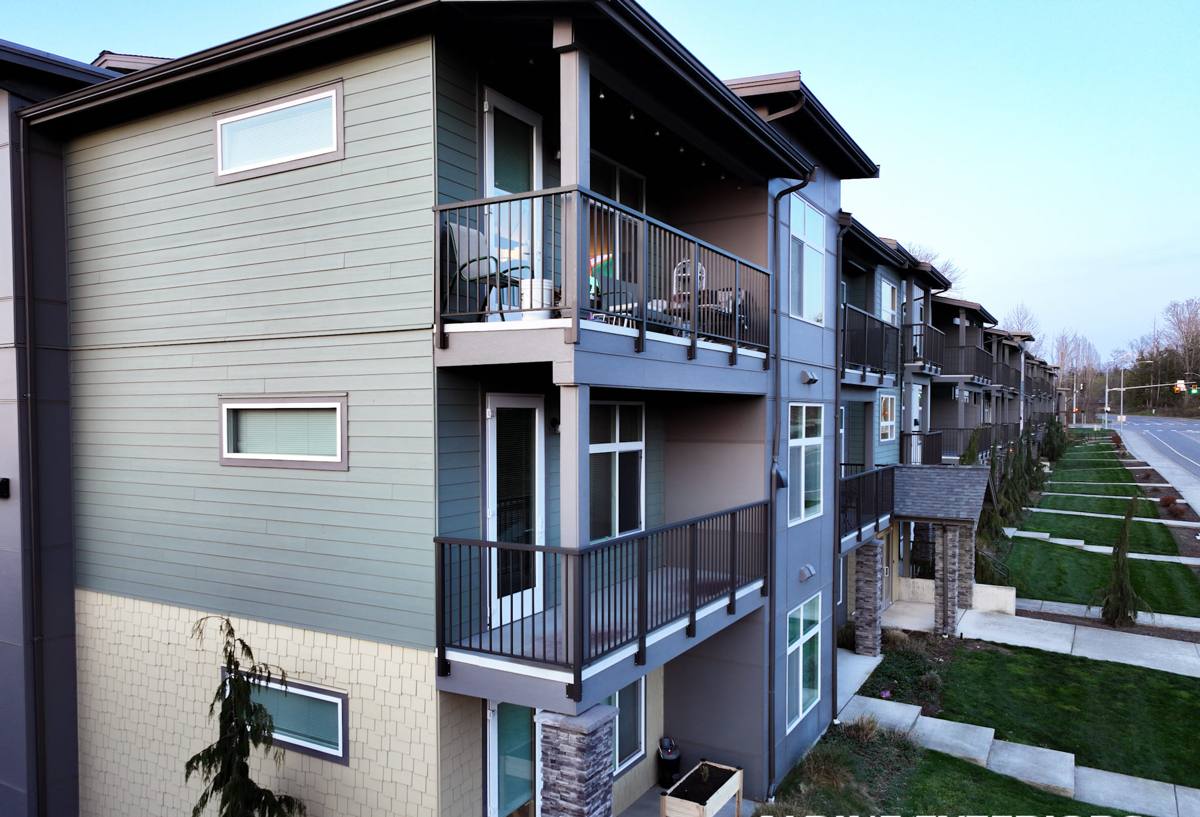
Why Ferndale Homes Are Hard on Siding
Salt Air and Marine Moisture
Even a few miles inland from the water, airborne salt and persistent humidity accelerate the breakdown of finishes and fasteners. Paint films chalk and fail sooner. Wood-based products absorb moisture more readily and swell, crack, or delaminate over time. Any siding material used here needs a finish system built to hold up under that kind of chronic exposure — not just resist it for a season or two.
Driving Rain
Storms coming off the Strait don't just fall straight down — wind-driven rain gets pushed sideways into wall assemblies, seams, and butt joints. If a siding product isn't dimensionally stable, or if the installation doesn't account for proper flashing, drainage gaps, and caulk-free water management, that rain finds its way behind the cladding. Once moisture is trapped behind siding, it doesn't matter how good the surface looks — the wall assembly underneath starts to suffer.
The Long Moss Season
Shaded, north-facing, and tree-lined walls around Ferndale can stay damp for months at a stretch, and moss doesn't need much more than that to take hold. Moss holds moisture directly against the siding surface, which is a problem for any organic or absorbent material and a cosmetic nuisance even for materials that resist rot. Reducing how easily moss can grip and spread is a real, practical consideration in material choice here — not a minor detail.
What a Correct Siding Installation Involves
Good siding is only as good as the assembly behind it. A correct installation in this climate means getting several layers right, in order:
- Tear-off and substrate inspection — removing old siding to check sheathing for rot, soft spots, or prior water damage before anything new goes up
- Weather-resistive barrier — a continuous, properly lapped house wrap or building paper that sheds bulk water down and out
- Rainscreen or drainage gap — a small air space behind the siding so any moisture that does get past the cladding can drain and dry instead of sitting against the wall
- Flashing at every penetration — windows, doors, hose bibs, light fixtures, and roof-to-wall transitions all need dedicated flashing, not just caulk
- Correct fastening — fastener type, spacing, and depth matched to the manufacturer's specification, not just "close enough"
- Factory-finished cladding installed to spec — panels and planks cut, gapped, and sealed exactly as the manufacturer requires to keep the warranty intact
Skip or shortcut any one of those steps and the finished wall can look fine for a year or two while the real problems build underneath. This is why we treat installation quality as equal in importance to the product itself.
Why We Install Only James Hardie Fiber Cement
We don't install vinyl, LP SmartSide, primed spruce, cedar, or other fiber cement brands like Cemplank or Allura. That's a deliberate standard, not a lack of options. For a climate like Ferndale's — salt air, driving rain, extended damp periods — James Hardie fiber cement holds up in ways that matter over the life of the siding, not just at installation:
- Non-combustible material that doesn't rely on a wood substrate, so it isn't vulnerable to the moisture absorption and swelling that affects engineered wood products
- ColorPlus factory finish, baked on in a controlled environment rather than field-applied, which holds color and resists the chalking and fading that marine air accelerates on site-painted surfaces
- HZ5 and HZ10 product lines engineered specifically for higher-moisture, harsher climate zones like the Pacific Northwest
- Dense, moisture-resistant composition that doesn't provide the same organic food source or moisture retention that makes moss and mildew easier to establish on some other materials
- A strong, transferable warranty backed by a manufacturer with decades of fiber cement manufacturing history
We're not saying every other product is unusable — vinyl and engineered wood have their place, and plenty of homes wear them without incident. What we're saying is that when we looked at the maintenance burden, moisture behavior, and long-term performance of the alternatives against what Ferndale's climate actually demands, Hardie fiber cement was the material we were willing to put our name behind and stand on with our own installation crews.
Comparing Siding Materials for This Climate
| Material | Moisture Behavior | Finish Durability | Moss/Organic Resistance |
|---|---|---|---|
| James Hardie fiber cement | Dimensionally stable, engineered for wet climates (HZ5/HZ10) | Factory-baked ColorPlus finish, holds color long-term | Dense composition, not an organic food source |
| Vinyl | Can warp or gap over time; seams are moisture entry points | Color molded in but can fade and become brittle with UV/salt exposure | Doesn't feed moss directly, but seams can trap debris and moisture |
| LP SmartSide / engineered wood | Wood-strand core is vulnerable if the finish is compromised | Site or factory finish, but edges are a common failure point | Wood-based core can support growth if moisture gets in |
| Cedar | Natural material, absorbs and releases moisture readily | Requires ongoing staining or sealing to perform | Organic material, more prone to moss and mildew without upkeep |
This table reflects general material characteristics, not brand-specific test data. It's meant to explain our reasoning, not to make unverifiable claims about any specific competitor product.
Our Installation Process for Ferndale Homes
1. On-Site Assessment
We walk the property, look at sun and shade exposure, wind direction, roofline drainage, and the current condition of the siding and sheathing. Homes with heavy tree cover or north-facing walls get extra attention for moisture and moss history.
2. Tear-Off and Substrate Check
Old siding comes off and we inspect what's underneath. Any soft sheathing, hidden rot, or prior water intrusion gets addressed before new material goes up — covering a damaged wall with new siding just hides the problem.
3. Weather Barrier and Drainage Plane
We install a properly lapped weather-resistive barrier and a rainscreen gap so the wall assembly can dry if moisture ever does get behind the cladding — critical given how much wind-driven rain this area sees.
4. Flashing and Detailing
Every window, door, and penetration gets proper flashing. This is one of the most common places corners get cut in siding work, and it's one of the most consequential for long-term performance.
5. James Hardie Installation to Manufacturer Spec
Panels and planks are cut, fastened, and gapped exactly to Hardie's published installation guidelines, which keeps the manufacturer's warranty valid and ensures the siding performs the way it's designed to.
6. Final Walkthrough
We review the finished work with the homeowner, confirm all trim and caulking details, and make sure everything meets both our standard and the manufacturer's.
Why a Crew That Already Works Ferndale Matters
Siding installation isn't one-size-fits-all across Whatcom County. A crew that regularly works Ferndale and the surrounding Blaine area already knows what these homes tend to face — where moss builds up fastest, which wall orientations take the worst of the driving rain, and how salt-air exposure shows up differently here than it might further inland. That local pattern recognition shortens the assessment phase and helps catch problems before they're covered up by new siding. It also means we're not learning the region's climate behavior on your project — we're applying what we've already seen on homes nearby.
Signs Your Ferndale Home May Need New Siding
- Persistent moss or algae staining that returns shortly after cleaning
- Paint that's chalking, peeling, or fading faster than expected
- Soft spots, bubbling, or visible warping in the siding surface
- Gaps at seams, corners, or trim that let daylight or drafts through
- Rising energy bills that suggest the wall assembly isn't insulating or sealing as it should
- Visible rot or water staining at the base of walls or below windows
If any of these sound familiar, it's worth having the siding and the wall assembly behind it looked at before small issues become expensive repairs.
Get a Free, No-Pressure Estimate
If you're weighing a siding replacement for your Ferndale home, we're happy to take a look, walk you through what we see, and give you an honest estimate — no pressure, no hard sell. Use the form below to get started.