 Blaine Siding
 Building Decks for Ferndale's Specific Climate
Ferndale sits close enough to the water and the Strait that homes here deal with a mix most inland Washington towns don't: salt-laden air off the bay, long stretches of driving rain through fall and winter, and a moss season that can run half the year on anything shaded or north-facing. A deck built without those three factors in mind will look fine for a season or two, then start showing problems — soft spots, streaking, corroded fasteners, a slick green film on the boards by February. A deck built for Ferndale specifically holds up because it was designed around those conditions from the framing up, not just finished to look good on install day.
This page covers what that actually means for a custom deck project in this area: material choices, framing and fastener decisions, drainage and moss management, our build process, and the permitting side of working in Whatcom County. If you're planning a new deck, a replacement, or a rebuild of something that's failing early, this is the detail level we think you deserve before signing off on a design.
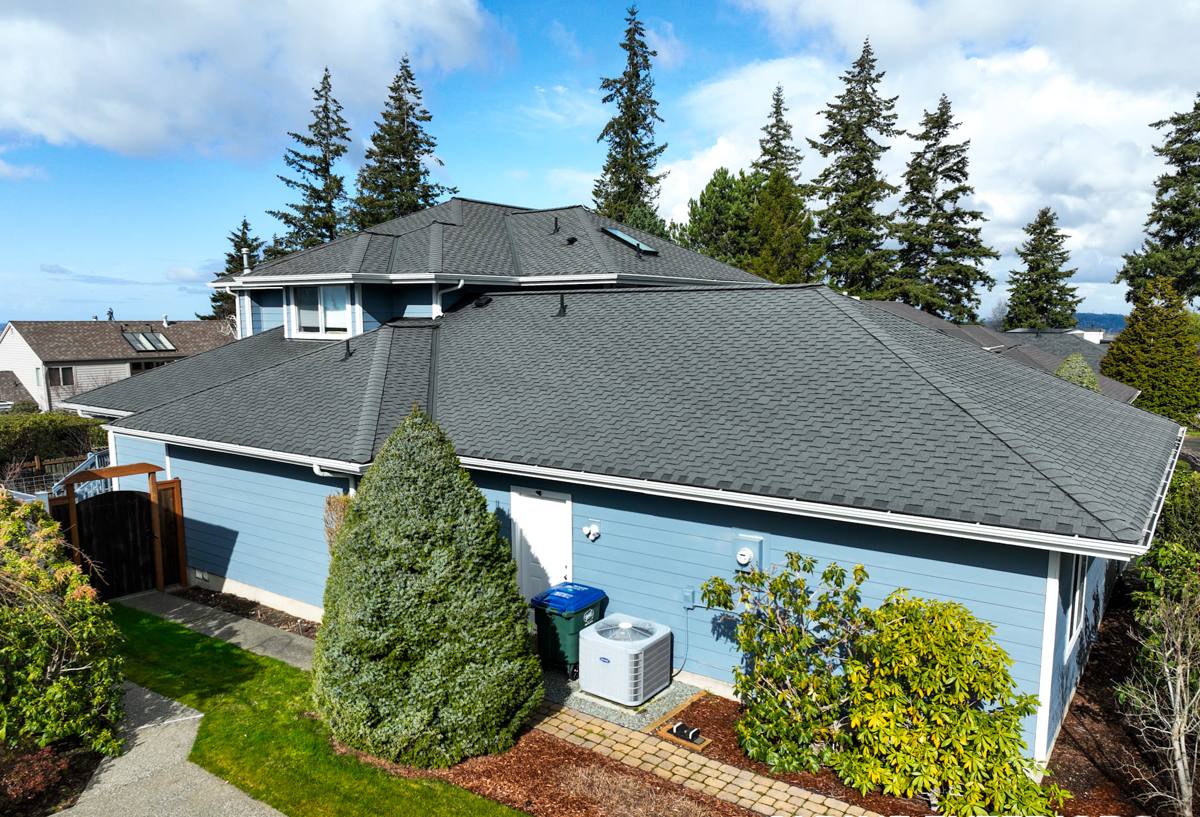
What Salt Air and Driving Rain Do to an Unprepared Deck
Salt air isn't just a coastal cliché — it's airborne moisture carrying dissolved salts that accelerate corrosion on any exposed metal and slowly break down finishes that aren't rated for it. Combine that with wind-driven rain that hits decks at an angle instead of falling straight down, and you get moisture getting into joints, fastener heads, and end grain that a "normal" rain pattern wouldn't reach as often.
- Standard galvanized fasteners can start showing rust streaks and bleed stains into decking within a few seasons near the water
- Rain driven sideways by coastal wind gets under poorly flashed ledger boards, which is where a lot of hidden rot starts
- Cheap or under-rated finishes on wood decking break down faster here than the same product would inland, leaving wood exposed sooner
- Metal railing hardware and connectors that aren't marine-grade or coated correctly can pit and weaken over a few winters
None of this means a deck near Ferndale can't last decades — it means the spec sheet matters more here than it does forty miles inland, and cutting corners on fasteners or flashing shows up faster than it would somewhere drier.
Choosing the Right Decking Material for This Climate
There's no single "best" decking material — there's a best material for your budget, your maintenance appetite, and how exposed your particular site is to sun, shade, and moisture. Here's how the common options actually compare for a Ferndale-area build:
| Material | Moss/mildew resistance | Maintenance | Typical lifespan here |
|---|---|---|---|
| Pressure-treated wood | Low — needs regular cleaning and sealing | Annual cleaning, resealing every 1-2 years | 10-15 years with upkeep |
| Cedar | Moderate — natural oils help, but still needs care | Cleaning and oil/sealant every 1-2 years | 15-20 years with upkeep |
| Capped composite | Good — cap layer resists staining and growth | Occasional wash, no sealing | 25-30 years |
| PVC/cellular decking | Best — fully synthetic, sheds moisture readily | Occasional wash, no sealing | 25-30+ years |
Wood is still a legitimate choice, especially if you want a specific look or a lower up-front cost and don't mind the maintenance schedule. But in shaded, damp yards — which describes a good number of Ferndale lots with mature trees or fences blocking airflow — moss and mildew will find bare or under-sealed wood fast. Composite and PVC cost more up front but largely take that maintenance cycle off your plate, which matters if the deck sits somewhere you won't get to every spring with a scrub brush.
Where the Cost Actually Goes
Homeowners often assume decking boards are the main cost driver. In practice, framing, footings, railing, stairs, and site conditions (slope, existing structure removal, permit requirements) usually account for more of the total than the surface material itself. A realistic custom deck project in this area typically lands in a broad mid-to-upper range depending on size, height off grade, and material — we'll give you an actual number once we've seen the site and talked through what you want, not a generic estimate that doesn't reflect your yard.
Framing and Fasteners: The Part You Don't See
A deck's surface material gets all the attention, but the framing underneath and the fasteners holding it together are what actually determine whether it survives coastal weather without hidden rot or corrosion. For Ferndale-area builds, we treat a few things as non-negotiable:
- Structural fasteners and connectors rated for coastal/high-moisture exposure, not just standard exterior-grade hardware
- Proper ledger board flashing where the deck attaches to the house, so wind-driven rain can't work its way behind the band board
- Joist tape or equivalent protection on framing lumber to slow moisture absorption at the top of each joist
- Footings sized and set to local frost depth and soil conditions, not just "deep enough to pass a quick look"
Every one of these is invisible once the decking is down. It's also exactly where a deck built cheap starts to fail first — usually two or three years in, right around when a homeowner assumes everything is fine because the boards still look good on top.
Moss, Drainage, and Designing a Deck That Sheds Water
Moss doesn't grow because a deck is old — it grows because moisture sits somewhere long enough to let it take hold. Design choices affect that more than most homeowners expect:
Board spacing and airflow
Decking gaps that are too tight trap moisture and debris between boards, which is exactly what moss and mildew want. Correct spacing lets water drain through and air move underneath instead of pooling.
Under-deck ventilation
Low decks or ones built close to grade need enough clearance and skirting design to let air circulate underneath. A deck that's sealed in tight to the ground stays damp longer after every rain, which speeds up both wood rot and moss growth.
Grading and runoff
Where the ground around and under a deck slopes matters. If water from the roofline or yard drains toward the deck's footings instead of away from them, you're fighting a losing battle no matter what decking material you choose.
Our Custom Deck Process
A custom deck should be designed around how you actually use your yard, not dropped in as a generic rectangle. Here's how we approach it:
- On-site assessment — we look at grade, drainage, sun/shade exposure, existing structure condition if it's a replacement, and how the space connects to your house
- Design and material walkthrough — we talk through layout, railing style, and material tradeoffs based on your budget and how much maintenance you actually want to do
- Permitting — we handle the paperwork with the applicable jurisdiction so you're not chasing that down yourself
- Framing and structural work — footings, ledger attachment and flashing, joists, and connectors built to the standards outlined above
- Decking, railing, and finish work — installed to manufacturer spec so warranties stay intact
- Final walkthrough — we go over the finished deck with you, including what maintenance (if any) it needs going forward
Permits and Code Considerations in Whatcom County
Most new decks and significant deck replacements require a permit, with specifics depending on height, size, and whether the deck is attached to the house. Requirements can differ slightly depending on whether your property falls under Whatcom County jurisdiction or the City of Ferndale, and setback rules can matter more than people expect on smaller lots. We handle the permit process as part of the job so you're not the one figuring out which office to call — but it's worth knowing up front that "just build it" isn't a legal option for most deck projects here, and skipping permitting can create real problems later if you go to sell the house.
Maintenance: What Ferndale Deck Owners Should Actually Do
Whatever material you choose, a little seasonal attention goes a long way in this climate:
- Clear leaves and debris from between boards and off railings before wet season sets in, since trapped organic matter is what feeds moss
- Rinse or lightly scrub decking a couple of times a year, more often in heavily shaded areas
- Check fastener heads and railing hardware annually for early rust or corrosion, especially on wood decks
- Reseal or reapply finish on wood or cedar decking on the schedule the product actually requires — skipping a year is when problems start
- Keep gutters and downspouts near the deck clear so roof runoff isn't dumping extra water onto or under the structure
Why It Matters to Hire a Crew That Already Works Ferndale
A contractor who mostly builds decks in drier inland areas will often spec the same fasteners, the same flashing details, and the same maintenance advice they'd give anywhere else — and that advice is wrong for a yard exposed to salt air and near-constant winter moisture. A crew that already works Ferndale and the surrounding Whatcom County coastline knows which details actually matter here: the fastener grade, the ledger flashing, the drainage path, the local permit process. That's the difference between a deck that needs real repair work in three years and one that's still solid in twenty.
If you're considering a new custom deck, a replacement, or you're not sure whether your current deck's framing is holding up the way it should, we're happy to take a look and talk through honest options — no pressure, no generic sales pitch. Use the form below to request a free estimate and we'll go from there.