 Blaine Siding
 Custer Roofs Take a Different Kind of Beating
Custer sits close enough to the water and open farmland that roofs here absorb weather most inland homes never deal with. Winter storms roll in off the Strait with driving rain that hits roofs sideways, not straight down, which finds every marginal flashing detail and worn seal a roof has. Add in salt-laden air moving through Whatcom County and a moss season that can run eight or nine months out of the year, and you get roofs that age differently than a similar house would fifty miles inland. Storm damage repair in this area isn't just about patching what broke during the last windstorm — it's about understanding what the climate has already been doing to that roof for years before the storm ever hit.
We work on Custer roofs regularly, which matters more than it sounds. A roof that took wind damage in a storm often had underlying moss buildup, saturated underlayment, or corroding fasteners that made the damage worse than it would have been on a well-maintained roof. Fixing the visible damage without addressing what let it happen is how homeowners end up calling again after the next storm.
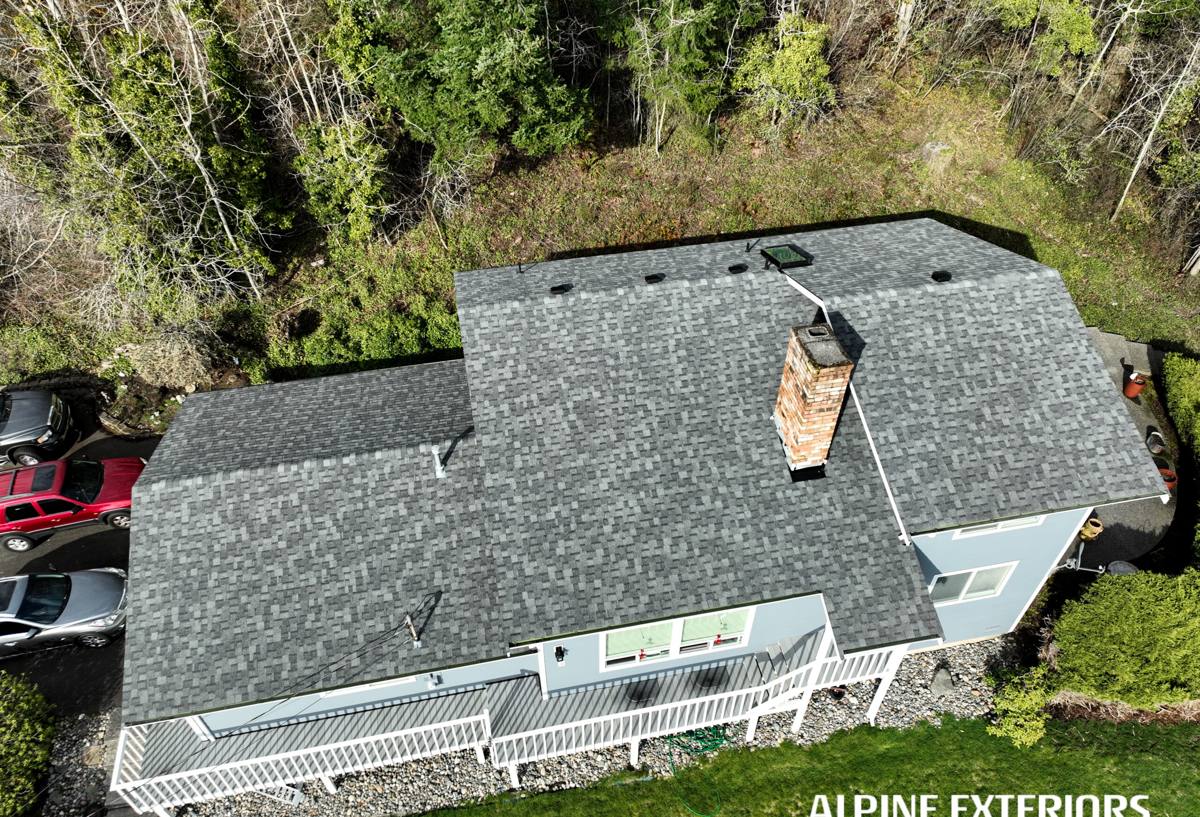
What Storm Damage Actually Looks Like Here
Wind and Driving Rain Damage
Sideways rain during a windstorm gets pushed up under shingle tabs and around flashing that would shed water fine in a normal downpour. The result is often not a dramatic hole but a slow leak that shows up days or weeks later as a stain on a ceiling or a damp spot in the attic. Wind itself tends to lift and crease shingles along ridge lines, around chimneys, and at roof edges where the wind gets underneath and works a shingle loose. Once a shingle's seal is broken, it usually won't reseal on its own — it needs to be repaired or replaced before the next storm finishes the job.
Moss, Trapped Moisture, and Hidden Rot
Moss doesn't cause storm damage directly, but it sets the stage for it. A roof with moss growth holds moisture against the shingle surface and underlayment far longer than a clean roof does, which softens materials and accelerates granule loss. When a storm then puts wind and rain stress on that same section, it fails faster and worse than it would have on a moss-free roof. We routinely find that storm damage repair calls in this area also involve moss removal and treatment, because the two problems are connected, not separate.
Salt Air's Slow Corrosion of Metal Components
Metal flashing, drip edge, gutter hardware, and exposed fasteners corrode faster near the water than they do inland. A storm can knock loose a flashing piece that was already weakened by corrosion, or drive rain through a fastener hole that had already started to rust and loosen. This is a slower, quieter form of storm damage — it doesn't look dramatic, but it's often the actual point of failure once we get up on the roof.
Why This Repair Isn't a Patch-and-Go Job
A correct storm damage repair starts with figuring out why the damage happened where it did, not just covering the visible symptom. Sealing a shingle back down without checking the decking underneath for water intrusion just hides a problem that keeps growing. Replacing a section of shingles without checking whether the surrounding shingles have already lost enough granules to fail soon after is a short-term fix that costs the homeowner twice.
We also pay attention to whether the original roofing materials and installation details were adequate for this area in the first place. A roof installed without ice-and-water shield at valleys and eaves, or with flashing details built for a drier climate, is going to keep having storm-related problems no matter how many times individual spots get patched. Part of an honest repair is telling a homeowner when a repair is genuinely a repair, and when it's really a sign that a section — or the whole roof — is past the point where patching makes sense.
Our Storm Damage Repair Process
- Inspection and documentation. We get on the roof (weather permitting) and check not just the obvious damage but the surrounding area, flashing, gutters, and attic for signs of water intrusion. We take photos throughout for the homeowner's records and any insurance claim.
- Temporary protection if needed. If there's active leaking or exposed decking, we get it covered and weathertight before doing anything else. This step isn't billed as the final repair — it's just stopping further damage while a proper repair is scheduled.
- Scope and estimate. We explain what we found, what caused it, and what it will take to fix it correctly — including whether moss removal, flashing replacement, or decking repair needs to happen alongside the visible shingle work.
- The repair itself. Matching materials where possible, replacing anything compromised (not just what's broken), and rebuilding flashing and seal points to handle the next storm, not just look fine until then.
- Cleanup and final check. Debris removed, gutters checked for granule buildup from the repair, and a final walk-through so the homeowner knows exactly what was done.
Repair vs. Replacement: How We Decide
Not every storm-damaged roof needs to be replaced, and not every roof that "just needs a patch" should be patched. Here's how we weigh it:
| Factor | Repair Usually Makes Sense | Replacement Should Be Considered |
|---|---|---|
| Roof age | Under 12–15 years, materials still have life left | Near or past expected lifespan for the roofing type |
| Extent of damage | Isolated to one section or a few shingles | Multiple areas affected, or damage widespread across slopes |
| Moss/moisture history | Light moss, no sign of decking damage | Heavy moss buildup with soft or rotted decking found underneath |
| Granule loss | Localized wear, most of roof still has good coverage | Widespread granule loss visible in gutters and downspouts |
| Underlying materials | Adequate underlayment and flashing details for this climate | Missing ice-and-water shield, undersized flashing, or outdated details |
Cost ranges vary a lot depending on the size and type of damage, but most isolated storm repairs on an asphalt shingle roof run from a few hundred dollars for a small flashing or shingle fix up into the low thousands when decking replacement or a larger section is involved. We give a firm number after inspection, not a guess over the phone, because storm damage is rarely as simple as it looks from the ground.
Insurance and Storm Claims
Many storm damage repairs in Whatcom County are covered in some form by homeowners insurance, but coverage details vary by policy and by what caused the damage. We're glad to provide documentation — photos, a written description of the damage, and our assessment of cause — that a homeowner can bring to their insurance company. We don't handle the claim itself or promise a specific payout, since that's between the homeowner and their insurer, but a clear, honest inspection report tends to make that process go smoother.
Preventing the Next Round of Damage
Once a storm-damaged roof is repaired, a little maintenance goes a long way toward keeping the next storm from doing the same thing again. Things worth checking regularly on a Custer roof:
- Gutters and downspouts clear of debris and moss buildup, especially before fall storm season
- Moss growth treated before it spreads across a slope, not after
- Flashing around chimneys, vents, and valleys checked for lifting or corrosion
- Overhanging branches trimmed back so they can't scrape shingles or drop debris in wind
- Attic checked periodically for moisture, staining, or daylight through the decking
- A roof inspection after any major windstorm, even if nothing looks obviously wrong from the ground
Why a Crew That Already Works Custer Roofs Matters
Storm damage repair goes faster and gets diagnosed more accurately when the crew already knows what this area's roofs typically deal with — the moss patterns, the flashing details that tend to fail first, the way driving rain finds its way in on homes exposed to open wind. That familiarity means less time spent figuring out what's normal wear versus what's actual storm damage, and a repair that accounts for what's likely to happen next storm season, not just what's visibly broken today.
If your roof took damage in a recent storm, or you're not sure whether what you're seeing is storm-related or just moss and age catching up with an older roof, we're happy to take a look. Reach out for a free, no-pressure estimate — use the form below to get started.