 Blaine Siding
 Siding Replacement in Cherry Point: Built for a Shoreline Climate
Cherry Point sits along the Strait of Georgia shoreline between Blaine and Ferndale, in a stretch of Whatcom County where homes face weather straight off open water with very little to break it up. That exposure is different from what a house a few miles inland deals with, and it changes what a siding replacement actually needs to accomplish. A product or installation detail that holds up fine in a sheltered neighborhood can fail years early on a Cherry Point lot facing open water and wind.
This page is about one job, done right, in one area we know: full siding replacement for homes in and around Cherry Point. We install James Hardie fiber cement exclusively, and we'll explain exactly why below — not as a sales pitch, but because it's the professional standard we've settled on after years of tear-offs and service calls on houses in this exact kind of coastal exposure.
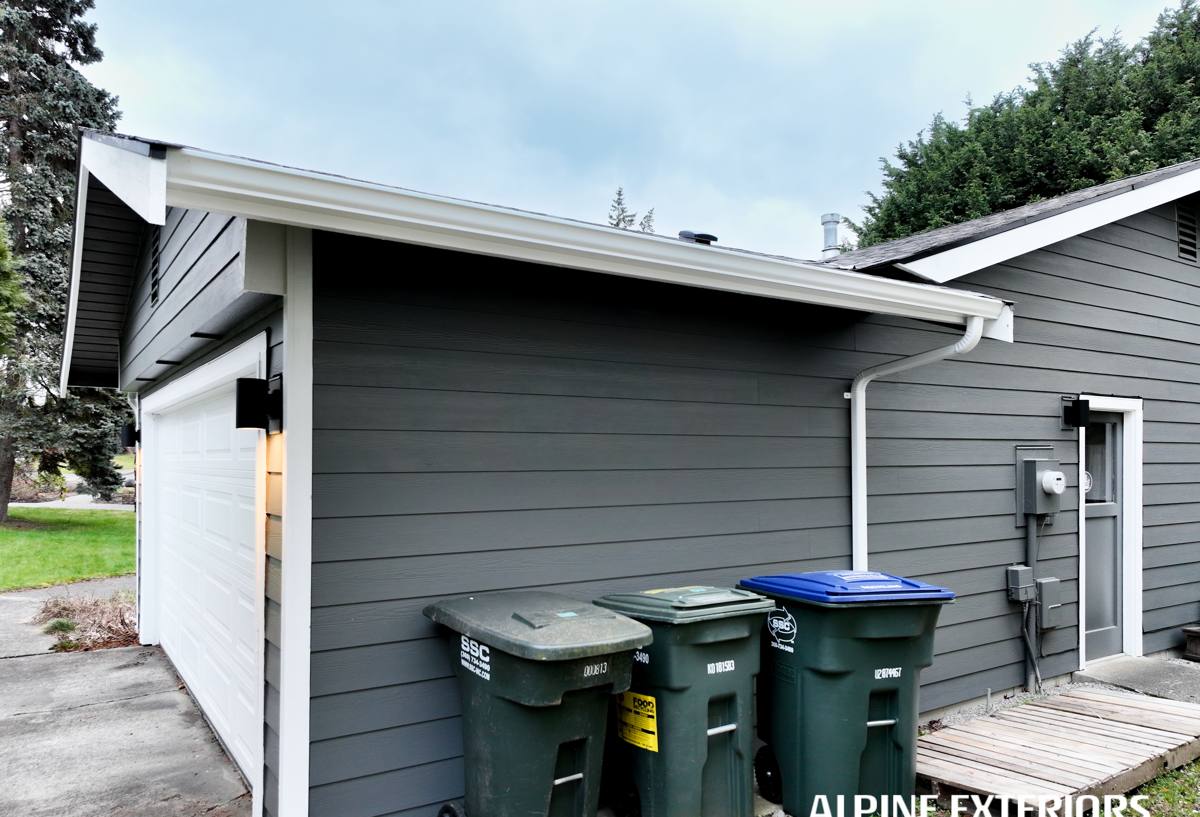
What Cherry Point's Climate Does to Siding
Salt Air and Wind Off the Water
Salt-laden air moving off the Strait doesn't stop at the shoreline — it travels well inland on a steady wind, and Cherry Point properties get a heavier, more constant dose of it than towns set back from the water. Salt accelerates corrosion on fasteners, flashing, and any exposed metal trim, and it breaks down lower-grade paints and coatings faster than dry inland air ever would. On a coastal lot like this, the hardware and finish matter as much as the siding panel itself.
Driving Rain With Nothing to Block It
Open shoreline means storms arrive with wind behind the rain, driving it sideways into wall assemblies instead of just falling straight down. That sideways-driven moisture finds its way into window flashing, siding laps, and butt joints far more aggressively than vertical rainfall does, and it's exactly the kind of load that exposes a shortcut in the original installation. Whatcom County gets plenty of wet weather generally, but a shoreline property at Cherry Point takes a harder, more direct version of it.
A Long Moss and Mildew Season
Mild temperatures combined with near-constant moisture give moss, algae, and mildew a long growing window on this part of the coast — often most of the year on shaded or north-facing walls. Any siding surface that stays damp longest is the first to show green streaking or soft growth, and porous or absorbent materials give it more to hold onto. On tree-lined or north-facing Cherry Point lots, this shows up earlier and spreads further than it would on a sunnier, more sheltered site.
Signs a Cherry Point Home Needs Siding Replacement, Not Just a Patch
Coastal exposure tends to turn small siding problems into bigger ones faster than it would in a milder climate. These are the signs worth taking seriously rather than waiting on:
- Soft, spongy, or crumbling spots when you press on the siding, especially near the bottom courses and around window trim
- Paint that's peeling, bubbling, or chalking heavily, particularly on walls facing the water or prevailing wind
- Visible gaps opening up at seams, corners, or butt joints where boards meet
- Persistent moss, algae, or black staining that comes back quickly after cleaning
- Warping, cupping, or boards pulling away from the wall at the edges
- Rising heating bills that don't match any other change to the house, which can point to moisture-compromised insulation behind failing siding
- Visible rust streaking from fasteners or trim, a sign the hardware underneath is corroding
Any one of these on its own might be a spot repair. Several at once, especially on a wall that faces open water, usually means the underlying moisture barrier or original installation has been compromised and a full replacement is the more honest recommendation.
What a Correct Siding Replacement Involves
Tear-Off and What's Underneath
A real replacement starts with removing the old siding down to the sheathing, not covering over it. That's the only way to actually see what's happening underneath — soft sheathing, rotted framing, or a house wrap that's failed are common finds on coastal tear-offs, and none of it shows up in an estimate done from the outside. Any damage found gets addressed before new siding goes on; skipping this step just seals a problem behind a new surface.
Water Management Comes First
On an exposed shoreline lot, how water is managed behind the siding matters more than the siding material itself. That means a properly lapped weather-resistive barrier, correctly flashed windows and penetrations, and a drainage gap behind the siding so any moisture that does get past the surface can drain and dry instead of sitting against the wall. This is the layer that determines whether a house stays dry through decades of driving rain, and it's also the layer that's easiest for a rushed crew to shortcut because it disappears once the siding goes up.
Fastening and Sealed Transitions
Correct fastener type, spacing, and depth is a manufacturer spec, not a preference, and it's one of the most common things we find done wrong on tear-offs — especially with the wrong fastener corroding in salt air years before the siding itself would have failed. Every butt joint, corner, and trim transition needs to be sealed correctly, since those seams are exactly where wind-driven coastal rain finds its way in first.
Why We Install Only James Hardie Fiber Cement
We don't install LP SmartSide, vinyl siding, Cemplank, Allura, primed spruce, or cedar. Each has a place in the market, and plenty of homeowners are satisfied with them in the right setting. But after years of tear-offs and service calls on shoreline properties like the ones around Cherry Point, we made a professional decision to install one system we can fully stand behind rather than offer alternatives that quietly shift maintenance risk onto the homeowner down the road.
- Non-combustible core: Fiber cement doesn't feed a fire the way wood-based siding products can — a real factor for both safety and insurance.
- Factory-applied ColorPlus finish: The color is cured on under controlled factory conditions rather than field-applied, so it resists fading and chalking far longer against direct sun and salt exposure.
- Climate-engineered HZ formulations: Hardie's HZ5 product line is engineered for regions with sustained moisture and freeze-thaw cycling, which describes coastal Whatcom County well.
- Dimensional stability: Fiber cement doesn't swell, cup, or warp with repeated wetting and drying the way engineered wood products can.
- Strong transferable warranty: Hardie backs its products with one of the stronger warranty structures in the industry, contingent on installation following their spec — which is exactly why we install to spec every time.
James Hardie Product Lines for a Cherry Point Home
Hardie makes several siding profiles, and the right choice depends on the home's style and how much direct wind and water exposure a given wall gets:
| Product | Best Fit | Notes for Coastal Exposure |
|---|---|---|
| HardiePlank lap siding | Most homes, traditional or modern styles | Widest range of textures and widths; the most common choice on Whatcom County coastal replacements |
| HardiePanel vertical siding | Board-and-batten or modern facades | Fewer horizontal laps means fewer seams for wind-driven rain to find |
| HardieShingle | Accent gables, Cape Cod or shingle-style homes | More seams than lap siding, so flashing detail matters even more on exposed walls |
| HardieTrim | Corners, fascia, window and door casings | Matched fiber cement trim avoids the mismatched durability of wood trim against Hardie field siding |
For a property with direct exposure to Strait winds, we typically steer the conversation toward HZ5 formulations and simpler lap or panel profiles with fewer seams, saving shingle-style accents for more sheltered elevations of the same house.
What Drives Siding Replacement Cost in Cherry Point
Every home is different, but the same handful of factors move the price up or down on most jobs we quote in this area:
| Factor | Why It Matters |
|---|---|
| Total square footage and wall complexity | More corners, dormers, and cutouts mean more labor and material waste than a simple rectangular footprint |
| Condition of the sheathing underneath | Rot or water damage found during tear-off adds repair work before new siding can go on |
| Siding profile chosen | Lap, panel, and shingle styles differ in material and installation labor |
| Trim and accent work | Matched fiber cement trim, fascia, and soffit work adds to the scope beyond field siding alone |
| Site access and disposal | Waterfront and rural lots can add logistics for staging, tear-off disposal, and equipment access |
We give a written, itemized estimate before any work starts, so a homeowner can see exactly what's driving the number rather than a single lump-sum figure.
Our Process, Start to Finish
- On-site inspection: We walk the exterior, check for soft spots and moisture signs, and look at how each elevation faces prevailing wind and water.
- Written estimate: A clear, itemized quote covering material, labor, tear-off, and disposal — no pressure, no expiring "today-only" pricing tactics.
- Tear-off and inspection: Old siding comes off down to the sheathing, and we document and address anything found underneath before moving forward.
- Water management install: Weather-resistive barrier, flashing, and rainscreen gap go in first, since this is the layer that protects the house for decades.
- Hardie installation to spec: Correct fastening, sealed joints, and manufacturer-specified detailing throughout — the parts that are invisible once the job is done but determine how it ages.
- Final walkthrough: We go over the finished work with the homeowner before calling the job complete.
Why Hiring a Crew That Already Works Cherry Point Matters
A siding crew that mostly works inland, sheltered neighborhoods doesn't get daily practice with the wind-driven rain, salt exposure, and long moss season that define shoreline properties like the ones around Cherry Point. That difference shows up in the details — how tight the flashing laps are, whether the rainscreen gap gets skipped to save an hour, which fastener actually gets used. We work this stretch of Whatcom County regularly enough to know which walls on a given lot take the worst of the weather and to install accordingly, rather than treating every job the same regardless of exposure.
If your Cherry Point home is showing signs of siding failure, or you're planning ahead for a replacement, we're glad to take a look and put together a free, no-pressure estimate — just fill out the form below.