 Blaine Siding
 Windows Built for Life on Birch Point
Birch Point sits close enough to the water that the weather off Semiahmoo Bay and the Strait of Georgia shapes everything about how a house holds up over time. Homes here take on salt-laden air, wind-driven rain that finds its way into gaps most inland houses never have to deal with, and a long, damp moss season that keeps wood and vinyl surfaces wet for weeks at a stretch. Windows are one of the first places that exposure shows up — as fogged glass, swollen sashes, drafts around the frame, or a heating bill that never quite makes sense for the size of the house.
Energy-efficient windows aren't just about lower utility bills, though that matters in a Blaine winter when the wind comes straight off the water. The bigger issue is what happens behind the frame if a window isn't sealed and flashed correctly for this climate. A window that leaks moisture into the wall cavity over a few seasons can cause far more expensive damage than the window itself ever cost. Doing this job right in Birch Point means treating the window as part of a weatherproofing system, not just a glass unit dropped into a hole.
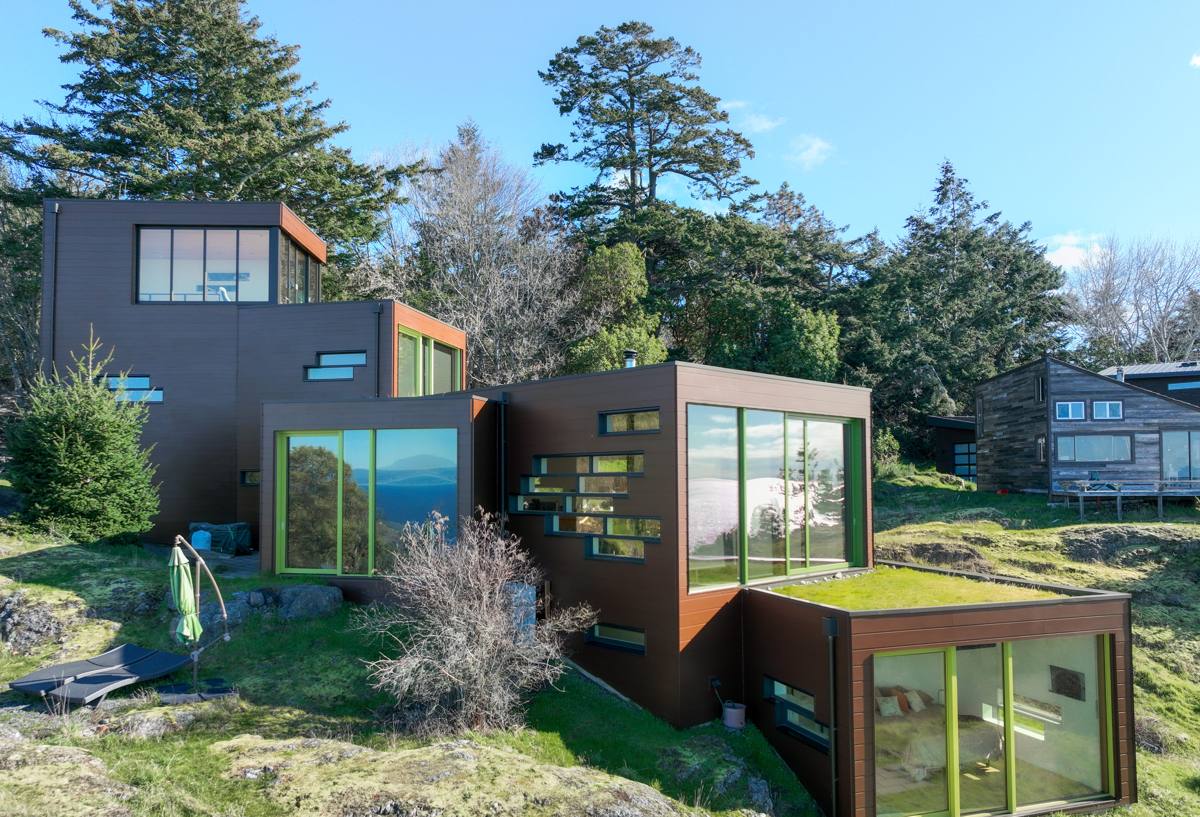
What Blaine's Coastal Climate Does to Windows
Salt Air and Corrosion
Salt-laden air off the bay accelerates corrosion on hardware, fasteners, and lower-grade metal components. Cheaper window hardware — hinges, cranks, locking mechanisms — can start showing rust or seizing up years before it would in a drier, inland part of Whatcom County. This is one of the reasons hardware quality matters as much as glass quality on a project this close to the water.
Driving Rain and Wind Pressure
Storms coming off the Strait don't just drop rain straight down — wind pushes it sideways and up under trim and sills. A window that's watertight in calm weather can still leak during a windstorm if the flashing and sill pan weren't detailed for wind-driven water. Birch Point's exposure to open water makes this a bigger factor than it would be for a home tucked further inland in Blaine.
Moss, Mildew, and Prolonged Dampness
The long wet season in this part of Whatcom County keeps humidity high around window openings for much of the year. Wood sills and frames that don't drain properly stay damp long enough to invite rot and mildew growth, especially on north-facing walls that get less sun to dry things out between rain events.
What "Energy-Efficient" Actually Means for a Coastal Home
Energy efficiency in a window comes down to a handful of measurable factors, not marketing language. For a Birch Point home, we're weighing these against both heating performance and moisture resistance:
| Factor | Why It Matters Here |
|---|---|
| U-Factor | Measures heat loss through the window. Lower is better for holding warmth during cold, windy stretches off the water. |
| Solar Heat Gain Coefficient (SHGC) | Controls how much solar heat passes through the glass — helps balance winter warmth against summer overheating on sun-exposed sides. |
| Air Leakage Rating | Lower ratings mean less wind infiltration, which matters directly on a site exposed to steady bay winds. |
| Frame Material | Needs to resist moisture and salt exposure without warping, corroding, or requiring constant upkeep. |
| Glazing (Double vs. Triple Pane) | More panes and gas fill improve both insulation and sound dampening, useful for wind noise off open water. |
None of these numbers mean much in isolation. A window with a great U-factor but a poor installation will still leak air and water around the frame. The rating tells you what the product is capable of — the install determines whether the house actually gets that performance.
Frame Materials: What We Recommend and Why
For homes in Birch Point's salt-air, high-moisture environment, we lean toward vinyl and fiberglass frames over bare wood or lower-grade aluminum. This isn't a knock on any particular manufacturer — it's a practical trade-off assessment based on what holds up in this specific exposure:
- Vinyl: Doesn't corrode, doesn't need repainting, and handles moisture well. A solid, cost-effective choice for most Birch Point homes.
- Fiberglass: More dimensionally stable than vinyl in temperature swings, very durable against moisture and salt exposure, generally a step up in cost.
- Wood (with cladding): Attractive and traditional, but exposed wood surfaces need real maintenance discipline in this climate — we typically recommend clad options that protect the exterior face from direct weather exposure.
- Bare Aluminum: Conducts heat and cold efficiently, which works against energy efficiency, and is more prone to corrosion issues near saltwater. We generally steer clients away from uninsulated aluminum frames for this reason on coastal properties.
The right choice also depends on the home's style, budget, and how much maintenance the homeowner wants to take on. We'll walk through the honest trade-offs for your specific house rather than pushing one product line.
What a Correct Installation Involves
The window unit itself is maybe half the job. The other half is everything around it that keeps water out and heat in — and it's the part that's easy to shortcut if a crew isn't used to coastal installs.
Proper Flashing and Sill Pan Details
Every window opening needs a sill pan and flashing sequence that directs any water that gets past the window back outside the wall assembly, not into it. This matters more in Birch Point than in a drier part of the state, because wind-driven rain increases the odds that some water reaches the sill.
Air and Water Sealing Around the Frame
Backer rod and quality sealant at the right joints, paired with correctly lapped house wrap or weather-resistive barrier, close off the paths air and water use to get around a window frame. Skipping or rushing this step is one of the most common causes of drafts and slow leaks that don't show up until months later.
Insulating the Gap
The gap between the window frame and the rough opening needs to be insulated without over-packing it, which can bow the frame and affect operation. Low-expansion foam or backer rod and sealant, applied correctly, keeps that gap from becoming a thermal bridge.
Our Process for a Birch Point Window Replacement
- On-site assessment — We look at existing window condition, signs of past moisture intrusion, wall assembly, and sun/wind exposure specific to your home's position.
- Product recommendation — We walk through frame material, glazing, and performance ratings suited to your home's exposure and budget, with honest pros and cons for each option.
- Removal and opening inspection — Old windows come out carefully so we can check the rough opening and sheathing for hidden rot or water damage before anything new goes in.
- Flashing and sill pan installation — Correct water management details go in before the new window, not as an afterthought.
- Window installation and sealing — The unit is set, shimmed, insulated, and sealed to manufacturer specs and coastal best practices.
- Interior and exterior finish work — Trim, caulking, and touch-up work are completed to match the rest of the home.
- Final walkthrough — We check operation, seals, and appearance with you before calling the job done.
Signs Your Birch Point Home May Need New Windows
- Visible condensation or fogging between the panes (a sign the seal has failed)
- Drafts you can feel near the frame on windy days
- Sashes that are difficult to open, close, or lock
- Soft or discolored wood trim around the window opening
- Visible mildew or staining on interior sills, especially on walls facing the water
- Noticeably higher heating bills without another clear cause
- Peeling paint or bubbling finish near window edges
Any one of these on its own isn't necessarily an emergency, but a few of them together are usually a sign it's time to have the windows looked at before minor issues turn into structural repairs.
Why Local Experience in Birch Point Matters
A crew that's worked windows in Birch Point and along the Blaine waterfront already knows how the wind sits on different sides of a house here, how much wind-driven rain a given exposure typically sees, and where moss and moisture tend to collect on this type of lot. That's not something a general contractor from outside Whatcom County picks up on their first job in the area. It shows up in the small decisions — how much flashing overlap to use, which sealants hold up against this level of salt exposure, how to detail a sill on a wall that faces open water versus one that's more sheltered.
It also matters for making sure the work matches the realities of this specific microclimate rather than a generic install approach that works fine in a drier part of the state but leaves gaps here.
Get a Free, No-Pressure Estimate
If your Birch Point home has aging, drafty, or fogged windows, or you're planning ahead for a remodel, we're happy to take a look and give you a straightforward assessment of what your home needs — no pressure, no upsell. Use the form below to request a free estimate.