 Blaine Siding
 Birch Bay Windows Take a Different Kind of Beating
Birch Bay sits right on the water, and that changes what a window has to survive year after year. Homes here aren't just dealing with ordinary Pacific Northwest rain — they're dealing with salt-laden air off the bay, wind that drives rain sideways into the west and south faces of a house, and a long stretch of the year where shaded siding and trim never really dry out. A window that would hold up fine ten miles inland can start failing early out here if it wasn't built or installed with that in mind.
We work window replacement jobs in Birch Bay and throughout Whatcom County regularly enough to know which failure patterns show up first, which parts of a house take the worst of it, and what a correct install looks like for this specific stretch of coastline. This page is about that one job — window replacement for Birch Bay homes — not a general overview of what we do everywhere.
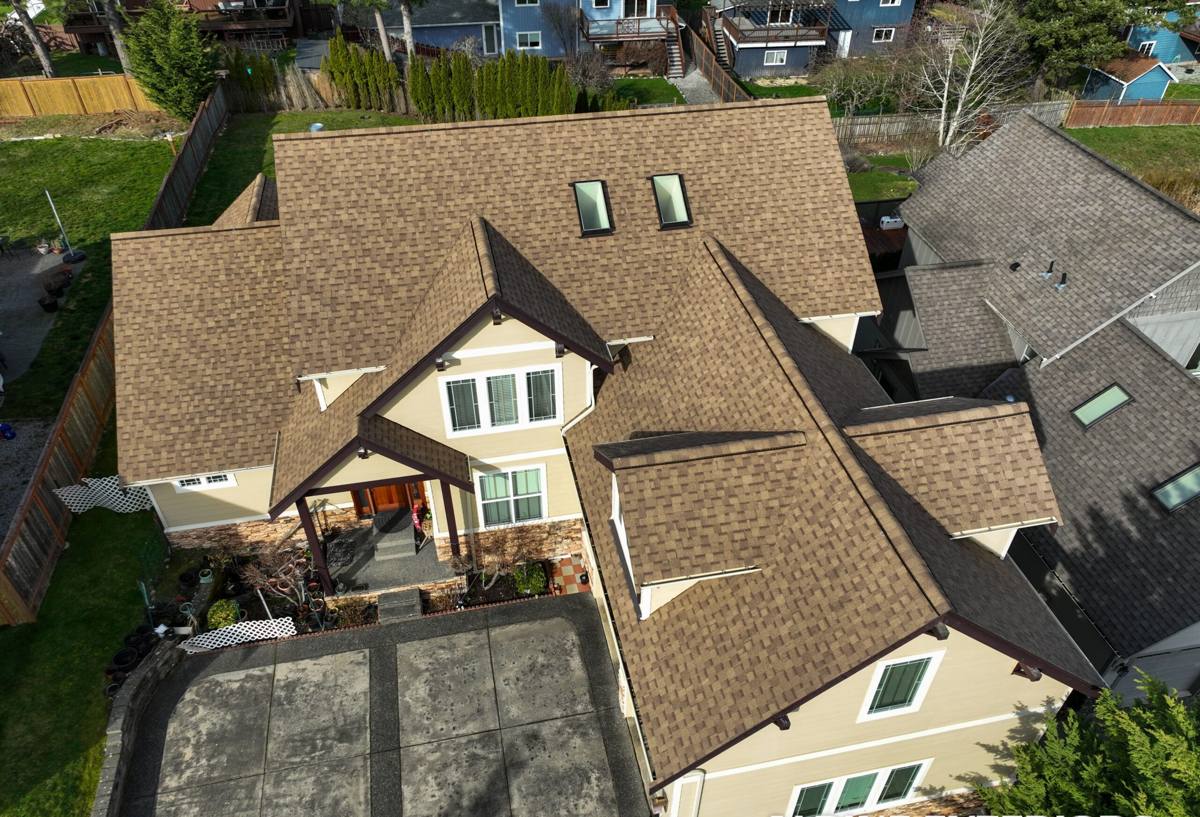
What Salt Air and Coastal Wind Actually Do to a Window
Salt air is corrosive to metal hardware — hinges, cranks, balance systems, and screws — well before it does visible damage to glass or frames. On a lot of older Birch Bay homes we look at, the window glass and frame still look fine, but the hardware has seized up, pitted, or started leaching rust stains down the sill. That's usually the first sign a window's service life is winding down, even if it "still closes."
Wind-Driven Rain Is the Bigger Long-Term Problem
Wind off the water pushes rain into gaps that would just bead up and run off in a calmer setting. Over years, that pressure finds its way past worn weatherstripping and marginal flashing details, and the damage shows up where you can't see it — in the sheathing and framing around the window opening, not in the window itself. By the time it's visible as soft trim or a stained interior wall, the water's usually been getting in for a while.
Condensation and Sealed-Unit Failure
Older double-pane units in this climate are prone to seal failure — you'll see fogging or a milky haze between the panes that no amount of cleaning fixes. That's a broken seal letting moist air in, and it's a sign the insulated glass unit is done, even if the frame around it is otherwise sound.
The Long Moss Season Changes the Install Calendar, Not Just the Roof
Moss doesn't stay on the roof. On north- and west-facing walls that stay damp for months at a stretch, it works its way into window sills, trim joints, and anywhere caulking has started to crack. That moisture-holding growth keeps wood trim wet longer than it should be, which accelerates rot right at the point where a window frame meets the wall. When we're replacing windows on an older Birch Bay home, we're often also finding and repairing soft trim or sheathing around the opening that moss cover has been sitting on top of, unnoticed, for a season or two.
This is also why timing and sequencing matter for the install itself. Setting a new window into an opening that's still damp underneath just seals moisture in behind fresh material. Part of doing this job right is making sure the opening is actually dry before anything goes back together.
What a Correct Window Replacement Job Involves
Swapping glass into an existing frame, or dropping a new unit in without addressing what's around it, is the shortcut that causes most of the problems we get called out to fix later. A proper replacement in a coastal, high-moisture setting like this involves a few things that are easy to skip and hard to notice once the trim is back on:
- Removing the old unit fully enough to inspect the framing, sill, and sheathing underneath — not just the visible trim
- Repairing or replacing any soft or rotted wood found in the opening before the new window goes in
- Installing flashing that actually sheds water down and out, layered correctly with the house wrap or building paper — not just caulked over
- Using sealants and backer rod rated for exterior exposure, not general-purpose caulk that hardens and cracks within a couple of seasons
- Choosing hardware and frame materials that resist corrosion from salt air, especially on water-facing elevations
- Insulating the gap between the new frame and the rough opening properly — gaps that are too tight or overfilled with expanding foam both cause problems
- Confirming the unit is level, plumb, and square before final fastening, so weatherstripping seals evenly for the life of the window
Skip any one of these steps and the window itself can be a good product and still fail early — because the problem was never the glass, it was what it was set into.
Matching the Window to the Exposure
Not every window on a Birch Bay house needs the same spec. A window on a sheltered, east-facing wall is a different decision than one facing the water and prevailing weather. We walk the house and factor in which walls take direct wind-driven rain, which stay shaded and damp longest, and which get the harshest sun exposure, before recommending materials.
| Frame Material | How It Handles Salt Air & Moisture | Maintenance | Typical Fit for Birch Bay |
|---|---|---|---|
| Vinyl | Won't rust or corrode; performs well against salt air | Low — occasional cleaning | Good all-around choice for most elevations, budget-conscious |
| Fiberglass | Very stable in moisture and temperature swings; strong against coastal wear | Low | Best fit for water-facing walls that take the worst wind and rain |
| Wood / Wood-clad | Handsome, but exterior wood or thin cladding is more vulnerable to the moss-and-moisture cycle here | Higher — regular inspection and upkeep | Workable on sheltered elevations if the homeowner is committed to upkeep |
| Aluminum | Can corrode with prolonged salt exposure unless properly finished; conducts cold | Moderate | We use it selectively, not as a default for water-facing sides |
We're not going to tell you a certain material is universally the "right" answer — the honest answer depends on which wall of the house we're talking about, your budget, and how much upkeep you actually want to do. What we won't do is put a high-maintenance material on a wall that takes the brunt of the wind and salt just because it looks a certain way, without being upfront that it'll need more attention than the rest of the house.
Our Process for a Birch Bay Window Replacement
The steps are the same on every job; what changes is how much attention we put into the parts that matter most for this location.
- Walkthrough and assessment. We look at every window being replaced, plus the wall and trim condition around it, and flag anything that's already showing moisture or rot before we quote the job.
- Honest measurement and product recommendation. We measure openings precisely and talk through material options by elevation, not a one-size answer for the whole house.
- Written estimate, no pressure. You get a clear number and a clear scope before anything is scheduled.
- Removal and opening inspection. Old units come out fully enough to see what's actually underneath — this is where hidden moss-season damage usually turns up.
- Repair before replace. Any soft framing or sheathing gets fixed first. We won't install a new window into a wet or rotted opening.
- Install with proper flashing and sealing. Water management details go in correctly, not just cosmetically.
- Final check and cleanup. Every unit gets tested for smooth operation and a tight seal before we call the job done.
What Drives the Cost of Window Replacement Here
Pricing varies house to house, but the same handful of factors move the number up or down on most Birch Bay projects:
| Factor | Why It Matters |
|---|---|
| Number and size of windows | Straightforward — more openings and larger units mean more material and labor |
| Hidden rot or moisture damage | Repair to the opening itself adds time and material beyond the window purchase |
| Frame material chosen | Vinyl, fiberglass, and wood-clad carry different price points and different long-term maintenance costs |
| Water-facing vs. sheltered elevation | Openings that take direct wind-driven rain may call for higher-spec flashing and sealing detail |
| Access and site conditions | Second-story units, tight lot access, or waterfront setbacks can affect labor time |
| Glass package | Double-pane, upgraded low-E coatings, or triple-pane options change unit cost and performance |
We'd rather walk your house and give you real numbers than throw out a broad range that doesn't mean much once we're standing in front of your actual windows.
Signs a Birch Bay Home May Need Window Replacement Soon
- Fogging or a milky haze between the panes that cleaning doesn't fix
- Hardware — cranks, hinges, locks — that's stiff, rusted, or won't hold the window shut tight
- Visible gaps, drafts, or a noticeable temperature difference near the window on a windy day
- Soft, discolored, or moss-covered trim and sill material around the frame
- Condensation forming on the inside of the glass regularly, especially in cooler months
- Difficulty opening or closing the window smoothly, or a frame that looks slightly out of square
- Paint or finish that's bubbling, peeling, or staining near the window edges
Any one of these on its own isn't necessarily an emergency, but a few of them together on the same window usually means it's past due.
Why a Crew That Already Works Birch Bay Matters
Window replacement here isn't a different trade than anywhere else — it's the same skill set applied with more attention to the details that Whatcom County's coastal climate punishes fastest. A crew that regularly works this stretch of the county already knows which elevations take the worst of the wind, how long the moss season actually runs, and what corrosion looks like on hardware before it becomes a bigger problem. That's the difference between a window that's installed correctly the first time and one that needs revisiting in a few years because a flashing detail or material choice didn't account for where the house actually sits.
We're a Blaine-based crew, and Birch Bay is part of our regular service area, not a special trip. That means straightforward scheduling, familiarity with the kind of construction common to homes in this area, and a crew that's seen enough of these jobs locally to know what to look for before problems get expensive.
If your Birch Bay windows are showing any of the signs above, or you just want an honest read on what shape they're in, we're glad to walk the house and give you a straight answer. Use the form below to request a free, no-pressure estimate.