 Blaine Siding
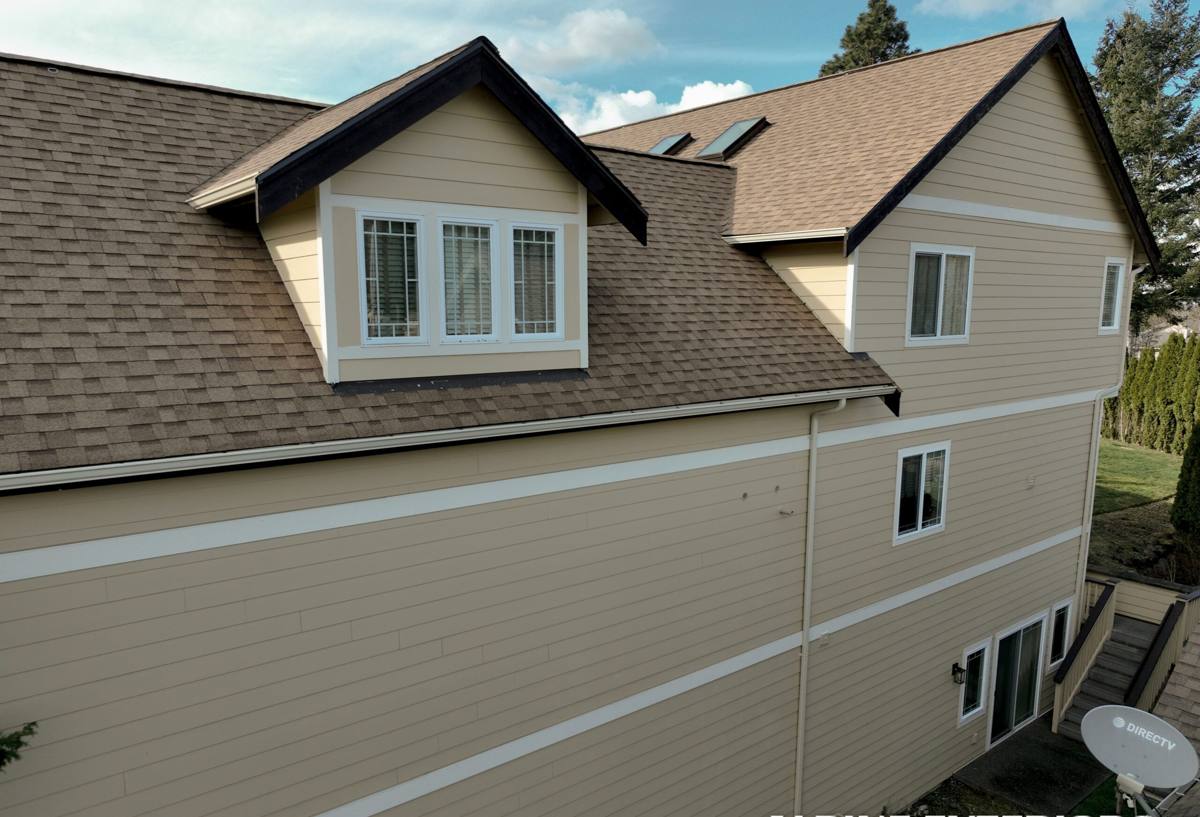
 Siding Replacement for a Birch Bay Waterfront Home
Birch Bay sits directly on the water in northern Whatcom County, and that location is the reason so many homes here need a full siding replacement years before a comparable house a few miles inland would. Salt-laden air off the bay, driving rain that gets pushed sideways into wall assemblies by wind, and a moss season that can run most of the year on shaded walls all combine to wear siding down faster than a simple age comparison suggests. A fifteen-year-old wall on the water can be in worse shape than a thirty-year-old wall a few blocks back from the shoreline.
This page is specifically about full siding replacement in Birch Bay: how to tell when a wall is past the point of patching, what a correct tear-off and re-side actually involves, and what we do differently on a waterfront job than we would on a sheltered, inland one. We install James Hardie fiber cement exclusively, and on a site with this much moisture and salt exposure, the case for that standard is stronger than almost anywhere else we work.
How Birch Bay's Climate Wears Down Siding
Salt Air
Homes close to the water take on a steady dose of salt in the air, and salt is hard on more than just paint color. It accelerates corrosion in fasteners, house wrap staples, and any exposed metal trim, and it breaks down lower-grade finishes faster than a drier climate would. By the time siding starts chalking, cracking, or losing its finish on a waterfront lot, the fasteners and flashing behind it have often been dealing with that same exposure for just as long.
Wind-Driven Rain
Being on open water means more wind, and wind-driven rain doesn't behave like a calm, straight-down rainfall. It gets forced sideways into laps, joints, and any gap in the siding or flashing. Products and installation details that would hold up fine in a sheltered spot can fail here specifically because water is finding its way in horizontally, not just running off the surface.
Moss and Sustained Moisture
Mild temperatures and near-constant moisture add up to a long moss and mildew season across this part of Whatcom County, and north-facing or tree-shaded walls usually show it first. Any siding material that's even slightly porous, or that traps moisture against the wall, becomes a growth surface over time. On a lot of Birch Bay homes, the shaded side of the house needs a full replacement well before the sun-facing walls do.
Signs Your Siding Needs Full Replacement, Not a Patch
Not every siding problem calls for tearing the whole wall off. But on a waterfront property, the line between "repair it" and "replace it" gets crossed sooner, because damage found on the surface usually means moisture has already been working on the sheathing and framing behind it for a while.
- Soft, spongy, or crumbling siding when pressed, especially near the bottom courses or window sills
- Visible warping, cupping, or buckling across more than a section or two of wall
- Persistent moss or mildew that returns within a season of cleaning
- Peeling or bubbling paint alongside soft wood underneath, a sign moisture is already past the surface
- Rot or staining discovered when even a small section of siding is pulled back
- Rising energy bills or noticeably drafty rooms that point to a failing wall assembly, not just old siding
A single rotten board or a small area of storm damage can sometimes be repaired in place. But once damage shows up in more than one spot, or once we find soft sheathing when we open up a test section, patching just delays a full replacement while masking how much moisture is already in the wall.
What a Correct Siding Replacement Involves
Tear-Off and Inspection
A real replacement starts with removing the old siding down to the sheathing, not installing new panels over old ones. That step matters everywhere, but it matters more in Birch Bay because it's the only point in the project where we can actually see what years of salt air and wind-driven rain have done to the wall behind the old siding. We inspect the sheathing, framing, and any existing house wrap or building paper for rot, delamination, or hidden moisture damage before anything new goes up.
Repairing What's Underneath
On waterfront homes, it's common to find some degree of sheathing damage once the old siding comes off, even on walls that looked fine from the outside. Any soft or damaged sheathing gets replaced, not covered over, and any framing issues get addressed before the new weather-resistive barrier goes on. Covering damaged sheathing with new siding just resets the clock on the same problem.
Weather-Resistive Barrier and Drainage Plane
A correctly built wall needs a continuous weather-resistive barrier and a drainage plane that lets any moisture that does get past the siding find its way back out, rather than sitting against the sheathing. On a site with this much wind-driven rain, we pay particular attention to how that barrier laps at windows, doors, and any other penetration, since those transition points are where most water intrusion actually starts.
Installing to Manufacturer Spec
Fiber cement only performs the way it's designed to when it's installed to James Hardie's published specifications: correct fastener type and spacing, proper clearance from grade, decks, and roof lines, and joints that are factory-mitered or properly sealed. A quality product installed loosely will still develop moisture problems in a climate like this one. The installation details matter as much as the material itself.
Why We Install Only James Hardie Fiber Cement
We used to offer a wider range of siding products. We don't anymore, and that change came from what we kept finding on tear-offs and service calls in exactly this kind of coastal, wet climate.
- Non-combustible core: Fiber cement doesn't feed a fire the way wood-based siding products can.
- Factory-applied ColorPlus finish: The color is baked on under controlled conditions rather than field-applied, which holds up longer against fading, chalking, and salt-air breakdown than site-applied paint.
- Climate-engineered HZ5 formulation: Hardie's HZ5 product line is built for regions with heavy moisture exposure and freeze-thaw cycling, which describes waterfront Whatcom County well.
- Dimensional stability: Fiber cement doesn't swell, warp, or cup the way engineered wood products can when they repeatedly take on and release moisture over a wet season.
- Strong transferable warranty: Hardie backs the product with a robust warranty structure, provided installation follows their spec.
We won't install LP SmartSide, vinyl siding, Cemplank, Allura, primed spruce, or cedar. Each has a legitimate place in the market, and homeowners elsewhere are satisfied with them. But on a shoreline exposure like Birch Bay, we've made a professional call that we'd rather stand fully behind one system than offer a cheaper option that shifts long-term maintenance risk back onto the homeowner.
What Drives the Cost of a Full Re-Side
| Factor | Why It Matters in Birch Bay |
|---|---|
| Extent of sheathing repair | Waterfront walls more often need sheathing replaced once opened up, which adds material and labor beyond the siding itself |
| Wall complexity | Corners, trim details, and window and door count all add labor time regardless of material |
| Siding profile chosen | Lap width, shingle-style panels, and board-and-batten each carry different material and labor costs |
| House size and stories | More wall area and second-story access both increase labor and equipment needs |
| Existing moisture damage | Homes closer to the water more often carry hidden damage that isn't visible until tear-off begins |
| Trim and flashing scope | Full replacement of trim and flashing, rather than reusing old pieces, adds cost but reduces future risk on a high-exposure site |
We give a firm, written scope after walking the property and, where needed, opening a small test section to check the sheathing before finalizing a number. That avoids surprises once the tear-off actually begins.
Why Local Experience on This Stretch of Coastline Matters
A crew that regularly works Birch Bay already knows how salt air, open-water wind, and prolonged moisture behave differently here than they do even a short distance inland. That shows up in specific decisions on the job: which fastener grade to use, how much extra drainage detailing a north-facing wall needs, and where to expect hidden sheathing damage before the tear-off even starts. Those are the details that decide whether a re-side lasts one wet decade or three.
A Simple Checklist Before Hiring for a Siding Replacement
- Ask whether the quote includes a full tear-off to sheathing, not an install over existing siding
- Ask what happens if damaged sheathing is found once the old siding comes off, and how that's priced
- Confirm what siding material they install and why, and whether it carries a written manufacturer warranty
- Ask how they detail the weather-resistive barrier and flashing at windows and doors for wind-driven rain
- Confirm current Washington contractor licensing and active liability insurance
- Get a clear, written scope of work before signing anything
Our Process for a Birch Bay Re-Side
We start with an on-site walk-through of the existing siding, looking specifically for how it's held up against salt exposure, wind-driven rain, and moss on this particular lot. Where the siding condition warrants it, we'll open a small test section to check the sheathing before putting together a final scope. From there we provide a clear, written proposal covering material, tear-off, any sheathing repair, and installation details, with a realistic timeline before any work begins.
Once work starts, tear-off, sheathing repair, the weather-resistive barrier, and fastener selection are all handled to spec as standard practice, not as optional upgrades, because those are exactly the details a waterfront climate tests hardest.
If your siding is showing its age, or you just want an honest read on whether repair or full replacement is the right call for your Birch Bay home, we're glad to take a look. Reach out below for a free, no-pressure estimate.