 Blaine Siding
 What Bellingham's Climate Actually Does to Siding
Bellingham sits close enough to the Strait of Georgia and Bellingham Bay that salt-laden air is a routine part of the weather, not an occasional event. Add Whatcom County's long wet season — months of driving rain off the water, low winter sun angles that leave north- and west-facing walls damp for days at a time, and a moss season that can run from October through May — and you get a set of conditions that punishes the wrong siding choice faster than almost anywhere else in the state. Homes here don't fail because owners neglected them. They fail because the siding product wasn't built for this specific combination of salt, moisture, and shade.
Wood-based products swell and shrink with every wet-dry cycle. Vinyl gets brittle in cold snaps and can warp where afternoon sun hits it directly. Both give moss, algae, and mildew a foothold in the seams and laps where water collects and doesn't dry out quickly. On a Bellingham home, that's not a hypothetical — it's what happens on siding that was rated for a drier or more moderate climate.
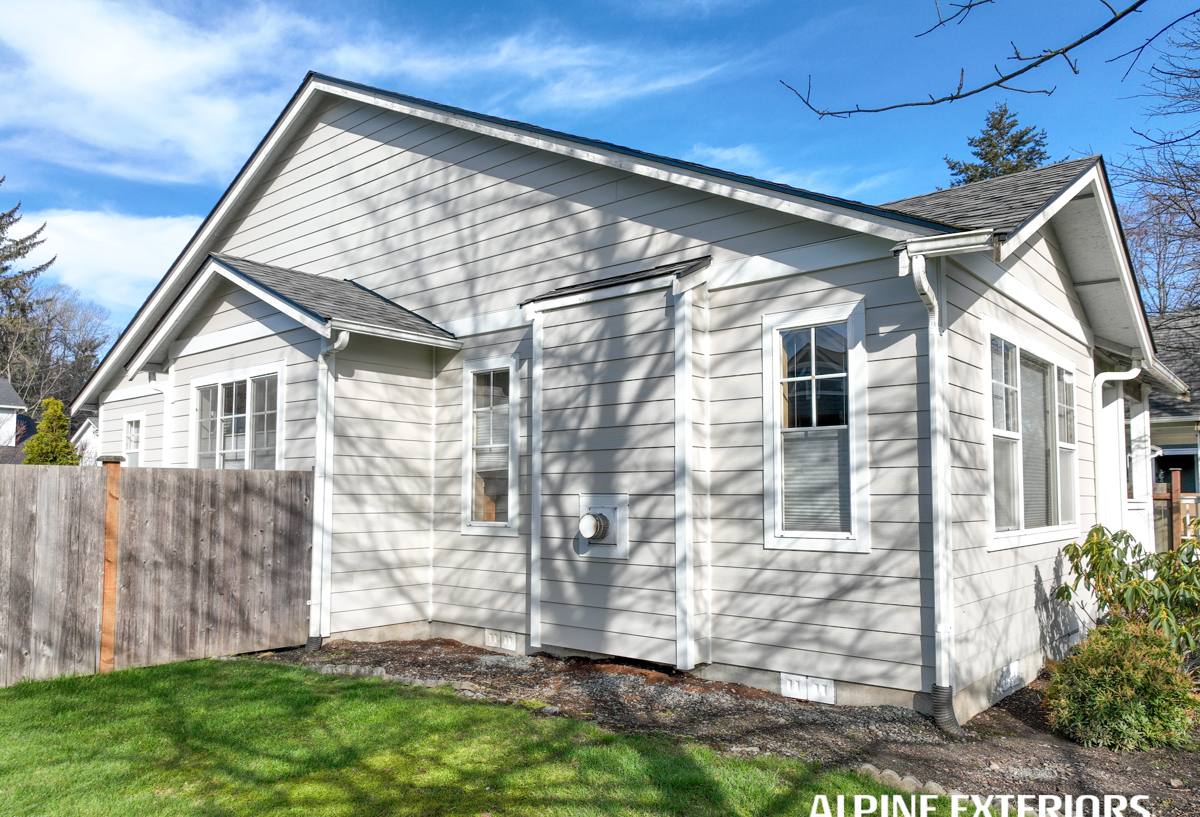
Why This Page Focuses on Siding Installation, Not Just the Product
Homeowners researching siding tend to focus entirely on the material — which is understandable, since the brand name is what gets marketed. But in a climate like Bellingham's, installation quality determines whether that material performs anywhere close to its rated lifespan. We've seen good siding fail early because of gaps at flashing, wrong fastener placement, or clearances that ignored local rain exposure. We've also seen siding hold up for decades because it was installed correctly the first time. This page is about what "correctly" means for a Bellingham home specifically — the flashing details, clearances, and sequencing that matter here more than they would in a drier region.
What a Bellingham Home Needs From Its Siding
Moisture Management First
Every successful siding installation in this climate starts with the water-resistive barrier and flashing system underneath the siding, not the siding itself. If that layer is done wrong, no amount of premium material on top will keep the wall assembly dry. Correct installation means:
- A continuous weather-resistive barrier lapped correctly, shingle-style, so water sheds down and out rather than behind the siding
- Properly integrated flashing at every window, door, and roof-to-wall transition — the points where most water intrusion actually starts
- Kick-out flashing at roof-wall intersections to direct runoff away from the wall plane instead of behind it
- Correct clearance between the bottom of the siding and grade, decks, patios, and roof lines, so splash-back and standing water don't sit against the material
Salt Air Resistance
Proximity to salt water means fasteners, trim, and flashing all need to be corrosion-resistant, not just the field material. A siding job can use a premium product and still degrade early if the wrong fastener or flashing metal was used underneath it. This is a detail that's easy to skip and hard to notice until years later when rust stains start bleeding through.
Moss and Algae Resistance
Bellingham's shaded, north-facing walls and tree-lined lots are where moss and algae take hold first. A factory-applied, baked-on finish resists organic growth far better than field-applied paint, because there's no porous surface for spores to grip. Proper installation also means keeping siding clear of vegetation and maintaining the gaps that let walls dry between rain events — details that matter as much as the product itself.
Why We Install Only James Hardie Fiber Cement
We standardized on James Hardie siding for every home we work on, including here in Bellingham, and we don't install vinyl, LP SmartSide, Cemplank, Allura, or primed wood siding. That's not a marketing position — it's a decision based on what actually holds up in this climate over decades, not just years.
Non-Combustible Material
James Hardie fiber cement is non-combustible, which matters increasingly in Washington as wildfire risk expands the areas insurers and building codes pay attention to. It's not the primary reason homeowners choose it in Whatcom County, but it's a real, permanent advantage that wood- and polymer-based sidings simply can't match.
Climate-Engineered Product Lines
Hardie's HZ10 product line is engineered specifically for the wetter, more humid conditions found in the Pacific Northwest, as distinct from their HZ5 line built for freeze-thaw climates. That distinction matters — it means the product formulation itself accounts for the kind of sustained moisture exposure Bellingham sees for months at a time, rather than being a generic siding sold everywhere.
ColorPlus Factory Finish
Rather than a field-applied paint job, Hardie's ColorPlus finish is baked on at the factory in multiple coats, which gives it better fade resistance, better adhesion, and a denser surface that resists the organic growth that plagues shaded, damp walls. It also comes backed by its own finish warranty separate from the product warranty.
Long-Term Warranty Backing
Hardie's product warranty is transferable and substantial, which matters both for owners planning to stay long-term and for resale value — a documented, transferable warranty is a real selling point when a home eventually goes on the market.
Our Installation Process for Bellingham Homes
The process doesn't change dramatically from house to house, but the details we pay closest attention to are shaped by what this specific climate does to a wall assembly.
- Assessment and existing siding removal. We evaluate what's underneath — sheathing condition, existing moisture damage, and whether prior water intrusion has already compromised framing. In an older Bellingham home, this step often reveals issues that need addressing before new siding goes on.
- Water-resistive barrier installation. A continuous, correctly lapped barrier goes down first, sized and detailed for the specific wall.
- Flashing integration. Every penetration — windows, doors, hose bibs, vents, roof lines — gets flashed and integrated with the barrier before siding starts.
- Furring or rainscreen consideration. On walls with heavy rain exposure or limited sun for drying, we evaluate whether a rainscreen gap adds meaningful drainage and drying capacity behind the siding.
- Siding installation to Hardie spec. Correct fastener type, spacing, and placement; correct panel and board clearances from grade, roofs, and decks; correct joint treatment at seams and corners.
- Trim, caulking, and final detailing. Corner boards, trim, and caulking at transitions are finished to shed water rather than trap it.
- Final walkthrough. We review the completed job against the original assessment so nothing gets missed.
Why Hiring a Crew That Already Works in Bellingham Matters
Siding installation isn't uniform across Washington. A crew that mostly works drier inland areas may not instinctively account for the clearances, flashing detail, and drainage planning that a coastal Whatcom County home needs. A crew based in this region and working homes here regularly has already seen what goes wrong on Bellingham houses specifically — where moss builds up first, which wall orientations stay damp longest, and how salt air affects fasteners and trim over time. That local pattern recognition is hard to replace with a generic installation checklist.
Cost Factors for a Bellingham Siding Installation
Every home is different, but the same set of variables tends to drive cost up or down. We give firm numbers only after seeing the home in person, but here's what typically factors in:
| Factor | Why It Affects Cost |
|---|---|
| Existing siding removal and disposal | Tear-off labor and disposal fees vary by material and how many layers are present |
| Sheathing or framing repair | Water damage found underneath old siding adds repair scope before new siding can go on |
| Home size and wall complexity | More corners, dormers, and roof-wall intersections mean more flashing and cutting time |
| Siding profile chosen | Lap width, shingle-style panels, and board-and-batten all price differently in labor and material |
| Trim and detail work | Corner boards, window trim, and fascia detailing add labor beyond the flat wall area |
| Access and site conditions | Multi-story walls, tight lot lines, or landscaping obstacles affect scaffolding and staging time |
Signs a Bellingham Home Needs New Siding Soon
- Persistent moss or algae staining that comes back within weeks of cleaning
- Soft spots, bubbling, or visible warping, especially on north- or west-facing walls
- Paint that's failing faster than a normal repaint cycle would suggest
- Visible gaps, cracking, or separation at seams and corners
- Rust streaking from fasteners bleeding through the surface
- Rising energy bills that suggest the wall assembly is no longer performing as insulation
What to Expect From an Estimate
A proper estimate isn't a drive-by. It should include a close look at the current siding's condition, an assessment of what's likely underneath it, and a clear explanation of what the installation would involve on that specific house — not a generic per-square-foot number pulled from a price sheet. If a contractor won't walk you through flashing, drainage, and clearance details for your home, that's worth noting before you sign anything.
If your Bellingham home's siding is showing its age, or you're planning ahead before the next wet season sets in, we're glad to take a look and give you a straightforward, no-pressure estimate — free, with no obligation to move forward.