 Blaine Siding
 Why Bellingham Decks Wear Out Faster Than the Brochure Says
A deck in Bellingham doesn't fail the way a deck in a dry inland climate fails. It doesn't crack from heat or dry out and split from sun exposure the way a deck in Arizona might. Here, the enemy is moisture that never fully goes away combined with salt-laden air blowing off the Strait of Georgia and Bellingham Bay. That combination attacks fasteners, softens end grain, and feeds the moss and algae that turn a deck surface slick and dark within a couple of seasons if it's not built and finished correctly the first time.
We build and replace decks throughout the Blaine and Bellingham area, and the pattern is consistent: decks that were built to a generic national spec — standard hardware, minimal drainage planning, decking laid tight with no thought to airflow underneath — start showing problems in year three or four. Decks built with this climate in mind still look and perform well a decade or more later. The difference isn't exotic materials. It's a handful of decisions made correctly during framing and finishing that most out-of-area crews don't think twice about.
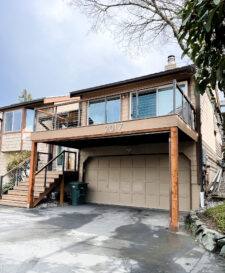
What Local Conditions Actually Do to a Deck
Salt Air and Corrosion
Properties closer to the water pick up airborne salt that settles on every exposed surface, including deck hardware. Standard galvanized fasteners and connectors can start corroding within a few years in this environment, especially where two dissimilar metals meet or where a fastener head sits in standing water. Corroded fasteners aren't just an eyesore — they lose holding strength, and a ledger board connection or joist hanger that's rusting through is a structural problem, not a cosmetic one.
Driving Rain and Trapped Moisture
Whatcom County rain often comes sideways, driven by wind off the water, which means it gets up under railings, behind ledger boards, and into any gap that isn't properly flashed or sealed. Wood that stays wet for extended periods — because it can't drain or dry between storms — is what actually rots, far more than wood that gets rained on but dries out quickly. Deck design in this area is really a drainage and airflow problem as much as it's a carpentry problem.
A Long Moss Season
Between the shade many Bellingham lots have from mature trees and the extended stretch of cool, damp months, moss and algae have a long window to establish themselves on horizontal wood surfaces. Once moss takes hold in the grain of decking boards, it holds moisture against the wood and turns the surface hazardous underfoot. Prevention through spacing, slope, and material choice matters far more than trying to scrub it off after the fact.
The Fundamentals of a Deck Built to Last Here
Footings and Framing
Footings need to be sized and set to local frost depth and soil conditions, not a generic minimum. We use pressure-treated framing lumber rated for ground contact where posts meet concrete, and we keep post bases elevated off the footing with a proper base connector rather than burying wood directly in concrete, which traps moisture against the post.
Ledger Board Flashing
Where a deck attaches to the house, the ledger board connection is the single most common source of rot on decks we're asked to repair or replace. Correct flashing — metal flashing integrated with the house's water-resistive barrier, not just caulked over — keeps water from running behind the ledger and into the rim joist. This is a step that's invisible once the deck is finished, which is exactly why it gets skipped on rushed jobs.
Fasteners and Hardware
Given the salt air here, we use corrosion-resistant, coated fasteners and structural connectors rated for the treated lumber and environment they're going into, not whatever standard-grade hardware is cheapest. It costs more up front and makes no visible difference on install day. It's the difference between hardware that's still solid in fifteen years and hardware that's rusting through in five.
Board Spacing and Airflow
Decking boards need consistent gapping to let water drain through rather than pool on the surface, and the framing underneath needs enough clearance and ventilation to let the underside of the deck dry out between rain events. A deck built low to the ground with poor airflow underneath will stay damp far longer after a storm than one with proper clearance, and that extra dry time is what keeps moss and rot from getting a foothold.
Decking Material Comparison for This Climate
| Material | How It Handles Rain & Moss | Maintenance | Typical Lifespan Here |
|---|---|---|---|
| Pressure-treated wood | Resists rot with proper sealing; still needs regular upkeep to shed moss | Annual cleaning and re-sealing recommended | 10–15 years with upkeep |
| Cedar | Naturally rot-resistant, attractive grain, but softer surface holds moss if not maintained | Periodic cleaning and finish renewal | 15–20 years with upkeep |
| Composite decking | Doesn't absorb water like wood; resists rot; can still grow surface algae/moss if shaded and not cleaned | Occasional washing, no sealing or staining | 20-25+ years, varies by product warranty |
| PVC/capped polymer | Fully moisture-resistant surface, best moss resistance of the group | Lowest maintenance; periodic washing only | 25+ years, varies by product warranty |
There's no single "correct" material for every Bellingham property — it depends on budget, how much shade the deck gets, and how much upkeep the owner actually wants to do. A well-built wood deck with a smart maintenance routine can outperform a poorly installed composite deck. What matters more than the material label is whether the framing underneath and the fastening details are done right, because those are what determine whether the deck stays sound regardless of what's on top.
Dealing With Moss Before It Becomes a Problem
Moss doesn't show up because a deck is "old" — it shows up because moisture is sitting somewhere it shouldn't be for long enough to let it establish. The fixes that actually work are built into the design, not applied after the fact:
- Slight slope away from the house so water sheds off the deck surface instead of pooling
- Consistent board gapping so water drains through rather than sitting on top
- Adequate clearance and airflow underneath so the structure dries out between rain events
- Material choice matched to how much shade the deck actually gets
- A finish or sealant schedule the homeowner will realistically keep up with
Pressure washing an already-mossy deck once a year helps, but it's treating a symptom. A deck designed with drainage and airflow in mind needs that treatment far less often, which is the real goal.
How We Build a Deck in Bellingham
1. On-Site Assessment and Design
We look at sun exposure, drainage on the lot, how the deck ties into the house, and what the space will actually be used for, then design footings, framing, and material choices around that — not a one-size-fits-all layout.
2. Permitting
Most deck projects require a permit through the applicable local jurisdiction, and we handle that process as part of the job so the structure is inspected and built to code, not just to look right.
3. Framing and Footings
This is where the long-term durability of the deck is actually decided. Correct footing depth, elevated post bases, and corrosion-resistant hardware go in before anything visible gets installed.
4. Ledger Flashing and Waterproofing
Where the deck meets the house, we integrate flashing with the existing water-resistive barrier so water is directed out and away from the structure, not sealed in.
5. Decking and Railing Installation
Boards are spaced and fastened for proper drainage, and railing systems are installed with the same attention to corrosion-resistant hardware, since railings take the most direct exposure to wind-driven rain.
6. Finish and Walkthrough
For wood decks, we apply or discuss the appropriate sealant/stain schedule. For composite and PVC systems, we walk through cleaning recommendations. Either way, the homeowner leaves knowing exactly what upkeep the deck actually needs.
What Affects the Cost of a Custom Deck
| Factor | Why It Matters |
|---|---|
| Size and shape | Larger decks and multi-level or angled designs require more framing, footings, and labor |
| Decking material | Wood, composite, and PVC carry different material costs and different long-term maintenance costs |
| Height and site access | Elevated decks or decks on sloped lots need more substantial framing and footing work |
| Railing style | Standard rail systems cost less than glass panel or custom metal railing options |
| Site conditions | Soil type, existing structure removal, and drainage work all factor into footing and prep costs |
Because of these variables, deck costs range widely from project to project. We give straightforward, itemized estimates after seeing the site rather than quoting a number sight unseen.
Keeping a Bellingham Deck Sound Year After Year
- Clean debris out of gaps between boards each fall before wet weather sets in
- Rinse or wash the surface periodically to keep moss and algae from establishing
- Check railing connections and fasteners annually for early signs of corrosion
- Re-seal or re-stain wood decking on the schedule appropriate to the product used
- Keep gutters and downspouts near the deck clear so runoff isn't draining directly onto it
- Trim back overhanging vegetation that keeps the deck surface shaded and damp longer than necessary
Why It Matters to Hire a Crew That Already Works This Area
A contractor who mainly works drier inland climates isn't necessarily going to think about ledger flashing, fastener corrosion, or moss-driven drainage design as a first priority, because in their usual conditions those details matter less. In Whatcom County, they're not optional extras — they're what separates a deck that holds up from one that needs major repair inside a decade. Working regularly in Blaine and Bellingham means we're not guessing at how salt air, driving rain, and a long moss season affect a deck over time — we see the results on jobs we're called back to inspect or repair, and we build accordingly from the start.
If you're planning a new deck or looking to replace one that's showing its age, we're glad to come take a look at your property and put together a straightforward, no-pressure estimate using the form below.