 Blaine Siding
 Composite Decking Built for the Bellingham Area's Weather
Homes around Bellingham and the rest of Whatcom County deal with a specific combination of conditions: salt-laden air off the Sound, long stretches of driving rain, and a moss and algae season that can run most of the year in shaded yards. A deck out here isn't just outdoor furniture — it's a structure that sits exposed to moisture almost constantly between fall and spring. Composite decking has become the default choice for a lot of homeowners in this area for good reason, but "composite" isn't one product with one installation method. Getting the material choice, the substructure, and the drainage details right matters as much as the decking board itself.
This page covers what composite decking actually needs to hold up in this climate, what a correct installation looks like from the ground up, and how our process works for homeowners in and around the Bellingham area.
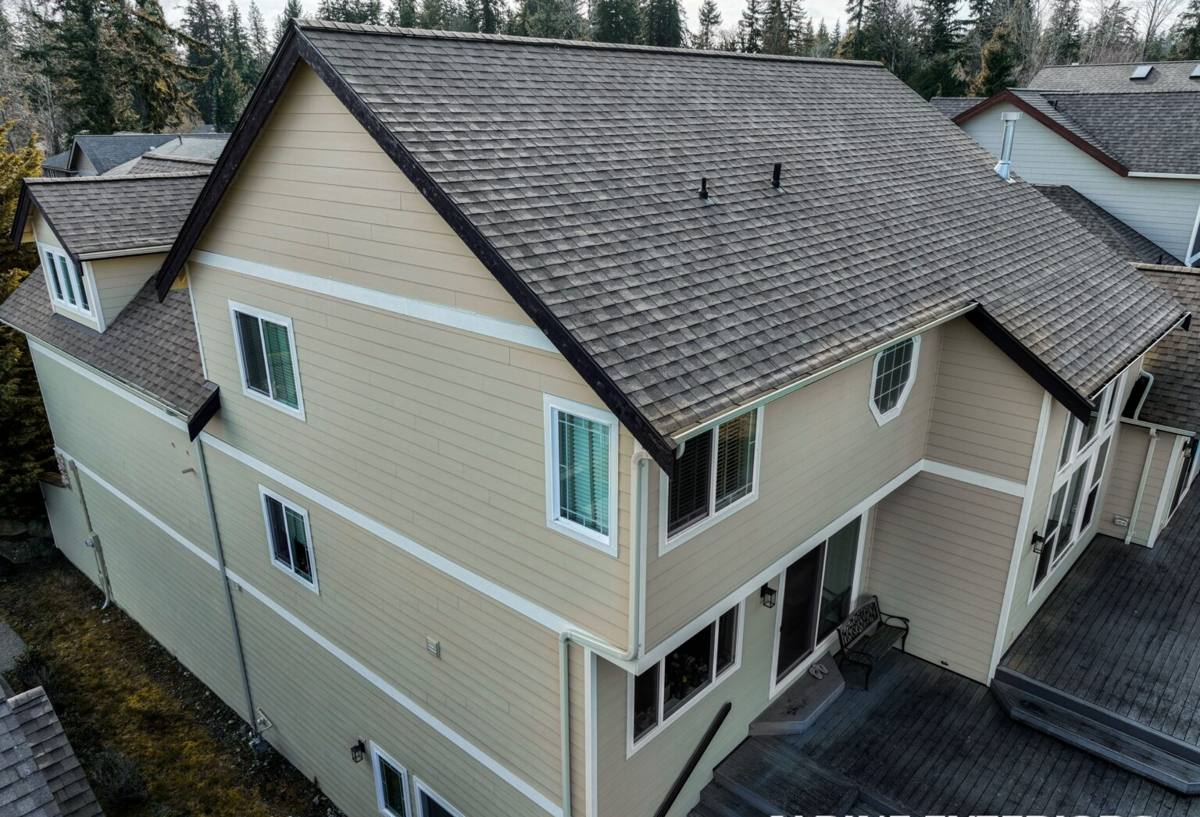
What This Climate Actually Does to a Deck
Salt Air and Metal Fasteners
Proximity to Bellingham Bay and the Sound means airborne salt is a real factor, even a few miles inland. Salt accelerates corrosion on any exposed metal — screw heads, joist hangers, structural post connectors. Standard fasteners can start showing rust streaks and pitting years before a composite board itself shows any wear. The fix isn't complicated, but it has to be deliberate: stainless steel or coated fasteners rated for coastal/treated-lumber contact, and hardware chosen with corrosion resistance in mind from the start rather than swapped in after the fact.
Driving Rain and Water Intrusion
Rain here doesn't just fall straight down — wind-driven rain gets pushed sideways into ledger connections, under board ends, and into any gap that isn't properly flashed. The composite board surface can be completely waterproof and the deck can still develop a rot problem if water is getting into the house band board at the ledger, or pooling on the substructure underneath. Most of the deck failures we see in this region aren't failures of the decking material — they're failures of the flashing and drainage detail behind it.
Moss and Algae Season
Shaded decks, north-facing walls, and tree cover — common throughout Whatcom County — create the damp, low-sun conditions moss and algae need. On wood decking that meant regular pressure washing and re-sealing. On composite, biological growth shows up as surface staining rather than structural damage, but it still needs a maintenance routine, and board spacing and airflow underneath the deck make a real difference in how fast it comes back.
Composite Decking Basics: What You're Actually Choosing Between
"Composite decking" covers a range of products, and the differences matter more in a wet climate than in a dry one.
- Capped composite — a wood-plastic composite core wrapped in a protective polymer shell. This is what we install almost exclusively for decks exposed to this region's rain and moisture. The cap resists moisture absorption, staining, and fading far better than uncapped material.
- Uncapped composite — an older generation of product where the wood-plastic blend is exposed on all sides. It can absorb moisture at a higher rate and is more prone to surface mold in a climate like ours. We generally steer homeowners away from it for that reason, not because it's a bad product everywhere — just a poor match for this rainfall pattern.
- Grooved-edge boards with hidden fasteners — no exposed screw heads on the walking surface, which removes one common point where water and corrosion can start a problem.
- Solid vs. grooved-core profiles — solid-core boards are heavier and more resistant to impact but retain more heat; grooved-core boards are lighter and drain internally, which suits a wetter climate.
What a Correct Installation Involves
The composite board is the visible 10% of the job. The substructure and connection details are the other 90%, and they're where a rushed or under-scoped installation shows problems years down the line.
Ledger and House Connection
Where the deck attaches to the house is the single highest-risk point for water intrusion. A correct ledger installation uses proper flashing that directs water out and away from the band board, not just a bead of caulk behind the ledger board. On older Whatcom County homes, we also check what the ledger is actually fastening into before assuming the existing rim joist is sound.
Framing and Fasteners
Pressure-treated joists and beams are standard under composite decking, but treated lumber is chemically active and will corrode the wrong fastener quickly. We use connectors and screws rated for contact with modern treated lumber, and we don't mix metals in ways that set up galvanic corrosion.
Airflow and Drainage Underneath
A deck built low to the ground, or over a patio, needs a plan for where water goes once it passes between the boards. Composite doesn't wick or trap moisture the way wood does, but the framing underneath still needs airflow to dry out and a grade or drainage system that moves water away from the foundation, not toward it.
Expansion Gaps and Board Spacing
Composite boards expand and contract with temperature more than lumber does. Gaps that are too tight can buckle over a hot stretch; gaps that are too wide collect debris and hold moss spores. Manufacturer spacing specs exist for a reason, and they get followed board by board, not eyeballed.
| Factor | Composite Decking | Pressure-Treated Wood |
|---|---|---|
| Moisture absorption | Very low (capped products) | High — needs annual sealing |
| Moss/algae staining | Occurs on surface; cleans off | Occurs and can promote rot |
| Fastener corrosion risk | Low with correct hardware | Moderate to high over time |
| Upfront material cost | Higher | Lower |
| Ongoing maintenance | Periodic washing | Sanding, sealing, staining |
| Typical lifespan (this climate) | 25–30+ years | 10–15 years before major repair |
Permits, Codes, and Structural Details
Deck projects in Whatcom County typically require a building permit once you're past a small, low, freestanding platform — and any deck attached to the house, with guardrails, or above a certain height almost always needs one. Permitting isn't a formality here; it's what triggers inspection of the exact things that fail first in this climate — the ledger connection, footing depth, and guardrail attachment. We handle the permit process as part of the job rather than leaving homeowners to sort it out separately.
Footing depth and post spacing also need to account for local frost depth and soil conditions, and guardrail and stair stringer connections need to meet current code load requirements — these aren't places to save money by cutting corners, since they're the parts of a deck that get someone hurt if they fail.
Our Process
- On-site assessment — we look at the existing structure (if there is one), the house connection point, drainage, sun/shade exposure, and what board profile and color will hold up best for that specific spot.
- Plan and permit — layout, footing plan, and permit submission where required, before any demo work starts.
- Demo and framing — old decking removed, framing built or reinforced with corrosion-appropriate hardware, ledger flashing installed correctly the first time.
- Composite installation — hidden-fastener board installation with manufacturer-spec spacing and expansion gaps.
- Final walkthrough — we go over the finished deck, the maintenance basics, and answer any questions before we consider the job done.
Keeping a Composite Deck Looking Right in This Climate
Composite decking is lower-maintenance than wood, not maintenance-free — especially with a moss season as long as this region's.
- Sweep debris off the deck regularly, especially fallen leaves and needles that trap moisture against the board surface.
- Rinse or wash the deck a few times a year with a soft-bristle brush and mild soap — a pressure washer on too high a setting can damage the cap layer, so keep it on a wide, low-pressure setting if used at all.
- Check and clear gaps between boards where organic debris and moss spores tend to collect.
- Keep planters and furniture legs from sitting directly on the surface for long stretches without moving them, which can trap moisture underneath.
- Have the substructure and ledger connection glanced at every couple of years — the composite board can look fine while a hidden framing issue develops underneath.
Why a Crew That Already Works This Area Matters
Deck problems in Whatcom County tend to repeat themselves in predictable ways — the same ledger flashing shortcuts, the same undersized footings, the same fastener corrosion issues — because the climate stresses every deck the same way. A crew that works the Bellingham and Blaine area regularly has already seen how a given board profile or framing detail holds up two, five, and ten winters in, not just how it looks on installation day. That experience shows up in the decisions that don't get photographed: which flashing detail to use at the ledger, how much drainage slope to build in, which fastener spec actually holds up against salt air. We're a Blaine-based crew that works this region consistently, and we build decks with this specific climate in mind rather than a generic installation approach.
Get an Honest Look at Your Project
If you're planning a new composite deck or replacing an aging wood one in the Bellingham area, we're happy to come take a look, walk through what your specific site needs, and give you a straightforward estimate — no pressure, no upsell. Use the form below to request a free estimate.