 Blaine Siding
 Grandview's Roofs Work Harder Than Most
Grandview sits close enough to Semiahmoo Bay and the Strait of Georgia that homes here deal with a combination of stresses that inland Whatcom County roofs simply don't see as often. Salt-laden air moves in off the water and settles on every exterior surface, including the shingles overhead. Add in Blaine's long stretch of wet, overcast months and the shade many Grandview lots get from mature evergreens, and you've got a recipe for a roof that ages differently than one in a drier, sunnier part of the state.
None of that means asphalt shingles are the wrong choice for this area — they're still the most practical, cost-effective roofing material for the vast majority of homes here. It means the installation has to account for those conditions from the start. A shingle roof put on the same way you'd do it in Spokane won't hold up the same way in Grandview, and homeowners who've dealt with premature moss growth, curling shingles, or a leak at a valley that should have lasted another decade usually trace it back to shortcuts taken during the original install, not a bad batch of shingles.
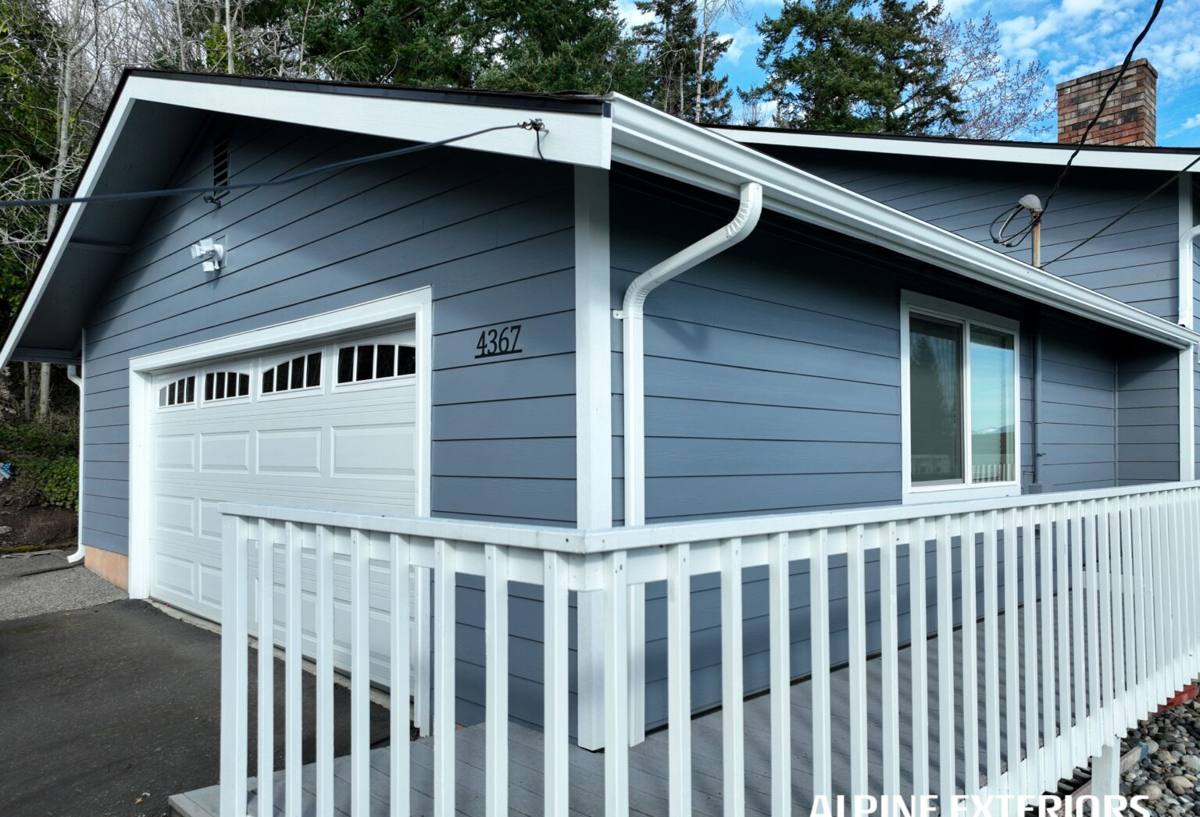
What Salt Air, Rain, and Moss Actually Do to a Roof
Each of these factors attacks a roof in a different way, and understanding the mechanism helps explain why certain details matter more here than elsewhere.
Salt Air
Airborne salt accelerates corrosion on any exposed metal — nail heads, flashing, vent stacks, and gutter hardware. Standard fasteners and thin flashing that would last decades in a dry inland climate can start showing rust and pitting years earlier this close to the water. This is why fastener and flashing material selection matters more in Grandview than in a lot of other parts of the county.
Driving Rain
Blaine doesn't just get a lot of rain — a good share of it comes in sideways off the water during winter storms. Wind-driven rain finds weaknesses that vertical rain never would: under-lapped shingle courses, improperly sealed valleys, and flashing that relies on caulk instead of proper mechanical overlap. A roof built for drizzle isn't automatically built for a January gale off the Strait.
Moss and Algae
Shade, moisture, and moderate year-round temperatures are exactly what moss and algae need to thrive, and a lot of Grandview's tree cover creates that environment on north-facing roof slopes especially. Moss isn't just cosmetic — its root structure works into the granule surface of the shingle, and mats of moss hold water against the roof deck long after the rain has stopped, which shortens the life of the shingles underneath it and can eventually lead to rot in the sheathing.
What a Correct Asphalt Shingle Installation Involves
A shingle roof is a system, not a single layer of material. Every component below has to be right for the roof to perform the way it's rated to.
- Deck inspection and repair — any soft, delaminated, or water-stained sheathing gets replaced before a single shingle goes down. Covering a bad deck with new shingles just hides the problem.
- Ice-and-water shield at eaves, valleys, and around penetrations — this self-adhering membrane is cheap insurance against the wind-driven rain and occasional freeze this area sees.
- Synthetic underlayment across the full deck as a secondary water barrier beneath the shingles.
- Drip edge at all eaves and rakes, properly lapped with the underlayment, not just tacked on as an afterthought.
- Step and counter-flashing at every wall intersection, chimney, and skylight, mechanically integrated rather than sealed with caulk alone.
- Valley treatment — either woven, closed-cut, or open metal valleys, chosen based on roof pitch and how much water that valley will actually carry.
- Correct nailing pattern — the right number of nails, in the right zone of the shingle, driven flush and not overdriven. This is one of the most common shortcuts on rushed jobs and one of the biggest causes of early wind damage.
- Balanced attic ventilation — intake at the soffits and exhaust at the ridge, sized to move air across the whole underside of the deck.
Choosing a Shingle for a Coastal Whatcom County Home
Not every asphalt shingle is built the same, and for a home exposed to salt air and heavy shade, the difference matters more than it would somewhere drier.
| Shingle Type | Typical Lifespan | Best Fit For | Trade-Offs |
|---|---|---|---|
| 3-Tab | 15-20 years | Budget-conscious rentals or outbuildings | Lower wind rating, less algae resistance, flatter look |
| Architectural (Laminate) | 25-30 years | Most Grandview homes | Best balance of cost, wind rating, and appearance |
| Premium/Designer | 30-40+ years | Homes prioritizing longevity or a specific architectural look | Higher upfront cost, longer payback period |
For most homes in this neighborhood, we recommend architectural shingles with algae-resistant (AR) granules — usually copper- or zinc-infused — as standard practice, not an upsell. Given the shade cover and moisture common on Grandview lots, the modest upcharge for AR granules is one of the more worthwhile line items on the estimate, since it directly targets the biggest maintenance headache local roofs face.
Building Moss and Algae Resistance Into the Install
You can't eliminate moss risk on a shaded, coastal roof, but you can install in a way that reduces it significantly.
Algae-resistant granules are the first line of defense — they release trace metal ions over time that make the shingle surface inhospitable to algae growth. We also pay attention to how the roof will actually shed water and stay dry: proper overlap and exposure so water sheets off cleanly, ventilation that keeps the deck temperature and moisture level from creating a damp microclimate under the shingles, and, where a homeowner is open to it, discussing zinc or copper strip installation near the ridge on heavily shaded roofs. These strips release metal ions with every rain and provide ongoing suppression well after the shingles themselves have weathered.
None of this makes moss maintenance optional — see the maintenance section below — but it does change how often that maintenance is actually needed.
Ventilation: The Detail Homeowners Rarely Ask About
Attic ventilation doesn't get much attention because it's invisible once the roof is finished, but it affects almost everything else on this list. A poorly ventilated attic traps warm, moist air against the underside of the roof deck. In winter that can contribute to condensation and even ice damming on colder days; in summer it bakes shingles from underneath, shortening their life regardless of how good the shingle itself is.
Balanced ventilation means intake at the soffit roughly matches exhaust at the ridge, so air actually moves through the attic space instead of just sitting there. On older Grandview homes we sometimes find soffit vents that were painted over or blocked by insulation decades ago — a cheap fix that makes a real difference to how long a new roof will last.
Our Process, Start to Finish
1. On-Site Evaluation
We walk the roof (weather permitting) or inspect from the attic and eaves, check the deck condition, flashing points, and existing ventilation, and take measurements for an accurate material estimate.
2. Written Estimate
You get a clear, itemized proposal — shingle type, underlayment, flashing approach, and any deck repair allowance — with no vague "and more" line items.
3. Material Delivery and Site Protection
Landscaping, siding, and windows get protected before tear-off starts. Given Blaine's changeable weather, we watch the forecast closely and stage the job so the deck isn't left exposed overnight.
4. Tear-Off and Deck Inspection
Old roofing comes off down to the deck, damaged sheathing gets identified and priced for repair before we move forward, not discovered as a surprise change order later.
5. Installation
Underlayment, ice-and-water shield, flashing, and shingles go on in the sequence and pattern described above, with ventilation addressed as part of the same job, not left for later.
6. Cleanup and Walkthrough
Magnetic sweep for stray nails, full debris haul-away, and a final walkthrough so you can see the finished work and ask questions before we consider the job done.
Signs Your Grandview Roof May Need Attention
Because coastal moisture and moss accelerate certain problems, it's worth checking these more often than a homeowner further inland might need to.
- Moss visible on shaded slopes, especially in mats rather than light surface growth
- Granules collecting in gutters or at downspout outlets
- Shingles that look cupped, curled, or are missing tabs after a windstorm
- Dark streaking (algae) concentrated on north-facing sections
- Rusty stains near flashing, vent boots, or nail heads
- Daylight visible through the roof deck from inside the attic
- Soft spots underfoot if you're ever up there for gutter cleaning
- Interior ceiling stains, particularly near valleys or chimneys
One or two of these don't necessarily mean full replacement — sometimes it's a repair. But moss combined with granule loss and a roof already past 20 years is usually a sign it's time for a real conversation about replacement rather than another round of patching.
Maintenance That Actually Extends a Shingle Roof's Life
A well-installed roof still benefits from basic upkeep, especially in a moss-prone, salt-air environment like this one.
- Keep overhanging branches trimmed back to reduce shade and let the roof dry out between rains
- Clean gutters at least twice a year so water isn't backing up under the shingle edge
- Have moss physically removed (not scraped aggressively) rather than left to spread, ideally before it forms thick mats
- Check attic ventilation isn't blocked by insulation, storage, or pest nests
- Schedule a roof check after major windstorms, which aren't rare on this stretch of coastline
Why Local Experience on This Kind of Roof Matters
A crew that regularly works roofs in Blaine and around Grandview isn't guessing at how much algae resistance is worth paying for, how aggressive the ventilation needs to be, or which flashing details tend to fail first this close to the water. That knowledge comes from seeing the same coastal conditions play out on roof after roof, not from a generic install checklist written for a different climate. It also means we're not learning on your roof — we already know what tends to go wrong here and build the install to avoid it.
If you're weighing repair versus replacement, comparing shingle options, or just want an honest read on your current roof's condition, we're happy to take a look. Reach out for a free, no-pressure estimate using the form below.