 Blaine Siding
 Custer's Climate Is Harder on Siding Than It Looks
Custer sits in the northwest corner of Whatcom County, close enough to the Strait of Georgia and the bay-side communities around Blaine that homes here catch a version of coastal weather that inland Whatcom County doesn't get. Salt-laden air moves in off the water, driving rain comes in sideways during fall and winter storms, and the region's long, wet, gray stretch from October through April gives moss and algae months to establish themselves on anything that stays damp and shaded. None of that is dramatic on its own, but stacked together over a few years, it's exactly the combination that turns small siding problems into big ones.
Most siding damage we see in this area isn't the result of one bad storm. It's slow: a joint that was never sealed quite right, a section that stays wet two days longer than the rest of the house because of where it sits relative to prevailing wind, or a north-facing wall that never gets enough sun to dry out between rain events. By the time a homeowner notices soft trim, a stain bleeding through paint, or a section that looks "off" compared to the rest of the wall, the damage underneath is usually further along than the surface suggests.
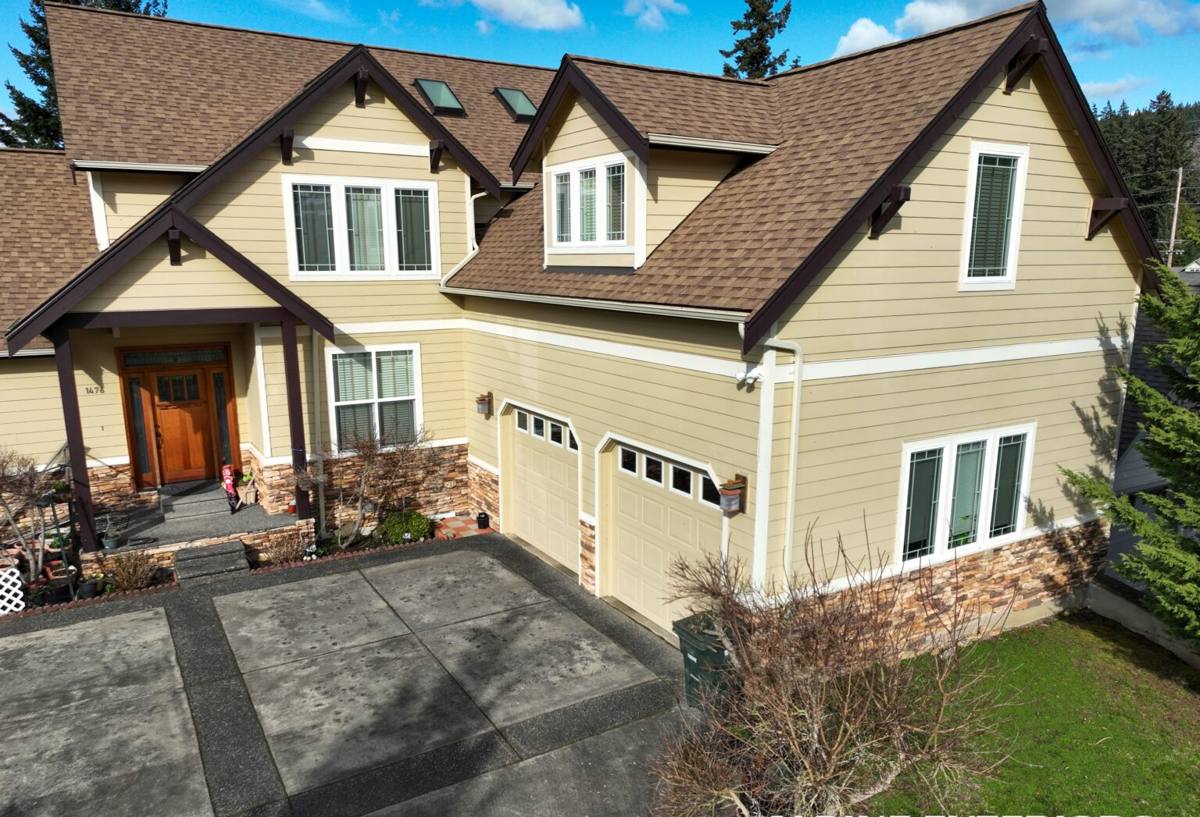
Signs Your Siding Needs Repair, Not Full Replacement
Not every problem means tearing off a wall. Most of the calls we get from Custer homeowners fall into a handful of categories that are fixable without replacing the whole house:
- Soft or spongy spots when you press on the siding, usually near the bottom courses or around window and door trim
- Visible gaps at butt joints or corners where caulking has failed and pulled away
- Dark streaking or green-black growth concentrated on shaded or north-facing walls
- Paint that's bubbling, peeling, or chalking in isolated sections rather than across the whole house
- Cracked or split boards from impact damage, settling, or old material fatigue
- Warping or bowing panels, which is common with older wood or engineered wood products that have taken on moisture
If the damage is limited to a few boards, a section of wall, or trim details, targeted repair is usually the right call. Replacement makes sense when the damage is widespread, when the underlying sheathing or house wrap has failed, or when the existing material simply isn't holding up to this climate no matter how many times it's patched.
Damage That Often Means More Than a Patch
Some issues look small from the outside but signal a bigger problem. Soft siding at multiple points around the same window almost always means the flashing or window integration has failed, not just the siding itself. Widespread moss on a wall that gets full afternoon sun points to a moisture source behind the cladding, not just surface growth. A good repair contractor will tell you honestly when a patch is a temporary fix versus a real solution.
What a Correct Siding Repair Actually Involves
A repair that's done right isn't just "cut out the bad piece and nail up a new one." It has to address why the damage happened in the first place, or the same spot fails again in a year or two.
Diagnosis Before Demolition
Before any siding comes off, we check moisture levels behind the surface, look at how water is shedding off the roof and gutters onto that section of wall, and check whether flashing, house wrap, or caulking failures caused the problem. Cutting out a damaged board without fixing the water source behind it just delays the repeat repair.
Matching the Existing Material
Getting a patch to actually blend in is harder than it sounds. Profile, reveal, and texture all have to match, and paint or factory finish needs to be a real color match, not an approximation. This is one of the reasons material choice matters for long-term repairability, which we get into below.
Proper Flashing and Sealant Detail
Every cut edge, joint, and penetration gets flashed and sealed the way it should have been the first time. In a climate that gets driving rain off the water, a repair with sloppy flashing just fails again in the next wet season.
Finish Work
The last step is making the repair disappear — matching caulk lines, touching up or repainting to blend the patch with weathered surrounding siding, and cleaning up so the finished wall looks intentional, not patched.
Repair vs. Replacement: How We Help You Decide
| Factor | Repair Usually Makes Sense | Replacement Usually Makes Sense |
|---|---|---|
| Extent of damage | Isolated to a few boards or one wall section | Spread across multiple walls or the whole house |
| Age of siding | Under 15-20 years, still structurally sound | Original material near or past its expected service life |
| Cause of damage | Impact, isolated flashing failure, one bad joint | Systemic moisture intrusion, failed house wrap, chronic warping |
| Material behind the damage | Sheathing is dry and sound | Sheathing shows rot or widespread water staining |
| Match quality achievable | Same material still available, colors close | Discontinued product, mismatched fade, multiple prior patches |
We'll always give you a straight answer on which side of that table your home falls on. There's no reason to sell a full re-side to someone who needs three boards replaced, and no reason to keep patching a wall that's telling you it's done.
Why Material Behind the Repair Matters
We install and repair James Hardie fiber cement siding, and that's not incidental to how repairs hold up here. Hardie's ColorPlus factory finish and fiber cement composition resist moisture absorption and hold paint and color far better over time than wood-based or vinyl products, which matters directly for repair work: a patch on Hardie siding, done with the correct product line and finish, blends in and stays blended for years. A patch on wood siding that's already sun-faded or on vinyl that's chalked unevenly rarely disappears the same way, because those materials shift in color and texture unevenly as they age.
Fiber cement also doesn't support moss and algae growth the way wood-based products can once the surface finish starts to break down, which matters in a place like Custer where shaded, damp walls stay wet for extended stretches through the winter. That doesn't mean Hardie siding never needs repair — impact damage, failed caulking, and flashing issues happen regardless of material — but the repairs tend to be cleaner, more durable, and less likely to need repeating.
Our Process for Custer Repair Calls
- On-site assessment — we look at the damage, check moisture behind the siding, and identify the actual cause, not just the visible symptom
- Honest repair-vs-replace recommendation — in writing, with our reasoning explained
- Material and color matching — sourcing the right product line and finish before any cutting starts
- Removal and inspection of sheathing — confirming what's underneath is sound before closing the wall back up
- Correct flashing, fastening, and sealing — done to manufacturer spec, not shortcuts
- Finish and cleanup — matching paint or factory finish and leaving the site clean
Moss, Algae, and Custer's Long Wet Season
Whatcom County's wet season runs long, and Custer's proximity to the water adds humidity on top of the rainfall itself. Shaded walls, areas under overhangs with poor airflow, and anywhere gutters overflow or drip directly onto siding are the spots we see moss and algae take hold first. Left alone, that growth holds moisture against the surface, which accelerates whatever damage is already starting underneath.
What Homeowners Can Do Between Professional Visits
- Keep gutters clear so water isn't sheeting or dripping onto siding below
- Trim back vegetation that's shading siding and keeping it from drying out
- Rinse visible moss or algae buildup with plain water rather than pressure-washing, which can force water behind panels and joints
- Check caulking at joints and trim once a year, since it's usually the first thing to fail
- Note any soft spots when you're outside doing other yard work, and get them looked at before the next wet season
Why It Matters That Your Crew Already Works Custer
A repair crew that regularly works this stretch of Whatcom County already knows which wall orientations take the worst of the wind-driven rain, how far moss will spread before it becomes a real problem, and what a proper repair needs to hold up through another wet season rather than needing to be redone. That local pattern recognition is the difference between a patch that looks fine for six months and one that actually lasts. It also means faster, more accurate estimates, because we're not guessing at how this climate behaves — we're working with what we already know it does to a home like yours.
If you've got soft siding, failing caulk lines, moss that won't quit, or damage you're not sure needs a patch or something bigger, we're happy to take a look. Fill out the form below for a free, no-pressure estimate — we'll tell you honestly what your siding needs and why.