 Blaine Siding
 Windows in Sumas Have a Different Job Than Windows Anywhere Else
Sumas sits inland from Blaine, tucked against the Nooksack River valley and the foothills near the Canadian border, and that location gives its homes a specific set of problems. Homes closer to the water in Blaine deal with salt air working on hardware and finishes; Sumas doesn't get that direct salt exposure, but it gets something just as hard on windows over time — long stretches of driving rain, valley fog, and humidity that settles into wood trim and framing and doesn't leave easily. Add Whatcom County's extended moss season, and you've got a climate that punishes any window with a weak seal, poor flashing, or the wrong material for the job.
Custom windows means the unit is built or selected to fit the actual opening and actual conditions of a specific house, not a stock size forced into a wall with shims and caulk. In older Sumas homes — farmhouses, post-war ranches, additions built without much thought to moisture management — that fit matters more than the glass itself. A well-built window in a poorly flashed opening will still fail. A cheap window installed correctly will still outperform a good window installed carelessly.
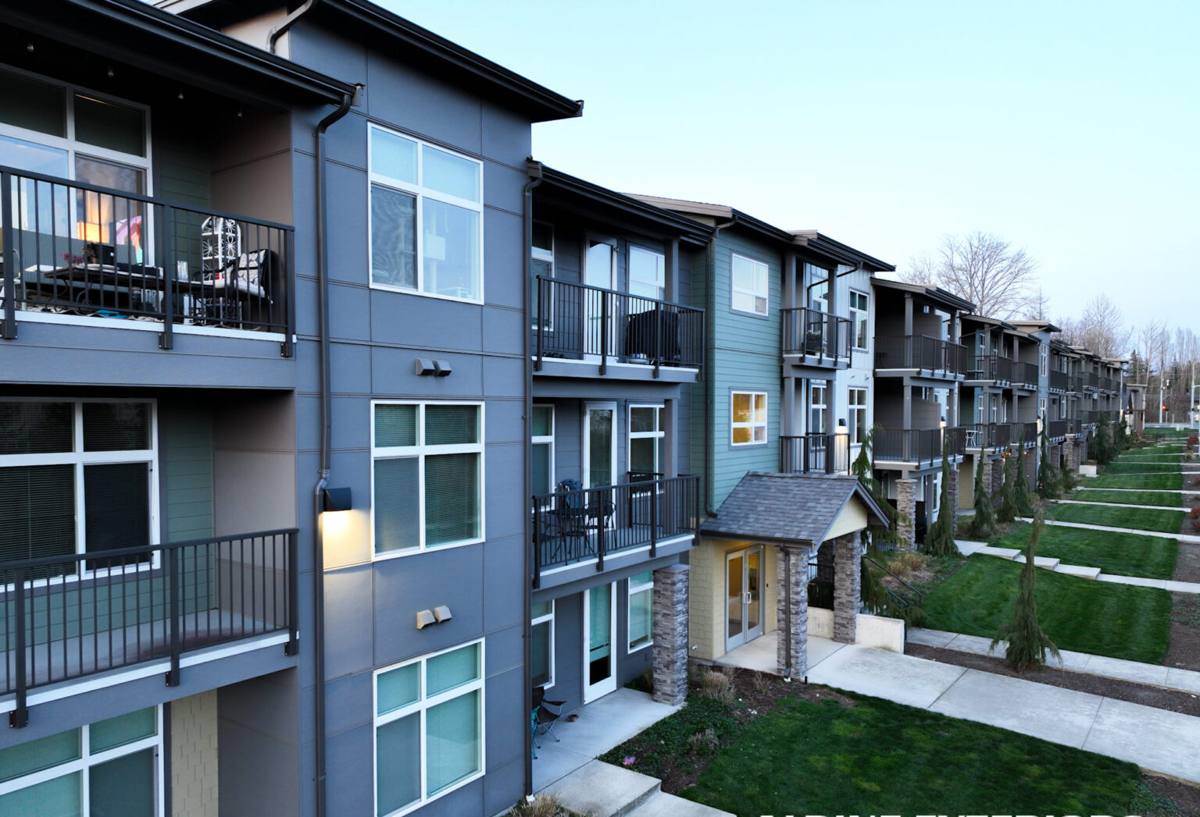
Signs a Sumas Home's Windows Are Losing the Fight
Most window failures don't announce themselves with a cracked pane. They show up as small, easy-to-dismiss symptoms first:
- Condensation between the glass panes, not just on the surface — this means the seal has failed and the insulating gas is gone
- Soft or discolored wood on the interior sill or exterior trim, especially on north- and west-facing walls that stay wet longest
- Visible daylight or a draft you can feel with your hand along the frame on a windy day
- Windows that are hard to open, stick in humid weather, or won't stay up without a prop
- Moss or black streaking building up on the exterior trim or sill faster than the rest of the wall
- A noticeable temperature difference standing near the window compared to the middle of the room
Any one of these is worth a look. Two or three together usually means the window and the flashing behind it are both due for replacement, not just the glass.
Why Waiting Costs More Here Than Elsewhere
In a drier climate, a failing window seal is mostly an energy-bill problem. In this part of Whatcom County, it's a rot problem. Water that gets behind a failed seal or bad flashing has months of damp weather to work with before things dry out, and by the time staining shows up on an interior sill, the framing behind it has often been wet for a full season already.
What a Correct Window Job Actually Involves
Swapping glass for glass is the easy part. The work that actually protects the house happens around the window, not in it.
- Opening inspection. Before anything is ordered, we check the framing, sill, and sheathing behind the existing window for soft spots, rot, or prior water damage. This is the step that gets skipped by crews trying to move fast, and it's the one that determines whether the new window lasts.
- Correct sizing and selection. Custom means measuring the actual opening — which is rarely perfectly square in an older house — and choosing a window built or ordered to that exact fit, rather than trimming a stock size to make it work.
- Flashing and weather barrier integration. The window has to tie into the house's weather-resistive barrier correctly — sill pan flashing, proper head flashing, and a drainage path so any water that does get past the exterior finish has somewhere to go besides the framing.
- Air sealing and insulation. The gap between the window frame and the rough opening gets sealed and insulated properly, not just stuffed with fiberglass or oversprayed with foam that traps moisture.
- Interior and exterior finish. Trim, casing, and caulking are finished to shed water on the exterior and look clean on the interior.
Skip step 1 or step 3 and it doesn't matter how good the window itself is — water will find the same path it always has.
Choosing the Right Material for This Valley
There's no single "best" window material — there's a best fit for the house, the budget, and how much upkeep the owner wants to do. Here's how the common options hold up under Whatcom County's wet, humid conditions:
| Material | Moisture Resistance | Maintenance | Typical Lifespan | Best Fit For |
|---|---|---|---|---|
| Vinyl | Good — won't rot, seams are the main watch point | Low — rinse occasionally | 20–30 years | Budget-conscious replacements, rental properties |
| Fiberglass | Very good — dimensionally stable in temperature and humidity swings | Low | 30–40+ years | Homes where long-term durability matters more than upfront cost |
| Wood-clad | Depends entirely on cladding quality and installation — the wood core is vulnerable if the cladding or seals fail | Moderate to high | 20–30 years, less if moisture gets behind the cladding | Homeowners who want a wood interior look and are willing to maintain it |
| Aluminum | Poor thermal performance, prone to condensation in this climate | Low | 20–30 years | Rarely our recommendation for residential replacement here |
Our default recommendation for most Sumas homes is vinyl or fiberglass, specifically because both handle the region's humidity and driving rain without the maintenance burden that comes with a wood-clad product in a climate this damp. We're not against wood-clad windows as a category — it's a legitimate look — but we're upfront that it comes with a maintenance schedule this climate doesn't forgive if it gets skipped.
How Windows and Siding Work Together
Because we do siding and windows, we see the failure point most homeowners never think about: the seam where the window frame meets the siding. That seam is where water intrusion actually starts in most cases, not in the glass or the sash. If your siding is being replaced at the same time as your windows, that's the ideal moment to get the flashing and weather barrier right in one continuous system, rather than patching new siding around old, questionable window flashing or vice versa.
If you're only doing windows for now, that's fine — we'll tie the new flashing into your existing siding correctly and note anywhere the siding itself is showing early wear, so you're not surprised by it later.
Our Process, Start to Finish
The process is the same whether it's two windows or a whole house:
- Free on-site assessment — we look at the openings, not just take a phone order for sizes
- Honest recommendation on material and style based on the specific wall, exposure, and budget
- Written estimate with the scope spelled out, not a vague lump-sum number
- Removal of old units and inspection of the opening before new windows go in
- Installation with proper flashing, insulation, and sealing — the steps that actually determine lifespan
- Finish work inside and out, and cleanup before we leave
- Walkthrough so you know what was done and what to watch for going forward
What We Won't Do
We won't install over rotten framing and caulk around the problem — that just hides damage until it's worse and more expensive. If we find rot behind an old window, we'll show you what we found and price the repair honestly before moving forward, not after the new window's already in.
Cost Factors Worth Understanding
Window pricing varies enough by size, count, and material that a single number isn't honest. What actually moves the price on a Sumas job:
| Factor | Why It Matters |
|---|---|
| Number and size of openings | More glass area and more units means more material and labor |
| Material chosen | Vinyl runs less than fiberglass; wood-clad typically costs more upfront and over time |
| Condition of the existing opening | Rot or framing repair adds labor before the new window can even go in |
| Access and second-story work | Upper-floor windows take longer and need more setup |
| Custom shapes or sizes | Non-standard openings cost more than stock sizes |
We'd rather walk a homeowner through these factors on-site than quote a number over the phone that won't hold up once we actually see the wall.
Why a Crew That Already Works This Area Matters
Sumas and the surrounding Blaine area have their own quirks — older housing stock, a mix of farmhouses and newer builds, valley humidity that behaves differently than the immediate coastline, and a climate that gives water intrusion a long window of opportunity every year. A crew that works this specific area regularly knows which wall orientations take the worst weather, what kind of rot patterns show up in local framing, and how to flash a window so it actually sheds Whatcom County's rain instead of just meeting a minimum code requirement.
That local knowledge is the difference between a window install that looks fine for a year and one that's still tight and dry a decade from now.
If your windows are drafty, fogging between the panes, or just original to a house that's due for an upgrade, we're happy to take a look. The estimate is free, there's no pressure, and you'll get straight answers about what your home actually needs — use the form below to get started.