 Blaine Siding
 Why Peace Arch Homes Take a Different Kind of Punishment
Homes in the Peace Arch area of Blaine sit close enough to the water that salt air is a daily fact of life, not an occasional nuisance. Add Whatcom County's driving winter rain and the long, low-sun stretches that keep shaded walls damp for months at a time, and you've got a climate that's genuinely harder on exterior siding than most manufacturers' glossy brochures assume. A siding job that would hold up fine in a dry inland town can start failing here in five or six years if it wasn't built for this specific exposure.
This page is about one thing: what it actually takes to install siding correctly on a Peace Arch home, and why the details matter more here than almost anywhere else in the county.
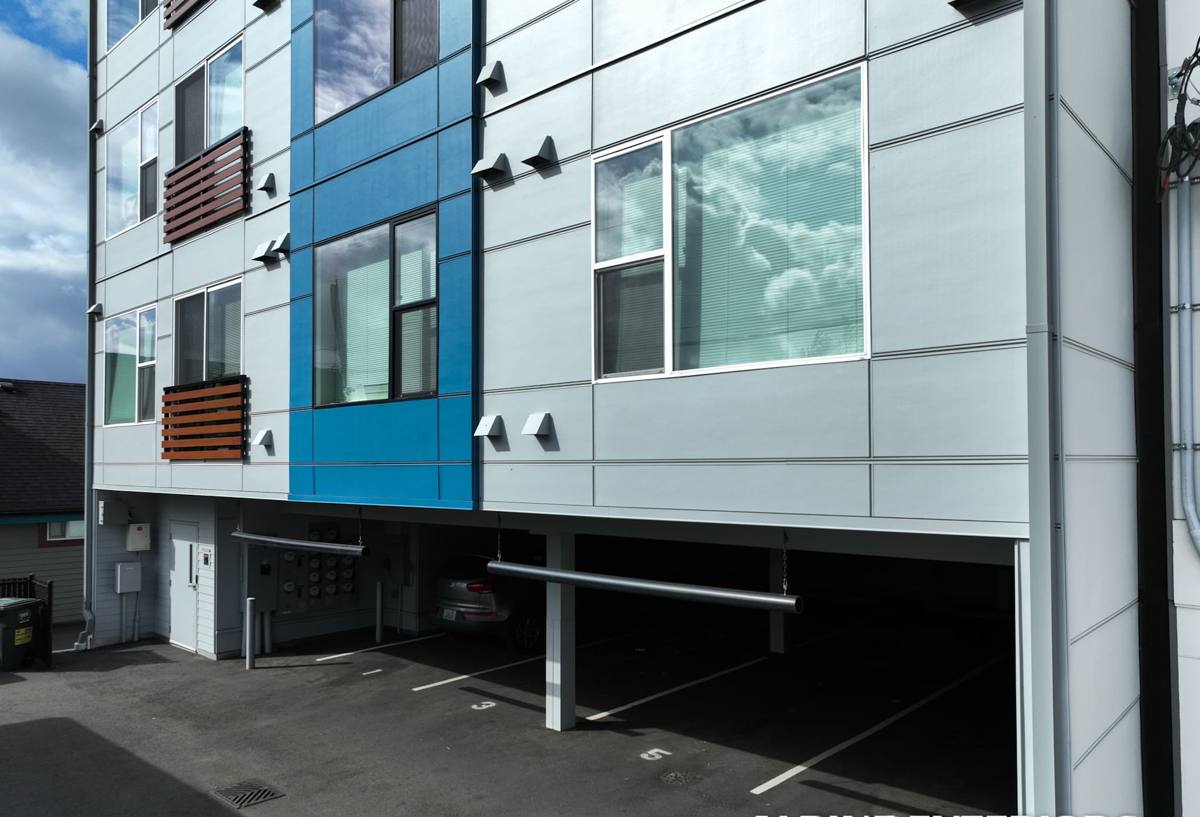
Three Climate Stresses Unique to This Corner of Blaine
Salt Air
Proximity to Semiahmoo Bay and Drayton Harbor means airborne salt settles on exterior surfaces year-round, not just during storms. Salt is corrosive to metal fasteners, flashing, and trim hardware, and it accelerates the breakdown of lower-grade paint finishes. Siding that isn't factory-finished with a coastal-durable coating, and fasteners that aren't corrosion-resistant, tend to show their age early in the form of rust streaks, chalking, and finish failure at the seams.
Driving Rain
Rain here rarely falls straight down. Wind off the water pushes it sideways into wall assemblies, which puts real pressure on every seam, joint, and penetration in the siding system. A water-resistive barrier and flashing detail that would be adequate in a sheltered inland lot can let water through on a home that takes wind-driven rain broadside several months of the year.
Long Moss Season
Mature tree cover and cooler, shaded exposures — common on north- and west-facing walls near the water — keep siding damp far longer after a storm than sun-exposed walls. That extended dampness is exactly what moss and algae need to take hold. Once moss establishes itself on a wall, it holds moisture against the surface and can accelerate deterioration of anything but a genuinely moisture-stable material.
What Correct Siding Installation Actually Involves
Most siding failures we get called out to inspect aren't a bad product — they're a product installed without respecting the details that matter in this climate. A correct installation on a Peace Arch home includes:
- An intact, properly lapped water-resistive barrier behind the siding, inspected and repaired before a single board goes up
- Flashing at every window, door, deck ledger, and roof-to-wall intersection, installed so water is directed out and down, never trapped behind the cladding
- Correct fastener spacing and type — corrosion-resistant fasteners driven to manufacturer spec, not just "close enough"
- Proper clearance from grade, roofing, and decks so siding isn't sitting in a moisture trap
- Factory-sealed or properly field-treated cut edges, since an unsealed cut edge is the single fastest way to void a warranty and invite moisture into the material
- A drainage plane or rainscreen gap in exposures that see heavy wind-driven rain, so incidental moisture has somewhere to go
None of this is exotic. It's the manufacturer's installation manual followed to the letter, on a wall that will actually be tested by weather rather than a showroom.
Why We Install Only James Hardie Fiber Cement
We standardized on James Hardie for every home we side, including the ones near the Peace Arch border crossing, for reasons that come directly from this climate. Hardie's HZ10 climate-engineered formulation is built for the wetter, cooler exposure common to the Pacific Northwest — it's designed to resist moisture-related damage in conditions that are harder on cladding than the national average. Fiber cement doesn't absorb and swell the way engineered wood products can, and it won't support rot the way untreated wood trim will if a seal fails somewhere down the line.
The ColorPlus factory finish also matters more here than in a drier climate. It's baked on under controlled conditions rather than field-applied, which gives it better adhesion and fade resistance against the combination of salt air and UV exposure than most field-applied paint jobs achieve. And because Hardie backs the product with a real transferable warranty, homeowners aren't relying on our word alone that the material will hold up — the manufacturer is standing behind it too, provided the installation meets spec.
We don't install vinyl, LP SmartSide, Cemplank, Allura, primed spruce, or cedar. Each of those products has legitimate uses elsewhere, and we're glad to explain the honest trade-offs on our other pages. For this climate, on this coastline, fiber cement installed correctly is what we're willing to put our name on.
Our Installation Process
- On-site assessment. We walk the exterior, note wall orientation relative to prevailing wind and rain, check for existing moss or moisture damage, and identify any problem areas in the current siding or trim.
- Tear-off and inspection. Old siding comes off and we inspect the sheathing and water-resistive barrier underneath. Any rot, soft spots, or barrier damage gets addressed before anything new goes up — this step is where a lot of corner-cutting jobs go wrong.
- Barrier and flashing repair. We repair or replace the weather-resistive barrier and install flashing at every window, door, and penetration to manufacturer spec.
- Siding installation. HardiePlank, HardieShingle, or HardiePanel goes up per Hardie's fastening schedule and clearance requirements, with attention to the exposures that take the worst of the wind-driven rain.
- Trim, caulking, and touch-up. Cut edges are sealed, seams are caulked with a product rated for the application, and any factory-finish touch-up is done with matched ColorPlus product.
- Final walkthrough. We review the finished job with you, wall by wall, before calling it done.
Signs Your Current Siding Is Already Losing the Fight
If your home is on a shaded lot near the water, watch for these signs that your current siding is past its service life:
- Persistent moss or algae growth that returns within a season or two of cleaning
- Soft or spongy spots when you press on the siding, especially near the bottom courses
- Paint that's chalking, peeling, or bubbling rather than just fading evenly
- Rust streaking around fasteners or trim hardware
- Visible gaps or separation at seams and corner boards
- A musty smell near exterior walls, which can indicate moisture getting behind the cladding
Any one of these on its own might just need a repair. Several at once, especially on a north- or west-facing wall, usually means the siding system itself has reached the end of its useful life.
Cost Factors for Peace Arch Siding Replacement
Every home is different, but these are the factors that most often move the price on a fiber cement siding replacement in this area:
| Factor | Why It Matters Here |
|---|---|
| Existing wall condition | Rot or moisture damage found during tear-off adds repair time before new siding can go on |
| Wall exposure | Walls that take direct wind-driven rain often need more careful flashing and sometimes a rainscreen detail |
| Home height and complexity | Multi-story sections, dormers, and steep rooflines add labor and staging time |
| Siding profile chosen | Lap siding, shingle-style, and panel products differ in material and labor cost |
| Trim and detail work | Corner boards, window trim, and fascia detailing add to the scope beyond flat wall coverage |
| Access and site conditions | Tree cover, tight lot lines, and landscaping near the foundation can slow staging and cleanup |
We'll walk your specific home and give you a real number based on what we actually find, not a generic square-footage guess.
Why Local Experience in Peace Arch Actually Matters
A crew that already works this part of Blaine knows which walls in this neighborhood take the worst of the wind off the water, which lots hold moss no matter how often they're cleaned, and how the City of Blaine and Whatcom County permitting process actually works for exterior replacement projects. That's not something you learn from a manual — it's something you learn by doing the work here, season after season, and adjusting the details that generic installation instructions don't cover. Hiring a crew with that background means fewer surprises during tear-off and a finished job that's built for the wall it's actually on, not just for siding in general.
If you'd like a straight answer on what your Peace Arch home needs, we're happy to take a look. Request a free, no-pressure estimate using the form below — we'll walk the exterior with you and tell you honestly what we find.