 Blaine Siding
 Building a Deck That Actually Holds Up in Peace Arch
A deck in the Peace Arch area of Blaine lives a harder life than the same deck fifty miles inland. This corner of Whatcom County sits close enough to the water that salt-laden air is part of the daily weather, on top of the driving, wind-pushed rain that rolls in off the Strait for much of the year and a moss season that can stretch from October into May. None of that means you can't build a great custom deck here — it just means the design, materials, and fastening choices need to account for conditions a generic deck spec sheet doesn't anticipate.
This page covers what we've learned building and repairing decks in and around Blaine's Peace Arch neighborhood: what fails first, what materials and details hold up, and how we run a custom deck project from first conversation to final walkthrough.
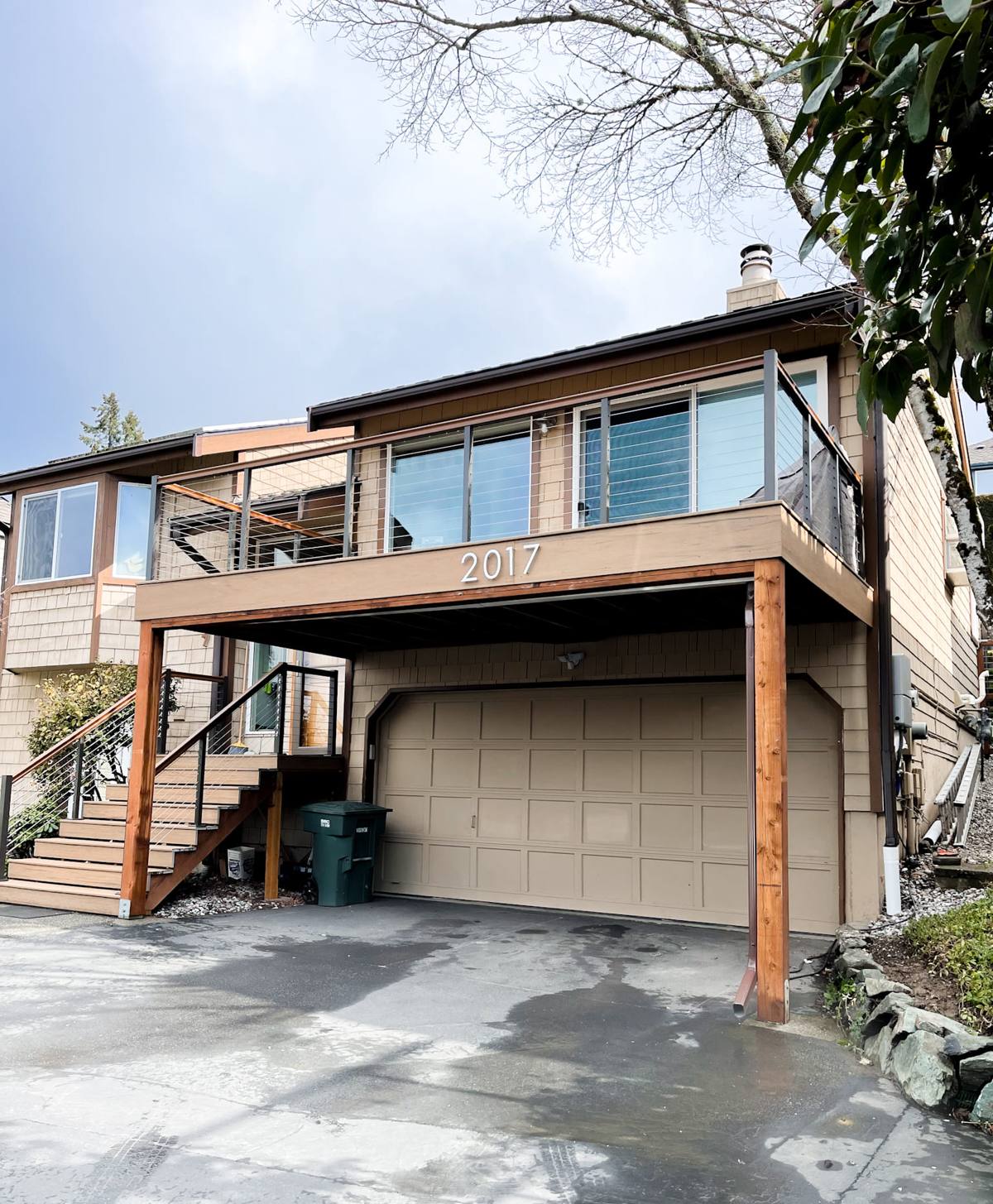
What Salt Air, Rain, and Moss Actually Do to a Deck
Three things drive most of the deck problems we see in this area, and they compound each other.
Salt Air and Metal Corrosion
Airborne salt accelerates corrosion on anything metal — fasteners, joist hangers, post bases, railing hardware. Standard electro-galvanized screws and connectors that would last decades in a dry inland climate can start rusting and staining the decking within a few seasons this close to the water. Once a fastener corrodes, it loses holding strength long before it looks obviously bad, which is why so many "surprise" deck failures happen at connections that seemed fine at a glance.
Driving Rain and Trapped Moisture
Rain that comes in sideways finds every gap a calm-weather deck design would get away with — around ledger boards, under poorly flashed rim joists, and into end grain that isn't sealed. Wood that stays wet for extended periods is where rot starts, and a deck's substructure can be rotting quietly for years before anything shows on the surface.
Long Moss and Mildew Season
Shaded, north-facing, or tree-covered sections of a deck — common on lots with mature evergreens, which describes a lot of Peace Arch's residential lots — stay damp long enough for moss and algae to take hold. Beyond looking bad, moss holds moisture against the decking surface and makes boards slick and genuinely dangerous underfoot.
Choosing Decking Material for This Climate
There's no single "best" decking material — there's a best material for your budget, your maintenance appetite, and how exposed your specific site is to sun, shade, and moisture. Here's how the common options actually compare for a Blaine coastal lot:
| Material | Moisture & Salt-Air Behavior | Maintenance | Typical Lifespan Here |
|---|---|---|---|
| Pressure-treated wood | Handles moisture fine if sealed and maintained; fasteners must be rated for treated lumber | Annual cleaning, re-sealing every 1-2 years | 15-20 years with upkeep |
| Cedar | Naturally rot- and insect-resistant; still needs sealing against driving rain | Cleaning plus periodic oil/sealer | 15-25 years with upkeep |
| Composite decking | Doesn't rot or absorb water like wood; some early-generation composites held surface moisture and grew mildew in shade | Occasional wash-down; no sealing/staining | 25-30+ years |
| PVC/capped polymer decking | Fully sealed surface, best resistance to salt air and standing moisture | Lowest — soap and water | 25-30+ years |
On shaded or heavily tree-covered Peace Arch lots, we lean toward capped composite or PVC boards for the field of the deck, since they don't give moss and mildew the organic surface they need to grip. On open, sun-exposed lots, a well-maintained wood deck is still a perfectly good choice and often the better value.
A Note on Product Selection
We install a limited set of decking and hardware lines rather than whatever's cheapest at the moment, because in this climate the difference shows up in three to five years, not on install day. That means being upfront when a lower-cost board or fastener isn't one we'll put our name behind for a coastal Whatcom County install — not because it's a bad product everywhere, but because it's a bad fit for this exposure.
What's Under the Boards Matters More Than the Boards Themselves
The decking surface is what you see, but the framing, fasteners, and connections are what determine whether the deck is safe and stable in ten years. In a salt-air, high-rainfall environment, this is where corners get cut and where we focus the most attention.
Fasteners and Hardware
We use stainless steel or heavy-coated (rated for coastal/treated-lumber exposure) fasteners and structural connectors throughout — ledger bolts, joist hangers, post bases, and hidden fastening clips. It costs more up front than standard hardware and is non-negotiable for anything within a few miles of the water.
Ledger Board Flashing
Where the deck attaches to the house is the single most common point of hidden rot on older decks in this area. Proper flashing — metal flashing plus a water-resistant membrane behind it — keeps driving rain from working its way behind the ledger board and into the house's rim joist. On repair and rebuild jobs, this is very often what we find failed first.
Footings and Post Bases
Whatcom County's wet soil conditions mean footings need to be sized and set to local frost and drainage requirements, and post bases need to hold the post above standing water and splash-back rather than sitting directly on a wet slab or damp soil.
Joist Protection
Wrapping the tops and cut ends of framing lumber with a waterproof joist tape adds real service life for not much added cost, since it's the cut ends and fastener penetrations where water gets into the wood fastest.
Keeping Moss and Mildew Off a Finished Deck
Design choices at build time make a real difference in how much moss becomes a maintenance headache later:
- Gapping boards correctly for drainage and airflow underneath, especially on shaded sections
- Grooved or ribbed board profiles (common on composite/PVC) that let water run off rather than pool
- Keeping the deck surface a few inches below door thresholds so water sheds away from the house, not toward it
- Trimming back overhanging branches where possible to cut down on shade and organic debris
- An annual rinse and, on wood decks, reapplying sealer before the wet season sets in
None of this eliminates moss entirely in a Whatcom County winter, but it's the difference between an occasional pressure-wash and a slick, green deck by February.
Our Process for a Custom Deck in Peace Arch
Every property is different, but our process stays consistent:
- On-site assessment: We walk the lot, note sun/shade exposure, drainage patterns, and how close the build is to salt air and prevailing wind-driven rain.
- Design and material selection: We talk through decking material, railing style, and layout based on how you'll actually use the space and how much upkeep you want long-term.
- Permitting: Deck permits in Blaine and unincorporated Whatcom County depend on size, height, and attachment to the structure — we handle the permit process rather than leaving it to you.
- Framing and structural work: Ledger flashing, stainless/coated hardware, and properly sized footings go in before a single deck board is laid.
- Decking, railing, and finish work: Installed to manufacturer spec so warranties stay intact.
- Final walkthrough: We go over the finished deck and basic maintenance — what to clean, when to reseal, what to watch for — so you know how to protect the investment.
What Drives Cost on a Custom Deck Here
Every deck is priced on its own specifics, but these are the factors that move the number most on Peace Arch-area jobs:
| Factor | Why It Matters Here |
|---|---|
| Decking material | Wood costs less upfront; composite/PVC cost more but need far less coastal-climate maintenance |
| Height and grade | Sloped or elevated lots near the water often need taller footings, stairs, and additional structural support |
| Hardware spec | Stainless/coated coastal-rated fasteners and connectors cost more than standard hardware but are worth it in salt air |
| Railing style | Cable, glass, and composite railing systems vary widely in material and labor cost |
| Site access | Tree cover, fencing, or tight side-yard access can add labor time on many Peace Arch lots |
As a rough starting point, simple pressure-treated decks tend to run at the lower end of the market, while larger composite or PVC decks with custom railing and multiple levels run considerably higher. We'll give you a firm, itemized number after seeing the site — not a phone-quote guess.
Why Hire a Crew That Already Works This Area
A deck contractor who mostly builds inland doesn't always think about salt-air hardware ratings or moss-prone shade pockets by default — those are lessons learned by building and repairing decks in exactly this environment. Working regularly in Blaine and along the Whatcom County coastline means we've already seen which fasteners rust first, which decking profiles shed water better under constant Pacific Northwest rain, and where ledger flashing tends to fail on older homes near the water. That local pattern-recognition is what keeps a new deck from repeating the same failures we get called out to fix on older ones.
Quick Checklist Before You Hire Anyone for a Deck Build
- Are they using stainless or coated fasteners and connectors, not standard hardware?
- Do they flash the ledger board properly where it meets the house?
- Are they licensed, bonded, and insured to work in Washington State?
- Will they pull the required permit rather than skip it?
- Can they explain material trade-offs for your specific site's sun/shade exposure?
- Do they offer a written, itemized estimate rather than a verbal ballpark?
If you're planning a new deck or need an honest look at one that's showing its age, we're happy to walk the site with you and put together a clear, no-pressure estimate — just fill out the form below to get started.