 Blaine Siding
 Birch Bay Roofs Work Harder Than Most
A roof in Birch Bay sits in a tougher spot than a roof a few miles inland. Homes along the water face wind coming straight off the Strait of Georgia, salt-laden air that never really lets up, and a wet season that stretches on long enough to grow moss on almost anything that holds shade or moisture. Add an actual windstorm on top of that steady wear, and a roof that looked fine in August can be leaking by December. Storm damage repair here isn't just about patching what broke during one bad night of weather — it's about recognizing that the storm usually finished off something the coastal climate had already been working on for years.
We've repaired roofs throughout Blaine and Whatcom County long enough to know that a Birch Bay job and a job a few miles inland aren't the same task, even when the damage looks identical from the ground. This page covers what storm damage repair actually involves for Birch Bay homes specifically, and what to expect from a crew that does this work correctly.
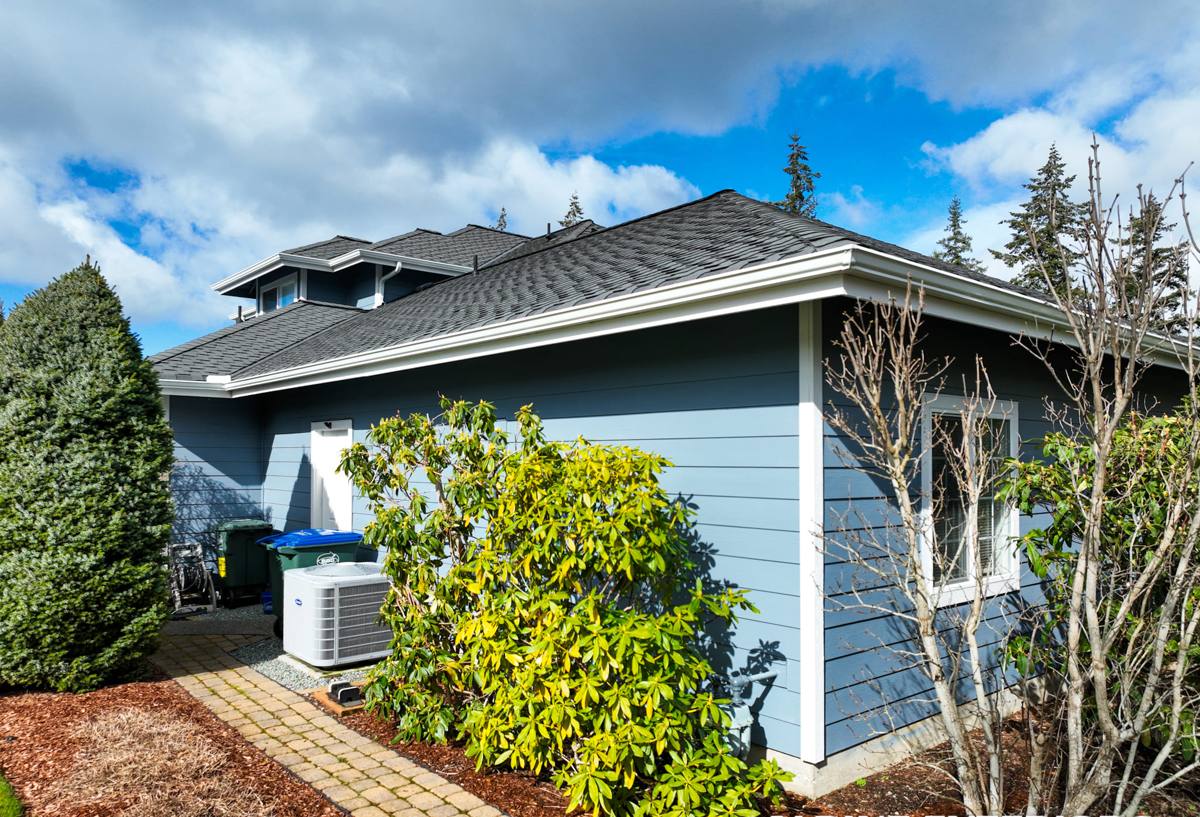
The Storm Damage We See Most Often in Birch Bay
Wind and Wave-Driven Rain
Open water means wind hits Birch Bay roofs with less to slow it down first. Gusts during a fall or winter storm can lift shingle tabs, tear off ridge caps, and peel back flashing at valleys and chimneys. The damage isn't always dramatic — a handful of lifted shingles or a separated flashing seam doesn't look urgent, but it's an open door for wind-driven rain, which doesn't need much of a gap to get pushed sideways under a roof covering.
Salt Air and Corrosion
Homes closer to the water deal with a slow, steady corrosion problem that inland roofs mostly avoid. Standard fasteners, cheap flashing, and exposed metal edges corrode faster here. A storm can expose that weakness fast — a nail that's already rusted through has far less holding power when the wind picks up, and a roof that's been quietly corroding for a few years is more likely to lose shingles in a storm that a newer or better-protected roof would shrug off.
Moss, Debris, and the Long Wet Season
Birch Bay's tree cover and marine humidity add up to a long moss season. Moss holds moisture against the roof surface, works its way under shingle edges, and lifts them slightly over time — which means by the time a storm rolls through, the roof may already have compromised seals in spots nobody's noticed yet. Storm damage repair on a mossy roof almost always uncovers more than the storm itself caused.
What a Correct Storm Repair Actually Involves
Beyond the Tarp: Inspecting What You Can't See
A tarp stops active leaking. It is not a repair. A correct storm damage repair starts with pulling back the damaged area far enough to check the decking, underlayment, and flashing underneath — not just replacing the shingles that are obviously missing. Water that got in during the storm can travel sideways under the roof covering before it shows up as a ceiling stain, so the repair has to account for where the water actually went, not just where it entered.
Matching Materials and Fasteners to the Coast
Repairs done with standard-grade fasteners and flashing might hold for a season or two before the salt air starts working on them again. We use corrosion-resistant fasteners and flashing metals suited to a marine environment, because a repair that fails again in two years because of coastal weather cost the homeowner twice for the same problem. This matters more in Birch Bay than almost anywhere else in Whatcom County — it's one of the few things we'd flag as non-negotiable on a waterfront or near-waterfront repair.
Matching the Existing Roof
Where possible, we match shingle style, profile, and color to the surrounding roof so the repair doesn't stand out. On older roofs, an exact color match isn't always available if the original product has been discontinued — we'll tell you honestly when that's the case and walk through the closest realistic option rather than promise a perfect match we can't deliver.
Our Storm Repair Process
The process is the same whether the damage is minor or significant — what changes is the scope, not the steps.
- Inspection and documentation. We assess the full roof, not just the obviously damaged area, and photograph findings that can support an insurance claim if you're filing one.
- Temporary weatherproofing. If the roof is actively leaking or exposed, we get it watertight first, especially if permanent repair has to wait on materials, insurance approval, or weather.
- Written scope and estimate. You get a clear explanation of what's damaged, what needs to be repaired versus replaced, and why — in plain language, not a vague line item.
- Permanent repair. Decking, underlayment, flashing, and roof covering are addressed as a system, not just swapped shingle-for-shingle.
- Cleanup and final check. Debris, old materials, and displaced fasteners are cleared from the roof, gutters, and property before we call the job done.
How Severe Is the Damage? A Rough Guide
Storm damage falls into a few general categories. This isn't a quote — every roof is different — but it gives you a sense of what's typically involved before we've had a chance to inspect.
| Severity | What It Usually Looks Like | Typical Repair Scope |
|---|---|---|
| Minor | A few lifted or missing shingles, a loose ridge cap, minor flashing separation | Localized shingle and flashing replacement, resealing exposed edges |
| Moderate | A larger section of missing shingles, exposed underlayment, damaged gutter or downspout | Underlayment repair or replacement in the affected area, flashing rework, gutter repair |
| Major | Exposed decking, visible interior water intrusion, tree limb impact or structural sag | Decking repair or replacement, full section re-roofing, interior moisture assessment |
Moss-related damage and salt-air corrosion often push a repair from "minor" toward "moderate" once we get underneath the surface — which is exactly why the inspection step matters more here than it might for a drier, more sheltered roof.
Insurance and Storm Damage Claims
Most homeowner policies cover sudden storm damage — wind, falling branches, that kind of event — but they typically don't cover damage from gradual wear, deferred maintenance, or moss that's been left to sit for years. That distinction matters, because an adjuster may look at a mossy, corroded roof and attribute more of the damage to neglect than to the storm itself. Clear documentation of the roof's condition and the storm event helps make sure you're not left covering a repair that should have been part of a legitimate claim. We provide the inspection photos and written findings; the claim itself is between you and your insurer.
What to Do Right After a Storm
- Check the attic or top-floor ceilings for new stains, damp spots, or drips — often the first real sign of a problem.
- Look at the ground and gutters for shingle granules, pieces of flashing, or shingle fragments.
- Note any visibly lifted, curled, or missing shingles from the ground — don't get on the roof yourself after a storm.
- Photograph anything you can see safely, including debris in the yard or gutters.
- Get a tarp or temporary cover in place quickly if there's active leaking, or call a contractor who can.
- Avoid patch jobs with caulk or sealant alone — they hide the problem without fixing it, and can make the real repair harder to diagnose later.
- Get an inspection before assuming it's "just cosmetic" — coastal wind damage is often worse underneath than it looks from the ground.
Why a Birch Bay-Familiar Crew Makes a Difference
A roofing crew that regularly works Birch Bay and the surrounding Blaine and Whatcom County area already knows which fastener and flashing upgrades are worth the extra cost here, which roof orientations take the worst of the wind off the water, and what a moss-compromised roof tends to look like underneath before the shingles are even pulled back. That's not something a crew coming from well inland necessarily accounts for on the first visit — and on a coastal roof, guessing wrong on materials or scope means paying for the same repair twice. We're not guessing; this is the climate we build every repair around.
If you've got storm damage — or you're not sure whether what you're looking at is storm damage or just years of coastal wear catching up with your roof — we're glad to take a look. Fill out the form below for a free, no-pressure estimate, and we'll give you a straight answer about what's actually going on up there.