 Blaine Siding
 Birch Point Sits Right at the Edge of the Weather
Birch Point is a shoreline community, and shoreline living in Whatcom County means the exterior of your home takes a harder hit than a house a few miles inland. Wind off the water carries salt. Rain doesn't just fall here — it blows sideways into siding, trim, and window returns. And because so many lots sit under tree cover or face away from direct sun for long stretches of the year, moss and algae get a head start every fall and don't fully let go until late spring.
None of that is unusual for this stretch of the Washington coast. But it does mean siding installation here isn't a generic job. The materials, the water management details behind the siding, and the way trim and flashing get handled all matter more in Birch Point than they would on a dry, sheltered lot twenty minutes inland.
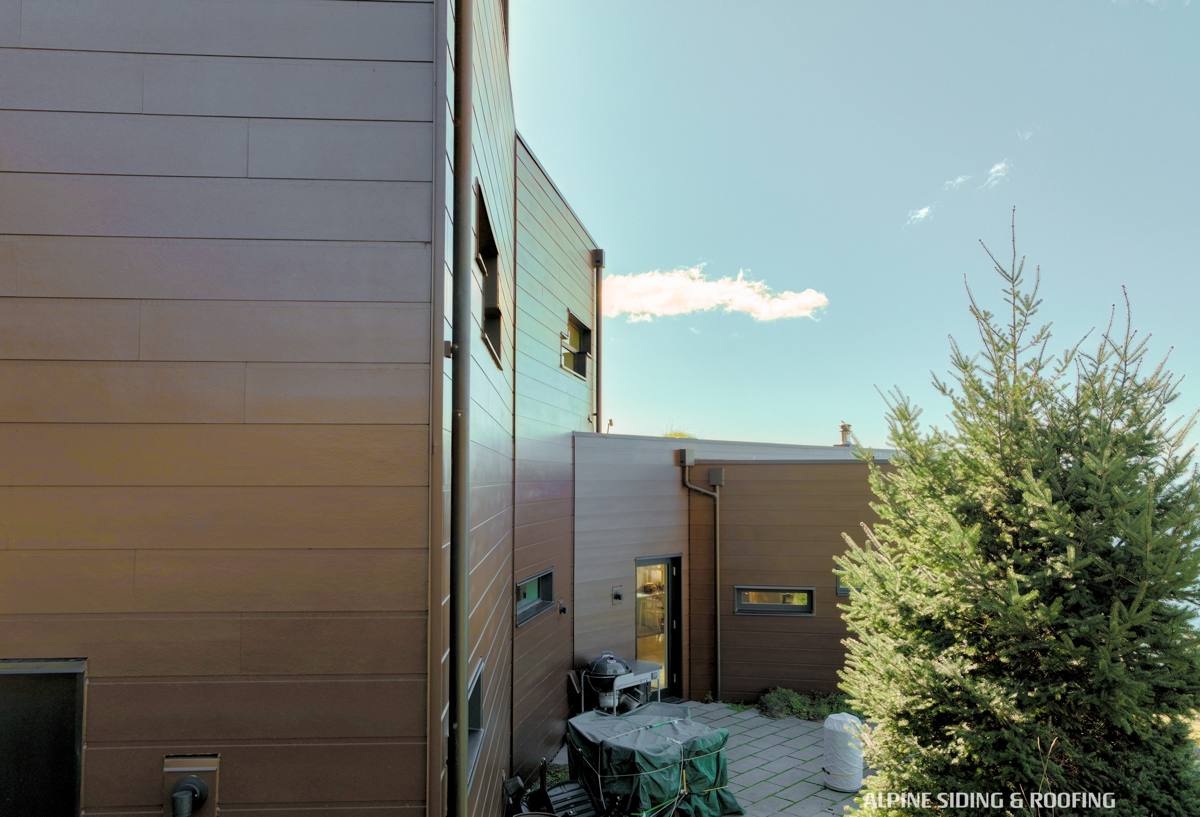
What Salt Air and Driving Rain Actually Do to Siding
Salt air
Airborne salt is corrosive and hygroscopic — it pulls moisture out of the air and holds it against whatever surface it lands on. Over years, that constant low-grade dampness accelerates fastener corrosion, breaks down caulk and sealant faster than inland exposure, and eats away at paint film on materials that rely on field-applied paint for protection.
Driving rain
Wind-driven rain doesn't behave like rain falling straight down. It gets forced up under laps, into butt joints, and behind trim boards that would stay dry in calmer weather. If the water-resistive barrier, flashing, and drainage plane behind the siding aren't detailed correctly, that water finds its way into the wall assembly — and by the time it shows up as a stain or soft spot on the inside, the damage has usually been building for a while.
Moss and shade
Moss needs moisture and shade to establish, and Birch Point has plenty of both for a good chunk of the year. Moss holds water against a surface far longer than open exposure would, which is exactly the kind of sustained dampness that punishes moisture-sensitive siding materials and softens caulked joints.
What a Correct Siding Installation Involves Here
The siding itself is only part of the system. On a Birch Point home, we pay just as much attention to what's happening behind the boards.
- A continuous water-resistive barrier, lapped correctly so water sheds down and out rather than behind the barrier
- A drainage gap (rainscreen) that lets any water that does get past the siding drain out and lets the wall assembly dry rather than trap moisture
- Properly flashed windows, doors, and penetrations — flashing tape and metal flashing installed in the correct sequence, not just caulk covering a gap
- Fastener placement and spacing that follows the manufacturer's specification for the wind and moisture exposure of a shoreline lot
- Correct clearance between the bottom of the siding and grade, decks, and roof lines so water and debris don't sit against the board
- Caulking only where the manufacturer calls for it — over-caulking traps moisture just as badly as leaving a real gap unsealed
Skip any one of these and the siding can look fine for a year or two while the wall behind it is already taking on water. This is where a lot of siding problems in coastal Whatcom County actually start — not with the siding material itself, but with shortcuts in the water management behind it.
Why We Install Only James Hardie Fiber Cement
We standardized on James Hardie for every home we side, including in Birch Point, because it holds up to exactly the conditions this location deals with.
It doesn't rot, and it doesn't feed moss the way wood-based products do
Fiber cement is cement, sand, and cellulose fiber — there's no wood fiber for moisture to break down and no organic food source for moss and mildew to root into the way there is with wood-based siding. In a shaded, damp environment like Birch Point, that difference matters more than it would on a dry inland lot.
ColorPlus factory finish
Hardie's ColorPlus finish is baked on at the factory under controlled conditions, not brushed or sprayed on-site. It's engineered to hold color and resist the fading and chalking that salt air and UV exposure cause faster on field-applied paint. It also carries its own finish warranty separate from the substrate warranty.
HZ engineering for this climate zone
Hardie manufactures its siding in different HZ formulations engineered for different climate exposures. The product line specified for the Pacific Northwest is built to perform in the moisture and freeze-thaw conditions this region sees, rather than a one-size-fits-all formulation.
Non-combustible
Fiber cement doesn't burn. That's a separate benefit from moisture performance, but it's part of why we don't split our installs across multiple product lines — everything we put on a home should be a product we're confident standing behind for the long haul.
We don't install LP SmartSide, vinyl, or cedar, and this is why: each of those products asks a homeowner to accept a trade-off — more maintenance, more moisture sensitivity, more repainting, or a shorter realistic lifespan on an exposed, damp lot — that we don't think makes sense to build into a home in this location.
How Siding Materials Compare in a Shoreline Environment
| Material | Moisture Behavior | Maintenance in This Climate | Typical Finish Life |
|---|---|---|---|
| James Hardie fiber cement | Does not rot or swell; resists moisture-driven damage | Occasional wash; no repainting on ColorPlus finish | Factory finish warranty; long service life when installed to spec |
| Vinyl | Doesn't rot, but can warp, crack, or fade; seams and laps can let water track behind panels | Low, but limited repair options if damaged or faded | Color is molded-in but fades unevenly over time; not repaintable in most cases |
| LP SmartSide (engineered wood) | Wood-based strand product; cuts and edges need sealing and ongoing attention to stay ahead of moisture | Field-applied finish needs monitoring and eventual repainting | Depends heavily on installation detailing and upkeep |
| Cedar | Natural wood; absorbs and releases moisture, prone to cupping, splitting, and rot in damp, shaded conditions | Regular refinishing or staining; highest ongoing maintenance | Shortest realistic lifespan in this climate without heavy upkeep |
This isn't a knock on those products in every application — vinyl and engineered wood both have a place in the market. It's a statement about what we're willing to put our name behind on a lot that deals with salt air, driving rain, and extended shade for months at a time.
Our Process on a Birch Point Job
- Site walk and assessment. We look at sun and wind exposure on each elevation, existing moisture damage, sheathing condition, and how water currently moves around the house before we ever talk product or price.
- Tear-off and sheathing check. Removing the old siding is also when hidden rot or water damage shows up. We address what we find before anything new goes up — covering a bad wall with new siding just delays the problem.
- Water-resistive barrier and rainscreen. This is the layer that does the real work of keeping a wall dry over decades, and it's the layer that's invisible once the job is done.
- Flashing at every window, door, and penetration. Sequenced correctly so water is always directed out and down, never trapped.
- Hardie installation to manufacturer spec. Fastener pattern, clearances, and joint treatment set the way Hardie specifies for this climate zone — not shortcuts to save time.
- Trim, caulking, and final detail work. Only where it belongs, done clean.
- Walkthrough and cleanup. We show you the work and clear the site.
What Affects Cost on a Birch Point Siding Job
| Factor | Why It Matters |
|---|---|
| Home size and elevation count | More wall area and more corners, gables, and dormers mean more material and more labor hours |
| Condition of existing sheathing | Hidden rot or water damage found during tear-off adds repair work before new siding can go up |
| Access and site conditions | Tight lots, slopes, decks, or landscaping close to the house can slow staging and increase labor time |
| Trim and detail complexity | Homes with more windows, custom trim, or architectural detail take longer to flash and finish correctly |
| Story height | Second-story and steep-roof work requires more scaffolding or lift time |
| Color and profile selection | Some ColorPlus colors and plank profiles carry different material costs than others |
We'll walk your specific home and give you a real number rather than a rough guess pulled from a price-per-square-foot chart — every lot in Birch Point sits a little differently relative to wind and water.
Living With Hardie Siding in a Moss-Prone, Salty Environment
Once the siding is installed correctly, upkeep in Birch Point is genuinely simple compared to what wood or vinyl siding demands in the same conditions.
- Rinse siding periodically to clear salt residue and organic buildup, especially on shaded elevations
- Keep gutters clear so overflow doesn't run down the face of the siding and feed moss growth
- Keep landscaping and tree limbs trimmed back from the walls so air can move and surfaces can dry
- Check caulking at trim and penetrations every year or two and have any gaps addressed before winter rains set in
- Address any impact damage promptly — a chipped or cracked board is a small repair now and a bigger one later if water gets behind it
Why a Crew That Already Works Birch Point Makes a Difference
Siding installation done to a manufacturer's general specification is the baseline. Doing it right for a specific shoreline lot means knowing which elevations of a Birch Point home typically take the worst of the wind-driven rain, how much shade a given lot holds onto through the year, and where moss tends to establish first on homes in this area. A crew that has done this work up and down the Blaine shoreline brings that judgment to your job without having to learn it on your house.
It also means understanding the practical side of working in this part of Whatcom County — permitting through the City of Blaine or the county, seasonal weather windows for tear-off and install, and scheduling around the wetter stretches of the year so a home isn't left exposed longer than necessary.
Ready to Talk About Your Home
If you're planning a siding project in Birch Point, we're glad to walk the property, look at what your home is dealing with on each side, and put together a straightforward estimate — no pressure, no inflated scope. Reach out through the form below and we'll get a time on the calendar.