 Blaine Siding
 Composite Decking in Peace Arch: Built for What This Spot Actually Deals With
Peace Arch sits right up against the water and the border, which means it takes weather that inland Blaine and Whatcom County neighborhoods get in a lighter dose. Salt-laden air off the bay, wind-driven rain that finds its way into places a calm rain never would, and a moss season that runs longer here than almost anywhere else in the county — all of it works on a deck year-round, not just in the wet months. Composite decking handles that combination better than most materials, but only when it's specified and installed correctly for this specific exposure. A composite deck put together the way you'd build one in a drier, inland town won't hold up the same way out here.
This page covers what Peace Arch homes specifically need from a composite deck, what a correct installation actually involves, and how we approach the job differently because we already work this neighborhood.
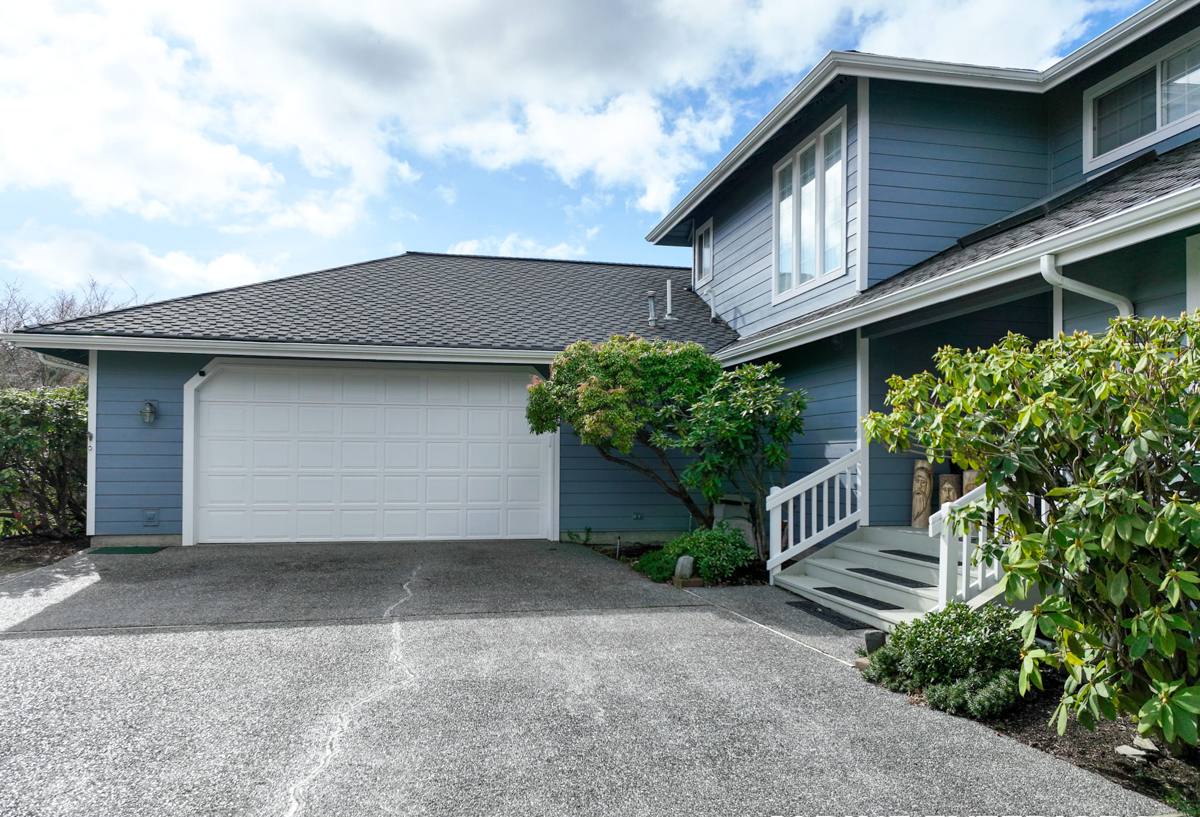
What Blaine's Marine Climate Does to a Deck Over Time
Salt Air and Hardware
Salt air doesn't just sit on the surface of a deck board — it gets into every metal connection point: fasteners, joist hangers, railing brackets, post bases. Standard galvanized hardware corrodes faster this close to the water than it does even a few miles inland. Once a fastener starts rusting, it weakens the connection long before the problem is visible from the surface, and by the time you see rust streaking on the boards, the hardware underneath is usually further along than it looks.
Driving Rain and Where Decks Actually Fail
Most deck failures near the water don't start on the walking surface — they start where the deck meets the house, at the ledger board, and at any point where water can get pushed sideways or upward by wind instead of just running off. Driving rain forces moisture into joints and fastener holes that a straight-down rain would never reach. A deck built without real attention to ledger flashing and end-grain sealing on the framing will eventually rot from the inside, well before the composite boards on top show any wear.
A Long Moss Season
Whatcom County's moss season runs longer near the water, where shade, humidity, and cooler temperatures overlap for much of the year. Moss and algae growth on a horizontal deck surface isn't just cosmetic — it holds moisture against the boards and, more importantly, turns walking surfaces slick fast. Composite boards vary a lot in how they resist this, and board texture, capping, and airflow underneath the deck all matter more here than they would in a drier climate.
Composite vs. Wood vs. PVC for This Exposure
Every decking material can be made to work somewhere. The question for a Peace Arch property is which one holds up with the least fuss given salt air, driving rain, and heavy shade-driven moss growth.
| Material | Moisture & Salt-Air Behavior | Maintenance Load | Typical Lifespan |
|---|---|---|---|
| Pressure-treated wood | Absorbs and releases moisture constantly; prone to cupping, splintering, and fastener corrosion near the coast | Annual cleaning, sealing, and spot repairs | 10–15 years before major repair or replacement |
| Composite (capped) | Resists moisture absorption; capped boards shed water and resist salt staining well | Periodic washing; no sealing or staining | 25–30+ years with proper install |
| Solid PVC | Fully moisture-proof; performs well in salt air but can feel and flex differently underfoot | Low; occasional cleaning | Comparable to or longer than composite |
Composite lands in the middle on upfront cost — more than pressure-treated wood, generally less than solid PVC — but it's the material we recommend most often for this stretch of Blaine because it balances moisture performance, appearance, and cost without asking the homeowner to keep up with sealing and staining on a schedule most people don't actually stick to.
What a Correct Composite Deck Install Involves
The composite boards themselves get most of the attention, but the parts of the job that determine whether a deck lasts 10 years or 30 are mostly hidden once it's finished.
Framing and Substructure
Joists need proper spacing for the specific composite product being used — composite boards can require tighter joist spacing than wood in wet, shaded conditions to prevent long-term sag. We also run joist tape over the tops of the framing before boards go down, which protects the wood substructure from the moisture that inevitably works its way through gaps over time. This step gets skipped more often than it should, and it's one of the main reasons a deck's frame rots out from underneath while the composite surface still looks fine.
Flashing and Water Management
Where the deck attaches to the house, proper ledger flashing directs water away from the wall and framing instead of letting it collect at the connection point. Given how much driving rain this area sees, we also pay close attention to any point where two surfaces meet — stair stringers, post bases, rim joists — because those are the spots where wind-driven moisture gets pushed in rather than running off naturally.
Fasteners and Hidden Fastening Systems
Most composite decks today use a hidden fastener system that clips boards together from underneath, which avoids the exposed screw holes that collect water and eventually rust or stain. We use fasteners and clips rated for coastal, high-moisture exposure rather than standard-grade hardware, since that's the part of the deck most likely to fail early this close to the water.
Ventilation Underneath
Airflow underneath the deck matters more here than in a drier climate — it's what lets the framing dry out between rain events instead of staying damp for weeks at a time through a wet Whatcom County winter. Low-clearance decks or decks built tight against grade need extra attention to drainage and skirting design so they don't trap moisture underneath.
Our Process, Start to Finish
- On-site assessment. We look at sun and shade exposure, existing drainage, proximity to the water, and the condition of any existing structure before recommending a board and substructure spec.
- Design and material selection. We walk through composite board options with you, including board profile, color, and hidden-fastener hardware, based on how much moss and moisture exposure that particular spot on the property gets.
- Tear-out and framing check. If we're replacing an existing deck, we inspect the framing underneath before building on top of it — reusing rotted or undersized framing is a shortcut we don't take.
- Framing and flashing. Joist spacing, joist tape, and ledger flashing get done to spec before a single composite board goes down.
- Decking installation. Boards are installed with hidden fasteners, proper gapping for drainage and seasonal expansion, and attention to consistent board direction and pattern.
- Railings and finishing details. Railing systems, stairs, and any picture-frame border trim go in last, using hardware rated for coastal exposure.
- Final walkthrough. We go over the finished deck with you, including what maintenance it actually needs — which, for a properly installed composite deck, is very little.
Railings and Hardware Choices That Matter Here
Railings take as much salt-air and rain exposure as the deck surface, sometimes more, since vertical posts and horizontal rails catch wind-driven rain from the side. We spec railing hardware and post bases rated for coastal or marine-grade exposure rather than standard interior-grade fasteners, and we make sure post bases have a way to shed water rather than trap it against the base of the post. This is a small line item on a deck estimate but one of the more common places we see premature failure on decks that weren't built with this exposure in mind.
Maintenance Peace Arch Homeowners Actually Need to Do
One of the real advantages of composite over wood is how little upkeep it needs — but "little" isn't "none," especially with this much moisture and shade in play.
- Sweep or rinse debris and organic buildup off the deck regularly, especially in shaded areas where moss and algae take hold fastest
- Wash the deck surface once or twice a year with a composite-safe cleaner to prevent surface staining before it sets in
- Check railing posts and stair connections annually for any looseness, which can signal hardware corrosion underneath
- Keep gutters and downspouts near the deck clear so runoff isn't dumping extra water onto or under the structure
- Clear debris from underneath the deck periodically so airflow can keep doing its job
- Avoid pressure-washing at high pressure directly into board seams, which can force water into the substructure
Permits and Building Near the Water
Deck projects in Blaine, particularly ones close to the shoreline or within setback zones, can involve permitting and review beyond a standard inland deck build. Requirements vary by property and location, so rather than guess at your specific situation, we check with the City of Blaine on permitting and setback questions as part of planning your project, and we handle that coordination as part of the job rather than leaving it for the homeowner to sort out separately.
Why a Crew That Already Works Peace Arch Matters
Composite decking is a mature, well-understood product, but installing it correctly in a marine environment is a different job than installing it inland. A crew that hasn't worked this stretch of coastline regularly may not think to spec tighter joist spacing for shaded, damp conditions, use coastal-rated hardware by default, or pay the extra attention to flashing that driving rain here demands. None of that shows up as a problem on install day — it shows up two, five, or ten years later, as soft framing, rusted hardware, or a deck surface that stays slick with moss far longer than it should.
Working Peace Arch and the rest of Blaine regularly also means we're familiar with the range of site conditions this neighborhood presents — proximity to the water, exposure angles relative to prevailing wind and rain, and the kind of shade patterns that drive moss growth on a given lot. That familiarity shapes the recommendations we make before a single board is ordered, not just how the crew executes once the job starts.
Get a Straightforward Estimate
If you're planning a new composite deck or replacing an aging one in Peace Arch, we're happy to take a look and walk you through what your specific site needs — no pressure, no upsell on materials you don't need. Use the form below to request a free estimate.