 Blaine Siding
 Windows Built for the Nooksack Climate, Not a Showroom in Arizona
Nooksack sits in the part of Whatcom County where the weather does real, measurable damage to a house over time. It's not dramatic — no hurricanes, no hailstorms — but it's relentless. Months of low-intensity rain, humid air moving up the Nooksack River valley, and a marine influence off the Salish Sea and Semiahmoo Bay combine to keep wood, trim, and window seals wet far more of the year than most window manufacturers assume when they write their installation instructions. A window that's rated fine for a dry climate can still fail early here if it's installed without accounting for how much moisture this region actually pushes at a house.
We install windows across Whatcom County out of Blaine, and Nooksack-area homes get the same attention: correct flashing, correct sealant, and a build sequence that assumes water will try to get in and needs somewhere to go besides your wall cavity.
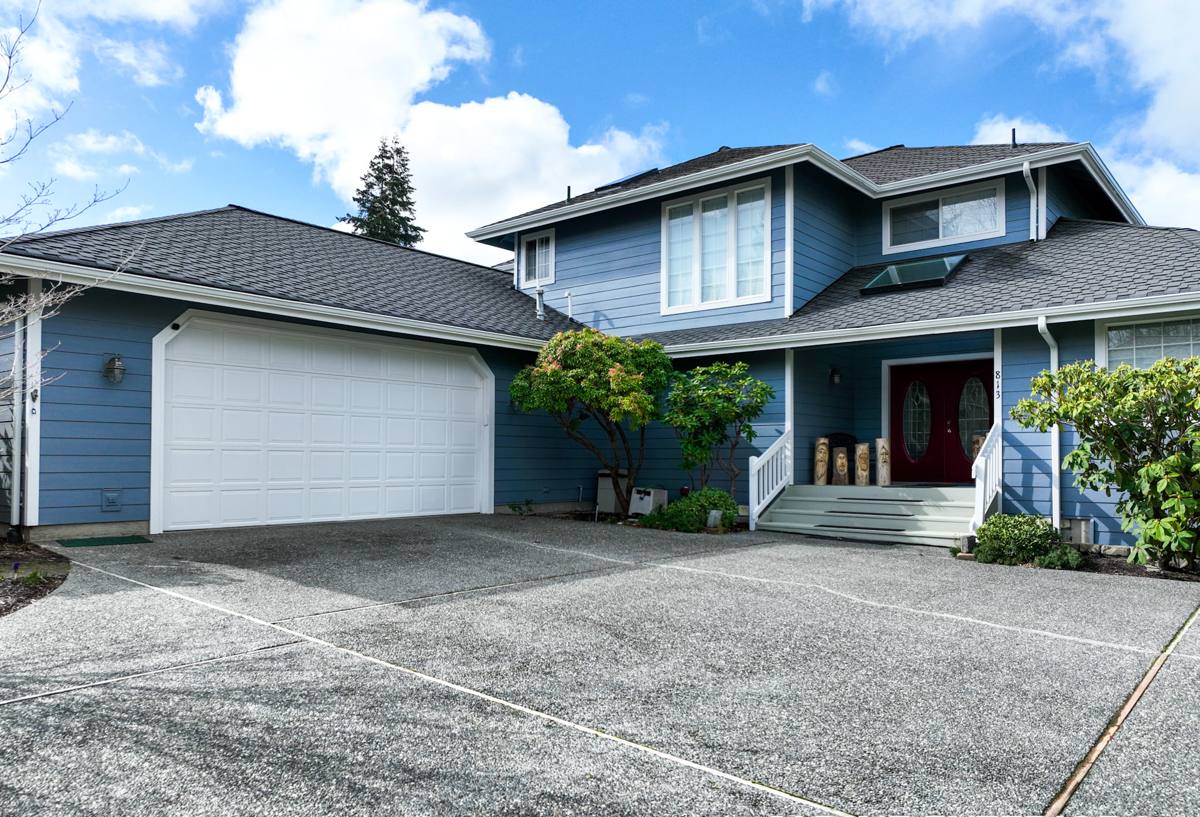
What This Climate Actually Does to Windows Over Time
Moss and Organic Growth
Whatcom County's long, cool, damp season is ideal for moss and algae growth on any surface that stays wet and shaded — including window sills, sashes, and the trim around a window. Once organic growth gets a foothold on wood trim or in a compromised sealant joint, it holds moisture against the surface constantly, which accelerates rot far faster than plain rain exposure would on its own.
Driving Rain and Wind-Driven Water
Rain here rarely falls straight down. Wind off the water pushes it sideways into wall assemblies, and a window opening is the weakest point in that wall for water intrusion. If the flashing details aren't done correctly — house wrap lapped the wrong way, sill pan missing or improperly sloped, head flashing skipped — water finds the path of least resistance, and that path is usually into the framing around the window, not back outside where it belongs.
Salt Air and Corrosion
Proximity to Semiahmoo Bay and the Salish Sea means homes throughout this part of Whatcom County are exposed to airborne salt, especially on north and west-facing elevations that catch weather off the water. Salt air accelerates corrosion of exposed fasteners, low-grade hardware, and unprotected metal flashing. It's a slower process than rain damage, but over a decade or two it shows up as pitted hardware, stained trim, and hinges or locks that stop working smoothly.
Signs a Nooksack Home Needs New Windows or a Proper Reinstall
Some of these show up gradually, which is exactly why they get ignored until the damage spreads into the wall framing. Worth checking for:
- Soft or spongy wood at the window sill or the trim directly below it
- Visible moss, algae, or black staining on the sill, sash, or exterior trim
- Fogging or a permanent haze between double-pane glass (a sign the seal has failed)
- Drafts you can feel near the frame even with the window fully latched
- Paint that keeps bubbling or peeling in the same spot no matter how often it's repainted
- Windows that are hard to open, close, or lock — frames can swell or warp with chronic moisture exposure
- Visible daylight or gaps around the frame from outside
- A noticeably higher heating bill compared to similar homes nearby
Any one of these can be minor on its own. Several together, especially soft wood plus staining, usually means water has been getting past the window for a while and it's worth having someone look at the wall assembly, not just the window itself.
What a Correct Window Installation Actually Involves
Window installation looks simple from the outside — take the old one out, put the new one in — but the parts that actually determine whether it lasts fifteen years or fifty happen in a sequence most homeowners never see.
Flashing and Water Management
Every opening needs a sloped sill pan so any water that does get past the window drains back out, not into the wall. Housewrap needs to be cut and lapped in the correct order — bottom flap out, side flanges taped, top flap last — so water sheds downward and outward like shingles, never backward into the framing. Skipping or rushing this step is the single most common cause of hidden rot behind a "successfully installed" window.
Insulation and Air Sealing
The gap between the window frame and the rough opening needs to be filled with a low-expansion foam or backer rod and sealant — not stuffed with fiberglass batting, which does little to stop air movement and holds moisture against the frame if it ever gets wet. Done right, this step is what actually delivers the draft-reduction and comfort improvement homeowners are usually chasing when they replace windows in the first place.
Fastening and Structural Integrity
Windows need to be shimmed plumb, level, and square before they're fastened, and fastened with corrosion-resistant screws through the frame into structural framing — not just through the nailing flange into sheathing. In a salt-air environment, fastener quality matters more than it does further inland; the wrong hardware can start corroding within a few years of exposure.
Choosing a Window Frame Material for This Climate
| Frame Material | How It Handles This Climate | Maintenance |
|---|---|---|
| Vinyl | Doesn't rot or corrode; handles moisture well; can expand/contract with big temperature swings, less of a factor here than in extreme climates | Low — occasional cleaning, no painting |
| Fiberglass | Very stable dimensionally, strong moisture and corrosion resistance, holds paint well if a custom color is wanted | Low — very durable, higher upfront cost |
| Wood (unclad) | Classic look but needs consistent upkeep in a wet, moss-prone climate — the material most vulnerable to the rot issues described above if maintenance lapses | High — regular painting/sealing required |
| Wood-clad (aluminum or vinyl exterior) | Wood interior warmth with a weather-resistant exterior shell; performs well here as long as the cladding and flashing are detailed correctly at the joints | Moderate — exterior is low-maintenance, interior wood still needs occasional attention |
There's no single "correct" material for every house — it depends on the home's style, budget, and how much upkeep the owner wants to commit to. Our standard is to explain the real trade-offs (moisture behavior, upkeep, cost) honestly rather than push whatever has the best margin.
What Drives the Cost of a Window Replacement Project
| Factor | Why It Matters |
|---|---|
| Frame material and glass package | Vinyl, fiberglass, and wood-clad windows carry different material costs; double vs. triple pane and low-E coatings add cost but improve performance |
| Number and size of openings | More openings and larger custom sizes mean more labor and material, straightforwardly |
| Condition of the existing opening | If we find rot or water damage once the old window is out, repairing the framing before the new window goes in adds time and cost — this is common enough in this climate that we build in an inspection step before quoting a firm number |
| Full-frame replacement vs. insert replacement | An insert (new window into the old frame) is cheaper and faster but only appropriate when the existing frame is sound; full-frame replacement costs more but is the right call whenever there's flashing or rot concerns |
| Access and site conditions | Second-story windows, tight landscaping, or limited access can add labor time |
We give a broad range up front and a firm number after we've actually looked at the openings — quoting a precise price sight-unseen on an older Nooksack-area home isn't honest, because what's hiding behind the trim varies a lot from house to house.
Our Process on a Nooksack Job
- On-site assessment. We look at each opening, check for existing water damage or soft framing, and measure for accurate ordering.
- Honest scoping. If we expect framing repair to be needed, we say so before ordering materials, not after we've already opened the wall.
- Removal and inspection. Old windows come out carefully, and we inspect the rough opening and sheathing before anything new goes in.
- Repair as needed. Any rot or compromised framing gets addressed before the new window is set — installing a new window over a damaged opening just hides the problem for a few more years.
- Sill pan, flashing, and housewrap integration done in the correct sequence for proper drainage.
- Setting, shimming, and fastening the window plumb, level, and square with corrosion-resistant hardware.
- Insulating and air-sealing the gap around the frame.
- Exterior trim, caulking, and final weatherproofing to shed water and resist the moss and algae growth common in this climate.
- Walkthrough so the homeowner can operate every window and confirm everything's sealed and working before we consider the job done.
Why Hire a Crew That Already Works This Area
Window installation isn't identical everywhere. A crew that mostly works drier inland climates can do competent work and still get flashing and drainage details wrong for a house exposed to driving rain and salt-laden air off the water. Working across Whatcom County out of Blaine means we see the same failure patterns repeatedly — moss-driven rot at sills, corroded hardware on water-facing elevations, water damage from short-cut flashing — and we build our installation sequence around avoiding those specific problems rather than a generic checklist. We're also familiar with the local permitting process and typical construction of homes in this area, which keeps a project moving instead of stalling on paperwork or surprises.
Maintenance That Actually Extends Window Life Here
A correctly installed window still benefits from basic upkeep in this climate. Rinsing sills and tracks periodically discourages moss and algae from taking hold. Keeping gutters clear prevents overflow from running down onto window heads. Reapplying exterior caulk if it cracks or separates — which sealants eventually do — keeps the water management system doing its job. None of this is expensive or time-consuming, but skipping it is how a well-installed window ends up with the same problems as a poorly installed one, just on a longer timeline.
If you're weighing a window replacement or repair for a Nooksack-area home, we're happy to take a look and give you a straightforward, no-pressure estimate — including telling you honestly if a repair makes more sense than full replacement. Use the form below to get started.