 Blaine Siding
 Asphalt Shingle Roofing in Nooksack: The Weather This Roof Actually Faces
Nooksack-area homes near Blaine sit in one of the more demanding corners of Whatcom County for a roof to hold up in. The same marine air that moves in off the water brings salt with it, storms come through with real wind behind the rain rather than a gentle straight-down soak, and mild, damp weather gives moss a growing season that runs most of the year on any roof plane that doesn't get much direct sun. An asphalt shingle roof built and installed for a drier, calmer climate tends to show its age here years ahead of schedule — not because asphalt shingles are a poor choice, but because the installation details that matter most in this climate are easy to skip and hard to see once the job is finished.
We work roofs, siding, windows, and decks, and roofing gets the most direct exposure to everything this climate throws at a house. This page is specifically about asphalt shingle roofing for homes in and around Nooksack — what the local weather actually does to a shingle roof, what a correct installation involves, how our process runs from first inspection to final walkthrough, and why it matters to hire a crew that already works this area regularly instead of one passing through.
Salt Air and Corrosion
Homes near Blaine sit close enough to the water that salt-laden air is a regular factor, not an occasional one. Salt speeds up corrosion on exposed fasteners, flashing, and any metal roof component that isn't specifically rated for it. A roofing job that uses standard-grade hardware instead of corrosion-resistant fasteners and flashing will usually show rust staining and early hardware failure well before the shingles themselves are due for replacement.
Driving Rain, Not Straight-Down Rain
Storms moving through this part of the county rarely drop rain straight down. Wind pushes it sideways into roof valleys, around chimneys and vent pipes, and under any flashing that isn't lapped correctly. That sideways load is a heavier test of a roof's details than a simple rainfall total suggests, and it's exactly where a roof with weak flashing or aging underlayment starts to leak first — usually well before the shingles look obviously worn from the ground.
A Long Moss Season
Mild temperatures and near-constant moisture add up to a moss and algae season that can run close to year-round on shaded or north-facing roof planes, especially under tree cover. Moss does more than look bad on a roof — it holds water against the shingle surface, works under shingle edges over time, and can lift or loosen roofing if it's left unchecked through more than one wet season.
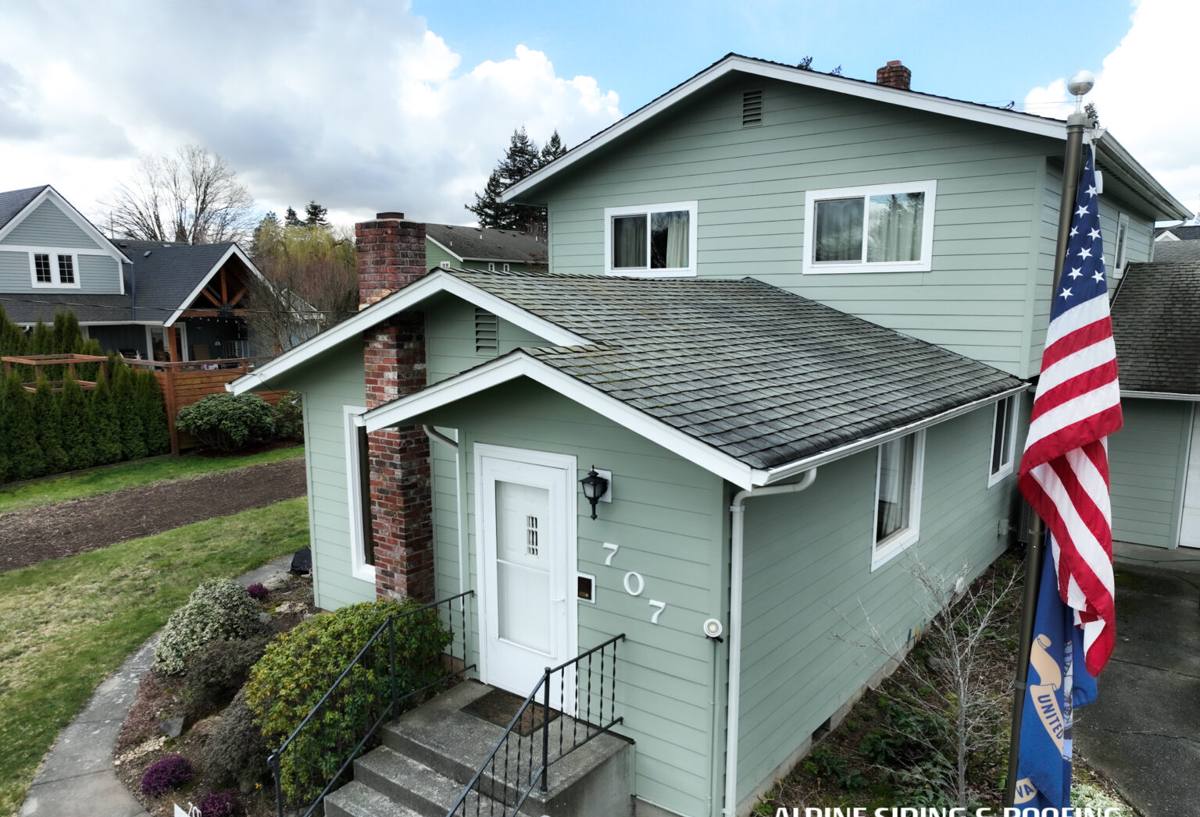
Why Asphalt Shingles Still Make Sense for a Nooksack Roof
Asphalt shingles remain one of the most practical roofing choices for this climate when they're specified and installed correctly. They're widely available in configurations built for wind resistance and algae resistance, they're more affordable up front than metal or premium synthetic roofing, and a well-installed architectural shingle roof holds up for decades in Whatcom County conditions — provided the underlying details are right. The mistake we see most often isn't homeowners choosing asphalt shingles; it's a roof where the shingle brand got all the attention and the underlayment, flashing, and ventilation underneath it were treated as an afterthought.
That said, asphalt shingles aren't automatically the right call for every roof. A heavily shaded, low-slope roof under mature trees carries more moss and moisture risk than an open, sun-exposed roof, and that's worth factoring into the material conversation before a homeowner commits. We'll walk through that trade-off honestly rather than defaulting to whatever's easiest to sell.
Choosing the Right Shingle for a Nooksack Roof
| Shingle Type | Moss & Moisture Behavior | Wind Rating | Realistic Lifespan Here |
|---|---|---|---|
| Standard three-tab | No inherent algae resistance; moss takes hold faster on shaded planes | Lower; more prone to lifting in wind-driven storms | 15-20 years |
| Architectural (laminated) | Better shedding profile; algae-resistant granule options widely available | Higher; rated for stronger sustained winds | 25-30 years |
| Algae-resistant architectural | Copper- or zinc-infused granules actively resist moss and algae growth | Same as standard architectural | 25-30 years, often better appearance retention |
| Impact-resistant (Class 4) | Standard moisture behavior; more resistant to physical damage from debris | Highest available in shingle roofing | 25-30 years |
For a shaded or north-facing roof plane in Nooksack, algae-resistant architectural shingles are usually worth the modest upfront difference over standard architectural shingles, simply because the moss pressure here is high enough that the resistant granules earn their cost back in reduced cleaning and earlier replacement avoided. For sun-exposed roof planes with less tree cover, standard architectural shingles are often a perfectly reasonable, lower-cost choice.
What a Correct Installation Involves
Shingle quality only matters as much as what's underneath and around it. On every asphalt shingle roof we install in this area, that means:
- Ice-and-water shield at eaves and valleys — the spots where water and wind-blown debris naturally collect and linger longest
- Synthetic underlayment rated for sustained moisture exposure, not a bare minimum-code product
- Properly lapped, sealed flashing at every valley, chimney, vent pipe, skylight, and roof-to-wall transition
- Corrosion-resistant fasteners and metal components, chosen for salt-air exposure rather than standard-grade hardware
- Balanced attic and roof deck ventilation, so moisture escapes instead of getting trapped against the underside of the roof deck
- Correct nailing pattern and shingle exposure per the manufacturer's published spec, which is what actually keeps a roof's wind rating and warranty intact
None of this adds significant cost relative to the shingles themselves, but skipping any of it is exactly what turns a twenty-five-year roof into a fifteen-year roof in a climate this wet.
How Our Process Works on a Nooksack Roofing Job
Inspection and Honest Assessment
We start by getting on the roof, not just looking at it from the ground. That means checking shingle condition, flashing, ventilation, and — where visible — the roof deck itself for soft spots or moisture staining. That assessment drives the estimate and the material recommendation, rather than a flat per-square guess.
Tear-Off and Deck Check
Once old shingles come off, we check the roof deck for rot, delamination, or soft spots before anything new goes down. Covering a compromised deck with new shingles just hides a problem that gets worse underneath — we'd rather find and repair it at this stage than have it resurface as a leak two years later.
Underlayment and Flashing First
Given how much roof failure in this climate traces back to water getting past flashing and underlayment rather than through the shingles themselves, this step gets careful, unhurried attention — especially at valleys, chimneys, and any wall transition.
Installation to Manufacturer Spec
Shingle manufacturers publish specific nailing patterns, exposure, and ventilation requirements that their wind and product warranties depend on. We install to that spec as the baseline, not as an upsell.
Cleanup and Final Walkthrough
We clear the site of old roofing debris and nails, then walk the finished roof with the homeowner, covering what was done and what maintenance to expect going forward, before calling the job complete.
Repair or Full Replacement? How We Help You Decide
Not every roofing problem on a Nooksack home calls for full replacement, and we don't default to recommending one. We look at the roof's age, how much of the surface is affected, whether the deck underneath has moisture damage, and how many prior repairs the roof has already had. A localized leak on a roof that's otherwise sound is usually a straightforward repair. A roof nearing the end of its rated life with moss damage spread across multiple planes, or a deck showing soft spots from long-term moisture intrusion, is more honestly addressed with a replacement than another round of patchwork. We'll explain what we find and why, and give you the real trade-offs rather than steering toward whichever option pays better.
Signs a Nooksack Roof Needs Attention
- Moss buildup in valleys or on shaded slopes that returns quickly after cleaning
- Granules collecting in gutters or at the base of downspouts
- Curling, cupping, or missing shingles, especially after a windstorm
- Rust staining around fasteners, flashing, or vent pipes
- Water staining on interior ceilings near exterior walls or around chimneys
- Daylight visible through the roof deck when viewed from inside the attic
- Sagging in the roofline or soft spots underfoot when walked
Any one of these is worth a professional look. Caught early, most are a repair. Left through another wet season, several of them turn into a full tear-off.
Cost Factors for Nooksack Asphalt Shingle Roofing
| Factor | What Drives Cost | Local Climate Consideration |
|---|---|---|
| Roof size and pitch | Square footage, number of stories, steepness of slopes | Steeper, shaded planes may need extra moss-resistant material |
| Number of penetrations | Chimneys, vent pipes, skylights, valleys | Each is a flashing detail that needs correct sealing against wind-driven rain |
| Deck condition | Whether sheathing needs repair or replacement after tear-off | More likely on older roofs with a history of trapped moisture |
| Shingle tier chosen | Standard vs. algae-resistant vs. impact-resistant | Algae-resistant granules often pay for themselves on shaded lots |
These are general drivers, not a quote. Tree cover, roof orientation, and how close a given property sits to open water all vary house to house in this area, so we walk the roof before putting a real number on the work.
Why a Crew That Already Works Nooksack Matters
A crew that works roofs across this part of Whatcom County through every season sees how salt air, wind-driven rain, and moss actually behave on real houses over years, not just how a shingle performs on a data sheet. That local familiarity shapes practical decisions on install day — which roof planes in the Nooksack area need extra ice-and-water shield because of shade and slope, how much attention a given valley or chimney flashing detail actually needs, and which fastener and ventilation choices are worth the extra time so you're not dealing with a callback after the next storm off the water. It also means that if a warranty or maintenance question comes up years down the line, it's a call to a crew still working in the same area, not one that's moved on.
If your Nooksack-area home needs a roof inspection, a repair, or you're weighing a full asphalt shingle replacement, we're glad to take a look and give you a straightforward, honest read on what it actually needs. Reach out using the form below to schedule a free, no-pressure estimate.