 Blaine Siding
 Building New in Birch Point Means Building for the Water
Birch Point sits close enough to the water that salt air, wind-driven rain, and a long stretch of damp, mossy weather are simply part of owning a home there. If you're framing a new house or a major addition in this part of Blaine, the windows you choose and how they're installed will do more to determine your long-term maintenance headaches than almost any other exterior decision. New construction gives you a real advantage over a retrofit: the window opening, the flashing, and the water management plane can all be built correctly from the start, instead of patched around an existing wall.
We install new-construction windows for homes in Birch Point and the surrounding Blaine and Whatcom County area, and we build every opening with the assumption that wind-driven rain will hit that wall eventually. The goal isn't just a window that looks good on install day — it's a window and flashing assembly that's still performing the same way in fifteen or twenty years, after a lot of wet winters.
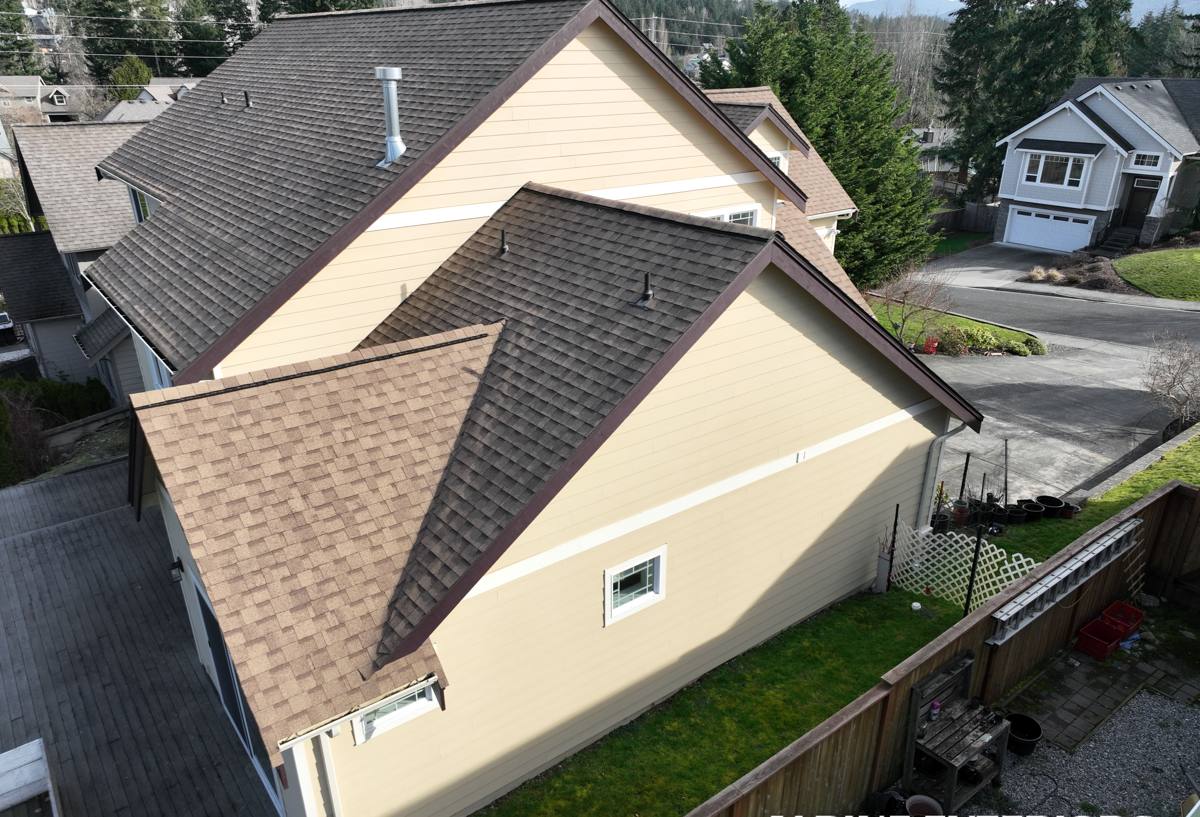
What Whatcom County's Coastal Climate Does to a Window Opening
Whatcom County gets a lot of rain, and Birch Point's exposure to the water adds wind and salt to that equation. A few specific things happen to window openings out here that don't show up the same way further inland:
- Wind-driven rain finds gaps. Ordinary rain falls straight down and mostly sheds off a wall. Wind-driven rain gets pushed sideways and upward into any seam, nail fin, or flange that isn't properly lapped and sealed.
- Salt air accelerates corrosion. Fasteners, flashing tape adhesives, and some window hardware degrade faster in a salt-air environment than they would a few miles inland. Material choice matters more here.
- Moss and algae hold moisture against the wall. Blaine's long damp season lets moss and algae establish on north- and shade-facing walls and around window trim. That growth holds water against the surface longer than a dry wall would ever see.
- Slow-drying conditions punish small mistakes. A minor flashing error inland might dry out between storms. On a Birch Point wall that stays damp for weeks at a time, the same error stays wet — and wet building materials are what eventually fail.
None of this means new construction here is a problem. It means the window opening has to be built with all of that in mind, not treated like a generic detail copied from a drier climate.
What a Correct New-Construction Window Install Actually Involves
The Rough Opening and Water Management Plane
Before a window ever goes in, the rough opening needs a continuous water-resistive barrier and a properly lapped flashing system — sill pan first, then side flashing, then head flashing, each one overlapping the layer below it so water is always directed outward and down, never trapped behind the window. On a Birch Point wall, we pay particular attention to the sill pan, since that's the spot most likely to collect wind-driven rain that gets past the window itself.
Sealing and Fastening
The nailing flange gets sealed with flashing tape rated for the temperatures and UV exposure it'll see during construction, and fasteners are chosen with the coastal environment in mind rather than whatever's cheapest at the yard. Sealant is used at the right points — not as a substitute for proper flashing, but as a backup layer where it belongs.
Window Selection for the Site
Not every window line is a good fit for a home sitting close to salt air and heavy weather exposure. We talk with homeowners about frame material, glazing options, and hardware finishes that hold up out here, and we're honest when a popular option isn't the right call for this particular site — that's a maintenance and longevity conversation, not a sales pitch.
Trim and Drainage Detailing
Exterior trim around a new-construction window needs a drainage gap behind it, not a tight caulked seam that traps moisture. This is one of the details that determines whether moss and algae get a foothold around the window in year two or stay away for a decade.
Comparing Window Frame Materials for a Birch Point Build
| Frame Material | How It Handles Salt Air & Moisture | Maintenance Over Time |
|---|---|---|
| Vinyl | Won't corrode; performs well with proper drainage detailing | Low — occasional cleaning, no painting |
| Fiberglass | Very stable, resists warping and corrosion in coastal exposure | Low — durable finish, minimal upkeep |
| Aluminum-clad wood | Good if flashing and sealing are done right; wood interior needs protection from any interior condensation | Moderate — exterior clad is low-maintenance, interior wood needs periodic attention |
| Bare wood | Most vulnerable to sustained damp conditions and salt exposure without diligent upkeep | Higher — regular painting/sealing required |
There's no single "right" material for every home — budget, architectural style, and how much upkeep an owner wants to take on all factor in. What matters is going in with realistic expectations about how each option behaves after a few Blaine winters, not just how it looks on the showroom floor.
Why the Installation Matters More Than the Window Brand
A high-end window installed with a rushed or incomplete flashing job will leak before a mid-range window installed correctly. We've seen this pattern enough on Whatcom County coastal properties to say it plainly: installation quality is the bigger variable. That's why we treat flashing sequence, sill pan drainage, and trim detailing as the parts of the job that can't be shortcut, regardless of which window line a homeowner chooses.
Our Process for New-Construction Window Installs
- Walk the plans with you. We review window schedules and rough opening sizes before framing is finalized, so there are no surprises when windows arrive.
- Coordinate with your builder or GC. New construction is a team effort — we work directly with whoever's running the build to keep the schedule moving.
- Build the water management plane correctly, opening by opening. Sill pan, WRB integration, and flashing sequence get the same attention on every single window, not just the ones facing the water.
- Set and fasten each window plumb, level, and square. A window that's slightly out of square puts ongoing stress on seals and hardware.
- Detail the exterior trim for drainage. This is where we build in the long-term defense against moss and trapped moisture.
- Walk the finished openings with you. You should understand what was done and why before we consider the job complete.
What to Ask Before Hiring Anyone for This Work
New-construction window installation looks straightforward from the outside — set the window, nail the flange, move on. The parts that actually determine whether you get a leak-free wall in year eight are the parts that aren't visible once the siding goes on. That's exactly why it's worth being selective about who does this work.
- Do they flash sill, sides, and head in the correct lapped order, every time?
- Can they explain their sealant and flashing tape choices for coastal exposure specifically?
- Do they detail trim with a drainage gap, or seal it tight against the wall?
- Are they familiar with Whatcom County's building requirements for water-resistive barriers and flashing?
- Will they coordinate directly with your builder or general contractor on scheduling?
- Can they speak to how different frame materials actually hold up in a salt-air environment, not just what's in stock?
A crew that already works in Birch Point and along the Blaine waterfront has usually already made — and learned from — the mistakes that show up in this exact climate. That's worth more than a lower bid from someone installing windows for the first time in a coastal wind-driven-rain environment.
Timing Your Window Install in a New Build
Windows typically go in once the structure is framed, sheathed, and the water-resistive barrier is up, and before siding starts. In Blaine's wet season, getting windows and their flashing in place quickly once the opening is ready matters — an exposed rough opening sitting through weeks of rain is not where you want your new build spending its time. We work with builders to slot window installation in at the right point in the schedule so the building stays protected.
Let's Talk About Your Birch Point Build
Every new build is a little different — lot exposure, architectural style, and budget all shape the right window and installation approach. If you're planning a new home or addition in Birch Point or elsewhere around Blaine, we're happy to walk the plans with you and talk through what makes sense for your site. Reach out for a free, no-pressure estimate using the form below.