 Blaine Siding
 Board & Batten Siding in Lynden: A Look That Has to Earn Its Keep
Board and batten has become one of the most requested siding profiles for homes in and around Lynden — the vertical lines read as clean, modern farmhouse or classic Pacific Northwest, and it pairs well with the barns, outbuildings, and larger lots common in this part of Whatcom County. But board and batten isn't just a style choice out here. The same vertical seams and exposed battens that give the look its character are also the parts of the assembly most exposed to weather, which means this profile either gets installed correctly for our climate or it becomes a maintenance headache within a few years.
This page is specifically about board and batten siding for homes in the Lynden area near Blaine — not a general overview of the style. If you're comparing this look for a home that sees regular marine air, wind-driven rain off the water, and long damp stretches under conifer cover, the details below are the ones that actually matter.
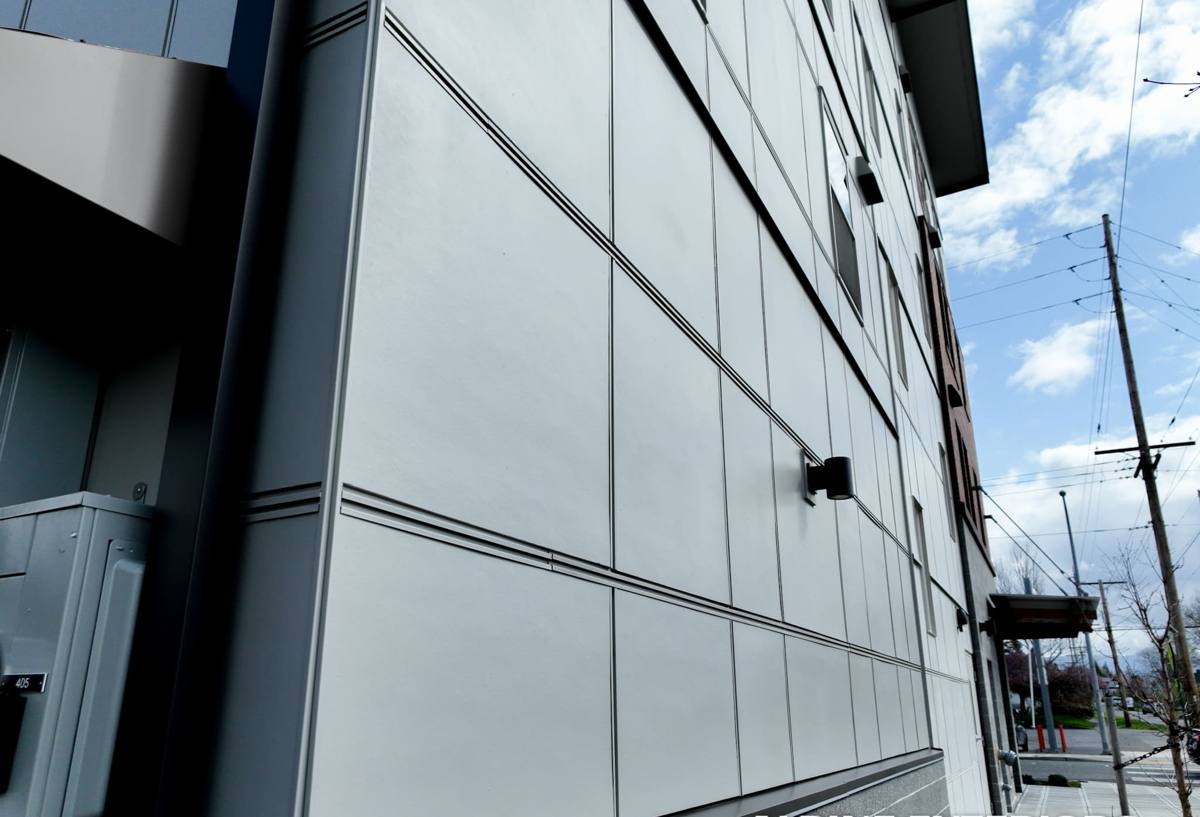
What Salt Air, Driving Rain, and Moss Season Do to This Profile
Whatcom County's coastal exposure means homes near Blaine and out toward Lynden deal with a combination most inland siding never has to survive:
- Salt-laden air that accelerates corrosion on fasteners, flashing, and any metal trim used around board and batten battens and joints.
- Driving, wind-pushed rain that doesn't just fall straight down — it gets forced sideways into vertical seams, corners, and the gaps behind battens if they aren't detailed correctly.
- A long moss and algae season, often eight or more months a year, driven by the shade, humidity, and mild temperatures typical of this part of the county.
Board and batten is more vulnerable to these three things than horizontal lap siding for one simple reason: it has more vertical seams per square foot of wall, and every seam is a potential path for water to get behind the cladding. On a wood-based or engineered-wood product, water that reaches the substrate at those seams causes swelling, delamination, and rot — often starting at the bottom of battens or around window returns, where it's hardest to spot until the damage has spread.
What a Correct Board & Batten Installation Actually Involves
A good-looking board and batten job and a job that survives twenty Whatcom County winters are not automatically the same thing. The visible battens are the least important part of the assembly — what's underneath decides whether the siding lasts.
The parts that matter but you can't see
- Weather-resistive barrier (WRB): A correctly lapped and taped barrier behind the panels, with every penetration sealed, is what actually keeps bulk water out — the siding itself is the second line of defense, not the only one.
- Rainscreen or drainage gap: Furring strips or a drainage mat behind the panels let any water that does get past the cladding drain and dry instead of sitting against the substrate. This matters more in Lynden's climate than almost anywhere else in the state.
- Fastener pattern and type: Board and batten needs fasteners placed and spaced to the manufacturer's engineering, using corrosion-resistant fasteners rated for coastal exposure — not whatever was left in the nail gun from the last job.
- Flashing at every horizontal transition: Window heads, belly bands, and roof-to-wall intersections all need proper flashing detail, because these are where driving rain finds the weak points first.
- Batten spacing and gap consistency: Battens need to be installed with enough of a gap over the underlying panel joint to allow for material movement without cracking sealant joints every year.
Skip any one of these and the siding can look right for a season or two before problems start showing up — usually right when they're most expensive to fix, after finish work and interior trim have gone back up around a window or door.
Material Choice: Why We Only Install James Hardie Board & Batten
We get asked regularly about LP SmartSide, vinyl board and batten panels, and even primed cedar boards for this profile. We don't install any of them, and it's worth explaining why rather than just saying no.
Where the alternatives fall short in this climate
Engineered wood products like LP SmartSide use a wood-strand substrate with a resin coating. It performs reasonably well in drier climates, but any breach in that coating — a cut edge left unsealed, a fastener that splits the surface, a seam that opens up — gives moisture a path into a wood-based core, and that's exactly the failure mode Lynden's rain and humidity are built to find. Vinyl board and batten panels solve the moisture-absorption problem but introduce their own: they're thinner, more prone to visible warping in sun and wind cycles, and the vertical battens are typically hollow or shallow-profile, which reads as noticeably less substantial up close than a true batten. Primed cedar looks and ages beautifully when it's maintained on a strict repainting schedule, but it demands more upkeep than most homeowners realistically keep up with, and once a coating lapses, cedar in a wet coastal climate can move fast toward rot.
Why fiber cement is different
James Hardie fiber cement is non-combustible, dimensionally stable across our wet winters and dry summers, and doesn't have a wood or vinyl core to swell, warp, or absorb bulk water. The ColorPlus factory finish is baked on under controlled conditions rather than field-applied, which means better adhesion and color retention than a job-site paint job — a real advantage when a house is going to spend eight months a year under damp, shaded conditions. Hardie's HZ5 product line is engineered specifically for climates like ours, with freeze-thaw and moisture performance built into the formulation rather than added after the fact. That's the standard we hold every board and batten installation to, and it's the reason we don't offer alternatives that we know will ask more of a homeowner in maintenance than they're getting back in performance.
Material Comparison for This Climate
| Material | Moisture Behavior | Maintenance Needed | Fit for Lynden's Climate |
|---|---|---|---|
| James Hardie fiber cement | Does not swell or rot; stable with correct rainscreen detailing | Occasional wash; no repainting on ColorPlus finish | Engineered for wet coastal climates (HZ5) |
| LP SmartSide / engineered wood | Vulnerable at cut edges and seams if coating is breached | Regular caulk and edge-seal inspection | Workable but higher risk in constant damp exposure |
| Vinyl board and batten | Won't rot, but can warp/fade with UV and temperature swings | Low, but limited repair options once damaged | Adequate but visually thinner profile |
| Primed cedar | Absorbs moisture once coating fails | Repainting/staining on a strict multi-year cycle | Handsome but demanding in this rainfall pattern |
Our Process for Board & Batten Projects Near Lynden
1. On-site assessment
We walk the exterior, check current siding and trim condition, look at drainage paths around the foundation, and note any areas — window heads, roof-to-wall intersections, ground clearance — that need extra attention given our rainfall and humidity.
2. Detailing plan before material arrives
Before any Hardie panels are ordered, we plan out flashing, WRB lapping, and rainscreen strategy for the specific house — board and batten hides fewer sins than lap siding, so the plan has to be right before the first panel goes up.
3. Tear-off and substrate check
Old siding comes off and we inspect sheathing for hidden moisture damage before covering it back up — this is often the point where problems from a prior installation get discovered and fixed rather than sealed in.
4. Installation to manufacturer spec
Fastener spacing, batten gap, and flashing details follow James Hardie's published installation requirements, which is also what keeps the manufacturer's warranty intact.
5. Final walkthrough
We go over the finished exterior with the homeowner, including what routine maintenance actually looks like for a Hardie board and batten exterior in this climate — which is far less than most homeowners expect.
Cost Factors for Lynden-Area Board & Batten Projects
| Factor | Why It Moves the Price |
|---|---|
| Wall complexity | Gables, dormers, and multiple roof-to-wall intersections add cutting time and flashing detail |
| Tear-off condition | Rotted sheathing found during tear-off adds repair scope before new siding goes on |
| Rainscreen system | A drainage gap behind the panels adds material and labor but is worth it in this climate |
| Trim and batten count | Tighter batten spacing for a bolder look means more material and more fastening labor |
| Color and finish | Factory ColorPlus finishes cost more upfront than field paint but remove a repaint cycle |
We give straightforward, written estimates based on the actual house, not a per-square-foot number pulled out of the air — every Lynden-area property has a different exposure profile depending on tree cover, wind direction, and how close it sits to open water.
Maintenance Checklist for Board & Batten Homeowners Here
- Rinse siding annually, focusing on north- and shade-facing walls where moss and algae take hold first.
- Check caulking at window and door trim yearly — this is the first seal to fail and the cheapest to catch early.
- Keep gutters clear so overflow doesn't run down and sit against batten bottoms.
- Trim back vegetation and tree limbs that keep a wall shaded and damp for extended periods.
- Watch for any soft spots or discoloration near ground level, a common early sign of moisture intrusion regardless of material.
Why Hiring a Crew That Already Works in Lynden Matters
Board and batten installation quality depends heavily on getting the weather-side details right for the specific climate a house sits in — and Lynden's exposure to salt air, wind-driven rain, and extended damp shade is different from what a crew coming from a drier part of the state is used to detailing for. A crew that regularly works Whatcom County homes has already seen where moisture finds its way in on this profile, in this weather, and builds the flashing and rainscreen plan around that experience rather than learning it on your house. That local repetition is worth more than a generic installation manual, especially on a siding style where the margin for error at every vertical seam is smaller than it looks.
If you're weighing board and batten for a home near Lynden or Blaine, we're happy to walk your property, talk through what your specific exposure calls for, and give you a straightforward, no-pressure estimate — fill out the form below to get started.