 Blaine Siding
 Why Birch Bay Homes Wear Out Siding Faster
Birch Bay sits right where Whatcom County meets Georgia Strait, and that location comes with a specific set of punishments for exterior building materials. Wind off the water carries salt spray well inland from the shoreline, driving rain hits siding at an angle instead of running straight down it, and the tree cover combined with long stretches of overcast, damp weather gives moss and algae months at a time to get established. None of these things are dramatic on their own. Together, year after year, they're exactly what breaks down siding that wasn't built to handle them.
We install James Hardie fiber cement siding exclusively. We don't offer vinyl, LP SmartSide, Allura, Cemplank, or primed wood siding as alternatives, and Birch Bay is a big part of why. When a product has to survive salt exposure, near-constant moisture, and heavy moss pressure for decades, the margin for the wrong choice gets thin fast.
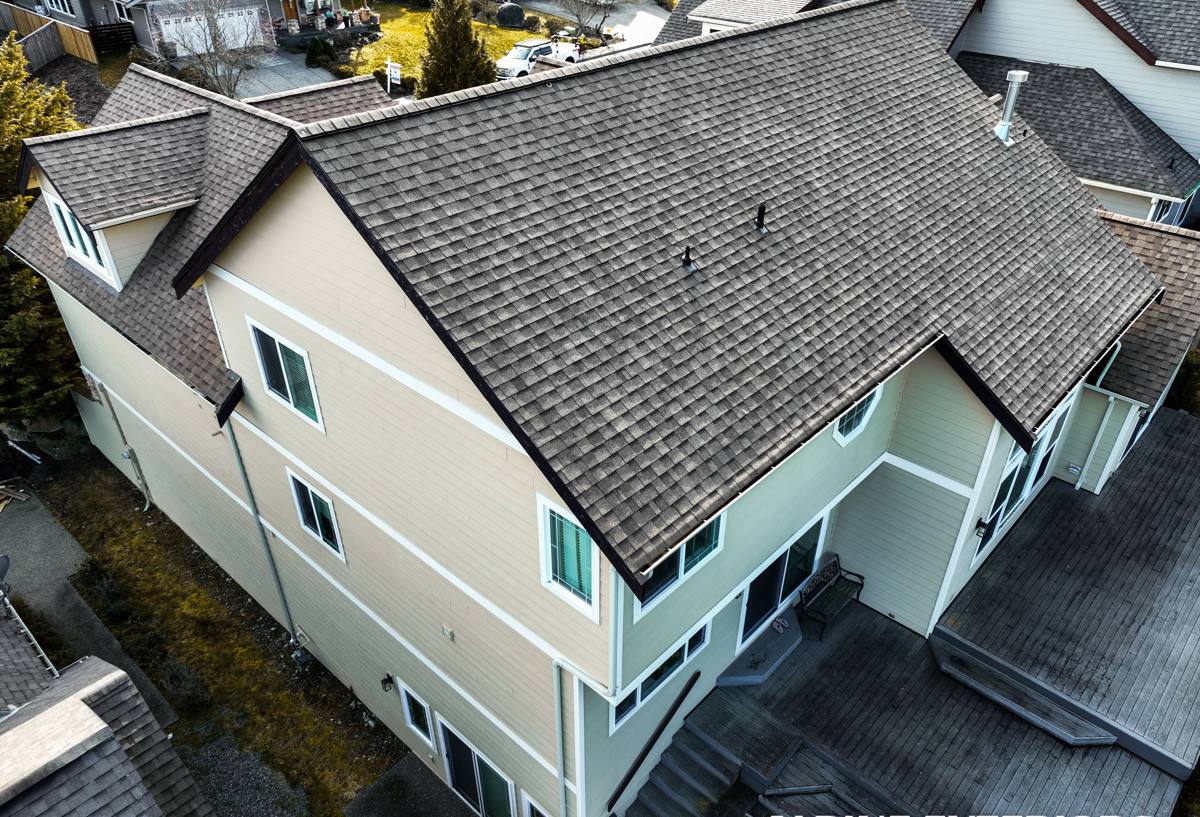
What Salt Air Actually Does to a House
Beyond just corrosion
Most people think of salt air as a metal problem — rusting fasteners, corroded flashing, pitted hardware. That's real, and it's one reason detailing matters so much on a job this close to the water. But salt air also accelerates the breakdown of paint films and coatings on softer siding materials, and it draws moisture into porous surfaces through hygroscopic salt deposits that sit on the wall and pull humidity out of the air even on days it isn't raining.
Why this matters for material choice
Vinyl siding doesn't rot from salt, but it does become brittle faster in this kind of exposure, and its seams and J-channels give salt-laden moisture places to collect. Wood-based products face the harder problem: any coating breach lets moisture into a substrate that salt air keeps chronically damp, which is a recipe for rot regardless of how well the product performed in a drier climate. Fiber cement doesn't have an organic substrate for moisture to feed on, which is the core reason it holds up on shoreline-adjacent properties like the ones throughout Birch Bay.
Driving Rain and the Whatcom County Wind Pattern
Rain that falls straight down is fairly easy for any siding to shed. Rain that's being pushed sideways by wind off the bay is a different problem — it gets forced up under laps, into gaps around trim, and behind poorly sealed penetrations. This is where installation quality matters as much as the product itself. A wall assembly with the wrong lap exposure, missing flashing, or gaps at butt joints will leak in wind-driven rain even if the siding material itself is excellent.
This is also where we see the most callback work from other companies' installs in this area — not siding failure, but installation shortcuts that only show themselves once a real Birch Bay windstorm pushes rain where it was never supposed to go.
Moss Season: Longer Here Than Almost Anywhere
Why north and shaded walls take the worst of it
Birch Bay's tree cover, marine layer, and long stretches of low sun angle in fall and winter add up to an extended moss season on north-facing and shaded elevations. Moss holds moisture directly against the wall surface for weeks at a time, which is a slow but steady attack on anything below a certain durability threshold. On wood siding, sustained moss contact is one of the more common paths to hidden rot. On fiber cement with a factory-applied finish, moss can still take hold, but it isn't feeding on the substrate — it's a surface and maintenance issue, not a structural one.
What this means practically
We tell every Birch Bay homeowner the same thing: moss on Hardie siding is a cleaning problem you can schedule around. Moss on the wrong siding material is a moisture problem you often don't see coming until it's expensive.
The James Hardie System Built for This Exposure
James Hardie makes climate-engineered product lines, and homes in this region fall into the wetter, cooler HZ5 category the company designs around. Combined with the factory-applied ColorPlus finish, the system is built to resist the specific combination of moisture cycling and UV exposure that Pacific Northwest coastal homes see year-round — without relying on a field-applied paint job to do the protecting.
| Concern in Birch Bay | How the Hardie system addresses it |
|---|---|
| Salt-laden air and moisture | Non-combustible fiber cement substrate with no organic material for moisture to break down |
| Driving, wind-pushed rain | Engineered lap profiles and correct flashing details manage water at every joint and penetration |
| Extended moss season | Factory finish resists surface breakdown; moss becomes a wash-down task, not a rot risk |
| Long-term color performance | ColorPlus finish is baked on and warranted, reducing repaint cycles common with field-painted siding |
What a Correct Install Involves on a Property Like This
Product quality only pays off if the installation respects it. On Birch Bay homes, we pay particular attention to a handful of details that matter more here than they would somewhere drier and more sheltered:
- Proper starter strip and lap exposure so wind-driven rain sheds correctly instead of finding its way behind the first course
- Correct flashing at every window, door, and roofline transition — the most common failure point we find on other installs in wet coastal areas
- Fastener placement and type matched to Hardie's specifications, avoiding the corrosion-prone hardware shortcuts that fail faster in salt air
- Proper clearance between the siding bottom edge and grade, decks, or roof surfaces to prevent standing moisture contact
- Sealed and back-primed cut edges on every field cut, not just the factory edges
- Ventilation behind the cladding so moisture that does get in has somewhere to go
Skip any one of these and you can install the best siding material available and still end up with a moisture problem in five years. This is the part of the job that doesn't show up in a sales pitch but shows up in the wall a decade later.
Our Process for Birch Bay Projects
Assessment first
We start with an on-site look at your home's specific exposure — which walls take the worst of the wind and rain, where moss has already established itself, and whether there's any existing moisture damage behind the current siding that needs to be addressed before new material goes up.
Tear-off and substrate check
Once the old siding comes off, we check sheathing and framing for hidden rot or moisture damage. This is common on older homes in wet, shaded, or salt-exposed spots, and it's far cheaper to fix during a siding project than to discover later.
Install to spec, not to shortcuts
Flashing, house wrap integration, fastening, and lap details are done to Hardie's installation requirements — the same requirements that keep their warranty valid and keep water out of your walls.
Final walkthrough
We walk the finished job with you, covering care basics for this climate and what to expect from the ColorPlus finish over time.
Ongoing Care for Birch Bay's Climate
- Rinse siding periodically, especially on north-facing and shaded walls where moss and algae establish fastest
- Keep gutters clear so overflow doesn't run down the wall face and feed moss growth in specific spots
- Trim back vegetation and tree cover that keeps siding shaded and damp longer than necessary
- Inspect caulking around windows and trim annually — this is a maintenance item, not a structural one, but it's an easy one to let slide
- Address any impact damage promptly rather than letting an exposed edge sit through a wet season
Why Local Experience on This Specific Coastline Matters
A lot of siding companies can install James Hardie somewhere inland and get a fine result. Birch Bay's combination of salt exposure, wind-driven rain, and extended moss season is a narrower, harder problem, and it rewards crews who've already worked through it on other homes nearby — who know which elevations need extra flashing attention, which details fail first in this exposure, and what moss pressure actually looks like a few years after installation. That's the kind of judgment that only comes from doing the work here repeatedly, not from a general install checklist.
If your Birch Bay home needs new siding, or you want a straight answer on whether your current siding is holding up the way it should in this climate, we're happy to take a look. The estimate is free, there's no pressure, and you'll get a plain-English read on what your home actually needs.