 Blaine Siding
 Why Bellingham Homes Need a Different Siding Strategy
Bellingham sits on the Salish Sea in Whatcom County, which means homes here deal with a combination of stresses that inland Washington siding rarely has to survive: salt-laden air off the water, long stretches of driving rain pushed sideways by coastal wind, and a moss season that can run from October through May in shaded and north-facing areas. Any one of these on its own is manageable. Together, over years, they punish siding that isn't engineered for the Pacific Northwest coast specifically.
Our crew installs James Hardie fiber cement siding as our only product, and Bellingham is one of the areas we work regularly. That matters less for marketing reasons and more for practical ones: the flashing details, caulk joints, and starter strip placement that keep water out of a wall assembly here are not identical to what works in a drier climate, and getting them right takes repetition in this specific environment.
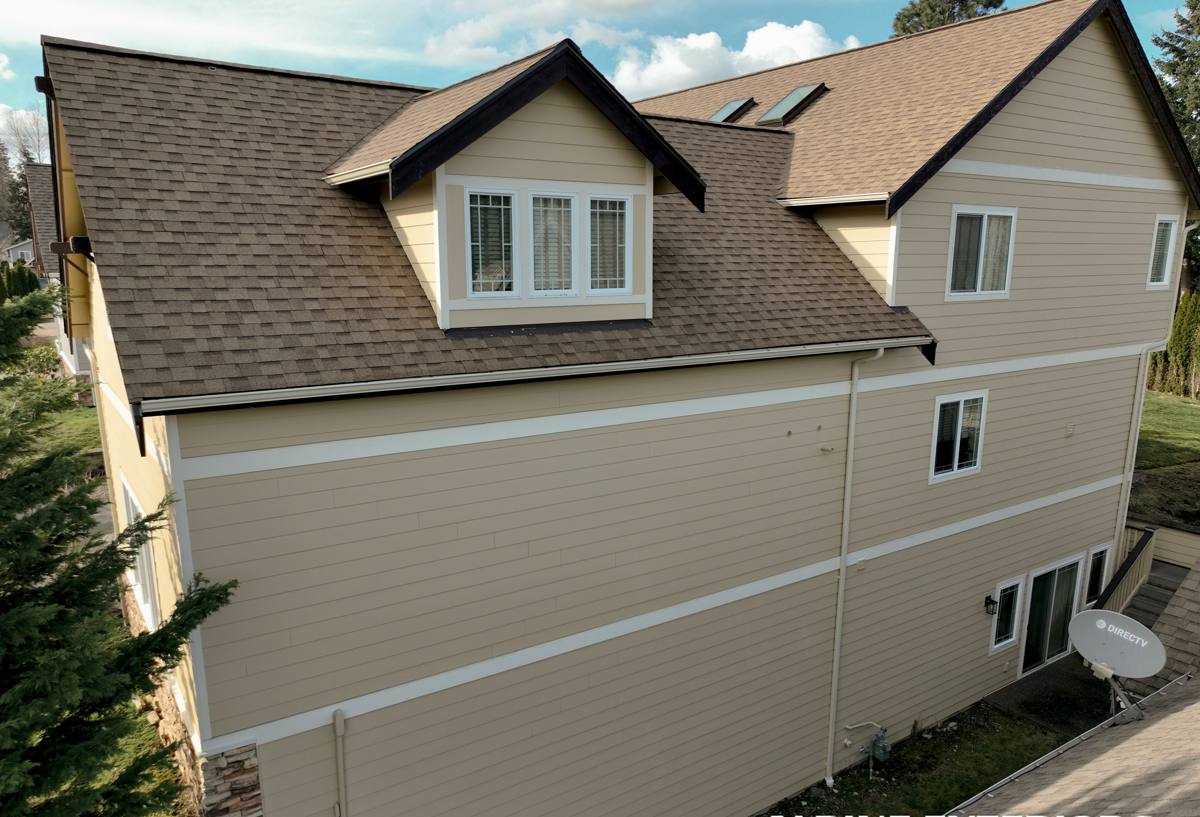
What Salt Air Actually Does to Siding Over Time
Salt air isn't just a coastal-cliché talking point — it's a real chemical and physical stressor on exterior materials. Airborne salt is hygroscopic, meaning it pulls moisture out of the air and holds it against whatever surface it settles on. On siding, that translates into a few specific failure modes over time:
- Fasteners and metal flashing corrode faster when salt film keeps them damp longer than plain rainwater would.
- Paint and factory finishes chalk, fade, or lose adhesion sooner when salt crystals cycle between dry and damp.
- Caulk and sealant joints degrade faster under repeated salt-and-moisture cycling, which is exactly where water intrusion usually starts.
- Wood-based and wood-fiber products are more prone to swelling and softening when they stay damp longer, which salt air encourages.
James Hardie fiber cement doesn't eliminate these mechanisms, but it resists them better than wood-based sidings because the material itself is cement, sand, and cellulose fiber — it doesn't rot, and it isn't a food source for the moss and mildew that thrive in damp coastal air. The factory-applied ColorPlus finish is also baked on under controlled conditions, which holds up to salt exposure better than field-applied paint reapplied every few years.
Driving Rain and Wind-Driven Water
Bellingham's rain doesn't always fall straight down. Coastal wind pushes it sideways and up under laps, trim, and butt joints — the places where a lot of siding failures actually start, regardless of the material. This is why the installation details matter as much as the product choice. A house sided with a premium product but flashed poorly will leak; a house sided correctly with a durable product will not.
Moss Season: The Slow Damage Nobody Notices Until It's Expensive
Whatcom County's long wet season, combined with tree cover common in and around Bellingham neighborhoods, creates ideal moss and algae growing conditions on north- and east-facing walls, under eaves, and anywhere siding stays shaded and damp. Moss itself doesn't eat fiber cement the way it can degrade wood fibers, but it does hold moisture directly against the wall surface for months at a time, and its root structures work into any existing gaps, cracks, or failed caulk joints.
On wood-based sidings, that trapped moisture is a real problem — it's a direct pathway to softening, swelling, and eventual rot underneath the surface, often before it's visible from the ground. On correctly installed James Hardie siding, the material itself isn't degraded by prolonged dampness, but proper drainage detailing (rainscreen gaps, correct lap spacing, and clear weep paths) still matters to keep moss from building up thick mats that trap debris and hold water against trim and flashing.
- Wall orientation determines moss risk more than the siding product does — north/east exposures and shaded walls need attention regardless of material.
- Moss buildup is a maintenance issue on Hardie siding, not a structural one, when the install was done correctly.
- Gutters and downspouts that dump water onto a wall face accelerate moss growth in exactly the areas where it's already worst.
What a Correct James Hardie Install Looks Like Here
The product James Hardie sells for the Pacific Northwest is the HZ5 line, engineered specifically for climates with sustained moisture exposure and freeze-thaw cycling. Choosing the right product line is step one. Installing it correctly is what actually determines how it performs over the next 30-plus years.
| Detail | Why It Matters in Bellingham's Climate |
|---|---|
| Rainscreen / drainage gap behind siding | Lets any moisture that gets behind the cladding drain and dry instead of sitting against the wall sheathing |
| Correct fastener type and spacing | Stainless or coated fasteners resist salt-air corrosion better than standard galvanized in coastal exposure |
| Flashing at every horizontal joint, window, and door | Wind-driven rain finds any gap; flashing is what actually stops water, not caulk alone |
| Correct lap and clearance from grade, decks, and roof lines | Keeps splash-back and standing moisture away from the bottom edge of the siding |
| Factory-primed cut edges sealed in the field | Any field cut exposes raw fiber cement; sealing it maintains the moisture resistance of the panel |
None of this is exotic. It's the difference between a siding job that looks right for the first year and one that's still performing correctly at year twenty.
Why We Only Install James Hardie
We get asked fairly often about vinyl, LP SmartSide, or engineered wood alternatives, usually because they cost less up front. We don't install them, and it's worth explaining why rather than just saying no.
Vinyl siding is inexpensive and easy to install, and in a dry climate it can be a reasonable choice. In a coastal Whatcom County environment, it expands and contracts more with temperature swings, can warp or crack in wind-driven weather, and doesn't hold paint or color changes the way fiber cement does — it's replaced, not repainted, when it fades or fails. Wood-fiber products like LP SmartSide perform well when maintained perfectly, but they rely on an engineered wood core and a field-applied or factory finish that has to keep water out completely; in a climate with this much sustained dampness and moss exposure, that margin for error is thinner than we're comfortable standing behind.
James Hardie fiber cement is non-combustible, doesn't provide a food source for moss or mildew, holds its factory ColorPlus finish for decades without repainting, and comes with a strong transferable warranty backed by a manufacturer that engineers a specific product line for this exact climate. That combination is why we standardized on it and stopped installing everything else.
Our Process for a Bellingham-Area Siding Job
- Walkthrough and assessment: we look at wall orientation, existing moisture damage, moss buildup, and drainage — not just the siding surface.
- Tear-off and sheathing inspection: anything soft, stained, or damaged underneath the old siding gets addressed before new siding goes on, not covered up.
- Weather barrier and rainscreen installation: the drainage plane behind the siding is what actually protects the wall long-term.
- Flashing at every penetration: windows, doors, and horizontal joints get flashed correctly, not just caulked.
- James Hardie panel installation to manufacturer spec: correct fastener type, spacing, and clearances for this climate zone.
- Final detailing and walkthrough: trim, caulking, and a final check with the homeowner before we call it done.
Signs Your Current Siding Is Already Struggling
Homeowners in this area often wait longer than they should because siding damage isn't always obvious from the ground. A few things worth checking, especially on north and east walls:
- Soft or spongy spots when you press on the siding, particularly near the bottom edge or under windows
- Persistent moss or dark staining that comes back within weeks of cleaning
- Paint that's bubbling, peeling, or chalking heavily in patches rather than evenly
- Visible gaps or separation at butt joints and around trim
- Musty smell or visible staining on interior walls that share an exterior wall with heavy siding wear
Any of these, on their own, is worth a look. Several together usually means the underlying wall assembly has been taking on moisture for a while, not just the surface finish.
Get a Straightforward Estimate
If you're weighing a siding replacement in the Bellingham area and want an honest read on what your home actually needs — not just a quote — we're glad to walk the exterior with you, point out what's working and what isn't, and give you a clear, no-pressure estimate for a James Hardie installation done right for this climate.