 Blaine Siding
 Grandview's Windows Work Harder Than Most
Grandview sits close enough to the water that its houses take a different kind of weathering than homes even a few miles inland. Salt-laden air off the Strait of Georgia and Boundary Bay corrodes hardware and finishes faster than a dry climate ever would. Wind-driven rain off the Sound doesn't just fall straight down — it gets pushed sideways into window frames, sills, and the joints where a window meets siding. And Whatcom County's long, damp shoulder seasons keep moisture sitting against exterior surfaces for months at a time, which is exactly the environment moss and mildew need to take hold. None of that is a defect in a house. It's just what a marine-edge climate does to a building envelope over twenty or thirty years, and windows are usually the first place it shows up.
For a homeowner, that means the question isn't just "are my windows old" — it's whether they were ever properly built and installed for this specific exposure in the first place. A window that would perform fine in a drier, more sheltered part of the county can fail early in Grandview if the flashing, sealants, or glazing weren't matched to salt air and driving rain.
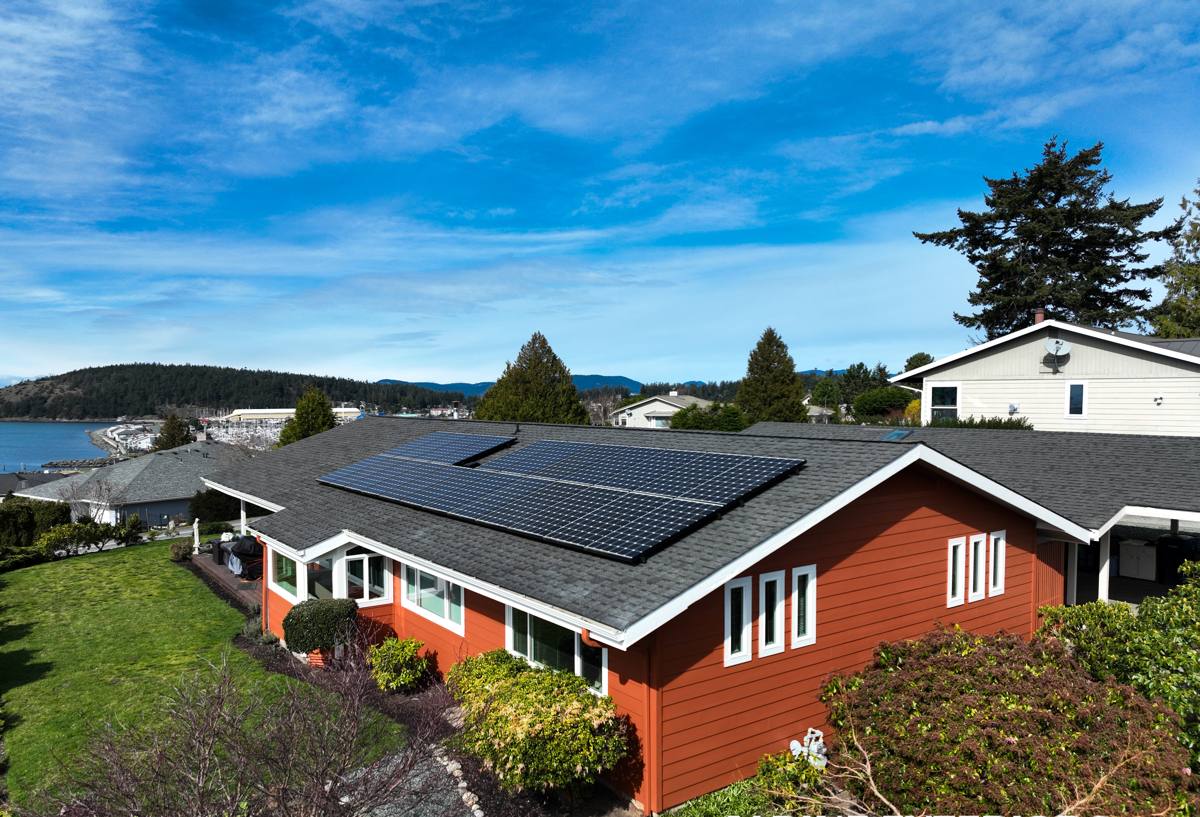
What "Energy-Efficient" Actually Means Here
Energy efficiency gets marketed around a single number — U-factor — but in a coastal Whatcom County setting, that's only part of the picture. A window can have an excellent U-factor on paper and still leak heat, air, and water if the installation doesn't account for local wind and rain patterns. What actually matters for a Grandview home:
- Air infiltration rating — how much outside air leaks through the assembly under wind load, not just at rest
- Water penetration resistance — how the window performs under sustained, wind-driven rain, not just a light shower
- Condensation resistance — how well the frame and glass resist interior moisture buildup during our cool, humid months
- U-factor — how much heat transfers through the whole unit (frame plus glass)
- Solar heat gain coefficient (SHGC) — less critical here than in sunnier climates, but still relevant on south- and west-facing walls
A correctly specified window for this area leans toward strong air and water performance first, with a solid U-factor as the baseline — because a window that keeps wind-driven rain and salt air out of the wall cavity is protecting the house, not just the heating bill.
Signs Your Windows Are Underperforming
Most homeowners don't replace windows because of a single dramatic failure — it's a slow accumulation of small signals. In Grandview specifically, watch for:
- Fogging or water between the panes (a failed seal on the insulated glass unit)
- Soft, discolored, or spongy wood at the sill or bottom corners of the frame
- Visible moss or dark streaking building up on the sill or below the window
- Drafts you can feel with a hand near the frame on a windy day
- Hardware — locks, cranks, hinges — that's pitted, stiff, or corroded
- Condensation forming on the inside of the glass regularly through fall and winter
Any one of these on its own might just mean a tune-up or re-caulk. Several together, especially on the weather-facing side of the house, usually mean the window assembly itself has reached the end of its useful service life.
What a Correct Installation Actually Involves
The window unit itself only does part of the job — how it's installed determines whether it actually performs in this climate. A correct replacement in a salt-air, high-rain environment includes several steps that are easy to skip and hard to notice once the trim is back on:
Before the old window comes out
We check the surrounding wall for hidden rot or moisture damage. Pulling a window is the one point in the project where you can actually see what's happening inside the wall — skipping that inspection means covering up a problem instead of fixing it.
Flashing and drainage
Proper head, jamb, and sill flashing, installed in the right order (so each layer sheds water onto the one below it, not behind it) is what actually keeps wind-driven rain out of the wall cavity. This is the single most common thing done wrong on window replacements in coastal climates — and the one most responsible for hidden rot showing up years later.
Sealing and insulation
The gap between the window frame and the rough opening needs to be sealed and insulated correctly — not just foamed shut, which can trap moisture, but sealed with materials suited to a marine climate and backed by proper weatherstripping at the sash.
Hardware and finish
In a salt-air environment, hardware finish matters more than most homeowners realize. Standard finishes can pit and corrode faster near the water; we account for that when specifying locks, cranks, and hinges.
Materials: What Holds Up in This Climate
There's no single "best" window material for every home — it depends on your budget, your home's style, and how exposed the wall is to weather. Here's how the common options compare for a Grandview-type exposure:
| Material | Moisture/Salt-Air Behavior | Maintenance | Typical Lifespan |
|---|---|---|---|
| Vinyl | Doesn't corrode or rot; performs well in salt air | Low — occasional cleaning | 20–30 years |
| Fiberglass | Very stable in wet, salty conditions; resists warping | Low | 30-plus years |
| Wood (unclad) | Attractive but vulnerable to rot in constant damp/salt exposure without diligent upkeep | High — regular painting/sealing | Varies widely with maintenance |
| Wood-clad (aluminum or vinyl exterior) | Good — exterior shell protects the wood core from salt air and rain | Moderate | 25-plus years with proper install |
For most Grandview homes, we steer clients toward vinyl or fiberglass for weather-facing walls, and reserve unclad wood for sheltered elevations where a homeowner specifically wants that look and is prepared for the upkeep. This isn't a knock on wood windows — it's a matter of matching material to exposure, the same way we'd never recommend the wrong siding for a wall that takes direct rain.
Our Process for Grandview Jobs
- On-site assessment — we look at each window's exposure, the condition of the surrounding wall, and how the house sits relative to prevailing wind and rain
- Honest recommendation — which windows genuinely need replacing now versus which can wait, and why
- Correct product match — material and glazing specified for that wall's actual exposure, not a one-size-fits-all package
- Proper removal and inspection — checking the wall cavity before anything new goes in
- Flashing, sealing, and install — done in the sequence that actually sheds water, not just what's fastest
- Cleanup and walkthrough — so you understand what was done and why
Cost Factors to Understand
We don't quote specific prices without seeing the job, but these are the factors that move the number up or down on a typical Grandview project:
| Factor | Why It Matters |
|---|---|
| Number and size of windows | Bigger openings and more units mean more material and labor |
| Material choice | Vinyl is typically the most affordable; fiberglass and clad-wood cost more upfront |
| Wall condition | Hidden rot found during removal adds repair scope before the new window goes in |
| Exposure level | Weather-facing walls often warrant a higher-performance spec than sheltered ones |
| Access and height | Second-story or hard-to-reach openings take more labor time |
Why Local Experience Matters
A crew that already works in Grandview has seen how this specific pocket of Blaine weathers — which walls take the worst of the wind-driven rain, how fast moss builds up on north-facing sills here, and which installation shortcuts show up as rot five years later on this coastline. That's not something you get from a general contractor working from a generic spec sheet. It shows up in small decisions: which flashing sequence to use, which hardware finish to spec, which walls need the higher-performance glazing and which don't. Those decisions add up to a window system that actually holds up to Whatcom County's marine climate instead of one that just looks right on installation day.
Before You Hire: A Practical Checklist
- Ask what flashing method they use and why — a contractor who can't explain their sequence hasn't thought it through
- Confirm they inspect the wall cavity before installing, not just after removing the old window
- Ask about hardware finish options suited to salt-air exposure
- Get the manufacturer's warranty terms in writing, along with the installer's own labor warranty
- Ask how they handle a wall that turns out to have hidden rot once the old window is out
- Check that the quote specifies material, glazing package, and installation scope — not just "windows replaced"
If your Grandview home's windows are drafty, fogged, or showing wear at the sills, we're glad to take a look and give you a straightforward assessment — no pressure, no upsell, just what we'd actually recommend for your home. Use the form below to request a free estimate.