 Blaine Siding
 Roof Repair in Ferndale: A Job That Rewards Local Knowledge
Ferndale sits close enough to the water and to Blaine that its roofs deal with the same weather pattern year-round: damp air, wind-driven rain off the Strait, and long stretches of gray winter where a roof rarely gets the chance to fully dry out. A repair that would hold up fine in a drier inland climate can fail here within a season or two if it isn't built for this environment. We work on roofs across this part of Whatcom County regularly, which means we're not guessing at what Ferndale weather does to shingles, flashing, and decking — we're fixing the same failure patterns on a routine basis.
This page is specifically about roof repair, not full replacement. Plenty of roofs that look rough from the ground still have years of life left if the right sections are addressed correctly. The goal of a good repair is to stop the actual source of a leak or deterioration, not just patch the spot where water happens to be showing up inside the house.
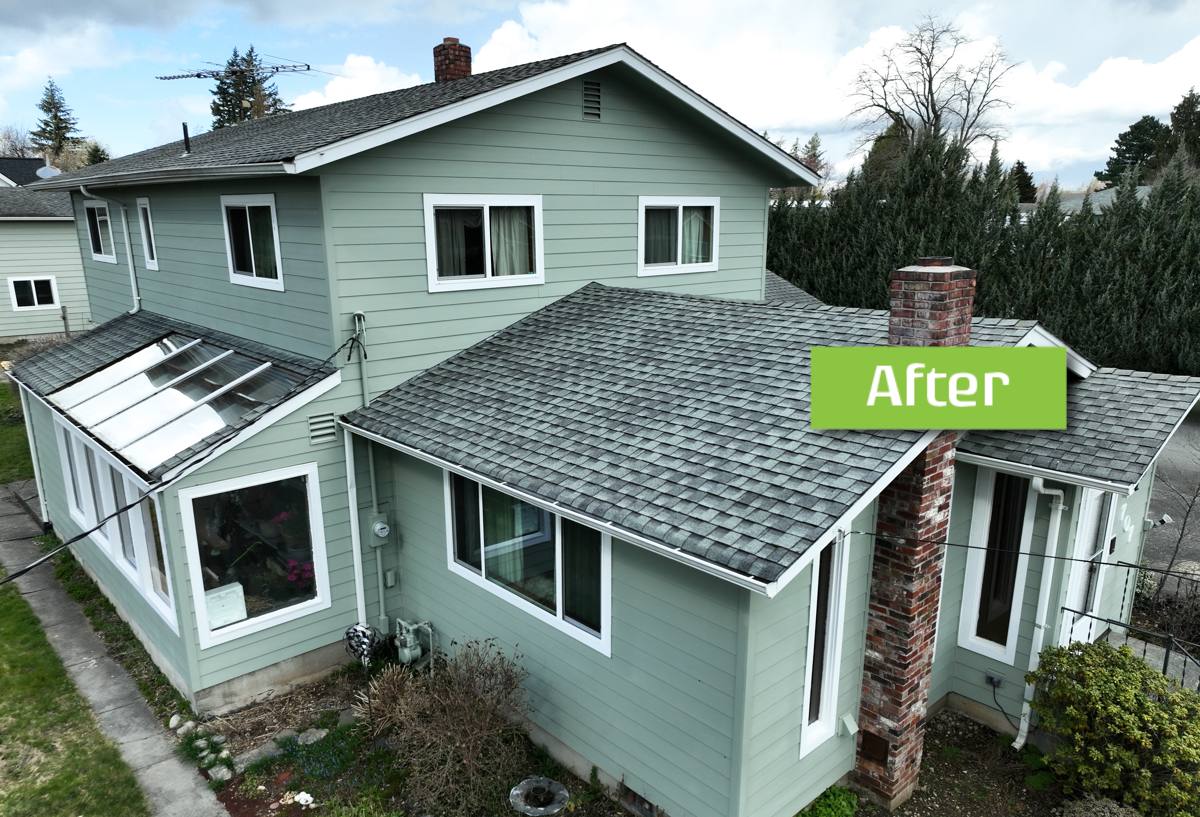
What This Climate Does to a Roof
Three regional factors drive most of the repair calls we get in and around Ferndale and Blaine:
Salt Air
Proximity to the water means airborne salt settles on roofing materials and accelerates corrosion on exposed metal — flashing, fasteners, vent caps, and gutter hardware. Bare or lower-grade metal components corrode faster here than they would twenty or thirty miles inland, and corroded flashing is one of the most common leak sources we find that homeowners never suspect.
Driving Rain
Storms coming off the water often bring rain at an angle, not straight down. That matters because wind-driven rain can find its way under shingles, around chimneys, and past step flashing that would keep out a vertical downpour just fine. Roofs here need lapping, sealing, and flashing details that account for rain hitting the surface sideways, not just from above.
A Long Moss Season
Whatcom County's damp, mild winters give moss and algae a long runway to establish themselves, especially on north-facing slopes and anywhere shade keeps a roof from drying between rains. Moss isn't just cosmetic — its root structure lifts shingle edges, holds moisture against the roofing material, and works granules loose over time, which shortens the life of an otherwise sound roof.
Signs a Ferndale Roof Needs Repair
Most homeowners call us after noticing one of the following. Catching these early is almost always cheaper than waiting:
- A water stain on a ceiling or in the attic that appears or grows after a windy rainstorm specifically
- Granules collecting in gutters or at downspout outlets
- Visible moss or dark streaking on the roof surface, especially on shaded or north-facing sections
- Curling, cracked, or missing shingles, particularly near ridges, valleys, or roof edges
- Rusted or lifted flashing around chimneys, skylights, or where a roofline meets a wall
- Daylight visible through the roof deck when viewed from inside the attic
- Sagging in a section of the roofline, which can indicate deck or structural moisture damage
Not every one of these means a full roof replacement is coming. Many are addressed with targeted, correctly executed repairs — but only if the underlying cause is identified first.
What a Correct Roof Repair Actually Involves
Diagnosis Before Patching
A leak visible in one room doesn't always originate directly above it — water can travel along rafters or decking before it shows up as a stain. We trace the path back to the actual entry point rather than sealing the spot where the damage appeared, which is the single biggest difference between a repair that lasts and one that reappears after the next storm.
Flashing and Metal Work
Given how hard salt air and driving rain are on flashing here, repair work often centers on this component more than the shingles themselves. That means correctly lapped step flashing, properly sealed counterflashing at chimneys, and hardware suited to a coastal-influenced climate rather than the cheapest option available.
Decking and Underlayment
If water has been getting past the surface layer for a while, the plywood or OSB decking underneath may be soft, delaminated, or rotted. Patching over damaged decking is a short-term fix at best — a proper repair replaces the affected section of decking and re-establishes a continuous underlayment barrier before any new shingles go down.
Shingle Matching and Tie-In
Repairing a section of an existing roof means blending new material into old without creating a new leak point at the seam. That involves proper shingle selection, correct nailing patterns, and weaving new courses into existing ones so the repaired area sheds water the same way the rest of the roof does.
Moss Treatment and Prevention
Where moss has been part of the problem, a real repair addresses it rather than just brushing it off. That can include careful removal (scraping too aggressively damages granules and shortens shingle life), treatment to slow regrowth, and recommendations like zinc or copper strips near the ridge, which allow rain to carry trace metal down the roof surface and inhibit moss over time.
Our Process, Start to Finish
1. Inspection
We look at the roof from the ground, from the attic side when accessible, and up close where it's safe to walk. We're checking flashing, decking condition, ventilation, and moss coverage — not just counting missing shingles.
2. Honest Assessment
We tell you plainly whether what you're dealing with is a repair, a series of repairs staged over time, or a situation where repair costs are approaching what replacement would run. We'd rather lose a repair job than sell one that won't hold.
3. Written Estimate
You get a clear scope of work and price before anything starts — what's being replaced, what materials are used, and what's included in cleanup.
4. The Repair Itself
We protect landscaping and gutters, remove and dispose of damaged material properly, and do the tie-in work carefully so the repaired section performs like the rest of the roof, not like a patch.
5. Cleanup and Walkthrough
Nail and debris cleanup, a magnetic sweep where appropriate, and a final walkthrough so you know exactly what was done and why.
Repair vs. Replacement: How We Help You Decide
| Factor | Leans Toward Repair | Leans Toward Replacement |
|---|---|---|
| Roof age | Under 15-20 years | Nearing or past expected lifespan |
| Extent of damage | Isolated to one section or component | Widespread across multiple slopes |
| Decking condition | Sound, dry in most areas | Soft or rotted in multiple spots |
| Leak history | First occurrence or isolated cause | Recurring leaks in different areas |
| Moss/algae coverage | Light to moderate, treatable | Heavy, long-term, granule loss visible |
Most Ferndale calls we get fall clearly on one side or the other once we're actually up on the roof. When it's genuinely a close call, we'll walk you through the reasoning rather than defaulting to whichever option costs more.
What Repair Costs Depend On
| Cost Factor | Why It Matters |
|---|---|
| Size of the affected area | Larger sections require more material, labor, and tie-in work |
| Decking replacement needed | Rotted plywood/OSB adds material and labor beyond the surface repair |
| Flashing complexity | Chimneys, skylights, and valleys take more time than open field repairs |
| Roof pitch and access | Steep or hard-to-reach roofs require more safety setup and time |
| Shingle availability/matching | Older or discontinued shingle styles can be harder to blend in seamlessly |
Because of these variables, we don't quote roof repair pricing over the phone without seeing the roof. A small, straightforward patch and a repair that involves rotted decking and multiple flashing details are very different jobs, even if they look similar from the driveway.
Why a Crew That Already Works Ferndale Matters
Roofing crews that mostly work drier, inland climates sometimes default to details that are adequate there but undersized for wind-driven rain and salt exposure. A crew that regularly works Ferndale, Blaine, and the surrounding Whatcom County coastline already knows which flashing details actually hold up here, which roof orientations need extra attention for moss, and which shortcuts tend to fail within a couple of winters. That's not a marketing point — it shows up directly in how few repair calls turn into repeat repair calls.
Simple Maintenance That Extends a Repair's Life
A good repair lasts longer when it's paired with basic upkeep between visits:
- Clean gutters at least twice a year so water isn't backing up under the roof edge
- Trim back overhanging branches to reduce shade and debris buildup that feeds moss
- Have moss treated before it spreads, rather than after it's established across a slope
- Check the attic after major windstorms for new staining or daylight through the deck
- Address small flashing issues promptly — they rarely stay small in this climate
Get a Straightforward Look at Your Roof
If you're dealing with a leak, visible moss, or a roof that just looks tired, we're happy to come take an honest look and tell you what's actually going on — no pressure, no upsell to a full replacement you don't need. Fill out the form below for a free estimate, and we'll give you a clear picture of what your Ferndale roof needs and why.