 Blaine Siding
 Why Decks Near the Peace Arch Wear Out Faster Than People Expect
If you own a home in the Peace Arch area of Blaine, you've probably noticed your deck ages differently than a deck fifty miles inland. Sitting this close to open water and the international border means near-constant exposure to salt-laden marine air, wind-driven rain that gets up under fascia and railings, and a moss season that can run eight months out of the year in shaded corners of Whatcom County. None of that is unusual for the Pacific Northwest — but it does mean a deck built or repaired with generic, big-box assumptions tends to fail years before it should.
We see the same pattern on almost every Peace Arch property we visit: the decking boards look tired first, but the real damage is usually happening quietly underneath — at the ledger board, the joists, and the posts — long before the surface gives it away. Replacing a deck the right way in this climate means treating the structure, not just the walking surface, as the thing that has to survive salt air and standing moisture year after year.
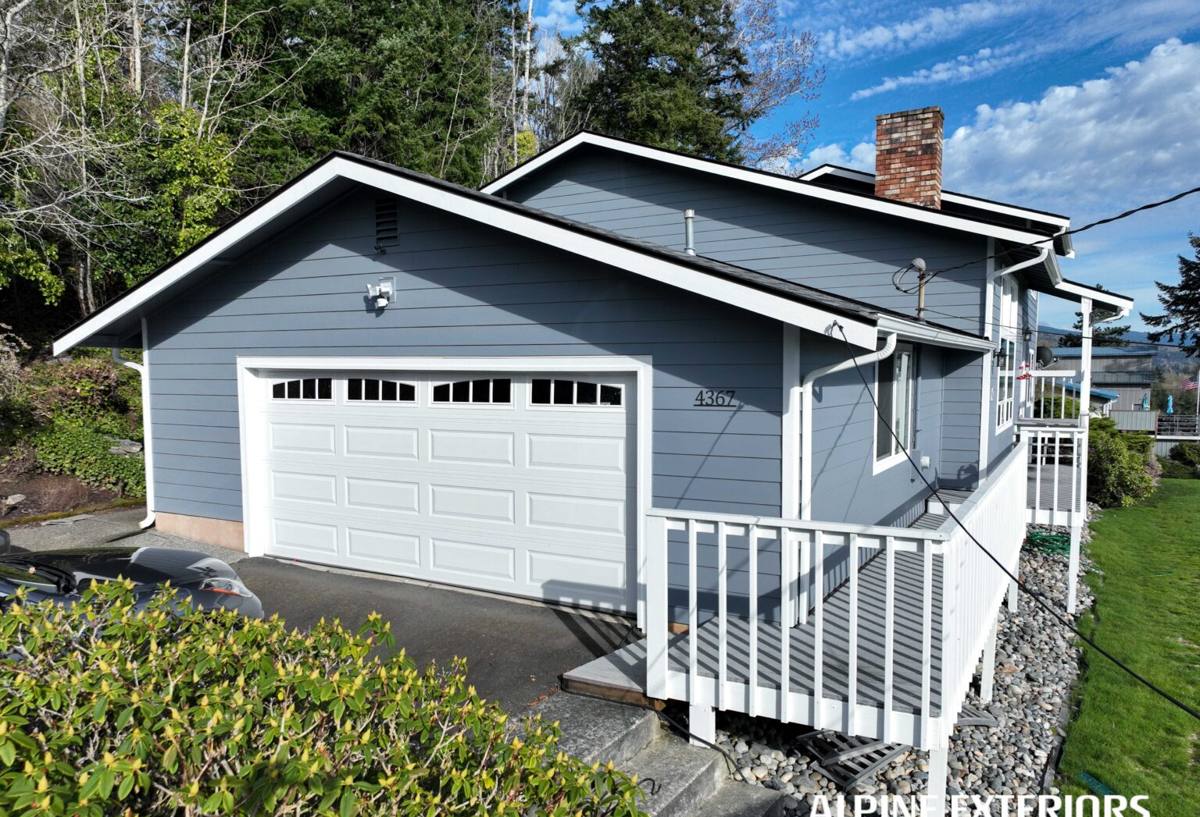
Signs a Deck Needs Replacement, Not Just Repair
Not every tired-looking deck needs to come out. But in a coastal, high-rainfall climate like ours, certain warning signs mean repair is just delaying the inevitable — and spending more money to do it.
- Soft or spongy spots in the decking, especially near the house or in shaded corners where moss holds moisture against the wood
- Rust streaking or corrosion around fasteners and connectors, which shows up faster this close to salt air
- A ledger board separating from the house, or visible water staining on the siding just above the ledger
- Posts that feel loose or that show soft wood when probed with a screwdriver at the base
- Persistent moss or algae growth that keeps coming back no matter how often it's cleaned
- Railings that flex or feel less rigid than they did a few years ago
Any one of these on its own might be repairable. Two or three together, especially on a deck that's already fifteen to twenty years old, usually means the structure has been compromised long enough that a full replacement is the more honest recommendation — and the safer one.
Why "It Still Looks Fine" Isn't the Right Test
Decking boards can look presentable while the joists underneath them are already soft. Moss and algae trap moisture against wood and fasteners, and in a climate where surfaces rarely get a long stretch of dry, sunny weather to fully dry out, that trapped moisture does its damage slowly and invisibly. A proper deck inspection means getting underneath the deck and checking connections, not just walking the surface.
What a Correct Deck Replacement Actually Involves
A deck replacement done right is mostly about what you don't see once the project is finished. In our climate, these are the details that determine whether a new deck lasts fifteen years or thirty-five.
Ledger Attachment and Flashing
The ledger board — where the deck attaches to the house — is the single most common failure point on Pacific Northwest decks, and it's almost always a flashing problem, not a fastener problem. Water works its way behind an improperly flashed ledger and rots the house's rim joist from the inside, which is a far more expensive repair than the deck itself. Correct flashing detail here isn't optional in this climate; it's the difference between a deck problem and a structural problem.
Footings and Post Bases
Ground contact and standing water are constant issues on lots with heavy clay soil or poor drainage, which is common in this part of Whatcom County. Footings need to be set below frost depth and post bases need to keep the wood post itself off the concrete entirely, so it never sits in a puddle after a heavy rain event.
Fasteners and Hardware
Salt air accelerates corrosion on standard hardware faster than most homeowners expect. We use stainless or high-grade coated fasteners and connectors rated for coastal exposure, because the cost difference over the life of a deck is small compared to the cost of replacing rusted-through hardware in ten years.
Ventilation Underneath
A deck built low to the ground or against a slope without airflow underneath will stay damp far longer after rain, which feeds moss and speeds up rot. Where grading allows, we build in enough clearance and, where it doesn't, we plan for other ways to keep air moving under the structure.
Decking Material Options: What Actually Holds Up Here
There's no single "best" decking material — there's a best fit for your budget, your maintenance appetite, and how much sun versus shade your particular lot gets. Here's how the common options actually perform in a wet, moss-prone coastal climate.
| Material | Upfront Cost | Maintenance in This Climate | Realistic Lifespan |
|---|---|---|---|
| Pressure-treated wood | Lowest | Annual cleaning, periodic staining/sealing to fight moss and moisture | 10-15 years |
| Cedar | Moderate | Regular sealing; naturally moss-resistant but still needs upkeep in shade | 15-20 years |
| Composite (capped) | Higher | Occasional washing; resists moisture and moss buildup far better than wood | 25-30 years |
| PVC decking | Highest | Minimal; fully synthetic, doesn't absorb moisture | 30+ years |
For shaded, moss-prone lots — which describes a lot of Peace Arch properties tucked under mature trees — we lean toward recommending capped composite or PVC to homeowners who are tired of the annual scrub-and-seal cycle. Wood and cedar are legitimate choices too, especially for homeowners who prefer the natural look and don't mind the upkeep, but we're honest that they demand more attention here than they would in a drier climate.
A Note on Cheaper Composite Products
Not all composite decking is built the same. Older, uncapped composite boards can absorb moisture at the core over time, which becomes a real liability in a climate that rarely gives boards a long dry stretch. As a matter of professional standard, we favor capped composite products with a solid warranty structure over budget uncapped boards, because the moisture behavior difference matters more here than it would in a dry climate — it's not about brand loyalty, it's about what actually survives our weather.
Our Deck Replacement Process
- On-site assessment — We inspect the existing deck from the ground up, including underneath, to confirm whether replacement is really the right call versus repair.
- Design and material selection — We walk through decking material, railing style, and layout options based on your budget and how you actually use the space.
- Permitting — For most full replacements, especially anything involving structural changes or new footings, we handle the permit application with the city.
- Demolition and haul-away — The old deck comes out, including any compromised framing, ledger flashing, and footings that don't meet current standards.
- Structural rebuild — New footings, framing, ledger flashing, and hardware go in first, built to handle our rainfall and salt exposure, not just to pass a quick glance.
- Decking and railing installation — Boards and railings go on last, with attention to drainage gaps and spacing that account for material expansion and moisture shedding.
- Final walkthrough — We go over the finished deck with you, including a maintenance rundown specific to whatever material you chose.
Permits and Code Basics in Blaine
Most full deck replacements in Blaine require a building permit, particularly when footings, framing, or railing height are being changed rather than just decking boards swapped in place. Guardrail height, baluster spacing, and stair requirements are all governed by code and get checked at inspection. We handle the permit process as part of the project so you're not the one navigating city requirements, and so the finished deck is something that won't cause problems if you sell the home later.
Keeping a New Deck Ahead of the Climate
Whatever material you choose, a few habits go a long way toward protecting your investment in a climate that doesn't give decks much of a break.
- Sweep leaves and debris off the deck regularly, especially in fall — trapped organic matter is what feeds moss and mildew
- Rinse or wash the surface a couple times a year to clear salt residue and early moss growth before it takes hold
- Check railings and stair connections annually for any looseness, especially after winter storms
- For wood or cedar decks, reseal on the schedule recommended for the specific product, not "whenever it looks dry"
- Keep gutters and downspouts near the deck clear so runoff isn't dumping extra water onto or under the structure
- Trim back overhanging branches that keep sections of the deck shaded and slow to dry
Why It Matters to Hire a Crew That Already Works in Peace Arch
Deck construction fundamentals don't change from town to town, but the details that actually matter — how aggressive to be with flashing at the ledger, which fasteners are worth the upcharge, how much ventilation a low deck needs on a shaded lot — are learned by building in this exact climate, not by reading a spec sheet. A crew that regularly works Blaine and the surrounding Whatcom County area has already seen what fails here and why, which means fewer surprises and a deck that's built for the weather it will actually face rather than average conditions somewhere else.
We also know the local permitting process and inspection expectations, which keeps the project moving instead of stalling on paperwork you didn't know you needed.
Get a Straightforward Estimate
If your deck is showing its age — or you just want an honest opinion on whether repair or replacement makes more sense for your situation — we're happy to take a look. Fill out the form below for a free, no-pressure estimate on deck replacement for your Peace Arch home.