 Blaine Siding
 Cherry Point's Weather Is Hard on Decks
Cherry Point sits on the exposed shoreline north of Blaine, right where Whatcom County's marine weather hits hardest. Decks out here deal with three things that inland decks mostly avoid: salt-laden air off the water, driving rain that gets pushed sideways into ledger boards and railings, and a moss season that can run from early fall through late spring. None of that means a deck is doomed — it just means repairs have to account for conditions a generic contractor from outside the area might not think about.
Salt air speeds up corrosion on anything metal — nails, screws, joist hangers, post brackets. Once a fastener starts rusting, it loses grip strength long before it looks bad enough to worry about from the surface. Driving rain finds every gap in flashing and every seam where a ledger board meets the house, and it doesn't take much of a gap for water to start working into framing that's hard to see. And moss doesn't just make a deck surface slick — it holds moisture against the wood underneath, which is exactly what starts rot.
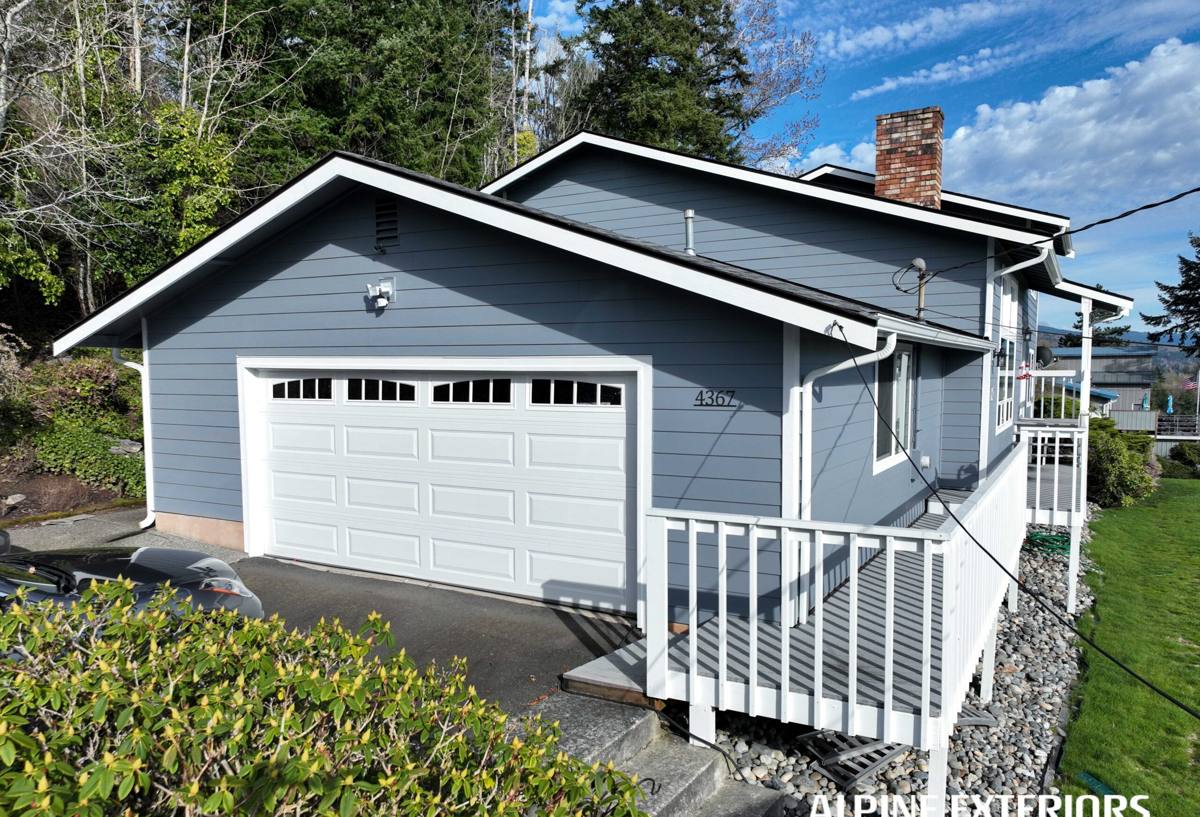
Signs Your Deck Needs Repair
Most deck problems in this area show up gradually, and homeowners often notice the symptom (a soft spot, a wobble) without realizing what's causing it underneath. Here's what we look for, and what you can check yourself before calling anyone:
- Soft or spongy decking boards, especially near the house or in shaded corners
- Rust streaks running down from screw heads or metal connectors
- A railing that flexes or moves when you lean on it
- Green or black staining that keeps coming back within weeks of cleaning
- Gaps opening up where the deck meets the house siding or foundation
- Visible sagging between support posts, or a deck that feels different underfoot than it used to
- Standing water that doesn't drain within an hour or two after rain
Any one of these on its own might be minor. Two or three together, especially involving the ledger board (the piece bolted to the house) or the support posts, usually means it's time for a real inspection rather than a patch job.
What a Correct Deck Repair Actually Involves
It starts underneath, not on top
A repair that only replaces the boards you can see and ignores the framing underneath doesn't hold up here. The framing — joists, beams, posts, and especially the ledger board where the deck attaches to the house — is what actually carries the load. If that's compromised, new decking on top is just a cosmetic fix with a short clock on it.
The parts that matter most
A proper repair checks and, where needed, replaces or reinforces: the ledger board and its flashing (the single most common failure point on attached decks in wet climates), joist hangers and their fasteners, post bases and footings, and any structural connections that have been exposed to standing water or years of splash-back from rain. Only after that structural work is confirmed sound does it make sense to move on to decking boards, railings, and stair treads.
Where We Find the Damage Most Often
| Component | Common Problem Here | Why It Happens | Typical Fix |
|---|---|---|---|
| Ledger board / flashing | Rot behind the board, water staining on siding above it | Driving rain pushed against the house wall, aging or missing flashing | Remove decking, replace flashing, repair or replace ledger section |
| Fasteners & hardware | Rust, weakened joist hangers, popped screw heads | Salt air accelerates corrosion on standard hardware | Replace with corrosion-rated stainless or hot-dip galvanized fasteners |
| Decking surface | Soft boards, persistent moss/algae, slick spots | Shade, poor airflow, long damp season | Replace affected boards, improve gaps and drainage |
| Support posts & footings | Base rot, movement, cracking at grade level | Ground moisture and splash-back at the soil line | Post base repair or replacement, improved drainage around footings |
| Railings & stairs | Loose posts, flex, corroded connectors | Repeated wet/dry cycling loosens fastener grip | Re-secure with proper hardware, replace compromised wood |
Repair or Replace? What Actually Decides It
Not every deck with problems needs to come out. The honest answer depends on how much of the structure is affected versus how much is cosmetic.
| Factor | Repair Usually Makes Sense | Replacement Usually Makes Sense |
|---|---|---|
| Framing condition | Ledger, joists, and posts are sound or damage is isolated to one section | Rot or corrosion is widespread through the main structural members |
| Age of the deck | Deck is within its expected service life and was built reasonably well | Deck is old, undersized for current code, or was built with shortcuts |
| Extent of moss/moisture damage | Limited to surface boards or a few connection points | Moisture has clearly reached the framing across most of the deck |
| Budget goals | You want to extend the deck's life for a defined, lower cost | You're planning to stay long-term and want a full reset, including layout changes |
As a rough guide, targeted repairs (a ledger section, a few joists, hardware, and a run of boards) tend to run in the low thousands. A full rebuild of an existing footprint costs meaningfully more, and that's before any changes to size or design. We'll give you real numbers after we've actually looked at the deck — not before.
Our Repair Process
- On-site inspection. We check the deck surface, then get underneath and behind it — ledger connection, joists, posts, and footings — because that's where the real story is.
- Moisture and structural check. We probe suspect wood and check fastener condition rather than guessing from the surface.
- Written scope. You get a clear list of what's failing, what's marginal, and what's fine, along with repair options at different levels of thoroughness.
- Repair work. We address structure first, then decking, railings, and finish details, using fasteners and materials suited to this climate.
- Final walkthrough. We check the deck with you before calling it done, including how it drains under a hose test if that's relevant to the repair.
Fasteners and Materials That Actually Hold Up Here
Standard zinc-coated screws and nails are fine in a lot of the country, but in salt air they can start showing corrosion within a few years, well before the wood around them fails. For repairs in Cherry Point and along the rest of Blaine's shoreline, we use stainless steel or hot-dip galvanized fasteners and hardware rated for coastal exposure. It costs a little more up front. It's not optional if you want the repair to outlast the next one.
On decking material, both wood and composite have a place. Pressure-treated lumber is affordable and repairable board-by-board, which matters for a repair job rather than a full rebuild — but it needs regular cleaning and sealing to keep moss and moisture from taking hold. Composite decking resists moss and rot better and needs less maintenance, but it costs more, and if it's ever damaged, matching a discontinued color or profile can be a real headache. Neither one is "better" across the board — it depends on what you're repairing, how much of the existing deck you're keeping, and how much upkeep you actually want to do. We'll walk through the trade-offs honestly rather than push whichever is easiest for us to install.
Keeping Moss and Rot From Coming Back
A repair is only worth doing if it actually lasts, and in this climate that means a little ongoing attention:
- Clean the deck surface at least once a year, ideally before the wet season sets in
- Keep gaps between boards clear of leaves and debris so water can drain instead of pooling
- Trim back overhanging branches or brush that keep sections of the deck shaded and damp
- Reapply sealant on wood decking on the schedule the product calls for — don't stretch it out
- Check the ledger flashing and any spots where the deck meets the house every year or two
- Address small soft spots or loose hardware right away, before the next wet season works on them
Why a Crew That Already Works Cherry Point Matters
A lot of deck problems out here look like generic wear and tear until you understand what's driving them — the direction the rain comes from, how much shade a lot gets, how fast moss reestablishes after cleaning. A crew that already works this stretch of Whatcom County has seen the same ledger boards fail the same way often enough to know what to check first, and knows which fastener grade actually holds up a few hundred feet from the water instead of guessing. That local pattern recognition is what keeps a repair from turning into a repeat visit.
If your deck has soft spots, rust stains, stubborn moss, or just doesn't feel as solid as it used to, we're happy to take a look. The estimate is free, there's no pressure to do more work than the deck actually needs, and you'll get a straight answer about what's structural and what's cosmetic before any decisions get made.