 Blaine Siding
 Building a Deck That Actually Holds Up Out Here
A deck in Nooksack has a different job than a deck in a dry climate. It isn't just a place to put a grill and some chairs — it's a wood or composite structure that sits outside, uncovered, through nine months of Whatcom County wet weather, salt-tinged air blowing in off the Strait, and a moss season that can run from October straight through April. Build it like a deck kit from a big-box catalog and you'll be dealing with soft boards, rusted fasteners, and a slick, moss-covered surface inside three or four years. Build it right for this area, and it'll still be solid and safe twenty years from now.
This page is specifically about deck building for homes in and around Nooksack — not a generic "decks" page. The framing choices, fastener grade, ledger flashing detail, and footing depth we use here are shaped by what this part of Whatcom County actually throws at a structure year-round.
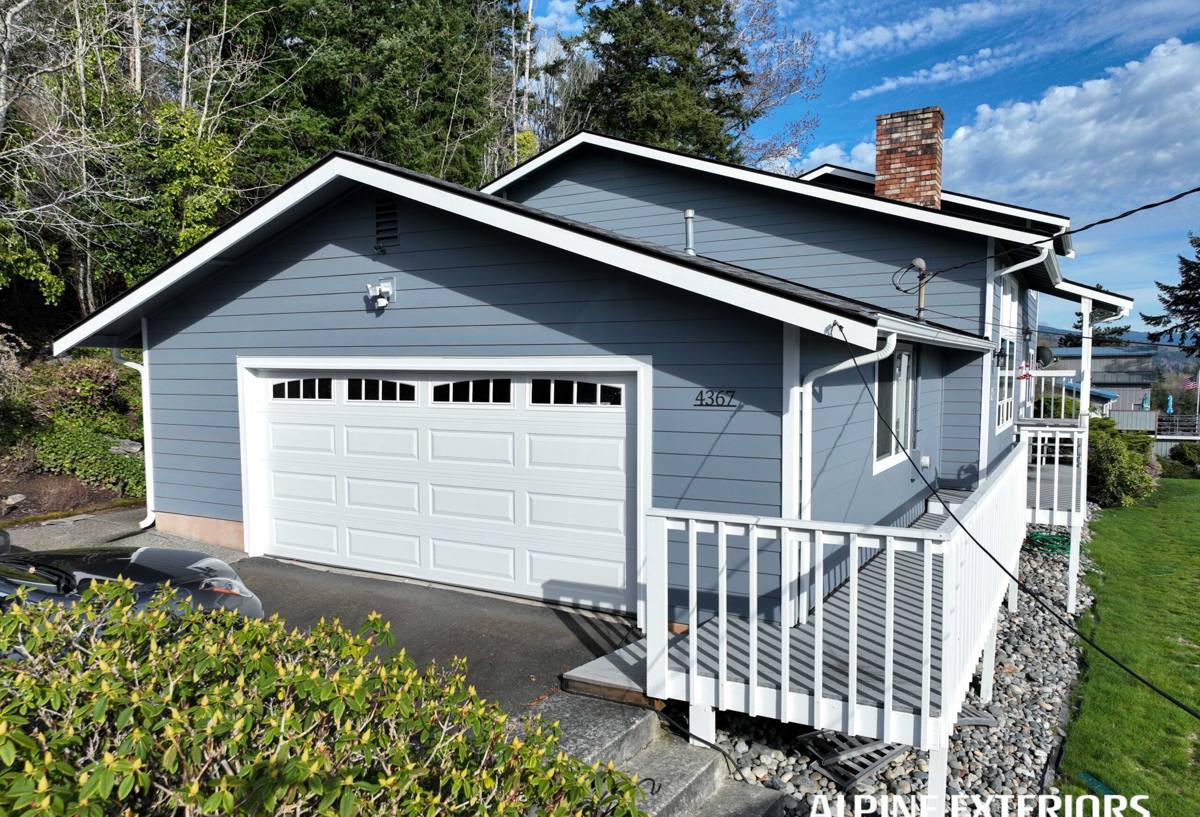
What the Local Climate Does to a Deck
Constant Moisture
Rain that falls steadily rather than in short hard bursts is worse for a deck than people expect, because it means wood and hardware stay damp for days at a stretch instead of getting a quick soak and a chance to dry. Any spot where water can pool — a poorly sloped ledger connection, a joist with no drip edge, decking boards laid tight with no gap — becomes the place rot starts first.
Salt Air
Blaine and the surrounding area sit close enough to the water that salt-laden air is a real factor, especially on decks that face west or sit more exposed to prevailing wind. Salt air accelerates corrosion on any fastener, bracket, or flashing that isn't rated for it. Standard interior-grade screws and cheap galvanized hangers will show rust bleed within a season or two out here.
Moss and Algae
Shaded decks, or decks under overhanging trees, grow moss on the walking surface almost as reliably as a roof does. Moss holds moisture against the board surface, and on wood decking that moisture leads directly to soft spots and rot. On composite decking it's mostly a slip hazard and a maintenance nuisance, but it still needs to be designed for — proper spacing, drainage, and material choice all matter.
Freeze-Thaw Cycling
Nooksack sits a bit further inland and at slightly higher elevation than the coast, so it sees more real cold snaps than Blaine proper. Footings that aren't poured to the correct frost depth can heave over a few winters, which throws the whole deck out of level and stresses every connection above it.
What a Correctly Built Deck Involves Here
Footings and Frost Depth
Whatcom County requires footings poured below the local frost line, sized to the load the deck will actually carry. We don't eyeball this — footing size and depth are set by the deck's span, joist spacing, and whether it's carrying a hot tub or just furniture. Undersized or shallow footings are the single most common failure point we see on older decks in this area.
Ledger Attachment and Flashing
Where the deck attaches to the house is the highest-risk connection on the entire structure. It has to be through-bolted (not just lag-screwed in most cases), flashed correctly so water sheds away from the house sheathing rather than into it, and separated from the siding with proper spacing. A poorly flashed ledger is a slow, hidden path for water into the wall framing — and it's invisible until the damage is already done.
Fastener and Hardware Grade
Given the salt air and constant damp, we use stainless steel or heavy hot-dip galvanized fasteners and connectors rated for coastal exposure, not the mill-standard galvanized hardware that's fine in a drier inland climate. Joist hangers, post bases, and structural screws all get matched to the wood or composite they're holding.
Decking Material and Board Spacing
Board gap spacing is set to let water and debris drop through instead of collecting, and end grain gets sealed or capped depending on the material. We also think about sun and shade patterns on the specific lot — a deck that stays shaded most of the day gets treated differently than one in full sun, because the moss and moisture risk is not the same.
Under-Deck Drainage
On taller decks, what happens to the water that falls through the boards matters. Grading the ground underneath to shed water away from the house foundation, rather than letting it pool against it, prevents a whole separate set of moisture problems at the foundation level.
Decking Material Comparison
There's no single "best" decking material — it depends on budget, how much upkeep the homeowner wants to do, and how exposed the deck is to sun, shade, and moisture. Here's how the common options actually perform in this climate:
| Material | Moisture/Rot Resistance | Moss & Algae Behavior | Maintenance | Typical Lifespan |
|---|---|---|---|---|
| Pressure-treated lumber | Good if sealed and maintained; poor if neglected | Grows moss readily if not cleaned | Needs reseal every 1-2 years | 10-15 years |
| Cedar | Naturally decay-resistant, but still needs sealing | Moderate — sheds moisture better than PT pine | Reseal/stain every 2-3 years | 15-20 years |
| Composite decking | Excellent — won't rot or absorb water | Can still grow surface moss/algae in shade; needs periodic washing | Occasional wash, no sealing | 25-30+ years |
| PVC/capped polymer | Excellent — fully moisture-sealed | Lowest moss retention of the group | Occasional wash | 25-30+ years |
For a heavily shaded Nooksack lot, we're more likely to steer a homeowner toward composite or capped polymer, simply because the maintenance burden of keeping wood sealed and moss-free in constant shade is real. For a sunnier, more exposed site, cedar or well-maintained pressure-treated lumber is a perfectly sound and more budget-friendly choice. We'll walk through the trade-offs honestly rather than pushing whatever has the best margin.
Our Process for a Nooksack Deck Project
- Site visit and assessment — we look at sun/shade exposure, drainage slope, soil condition, and how the deck will tie into the house.
- Design and material selection — sizing, layout, and material recommendation based on how the space will actually be used and how exposed it is to the elements.
- Permitting — most decks above a certain height or attached to the house require a Whatcom County building permit; we handle that paperwork rather than leaving it to the homeowner.
- Footings and framing — footings poured to frost depth, ledger properly flashed and fastened, joists and beams sized to span and load.
- Decking, railing, and stairs — installed with correct spacing, coastal-rated fasteners, and code-compliant railing height and baluster spacing.
- Final walkthrough — we go over maintenance expectations for the specific material chosen, so there are no surprises a year in.
Why Hire a Crew That Already Works in This Area
A contractor who mostly builds decks in a drier climate will often default to hardware, sealants, and framing details that are fine there and undersized here. Working regularly in Whatcom County means we already know the frost depth requirements, the local permitting process, and — just as important — which parts of a deck fail first when they're exposed to this specific combination of rain, salt air, and moss for years on end. That's not something you learn from a spec sheet; it's something you learn from going back to fix decks that were built without it in mind.
We also know this area well enough to have an honest conversation about site-specific factors — how much shade a particular lot actually gets through the year, whether a west-facing deck is going to take more weather than an east-facing one, and what that should change about material choice or fastener spec.
Signs an Existing Deck Needs Attention
- Soft or spongy spots underfoot, especially near the ledger or around post bases
- Rust streaking around screw heads or joist hangers
- Persistent moss or dark staining that comes back within weeks of cleaning
- Visible gaps or movement where the deck meets the house
- Railings or posts that flex more than they used to
- Standing water on the deck surface after rain instead of draining off
Any one of these is worth a look before it turns into a structural repair instead of routine maintenance.
What a Properly Built PNW Deck Should Have
- Footings poured to the correct local frost depth, sized for the actual load
- A through-bolted, properly flashed ledger connection to the house
- Stainless or coastal-rated galvanized fasteners and hardware throughout
- Decking board spacing that allows real drainage, not just cosmetic gaps
- Grading underneath the deck that moves water away from the foundation
- A material choice that matches the site's actual sun/shade and moss exposure
- Code-compliant railing height and baluster spacing for the deck's height off grade
Cost Factors to Expect
Every deck is different, but the main things that move the price are the same on nearly every job:
| Factor | Why It Matters |
|---|---|
| Deck size and shape | More square footage and more corners/angles both add material and labor |
| Height off grade | Taller decks need deeper footings, taller posts, and stairs |
| Decking material | Composite and PVC cost more upfront but less in long-term maintenance than wood |
| Ledger/attachment complexity | Older homes sometimes need extra work to create a solid, properly flashed attachment point |
| Railing and stair detail | Custom railing styles and multiple stair runs add both material and labor time |
| Permit and inspection requirements | Larger or higher decks generally require more inspection steps |
We'll give a firm, itemized number after the site visit rather than a rough phone quote — deck pricing genuinely depends on what we find on your specific lot.
Get a Straight Answer on Your Deck Project
Whether you're planning a new deck for a Nooksack-area home or trying to figure out if an existing one is still sound, we're happy to come take a look and give you an honest read on it. Reach out for a free, no-pressure estimate using the form below.