 Blaine Siding
 Building a Deck That Actually Holds Up in Cherry Point
Cherry Point sits right on the water, and that changes what a deck needs to survive. A deck built to a generic set of plans might look fine going up, but within a few years the fasteners are weeping rust, the boards are cupping, and the north side never fully dries out between storms. We build decks in this part of Whatcom County knowing exactly what the salt air, the driving rain, and the long moss season will do to a structure over time — and we spec accordingly, not after the fact.
This page covers what we actually do differently for a Cherry Point deck: material choices, framing details, fastener selection, and the maintenance reality homeowners here should plan for. It's not a generic "here's what a deck is" page — it's what changes when the deck sits a few hundred yards from Georgia Strait.
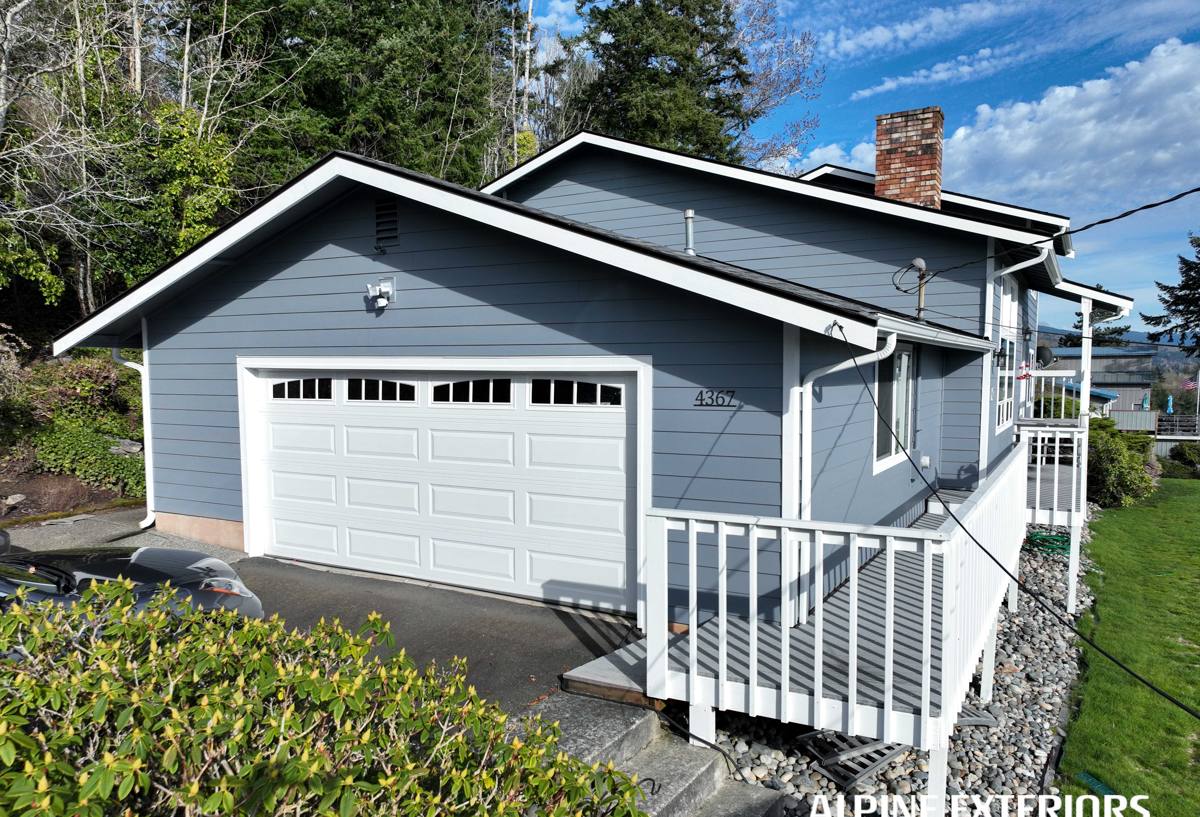
What Cherry Point's Location Demands from a Deck
Three environmental factors drive almost every decision on a coastal Whatcom County deck:
Salt Air Corrosion
Airborne salt accelerates corrosion on any exposed metal — nails, screws, joist hangers, bolts. A fastener rated for inland use can start showing rust streaks on a Cherry Point deck within a season or two if it wasn't chosen with marine exposure in mind. Once a fastener starts corroding, it weakens the connection it's holding, and that's not a cosmetic problem — it's a structural one.
Driving Rain
Storms off the Strait don't just fall straight down — wind-driven rain gets pushed sideways into ledger connections, under railings, and into any gap in the decking that wasn't detailed to shed water. A deck built without proper flashing and drainage planning will trap moisture in exactly the places you can't see it: behind the ledger board, under post bases, inside end grain.
Extended Moss and Mildew Season
Whatcom County's wet season runs long, and Cherry Point's exposure to the water keeps humidity high even between storms. Any deck surface that doesn't drain and dry quickly becomes a moss and algae host, which makes boards slick, holds moisture against the wood, and shortens the life of finishes.
Choosing the Right Decking Material
There's no single "best" decking material — there's a best fit for how the deck sits, how much sun it gets, and how much upkeep the homeowner actually wants to do. Here's how the common options hold up specifically in a marine, high-moss environment like Cherry Point:
| Material | Coastal Performance | Maintenance | Realistic Lifespan Here |
|---|---|---|---|
| Pressure-treated wood | Good if properly sealed and detailed for drainage; end grain and fastener points are the weak spots | Annual cleaning, re-sealing every 1-2 years | 15-20 years with upkeep |
| Cedar | Naturally rot-resistant but softer surface; can gray and hold moss faster without sealing | Sealing every 1-2 years, moss treatment | 15-20 years with upkeep |
| Composite decking | Doesn't absorb moisture into the board itself; still needs surface cleaning to prevent moss/algae film | Periodic washing, no sealing needed | 25-30 years |
| PVC decking | Fully moisture-resistant board, best resistance to moss staining and rot | Low — occasional washing | 25-30+ years |
We'll walk through the trade-offs honestly during the estimate — composite and PVC cost more up front but cut the maintenance burden significantly in a climate like this, while wood costs less initially but only performs well if the homeowner keeps up with sealing on schedule. Neither is the "wrong" choice; it depends on what you want to be doing every couple of summers.
Underneath the Deck Boards
Whatever surface material you pick, the framing underneath matters just as much — arguably more, since it's the part nobody inspects until something fails. That's the next section.
Framing and Structure: The Part You Don't See
A deck's surface can look brand new while the framing underneath is quietly failing. In a wet, salt-exposed environment, we pay particular attention to:
- Using appropriately rated pressure-treated lumber for all structural framing, regardless of what decking material sits on top
- Proper joist spacing for the specific decking product — composite and PVC boards often require tighter joist spacing than solid wood
- Air gaps and spacing between joists and any adjacent structure so air can circulate and framing can dry out between rain events
- Post bases set to keep wood-to-concrete contact points elevated and drained, not sitting in standing water
Framing failures in this climate are almost always moisture failures — wood that never got the chance to dry out between storms. Good structural design is really just good drainage design underneath.
Fasteners, Flashing, and Ledger Connections
If there's one place we won't cut corners on a Cherry Point deck, it's the connections. This is where salt-air corrosion does its worst work, and it's also where a failure has the highest consequence.
Fastener Selection
We use stainless steel or heavy hot-dip galvanized fasteners rated for coastal/marine exposure on decks in this area — not the standard galvanized hardware that's fine forty miles inland but starts corroding here within a few years. It costs more per fastener; it's not worth the trade-off in a location like this.
Ledger Board Flashing
The ledger board — where the deck attaches to the house — is the single most common failure point on decks nationally, and driving rain makes it worse here. We flash this connection properly with a drip edge and moisture barrier so water is directed away from the house band joist rather than wicking into it. A poorly flashed ledger is invisible until it's a rot problem behind your siding.
Hardware at Post Bases and Hangers
Joist hangers, post bases, and structural screws all get the same marine-rated treatment. This is one of the areas where the price difference between a deck that lasts 15 years and one that lasts 30 is decided, and it's largely invisible once the deck is built.
Our Deck-Building Process
We run the same core process on every Cherry Point deck, adjusted for the specific site conditions:
- Site assessment — we look at sun exposure, prevailing wind and rain direction, drainage slope, and how close the deck sits to the water
- Material and layout discussion — honest trade-offs on decking material, railing style, and layout based on how you'll actually use the space
- Permitting — pulling the required permit through the appropriate local jurisdiction before any work starts
- Framing and structural work — coastal-rated fasteners, proper joist spacing, ledger flashing, and post base drainage
- Decking installation — spacing and fastening per the manufacturer's specification for the chosen material
- Railings and finish work — installed to code for height and baluster spacing
- Final walkthrough — we go over maintenance expectations specific to the material you chose before we call the job done
Moss, Mildew, and Long-Term Maintenance
No deck in Whatcom County's moss season is truly maintenance-free — some just need far less of it. What we tell every Cherry Point homeowner, regardless of what material they choose:
- Sweep debris off the deck surface regularly — trapped leaves and needles hold moisture and feed moss growth
- Clean the surface at least once a year with a deck-safe cleaner; a pressure washer on too high a setting can damage wood fibers or composite surfaces, so lower pressure and the right nozzle matter
- Check and re-seal wood decking on the schedule the sealant manufacturer recommends — coastal exposure shortens the interval compared to inland homes
- Keep gutters and downspouts near the deck clear so runoff isn't dumping directly onto the deck surface or framing below
- Inspect ledger flashing and fastener heads once a year for early signs of corrosion or moisture staining
Catching a small moisture or corrosion issue early is a maintenance task. Catching it five years late is a rebuild.
Permits and Local Considerations
Deck projects in and around Blaine typically require a building permit, and requirements can vary depending on deck height, size, and proximity to property lines or shoreline setback rules — Cherry Point's waterfront-adjacent location means shoreline regulations sometimes come into play depending on exactly where a property sits. We handle the permit application as part of the job and will flag early if your specific lot has any shoreline or setback considerations worth discussing with the county before design is finalized.
Why Hire a Crew That Already Works Cherry Point
A deck built from a plan that ignores where it's actually sitting is a deck that ages faster than it should. Working regularly in Cherry Point and along this stretch of Whatcom County means we're not guessing at fastener grade, flashing detail, or material trade-offs — we've seen what standard-spec decks look like five and ten years in around here, and we build to avoid those failure points from the start rather than fixing them later.
Before you hire anyone for deck work in this area, a few questions worth asking:
| Question to Ask | Why It Matters Here |
|---|---|
| What fastener grade do you use for coastal exposure? | Standard galvanized hardware corrodes faster near the water |
| How do you flash the ledger board? | The most common deck failure point, worse in driving rain |
| What joist spacing do you use for composite or PVC decking? | Wrong spacing voids some manufacturer warranties and causes sagging |
| Will you pull the permit? | Required for most deck builds; also confirms setback compliance |
If a contractor can't answer these clearly, it's worth pausing before signing anything.
Get a Straight Answer on Your Cherry Point Deck Project
Every deck we build in this area gets specced for the site it's actually going on, not a generic template. If you're planning a new deck or replacing one that's showing its age, we're happy to come take a look, talk through material options honestly, and give you a straightforward estimate — no pressure, no obligation. The form below gets you started.