 Blaine Siding
 Building a Deck That Holds Up in Custer
Custer sits close enough to the water and open farmland north of Blaine that a deck here takes a different kind of beating than one built twenty miles inland. Salt-laden air off the Strait, wind-driven rain that comes in sideways more often than straight down, and a moss season that can stretch from October well into May all work on a deck's weakest points first: fasteners, ledger connections, and any spot where water can sit instead of run off. A deck built here needs to be designed for that reality from the framing up, not treated like a generic outdoor structure with a nicer railing.
We've built and repaired decks throughout the Custer area long enough to know which details matter and which ones are just upsells. This page covers what a correctly built custom deck actually requires in this climate, how we approach the job from first estimate to final walkthrough, and what a homeowner should know before signing with anyone for deck work here.
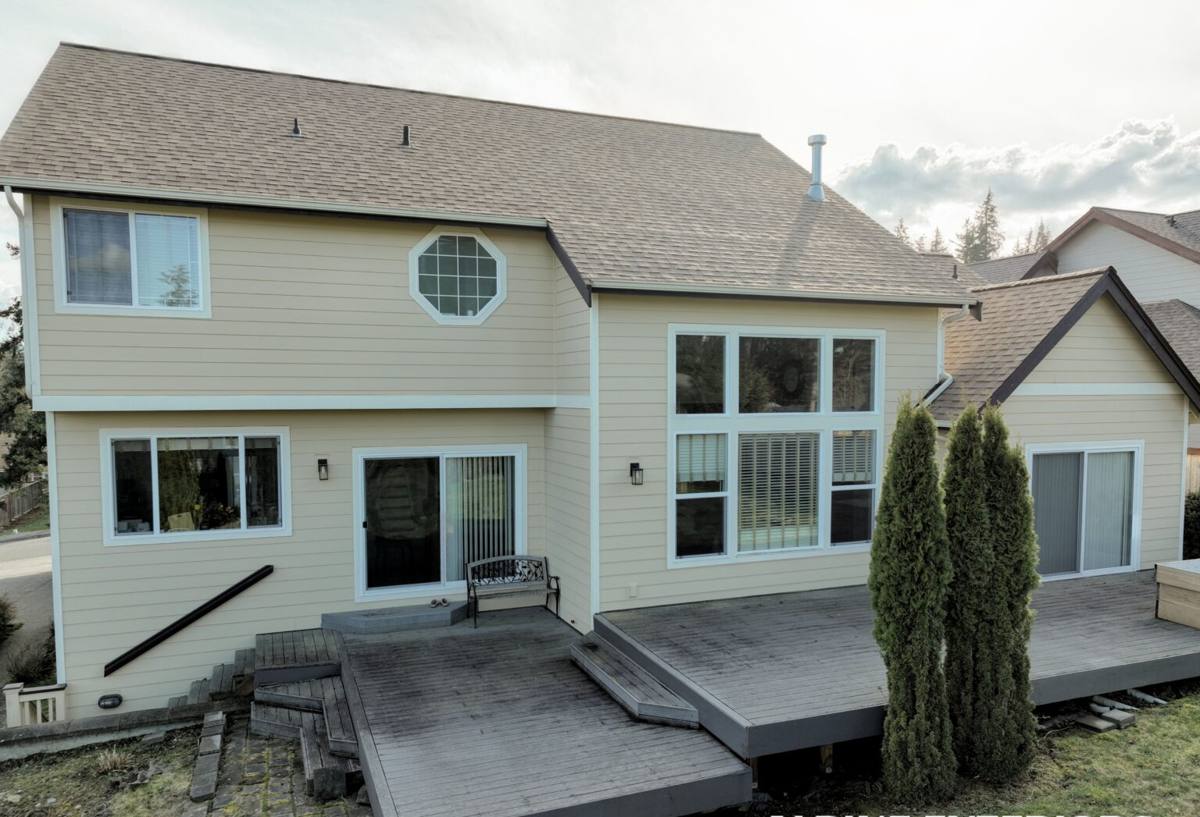
What Driving Rain and Salt Air Actually Do to a Deck
Whatcom County's marine climate is generally mild, which is part of why people underestimate what it does to exterior wood and hardware over time. Three things drive most of the deck failures and premature repairs we see in the Custer area:
- Wind-driven rain pushes water horizontally under railing caps, into end-grain cuts, and behind fascia boards that would stay dry in a calmer climate.
- Salt air accelerates corrosion on any fastener, bracket, or hanger that isn't rated for coastal exposure — galvanized hardware that would last decades inland can start rusting and staining the decking within a few seasons here.
- Extended moss and mildew season keeps horizontal surfaces damp longer between dry-out periods, which matters most on decking with tight board spacing, poor airflow underneath, or finishes that trap moisture instead of shedding it.
None of these are dramatic on their own. The damage shows up slowly, as soft spots near ledger boards, rust streaks below screw heads, or a slick green film on boards that never get enough sun and airflow to dry out. A deck designed with these factors in mind from the start avoids most of it.
Choosing Decking Material for This Climate
There's no single "best" decking material — the right choice depends on how much upkeep a homeowner actually wants to do, and how much shade and moisture exposure the site gets. In Custer, where many lots have mature trees or sit close to open fields with heavier moisture and moss pressure, that trade-off matters more than it would in a drier, sunnier location.
| Material | How It Handles This Climate | Maintenance |
|---|---|---|
| Composite / PVC decking | Doesn't absorb water or rot; resists moss growth better than wood when boards are spaced and ventilated correctly | Low — periodic cleaning, no staining or sealing |
| Cedar | Naturally rot-resistant and handles moisture well if properly finished and gapped, but end grain and fastener points still need attention | Moderate — needs re-staining or sealing every few years |
| Pressure-treated fir/hem-fir | Budget-friendly structural option, but surface decking from this material needs diligent sealing to keep pace with our rain season | Higher — annual inspection and more frequent sealing |
| Tropical hardwoods (ipe, cumaru) | Very dense and naturally water-resistant, but installation is unforgiving — pre-drilling and fastener choice have to be right the first time | Moderate to low, but oiling recommended to maintain color |
We don't push one material on every job. What we do insist on is matching the material to how the specific site drains, how much shade it gets, and how much maintenance the homeowner is realistically going to keep up with — because a beautiful deck that nobody maintains is exactly how moss and moisture problems get started.
Why We're Careful About Cheaper Composite Lines
Not all composite decking is built the same. Lower-tier boards can be more prone to moisture wicking at cut ends and less resistant to surface mold in shaded, humid conditions — which is the opposite of what you want in a Custer backyard with tree cover. We stick with product lines that have a solid track record in wet coastal climates and clear warranty terms, rather than the cheapest board available, because the callback cost of a moldy or failing deck isn't worth the up-front savings.
Substructure and Framing: Where Decks Actually Fail First
Homeowners tend to focus on the decking surface, but the framing underneath is what determines whether a deck lasts 10 years or 30. In this climate, we pay particular attention to:
Footings and Post Bases
Post bases need to hold the post above the concrete, not embedded in it, so water isn't wicking up into the wood over years of rain. Footing depth also has to account for our frost line and soil conditions, which vary more than people expect across Whatcom County's mix of clay and glacial till soils.
Joist Hangers and Fasteners
This is the single biggest place we see corners cut on older or lower-bid decks in this area. Standard galvanized hardware simply doesn't hold up as well under salt-air exposure as stainless or high-grade coated hardware rated for coastal or treated-lumber contact. We spec fasteners and hangers rated for both the lumber treatment chemicals and the coastal exposure, which costs more up front and saves the deck from early rust staining and hardware failure.
Ledger Attachment
Where a deck attaches to the house is the single most common source of hidden water damage — not just to the deck, but to the house's siding and framing behind it. Proper flashing at the ledger board, with the flashing lapped correctly under the house's water-resistive barrier, is not optional in a climate with this much wind-driven rain.
Railing, Stairs, and Hardware Standards
Beyond meeting current building code for height and baluster spacing, railing systems in this climate need the same corrosion-resistant hardware attention as the framing. Cable rail systems in particular need stainless components, since standard hardware will show rust streaks on light-colored decking within a couple of seasons of salt exposure. Stair stringers and treads get the same drainage and fastener treatment as the main deck frame — stairs are often the first place rot shows up because water runs down them and lingers on horizontal tread surfaces.
Drainage and Moisture Management
A deck that sheds water well needs almost no extra maintenance beyond routine cleaning. One that traps water needs constant attention and still fails early. We build in drainage from the ground up:
- Consistent board spacing sized for the decking material, so water and debris don't collect between boards
- Grading and gravel or drainage matting under low, shaded decks where soil moisture and moss pressure are highest
- Sloped ledger flashing and proper counter-flashing so water is directed away from the house wall, not toward it
- Airflow gaps at the rim joist and skirting so the underside of the deck can dry out between rain events instead of staying damp all winter
On shaded Custer lots with heavier tree cover, we'll often recommend slightly wider board gapping or a below-deck drainage system if the space underneath is going to be used as living or storage area, since trapped moisture under a deck is one of the more common sources of moss and mildew complaints we get called out on.
Permits and Local Requirements
Deck permitting in unincorporated Whatcom County (which covers most of the Custer area, outside Blaine's city limits) follows the county's building and setback requirements, and decks above a certain height or attached to the house typically require a permit and inspection regardless of size. Setbacks, height above grade, and guard rail requirements can all affect design before a single post goes in the ground. We handle the permit process as part of the job so homeowners aren't left figuring out county requirements on their own.
How Our Process Works
- On-site assessment: We walk the site, check drainage, sun exposure, and how the deck will tie into the house, and talk through how the space will actually be used.
- Material and design discussion: Based on the site conditions and the homeowner's maintenance preferences, we go over decking, railing, and framing options with honest trade-offs — not a one-size pitch.
- Written estimate: A clear scope and price before any work starts, including permit handling where required.
- Permitting and scheduling: We pull permits where needed and schedule around the weather window rather than rushing framing work into a heavy rain stretch.
- Build: Footings, framing, ledger flashing, decking, and railing, with attention to the fastener and drainage details covered above at every stage.
- Final walkthrough: We go over the finished deck with the homeowner, including basic maintenance expectations for the specific material chosen.
Maintaining a Custer Deck Once It's Built
Even a well-built deck needs some seasonal attention in this climate. A short annual routine keeps most problems from ever starting:
- Clear leaves and debris from between boards and off stair treads before the fall rains set in
- Rinse off surface moss and algae growth in spring before it gets a foothold, using a deck-safe cleaner rather than a pressure washer set too aggressively
- Check railing hardware and any visible fasteners once a year for early rust staining
- Keep gutters and downspouts near the deck clear so roof runoff isn't dumping extra water onto or under the structure
- Re-seal or re-stain wood decking on the schedule recommended for that specific product — waiting too long is the most common reason wood decks age poorly here
Why Local Deck-Building Experience Matters in Custer
A crew that mostly builds decks in drier, inland climates will often use the same fastener specs, the same board spacing, and the same drainage details everywhere, because those details work fine where they usually work. In Custer, that approach shows up as problems within a few years — rust streaks, soft spots at the ledger, moss that won't go away. Working this area regularly means we've already seen how a given lot's shade, soil, and wind exposure affects a deck over time, and we build accordingly instead of guessing.
If you're planning a new deck or replacing one that hasn't held up to Custer's weather, we're happy to take a look and put together a straightforward, no-pressure estimate. Use the form below to get started.