 Blaine Siding
 Why Custer Roofs Take More Punishment Than People Expect
Custer sits close enough to the water and far enough into Whatcom County's marine weather pattern that roofs here work harder than roofs even twenty or thirty miles inland. The combination is specific: salt-laden air drifting off the Strait, long stretches of driving rain that comes in sideways during winter storms, and a moss season that can run eight or nine months out of the year in shaded, tree-covered lots. Asphalt shingle roofs in this area often show granule loss, algae staining, and moss intrusion years before their rated lifespan is up. Metal roofing, installed correctly for this specific climate, handles all three of those stresses better than any other common roofing material — but "installed correctly" is doing a lot of work in that sentence, and it's the part most homeowners never get a straight answer on.
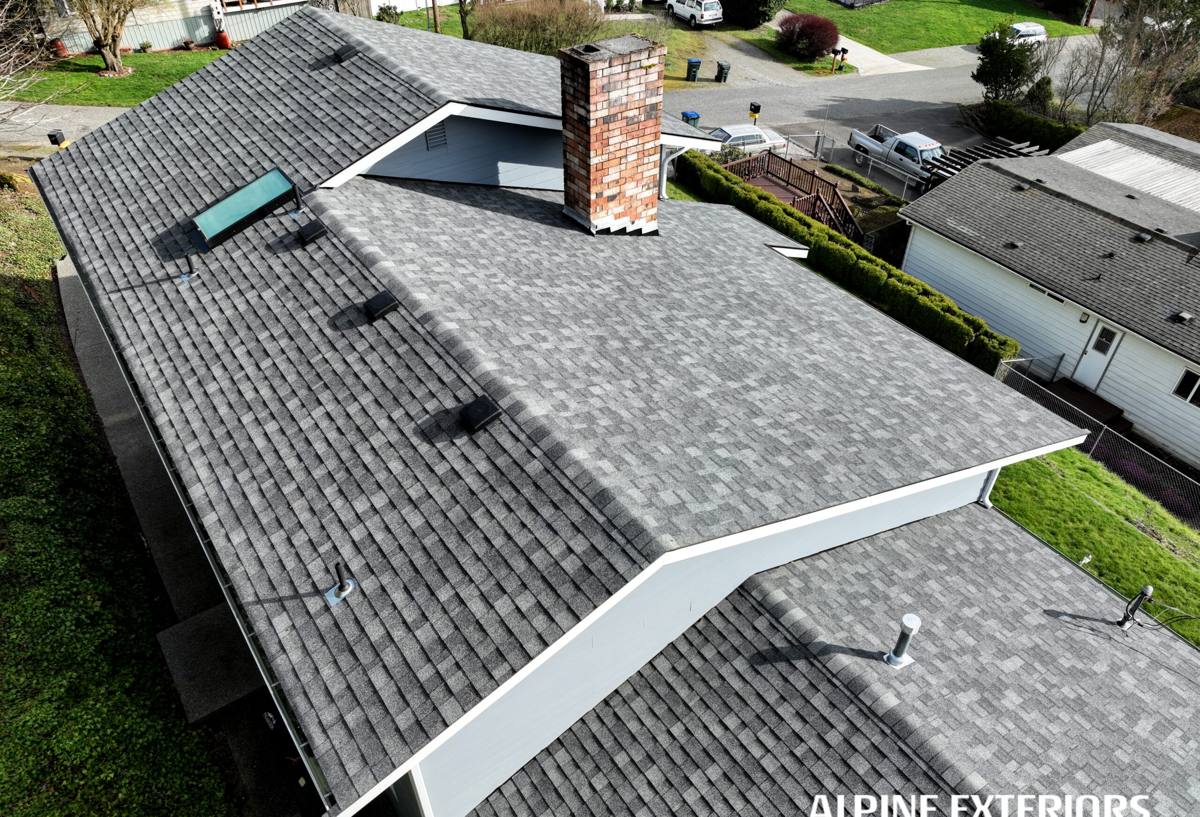
What Salt Air, Rain, and Moss Actually Do to a Roof
Salt Air
Airborne salt is corrosive to bare or poorly coated metal fasteners, flashing, and cut edges. It doesn't take a beachfront lot to feel the effect — prevailing winds carry salt further inland than most people assume, and Custer's proximity to the coast means most homes here are exposed to some degree. The fix isn't avoiding metal, it's specifying the right coatings and fastener grade so the material is designed for a marine environment instead of a dry inland one.
Driving Rain
Wind-driven rain doesn't just fall straight down — it gets pushed sideways and upward under laps, around penetrations, and into any gap in flashing. A roof that would shed water fine in a calm climate can leak here if the underlayment, seam design, and flashing details weren't built with wind-driven moisture in mind.
Moss
Moss needs shade and consistent moisture to establish, and a lot of Custer properties have both from mature tree cover. On asphalt shingles, moss roots into the granule layer and lifts shingles as it grows, opening a path for water. On metal, moss has nothing to root into and nowhere to hold moisture against the surface — it can still grow on debris that collects in valleys or against trim, but it doesn't undermine the roofing material itself the way it does with shingles.
Why Metal Roofing Fits This Specific Environment
We recommend metal roofing for Custer homes for practical reasons, not because it's trendy:
- Sheds wind-driven rain more reliably than lapped shingles when panels and seams are installed to spec
- Doesn't provide a surface moss can root into, cutting one of the biggest maintenance headaches in this area
- Modern coatings are formulated for coastal/marine exposure and resist the salt-driven corrosion that shortens the life of unprotected metal
- Sheds snow and ice load cleanly, which matters during the occasional hard winter system that comes through Whatcom County
- Typically outlasts asphalt shingle roofing by two to three times when installed and maintained correctly
That said, metal roofing isn't automatically immune to these problems — it's only as good as the coating spec, the fastener hardware, and the flashing details that go into it. A metal roof installed with the wrong fastener grade or generic flashing will still corrode and leak in this climate, just more slowly than shingles would fail.
Metal Roofing Options We Install
Not every metal roofing system is the same investment or the same performer in wind-driven rain. Here's how the common options compare for a Custer property:
| System | Best For | Wind-Driven Rain Performance | Maintenance Burden |
|---|---|---|---|
| Standing seam (concealed fastener) | Full roof replacements, long-term ownership | Excellent — raised seams shed water without exposed penetrations | Low |
| Exposed-fastener panel | Budget-conscious projects, outbuildings, additions | Good, but fastener gaskets wear and need periodic checking | Moderate — fasteners should be inspected over time |
| Metal shingle/shake profile | Homeowners wanting a traditional look with metal's durability | Good when interlocking laps are installed correctly | Low to moderate |
For most Custer homes exposed to open weather or tree cover, we lean toward standing seam because it has the fewest exposed penetrations for wind-driven rain and salt air to work into over time. Exposed-fastener panel is a legitimate option for secondary structures or tighter budgets, but the gaskets under those fasteners are a wear item that needs attention as the roof ages.
What a Correct Metal Roof Installation Actually Involves
A metal roof is only as good as what's underneath it and how the details are handled. For this climate, we don't skip these steps:
Underlayment
A high-temp synthetic or self-adhered underlayment goes down first, with extra ice-and-water barrier at eaves, valleys, and around penetrations — the spots where wind-driven rain concentrates.
Fasteners and Flashing
We spec corrosion-resistant fasteners and flashing rated for coastal exposure, not the standard-grade hardware that's fine further inland but corrodes faster here. Every penetration — vents, chimneys, skylights — gets custom-formed flashing, not a generic boot stretched to fit.
Ventilation
Metal roofing needs proper intake and exhaust ventilation in the attic space to prevent condensation from forming on the underside of the panels. Skipping this is one of the most common causes of "mystery leaks" that are actually condensation, not roof failure.
Seam and Panel Layout
Panel runs and seam direction are planned around the roof's actual exposure to prevailing wind and rain, not just laid out for the shortest path across the roof deck.
Our Process on Custer Projects
- On-site assessment — we look at tree cover, roof exposure, existing moss or moisture damage, and ventilation before recommending a system.
- Written scope and material spec — you see exactly what gauge, coating, and fastener hardware is going on your roof, and why.
- Tear-off and deck inspection — old roofing comes off and we check the deck for rot or soft spots before anything new goes down, since covering a compromised deck defeats the purpose of a durable roof.
- Underlayment and flashing installation — done to the standard above, not the minimum code requirement.
- Panel installation — laid out and fastened to spec for wind-driven rain exposure.
- Final walkthrough — we go over the finished roof and ventilation with you before we consider the job done.
What Metal Roofing Costs and What Drives the Price
Every roof is different, but a few factors consistently move the price on Custer projects:
| Factor | Why It Matters |
|---|---|
| Roof complexity (valleys, dormers, penetrations) | More cuts and flashing details mean more labor and material |
| System type (exposed-fastener vs. standing seam) | Standing seam costs more upfront but needs less long-term attention |
| Coating and gauge specification | Marine-grade coatings and heavier gauge steel cost more but last longer in salt air |
| Tear-off and deck condition | Rot or damage found under old roofing adds repair cost before new roofing goes on |
| Ventilation upgrades | Adding proper intake/exhaust venting where it's missing is a worthwhile add, not a corner to cut |
We'll walk through these factors specific to your roof during the estimate rather than quoting a number before we've seen the actual conditions.
Keeping a Metal Roof Performing in This Climate
Metal roofing needs less upkeep than shingles, but "less" isn't "none." A simple annual checklist keeps a Custer metal roof performing for decades:
- Clear debris from valleys and against any trim or flashing where moss or organic buildup could hold moisture
- Check exposed fasteners (if that's your system type) for loosening or gasket wear
- Look at flashing around chimneys, vents, and skylights for gaps after major storms
- Confirm gutters and downspouts are clear so water isn't backing up under eave flashing
- Have a professional check attic ventilation if you notice condensation or musty smells inside
Why Hiring a Crew That Already Works in Custer Matters
Metal roofing done wrong in a low-exposure climate might just mean a slightly shorter roof life. Done wrong in Custer's combination of salt air, driving rain, and heavy moss pressure, the same mistakes show up faster — corroding fasteners, leaks around poorly flashed penetrations, condensation from missed ventilation. A crew that installs metal roofing across Whatcom County's coastal conditions on a regular basis specs hardware and details for this exposure by default, not as an upsell. That's the difference between a roof that needs attention in five years and one that's still doing its job in twenty-five.
If you're weighing metal roofing for a home in Custer, we're happy to take a look and give you a straight assessment — no pressure, no inflated urgency. Fill out the form below for a free estimate.