 Blaine Siding
 Composite Decking Built for Lynden's Wet Whatcom County Climate
Lynden gets more rain-soaked days in a year than most homeowners realize until they're staring at a deck that's gone soft, gray, or slick with moss. Between the marine air drifting in from the coast, the long stretch of fall-through-spring drizzle, and a moss season that doesn't seem to end, a deck in this part of Whatcom County works harder than one built a few hundred miles inland. Composite decking, installed correctly for this specific climate, is one of the few decking choices that holds up to that pressure year after year without turning into a spring maintenance project.
This page is about composite decking specifically for Lynden homes — what the local weather demands, what a correct installation actually involves, and why the details matter more here than they do in a drier climate.
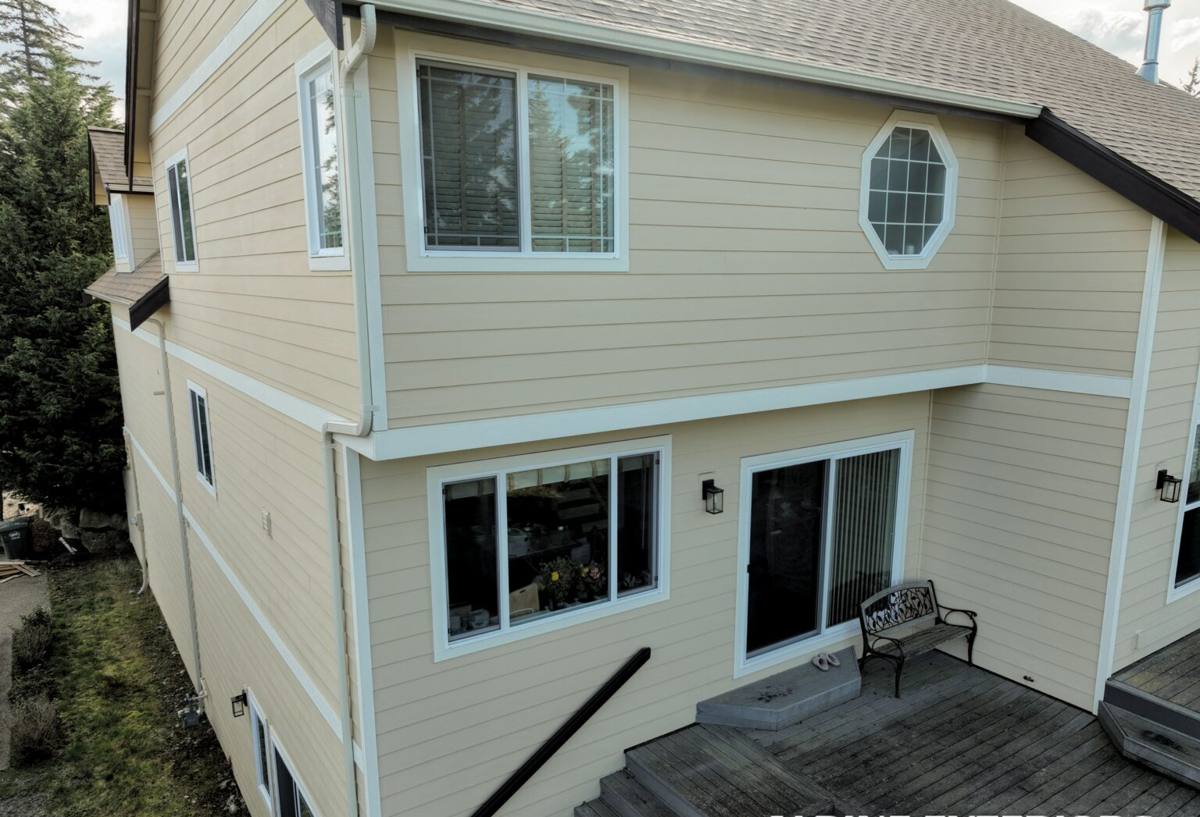
What Lynden's Climate Actually Does to a Deck
Lynden sits far enough inland to avoid direct salt spray, but the broader Whatcom County air still carries moisture off the Salish Sea, and that damp air settles into every low-lying yard and shaded corner of a property. Combine that with driving rain that comes in sideways during winter storms, and you get a deck surface that rarely gets a real chance to dry out between weather events.
- Standing moisture: Rain that lands on a deck doesn't evaporate quickly here — it sits, soaks into any exposed wood grain, and works into fastener holes and board gaps.
- Moss and algae growth: Shaded decks, north-facing decks, and decks under trees stay damp long enough for moss and algae to take hold, especially where boards aren't spaced or sloped to drain.
- Freeze-thaw cycling: Whatcom County doesn't get deep freezes often, but the occasional cold snap after a wet stretch can crack wood fibers and stress fastener connections that were already compromised by moisture.
- UV and rain in the same season: Summer brings enough sun to fade and dry out unprotected wood fiber, right after months of saturation — that swing is part of what breaks decks down over time.
None of this is unique to any one yard in Lynden — it's the baseline condition for outdoor structures across this part of Washington. A deck built without that reality in mind is a deck that will need work sooner than it should.
Why Composite Makes Sense Here
Composite decking is a mix of wood fiber and plastic, capped (in most quality boards) with a protective outer shell that doesn't allow water to soak into the board the way raw lumber does. For a Lynden property, that matters for a few concrete reasons:
- It doesn't absorb standing water the way wood does, so it's far less prone to swelling, cupping, or splintering after a wet winter.
- It doesn't need annual staining or sealing to keep moisture out — which matters if you're not planning to spend a weekend every spring on deck maintenance.
- It resists the surface breakdown that lets moss and algae grip into wood grain, though it still needs occasional cleaning in shaded, damp spots (more on that below).
- It holds its color and structure through the UV-then-rain cycle better than untreated wood, because the wear happens at the cap layer, not the structural core.
Composite isn't maintenance-free — no outdoor decking product is, regardless of what's printed on the packaging — but it shifts the maintenance burden from "necessary to prevent rot" to "occasional cleaning to keep it looking good." That's a meaningfully different relationship with a deck over a 20-30 year span.
Where Composite Decking Still Requires Real Attention
Substructure and Framing
The composite boards get most of the attention, but the framing underneath is what actually determines whether a deck lasts. In this climate, we treat the substructure — joists, beams, posts, and ledger connections — as the part of the job that can't be shortcut. Pressure-treated framing lumber, proper joist spacing for the composite brand being installed, and correct flashing at the ledger board (where the deck attaches to the house) are what keep water from working its way into the structure that composite decking sits on top of.
Drainage and Airflow
A composite deck that traps moisture underneath it is still a problem, even if the boards themselves don't rot. We grade and vent the space under the deck so water has somewhere to go, and we space boards correctly so water sheds off the surface instead of pooling between them. This is especially important on lower decks close to grade, which are common on Lynden lots.
Fasteners and Fastening Method
Hidden fastener systems are common with composite decking and generally give a cleaner look, but they have to be matched to the specific board profile and rated for exterior, moisture-heavy use. Mismatched or undersized fasteners are one of the more common causes of boards working loose over time — not a flaw in the composite material itself, but an installation shortcut.
Our Composite Decking Process
- On-site assessment: We look at the existing structure (if there is one), grading, sun/shade exposure, and how water currently moves across the yard and around the house.
- Framing evaluation or build: Existing substructures get inspected for rot, undersized framing, or missing flashing before any composite board goes down. New builds get framed to spec for the composite product being installed.
- Drainage and flashing details: Ledger flashing, joist protection tape, and grading under the deck are addressed before boards are installed, not treated as an afterthought.
- Board installation: Boards are installed with manufacturer-specified spacing and fastening, accounting for thermal expansion and proper drainage between boards.
- Finish details: Fascia, stair treads, railing, and edge trim are completed to match the composite system, keeping cut ends and exposed edges properly capped or protected.
- Walkthrough: We go over basic care — what to expect in year one, how to clean shaded areas prone to moss, and what's covered under the manufacturer's product warranty.
Comparing Decking Options for a Lynden Property
| Factor | Composite | Pressure-Treated Wood | Cedar |
|---|---|---|---|
| Moisture resistance | High — capped boards resist absorption | Moderate — needs sealing to hold up | Moderate — natural oils help but fade over time |
| Annual maintenance | Occasional cleaning | Sealing/staining every 1-2 years | Sealing/staining every 1-2 years |
| Moss/algae resistance | Good, better in sun-exposed areas | Lower — grain holds moisture | Moderate |
| Upfront cost | Higher | Lowest | Mid to high |
| Typical lifespan (this climate) | 25-30+ years with correct install | 10-15 years with regular upkeep | 15-20 years with regular upkeep |
Wood decking isn't a bad choice — it's a real trade-off between lower upfront cost and higher ongoing maintenance. For homeowners who don't want a recurring maintenance task tied to Lynden's wet season, composite is usually the better long-term fit. For homeowners who want the lowest possible upfront cost and don't mind the upkeep, treated lumber remains a reasonable option. We'll walk through that trade-off honestly rather than push one product regardless of what fits your situation.
What a Correct Job Involves — Homeowner Checklist
Whether you're hiring us or vetting another contractor, these are the things worth confirming before composite decking goes down on a Lynden property:
- Is the substructure being inspected or built to spec, not just covered up with new boards?
- Is ledger flashing being installed or verified where the deck meets the house?
- Is there a plan for drainage and airflow underneath the deck, especially on low or shaded decks?
- Are the fasteners rated for the specific composite board profile being used?
- Is board spacing accounting for thermal expansion and water runoff?
- Does the quote spell out what's included — framing, flashing, fascia, stairs, railing — rather than just "deck installation"?
- What's the manufacturer's warranty on the boards, and what's covered under our workmanship?
Why Hiring a Crew That Works Lynden Regularly Matters
A lot of composite decking problems don't show up as a bad install — they show up two or three winters later, once the deck has been through a full wet season or two. A crew that only occasionally works in this part of Whatcom County may not build in the drainage, flashing, and spacing margins that this climate actually requires, because they're used to conditions that don't punish a deck the same way. We work in Lynden and the surrounding Blaine-area communities regularly, which means we're building decks to hold up against the specific combination of driving rain, persistent damp, and moss pressure that shows up here every year — not a generic install pulled from a manufacturer's minimum spec sheet.
Get a Straight Answer for Your Property
Every yard drains differently, every deck has its own sun and shade pattern, and the right composite system depends on what your property actually does with water. We're happy to take a look, walk through what your specific site needs, and give you a straightforward estimate — no pressure, no upsell. Use the form below to request a free estimate for composite decking in Lynden.