 Blaine Siding
 Cherry Point's Climate Puts Real Stress on Exterior Siding
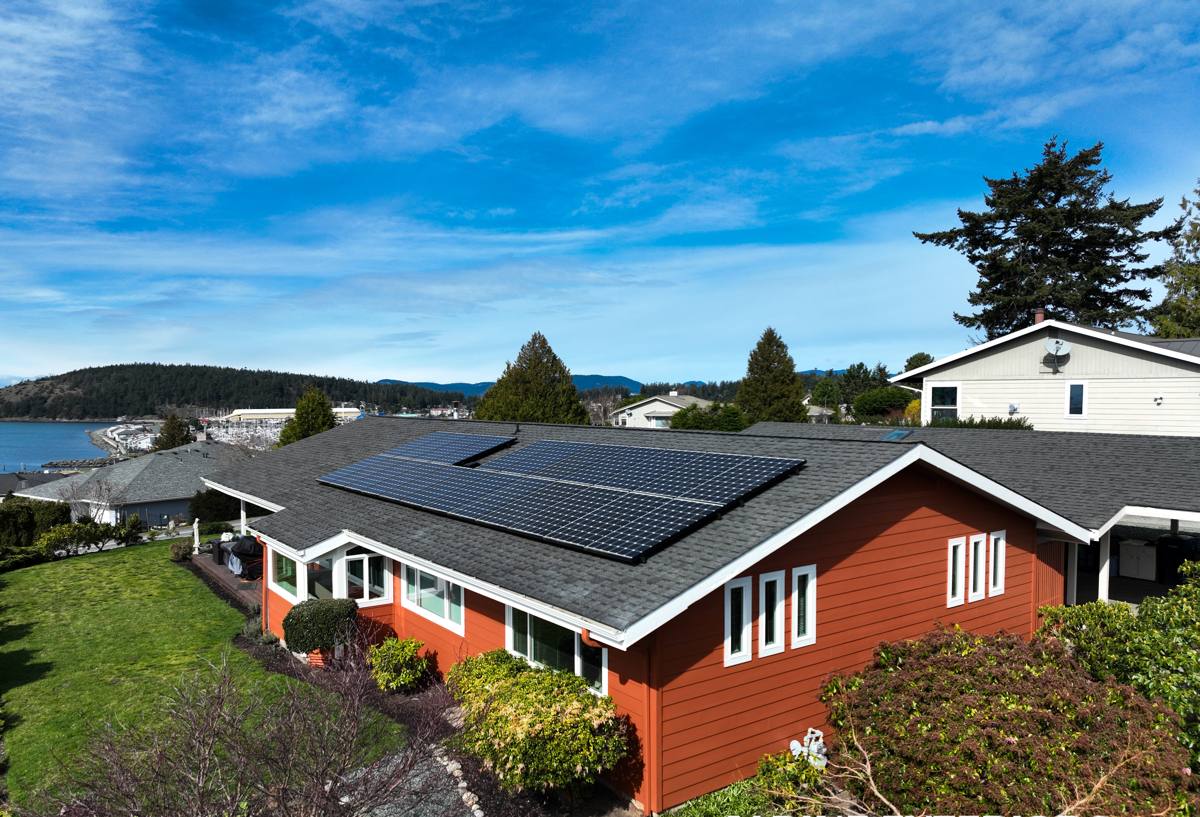
Cherry Point sits on the Whatcom County shoreline between Blaine and Ferndale, close enough to the Strait of Georgia that salt-laden air is a constant, low-grade presence on every exterior surface. Add wind-driven rain coming off the water, a heating season that runs long and damp, and a moss season that can stretch from fall through spring, and you have a climate that is genuinely harder on siding than most inland Whatcom County neighborhoods. None of this is dramatic on its own — it's the combination, repeated year after year, that wears down the wrong materials or a poorly executed installation.
Salt air doesn't just sit on the surface. Fine salt particles carried on marine wind settle into seams, fastener heads, and any place where two materials meet. Over time that accelerates corrosion in exposed metal fasteners and fittings, and it can leave a chalky residue on painted surfaces that homeowners often mistake for ordinary dirt. Driving rain, meanwhile, doesn't fall straight down — it gets pushed sideways into laps, corners, and trim joints, which is exactly where a siding system either sheds water correctly or lets it find a way behind the cladding. And moss, which thrives in the shaded, moisture-retaining conditions common on north- and water-facing walls here, holds dampness directly against the siding surface far longer than open, sun-exposed walls ever see.
None of these stressors are unique to Cherry Point by themselves. What makes homes here demand more from a siding job is having all three working at once, for most of the year.
What a Correct Installation Has to Get Right in This Environment
Moisture Management Behind the Cladding
Siding is the visible layer, but the water-resistive barrier underneath is what actually keeps a home dry. In a climate with this much wind-driven rain, that barrier has to be installed with correct overlaps, sealed at every seam, and integrated — not just butted up against — every window, door, and penetration. Where wall assemblies call for it, a drainage gap behind the siding gives any moisture that does get past the cladding a way to drain and dry instead of sitting against the sheathing.
Fastening Choices That Hold Up to Salt Air
Fastener selection matters more here than in a drier, inland climate. Corrosion-resistant fasteners rated for coastal exposure are worth the extra cost, because a fastener that starts rusting years before it should can telegraph staining through the finish and eventually loosen the panel it's holding. Fastening pattern and spacing also need to account for the material's expansion and contraction, which a rushed crew tends to get wrong.
Trim, Flashing, and Ground Clearance
Most siding failures don't start in the middle of a wall — they start at the edges: roof-to-wall intersections, window and door trim, deck ledgers, and the bottom edge near grade. Kick-out flashing where a roofline meets a wall, proper head flashing above openings, and adequate clearance between the siding's bottom edge and the ground or roof surfaces below are what keep water from being funneled directly into vulnerable joints. Caulk has a role, but it should be a backup to good flashing and lap detail, not the primary defense.
Why This Company Installs Only James Hardie Fiber Cement
We made a deliberate decision to install one product system rather than offer a menu of options — James Hardie fiber cement, factory-finished with ColorPlus. In a climate defined by salt air, sustained moisture, and moss, that decision comes down to how a material behaves over decades of wet-dry cycling, not how it performs on a sunny installation day.
| Material | How it handles salt air & driving rain | Moss/moisture exposure | Ongoing maintenance |
|---|---|---|---|
| Vinyl | Won't rot, but panels can warp or gap over time, opening paths for wind-driven rain behind the cladding | Sheds water well but doesn't stop growth on the surface; trapped moisture behind panels isn't visible until it's a problem | Low, but repairs and color matching after years of sun and salt exposure can be difficult |
| LP SmartSide (engineered wood) | Performs well when detailing is perfect; wood-based core is intolerant of the sustained moisture this climate delivers | Cut edges and any coating breach are vulnerable to swelling and eventual rot | Moderate — repainting and edge sealing are important and easy to fall behind on |
| Cedar | Attractive but naturally moisture-permeable; needs consistent finish maintenance to resist the region's rain load | Prone to moss and mildew staining without regular cleaning and refinishing | High — periodic refinishing is part of ownership, not optional |
| James Hardie fiber cement | Non-combustible, dimensionally stable, and engineered specifically for climates like this one under Hardie's HZ5 zone | Doesn't rot or support moss growth on the material itself; factory finish resists the moisture cycling that fades or lifts field-applied paint | Low — periodic washing and normal upkeep, with a long factory-backed finish warranty |
Hardie's climate-engineered HZ5 line is built for regions that see freeze-thaw cycling and sustained damp weather, which describes Whatcom County's winters well. That, combined with a factory-applied ColorPlus finish that doesn't rely on field painting to hold up, is why we standardized on it rather than offering a lower-cost alternative we'd have to caveat every time.
Our Installation Process for Cherry Point Homes
- On-site assessment — we look at wall orientation, water exposure, moss and staining patterns, and the condition of the existing sheathing and trim before quoting anything.
- Tear-off and sheathing check — old siding comes off and we inspect the sheathing underneath for any hidden moisture damage before it gets covered again.
- Weather barrier and flashing installation — a correctly lapped, sealed water-resistive barrier goes in first, with flashing integrated at every window, door, and penetration.
- Hardie panel installation to spec — panels, fasteners, and clearances installed per James Hardie's published installation requirements, not shortcuts that happen to look fine on day one.
- Trim, caulking, and finish detail — corners, trim boards, and joints finished so they shed water rather than depend on caulk alone.
- Final walk-through — we go over the finished work with the homeowner before calling the job done.
Signs a Cherry Point Home May Need New Siding
- Soft or spongy spots when you press on the siding, especially near the bottom edge or below windows
- Persistent moss or dark streaking on north- or water-facing walls that comes back shortly after cleaning
- Visible warping, cupping, or gaps between panels or at seams
- Paint that's peeling, bubbling, or chalking heavily rather than fading evenly
- Rust staining running from fastener heads or trim hardware
- Rising energy bills that coincide with drafts felt near exterior walls
- Visible daylight or moisture intrusion around window and door trim
Why a Crew That Already Works Cherry Point Matters
Siding installation isn't just about following a manufacturer's manual — it's about applying that manual correctly to the specific exposure a given wall faces. A crew that regularly works this stretch of Whatcom County shoreline already knows which wall orientations take the worst of the wind-driven rain, which older homes in the area tend to have hidden moisture damage behind their original siding, and how much clearance and flashing detail actually holds up through a full wet season here rather than just looking right at handoff.
There's also a practical side: local crews know the permitting expectations for exterior work in the county, can get to a punch-list item or a warranty question without a long drive, and have a reputation in the area to protect — which matters more than any sales pitch when you're trusting someone with the one layer standing between your home and the weather.
Living With Hardie Siding in This Climate
One advantage of moving to fiber cement here is how little ongoing maintenance it actually demands compared to wood-based or field-painted options. That said, a few habits go a long way in a salt air, moss-prone environment:
- Rinse the exterior periodically to clear salt residue and organic buildup before it accumulates
- Keep gutters clear and vegetation trimmed back from walls to reduce shaded, damp conditions that favor moss
- Check caulking at trim joints and penetrations annually, since caulk is a maintenance item even on a low-maintenance siding system
- Address any impact damage or chips in the finish promptly rather than letting moisture find an opening
What Drives the Cost of a Cherry Point Siding Project
| Cost factor | Why it matters here |
|---|---|
| Extent of tear-off and sheathing repair | Homes with hidden moisture damage behind old siding need more work before new cladding can go on |
| Wall complexity and trim detail | More corners, dormers, and trim transitions mean more flashing and labor time |
| Panel profile and finish selection | Different Hardie profiles and ColorPlus finishes carry different material costs |
| Exposure and access | Water-facing walls needing extra flashing detail, or difficult access, add labor |
| Existing moss or moisture damage | Remediation before installation is sometimes necessary and adds to project scope |
Every property is different, so we don't quote a siding project without seeing the walls in person first — a phone estimate on a home in this climate isn't worth much.
If you're weighing a siding replacement for a Cherry Point home, we're happy to take a look and walk you through exactly what your walls need. The estimate is free, there's no pressure, and you'll get a straight answer about what's actually going on behind your current siding.