 Blaine Siding
 Windows Built for the Cherry Point Waterfront
Cherry Point sits right up against the Strait of Georgia, north of Blaine in Whatcom County, and that location shapes everything about how windows perform there. Homes out this way take a steadier beating from salt-laden air and driving rain than houses even a few miles inland. Add in the long stretch of damp, low-light months that keep moss and mildew active most of the year, and you've got a climate that is genuinely hard on window frames, seals, and glazing. A window that's fine in a sheltered subdivision can start failing early out here if it wasn't chosen and installed with this specific exposure in mind.
We work this stretch of the county regularly, so we're not guessing at what holds up. We've seen which frame materials handle salt exposure without pitting or corroding, which seal systems actually stay watertight under wind-driven rain, and which installation shortcuts show up as leaks two winters later. This page covers what a correct custom window job looks like for a Cherry Point property — not generic advice, but what actually matters for homes in this specific spot.
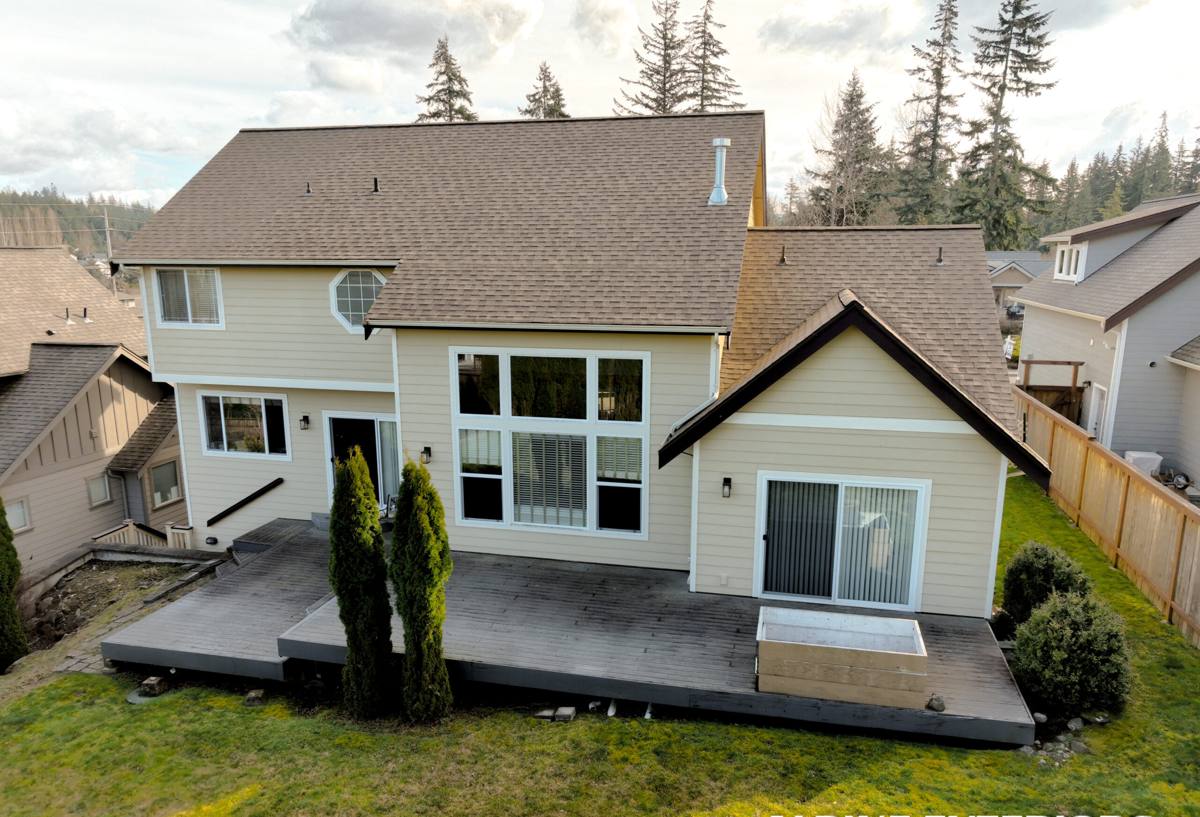
What the Cherry Point Climate Does to Windows
Salt Air and Metal Fatigue
Airborne salt from the strait settles on everything nearby, including window hardware. Cheap or unprotected metal components — hinges, cranks, screws, and some aluminum cladding — corrode faster here than they would even a short drive inland. Once corrosion sets in on hardware, windows get harder to operate and seals get compromised, which lets more moisture in.
Driving Rain and Wind-Driven Water
Storms coming off the water don't just drop rain straight down — wind pushes it sideways and up under trim, sills, and poorly flashed openings. A window can look properly installed and still leak if the flashing detail behind the trim wasn't done right. This is one of the most common failure points we find on older or budget installations in this area.
Moss, Mildew, and Prolonged Dampness
Whatcom County's long moss season isn't just a roof problem. Sills, exterior trim, and any wood components around a window opening stay damp for extended stretches, which is exactly the environment moss, algae, and mildew need to take hold. Once organic growth gets established around a window, it holds moisture against the frame and accelerates rot in wood-framed units or wood trim.
What a Correct Custom Window Install Involves
"Custom" doesn't just mean a non-standard size or shape — though that's part of it for older Cherry Point-area homes with openings that don't match modern stock dimensions. It means the whole job is built around the actual conditions of that opening and that house, not a one-size-fits-all approach.
- Accurate field measurement of the existing rough opening, including any settling or out-of-square conditions common in older homes
- Frame material selected for marine exposure, not just price or appearance
- Full removal of old flashing and sealant, not just installing over what's there
- Correctly lapped flashing tape and sill pan to shed wind-driven water outward, not into the wall cavity
- Low-expansion foam or backer rod and sealant at the perimeter, sized to the actual gap — not stuffed with fiberglass and hoped for the best
- Exterior trim and caulking detailed to shed water and resist moss buildup around joints
- Interior finish work that matches the home instead of leaving gaps or mismatched trim
Skipping any one of these steps is how a brand-new window ends up leaking or fogging within a few years. The window unit itself is only part of the job — the flashing and sealing detail around it matters just as much, especially in an exposure like Cherry Point's.
Choosing Frame Materials for Salt and Moisture Exposure
There's no single "best" window material for every home, but some choices hold up better than others in a marine climate. Here's how the common options compare for this specific area:
| Frame Material | Salt Air Performance | Maintenance | Notes for Cherry Point |
|---|---|---|---|
| Vinyl | Doesn't corrode; generally holds up well | Low — occasional cleaning | Good all-around choice for coastal exposure at a moderate price point |
| Fiberglass | Excellent — very stable, resists warping and corrosion | Low | Strong option where budget allows; handles temperature and moisture swings well |
| Wood (unclad) | Poor without diligent upkeep | High — regular repainting/sealing | Requires real commitment to maintenance in this moss and rain exposure |
| Wood, clad exterior | Good if cladding and flashing are done correctly | Moderate | Can work well but installation quality matters more here than most areas |
| Aluminum | Prone to pitting/corrosion in salt air over time | Moderate to high | We generally steer Cherry Point homeowners toward other materials unless it's a specific architectural match |
We'll talk through these trade-offs honestly during your estimate rather than pushing whatever's easiest to sell. The right call depends on your home's style, your budget, and how much upkeep you actually want to take on.
Glass and Weatherstripping Choices That Matter Here
Beyond the frame, a few details make a real difference for a house exposed to this much wind and moisture:
- Dual-pane, low-E glass is the practical standard for this climate — it helps with both energy efficiency and condensation control on cold, damp days
- Warm-edge spacer systems reduce condensation at the glass edge, which matters when humidity stays high for months at a time
- Quality weatherstripping at sash and frame junctions keeps wind-driven rain from working its way in around a closed window, not just a locked one
- Corrosion-resistant hardware — locks, cranks, hinges — holds up to salt air far longer than standard-grade components
None of these are exotic upgrades. They're standard-grade decisions that happen to matter more in a place like Cherry Point than they would somewhere sheltered and dry.
Our Process for a Cherry Point Window Project
1. On-Site Assessment
We look at your existing windows, the condition of the openings, any signs of past water intrusion, and how exposed each elevation of the house is to prevailing wind and rain. The side of the house facing the water often needs different detailing than a sheltered side.
2. Honest Recommendation
We'll walk you through material and glass options suited to your home and budget, and tell you plainly if a particular product isn't a good fit for this exposure — even if it costs us the upsell.
3. Careful Removal
Old windows, trim, and sealant come out fully so we can inspect the rough opening for hidden rot or past water damage before anything new goes in. Catching a problem here is far cheaper than finding it later.
4. Correct Flashing and Installation
This is where most of the long-term performance is decided. We flash and seal every opening to shed water outward, using materials rated for this climate, not just whatever's fastest.
5. Finish and Walkthrough
Interior and exterior trim get finished cleanly, and we walk the job with you before calling it done.
Why Local Experience Matters for This Job
A crew that mostly works drier, inland projects can still install a window correctly on paper and still get it wrong for a spot like Cherry Point, because they're not used to designing for this level of wind-driven rain and salt exposure. We work in and around Blaine and this stretch of Whatcom County regularly, so the flashing details, material choices, and sealing approach we use here are shaped by what we've actually seen fail — and what's actually held up — on homes with this exact exposure. That's not a marketing line; it's the difference between a window that's dry in year one and one that's still dry in year ten.
Warning Signs It's Time to Replace
- Fogging or moisture between the glass panes (failed seal)
- Soft or discolored trim and sills around the window
- Visible moss or algae buildup at the sill or corners
- Drafts or whistling during windy, rainy weather
- Windows that are hard to open, close, or lock — often a sign of frame corrosion or swelling
- Water staining on interior walls below or beside a window
Catching these early usually means a straightforward window replacement. Ignoring them tends to turn into a wall or framing repair on top of the window itself, which costs more and takes longer.
Get a Straightforward Estimate
If you're weighing custom windows for a Cherry Point-area home, we're happy to take a look, explain what we're seeing, and give you options without any pressure to decide on the spot. Use the form below to request a free estimate and we'll get back to you to schedule a time to come out.