 Blaine Siding
 Decks Built for Cherry Point's Marine Climate
Cherry Point sits close to the water on the edge of Blaine, and that location shapes everything about how a deck should be built here. The air carries salt off the Strait, rain comes in sideways more often than straight down, and the mild, wet Whatcom County climate keeps surfaces damp for long stretches of the year. A deck that would hold up fine in a drier inland town can start showing problems in Cherry Point within a couple of seasons if it wasn't built with this environment in mind.
We're not talking about exotic engineering. We're talking about the right materials, the right fasteners, and the right details at the ledger and the framing — the parts of a deck that don't show until they fail. Getting those right the first time is the difference between a deck that needs real attention every few years and one that just needs a rinse and a walk-through each spring.
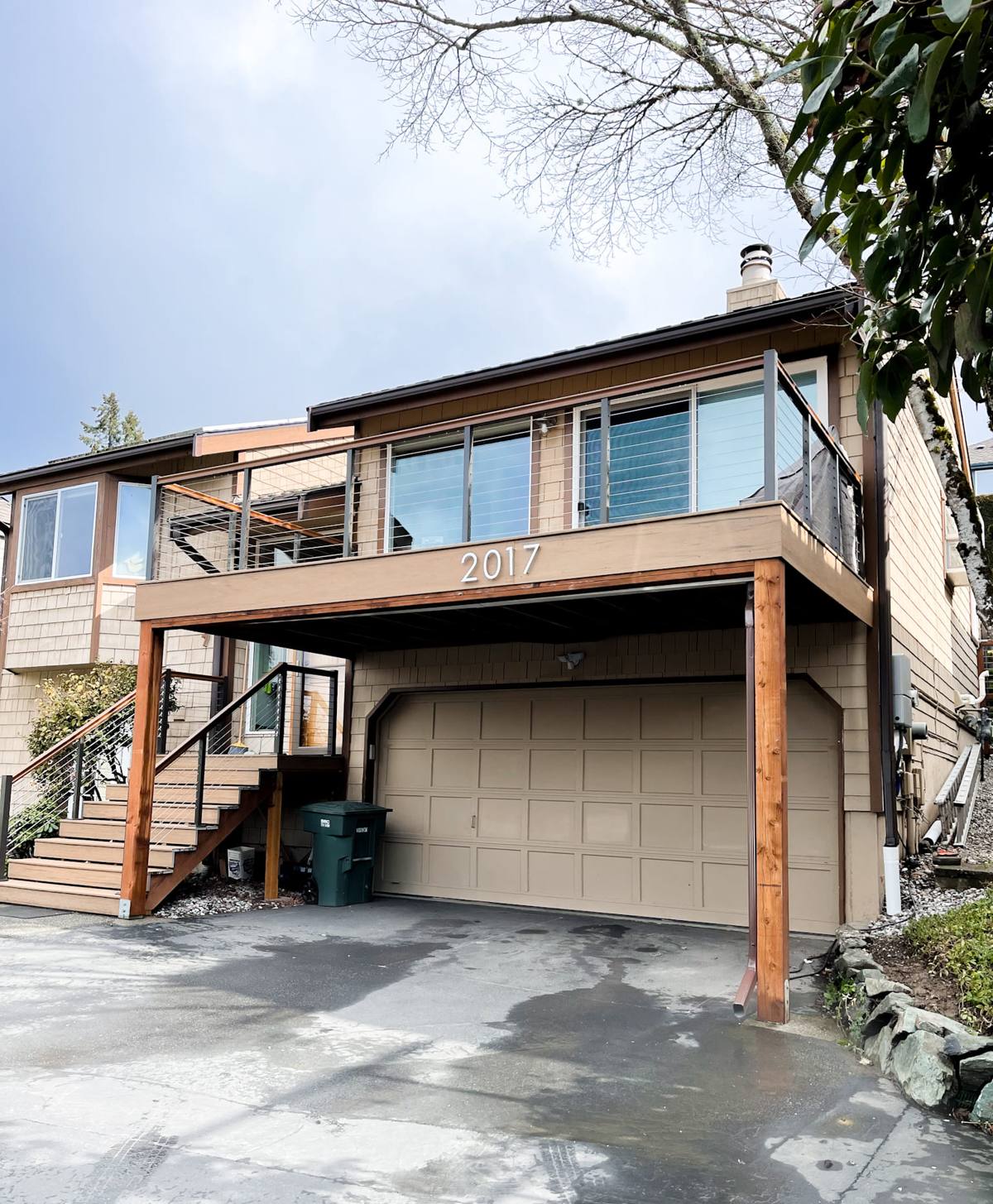
What Cherry Point Properties Demand From a Deck
Salt Air and Metal Fasteners
Salt-laden air accelerates corrosion on anything metal — screws, joist hangers, bolts, railing brackets. On a lot of decks we've seen fail early, the boards themselves were still fine; it was the hardware underneath that gave out first, rusting, staining the wood, and eventually loosening connections that are supposed to be structural. Close to the water, this happens faster than most homeowners expect.
Standing Water and Ground Contact
Whatcom County's rain totals mean deck framing near the ground, post bases, and any spot where water can pool are under near-constant moisture pressure for months at a time. Wood that sits in contact with wet soil or debris breaks down fast, and low-clearance decks are the ones we get called about most for rot repair.
Moss, Algae, and Slip Risk
The long moss season here isn't just a maintenance nuisance — it's a safety issue. Moss and algae hold moisture against decking material and turn a smooth surface slick, especially on shaded sides of a house or under tree cover. A deck built with the right surface texture, gapping, and drainage sheds water and dries out faster, which keeps moss from getting a foothold in the first place.
Choosing the Right Decking Material
There's no single "best" decking material for every Cherry Point home — it depends on your budget, how much upkeep you want to do, and how exposed the deck is to salt air and shade. Here's how the common options actually compare in this climate:
| Material | Upfront Cost | Maintenance | Behavior in Salt Air / Moisture | Typical Lifespan |
|---|---|---|---|---|
| Pressure-treated wood | Lowest | Annual cleaning, periodic sealing | Prone to splitting and graying; needs sealant to resist moisture uptake | 10-15 years with upkeep |
| Cedar | Moderate | Regular sealing to hold color and resist moisture | Naturally moisture-resistant but softer; needs consistent care near the coast | 15-20 years with upkeep |
| Composite decking | Higher | Occasional washing; no sealing or staining | Resists rot and doesn't absorb moisture, but can stay slick longer if not textured or capped | 25-30 years |
| PVC / capped polymer | Highest | Lowest — mostly rinsing | Fully sealed surface, best resistance to moisture and salt exposure | 25+ years |
We'll walk you through this trade-off honestly during an estimate rather than pushing whatever has the best margin. Some homeowners are fine re-sealing cedar every couple of years for the look; others would rather pay more up front and not think about it. Both are reasonable choices — the wrong choice is picking a material without knowing what it actually asks of you afterward.
Framing, Fasteners, and Hardware That Won't Let You Down
This is the part of the deck nobody sees, and it's the part that matters most in a marine climate. Our standard for Cherry Point builds is stainless steel or heavy-duty coated fasteners rated for coastal exposure — not the general-purpose hardware that's fine sixty miles inland but starts rusting near the water within a few seasons. The same goes for joist hangers, post bases, and structural screws.
We also use joist tape over framing lumber to keep water from wicking into end grain and screw holes, which is one of the cheapest things you can do during a build to add years of life to the structure. It's an extra step that doesn't show up in a walk-through, but it's the kind of detail that separates a deck that lasts from one that needs board replacement in year eight.
Ledger Attachment and Moisture Management
Where a deck attaches to the house — the ledger board — is the single most common failure point we find on older decks, and it's almost always a moisture problem, not a structural one. Water gets behind the ledger, the house's sheathing or framing starts to rot, and by the time it's visible from inside, the damage has been building for years.
A correct ledger installation uses proper flashing that directs water out and away from the house, not just a bead of caulk and a hope. We also check the siding and house wrap condition at that connection point before we ever attach a ledger board, because a deck is only as good as what it's fastened to. If we find deteriorated siding or sheathing during that check, we'll tell you before we build, not after.
Designing for Wind, Sun, and Waterfront Exposure
Properties near Cherry Point tend to be more open and exposed than deck sites in denser parts of Blaine, which means wind loads on railings and any overhead structure need real consideration, not guesswork. Railing height and baluster spacing follow code minimums for a reason, but on an exposed lot we also think about which direction the prevailing wind and driving rain come from when we plan railing style and any privacy or wind screening.
Orientation also affects how much sun a deck gets, which affects how fast moss and moisture build up on the shaded side. Where it makes sense, we'll talk through layout options that get you more usable sun exposure and less standing shade — it's a design conversation, not just a build one.
Our Process for a Cherry Point Deck Build
- Site visit and assessment — we look at grade, drainage, sun exposure, and the condition of the house at the attachment point before we talk materials.
- Design and material selection — honest options based on your budget and how much maintenance you actually want to take on.
- Permitting — deck permits are typically required based on size and height; we handle the paperwork with the applicable local jurisdiction so you're not chasing it yourself.
- Build — proper flashing, coastal-rated hardware, and framing details built for this climate, not a generic spec.
- Final walk-through — we go over the finished deck with you, including what maintenance it actually needs and on what schedule.
Keeping Your Deck Ahead of the Moss Season
The long moss season in Whatcom County means deck maintenance here isn't optional busywork — it's what keeps a deck safe and keeps small problems from becoming expensive ones. A simple seasonal routine goes a long way:
- Sweep debris and organic buildup off the deck surface regularly, especially in fall when leaves and needles pile up fastest.
- Rinse with plain water (or a deck-safe cleaner) before moss and algae get a real grip, particularly on shaded areas.
- Check fastener heads and railing connections once a year for rust staining or looseness.
- Keep gutters and downspouts near the deck clear so runoff isn't dumping extra water onto the structure.
- Reseal wood decking on the manufacturer's recommended schedule — don't wait until it's visibly gray and dry.
- Look underneath the deck once a year for standing water, debris buildup, or early rot at post bases.
Why a Crew That Already Works Cherry Point Matters
Building decks in a marine climate isn't the same trade as building them somewhere dry. A crew that works Cherry Point regularly already knows which fasteners hold up here, which materials are worth the extra cost on an exposed lot, and how the local permitting process actually works — not the generic version, the one that applies to this area. That familiarity shows up in fewer surprises during the build and a deck that's actually specified for the conditions it will sit in, not a one-size-fits-all approach.
It also matters for follow-up. If a question comes up two years after the build — a fastener that's starting to stain, a spot that's holding moss longer than the rest — a local crew that's still working in the area is easy to reach and already understands the site.
If you're planning a new deck or replacing one that's showing its age, we're happy to come take a look and give you a straightforward, no-pressure estimate — just fill out the form below.