 Blaine Siding
 Siding Repair on Birch Point Isn't the Same Job as Inland Repair
Birch Point sits right up against the water, and that changes what "siding repair" actually means. A house a few miles inland might go a decade between issues. A house on Birch Point, exposed to salt-laden air, wind-driven rain, and a moss season that runs most of the year, works its siding much harder. We've repaired enough homes out here to know the failure patterns are different, the fixes need to be different, and a patch that would hold up in downtown Blaine can fail within a season closer to the shoreline.
This page is about siding repair specifically for Birch Point homes — what the climate does to siding out here, what a correct repair actually involves, and why we handle it the way we do.
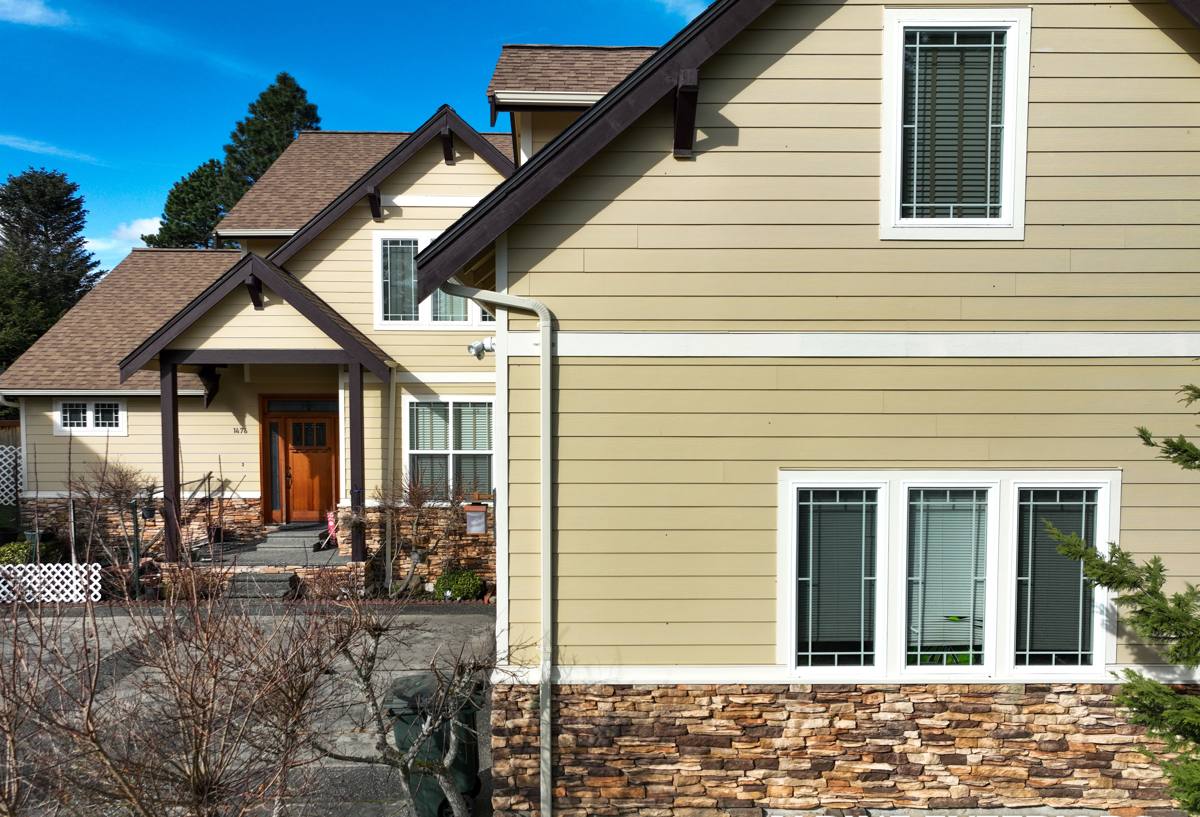
What Salt Air, Driving Rain, and Moss Actually Do to Siding
Salt Air and Fasteners
Airborne salt doesn't just sit on the surface of your siding — it works into fastener heads, seams, and any exposed cut edge. Over years, that accelerates corrosion in nails and staples, especially the cheaper electro-galvanized fasteners used in a lot of older or budget installations. Once a fastener starts to corrode, it loses grip, siding starts to work loose at the edges, and water finds its way behind the board. A repair that reuses corroded fasteners or doesn't account for salt exposure is a repair that fails again in a year or two.
Wind-Driven Rain
Whatcom County gets a lot of rain, but the exposure at Birch Point adds wind on top of it. Wind-driven rain doesn't just run down a wall the way rain does on a calm day — it gets pushed sideways and upward, finding gaps at seams, corners, and butt joints that would stay dry in a more sheltered location. This is why so much of the damage we find on Birch Point isn't on wide-open wall faces; it's concentrated at corners, around window trim, and at the bottom courses closest to grade, where wind pushes moisture hardest.
Moss, Algae, and the Shade Problem
Between tree cover, marine humidity, and a long stretch of gray months, moss and algae get a real foothold on north- and west-facing walls. Moss itself isn't usually what destroys siding — it's what moss does while it sits there. It holds moisture against the surface for extended periods, keeps that section of wall from drying out between rain events, and if it's growing in a seam or a compromised joint, it wedges the joint open further. Left alone long enough, chronic dampness under moss growth is what turns a cosmetic problem into a rot or delamination problem underneath.
Signs a Birch Point Home Needs Real Repair — Not Just a Wash
A lot of homeowners call about "dirty siding" and it turns out to be more than dirt. Here's what we actually look for during a repair inspection:
- Soft or spongy spots when you press on the siding, especially near the bottom courses or below windows
- Visible gaps or separation at butt joints and corners
- Paint that's bubbling, peeling, or flaking in a pattern that follows seams rather than general sun exposure
- Persistent moss or algae staining that returns within weeks of cleaning
- Rust streaking coming from fastener heads or trim fasteners
- Visible warping, cupping, or bowing on individual boards or panels
- Discoloration or staining on interior walls or trim that lines up with an exterior problem area
- Caulk joints that have cracked, shrunk, or pulled away from the siding edge
Any one of these can be a small, contained repair if it's caught early. Ignored through another wet season, most of them turn into a larger tear-out.
What a Correct Repair Actually Involves
A lot of "siding repair" in this area is really just caulk and paint over a problem that's still there underneath. That buys a season, maybe two, and then you're paying for the same repair again — except now there's more rot to deal with. A correct repair does a few things every time:
- Find the actual water path. Damaged siding is usually a symptom. We look at flashing, trim, and the house wrap or weather barrier behind the siding before we decide what to replace.
- Remove everything compromised. That includes soft sheathing underneath, not just the visible siding course. Patching over wet sheathing guarantees a repeat call.
- Let everything dry and confirm it. On the coast, this sometimes means scheduling around weather rather than rushing a repair into a wet substrate.
- Rebuild the water management, not just the surface. Correct flashing, proper lap and joint spacing, and rain-screen or drainage detailing where it applies.
- Match materials correctly. Replacement siding needs to be compatible with what's staying, fastened correctly for the exposure, and finished to blend rather than leaving an obvious patch.
Why We Repair Into James Hardie Fiber Cement — Not Whatever's Already There
We install and repair with James Hardie fiber cement exclusively. We don't install vinyl, LP SmartSide, Cemplank, Allura, primed spruce, or cedar, and that includes repair work. If a Birch Point home already has one of those products and needs a repair, we'll tell you honestly what your options are — sometimes that means a compatible patch, sometimes it means the repaired section is a good candidate to convert to Hardie so it stops being the weak point in the wall.
Here's the honest reasoning, not a sales pitch: fiber cement doesn't absorb water the way wood-based products can, it isn't fuel for pests, and it holds paint and factory finish far longer in salt air and constant damp than most alternatives we've worked with. Wood-based composite siding can perform fine for years, but it's more sensitive to sustained moisture exposure — exactly the condition Birch Point homes deal with more than most. Vinyl handles moisture fine but expands, contracts, and can distort in ways that open gaps at exactly the seams where wind-driven rain gets in. None of these products are "bad" — they're just not what we've chosen to put our name behind for this climate, and that includes repair work, not just full replacements.
Repair vs. Replace: How We Help You Decide
Not every damaged section needs full replacement, and not every home is a good candidate for a small patch. Here's how we walk homeowners through that decision:
| Factor | Points Toward Repair | Points Toward Full Replacement |
|---|---|---|
| Extent of damage | Isolated to one or two wall sections | Recurring damage across multiple elevations |
| Sheathing condition | Dry, solid underneath | Soft or rotted sheathing found during inspection |
| Age of existing siding | Newer install, matchable material available | Original siding nearing or past its service life |
| Water management | Flashing and drainage are basically sound | Systemic flashing or drainage problems found |
| Cosmetic match | Repair section won't stand out | Color/texture mismatch would be obvious |
We'll always give you the honest read on which column your home falls into — including when the honest answer is "repair now, but budget for replacement in the next several years."
Our Process for Birch Point Siding Repair
Because this stretch of shoreline has its own weather timing, we run repair jobs a little differently than an inland job:
- On-site inspection first. We look at the whole exterior, not just the section you called about — a problem at one corner often has a twin starting on the opposite side of the house.
- Written scope before any work starts. You'll know exactly what's being removed, what's being replaced, and why.
- Weather-aware scheduling. We don't install into wet sheathing or force a repair between rain bands just to hit a date — that's how repairs fail early out here.
- Correct fastening for the exposure. Fastener choice matters more on the coast than it does a few miles inland, and we don't cut that corner.
- Finish match. We do what we can to make the repaired section blend, understanding that a section repaired years after original install may never be a perfect color match — we'll tell you upfront if that's the case.
Why a Crew That Already Works Birch Point Matters
Siding repair on the coast rewards local knowledge. A crew that's worked this stretch of Whatcom County knows which corners of a house take the worst of the wind-driven rain, how long moss growth can sit before it's actually caused damage underneath, and how to schedule around the wetter stretches of the year instead of fighting them. That's not something you get from a general contractor pulled in from out of the area for a one-off job — it's something you build by doing the work here repeatedly and paying attention to what actually fails and why.
It also means less guesswork for you. We're not learning the local exposure on your dime; we already know what to look for the moment we walk the property.
What to Expect From Estimate to Finished Repair
We keep the process straightforward: a site visit to assess the damage and check behind it where needed, a clear written scope and price, a realistic schedule that accounts for weather, and a finished repair that's built to actually hold up to another Whatcom County winter — not just look fixed for the photo.
If you're seeing soft spots, recurring moss, peeling paint at the seams, or any of the warning signs above on a Birch Point home, it's worth having someone look before another wet season makes the fix bigger. We offer free, no-pressure estimates — use the form below to get one scheduled.