 Blaine Siding
 Birch Point's Climate Is Harder on Siding Than Most Homeowners Realize
Birch Point sits close enough to the water that salt-laden air is part of daily life, not an occasional event. Add Whatcom County's long, wet fall-through-spring stretch and the shaded, tree-covered lots common in this part of Blaine, and you get a combination that wears out the wrong siding fast: salt accelerates corrosion of fasteners and hardware, driving rain off the Strait pushes moisture sideways into seams and laps, and shade plus humidity keeps north- and west-facing walls damp long enough for moss and algae to take hold. None of this is unusual for the area — it's just the reality your siding has to be built for.
We install James Hardie fiber cement exclusively, and on a Birch Point home that's not a brand preference — it's a response to what this specific location does to a wall system over ten, twenty, thirty years.
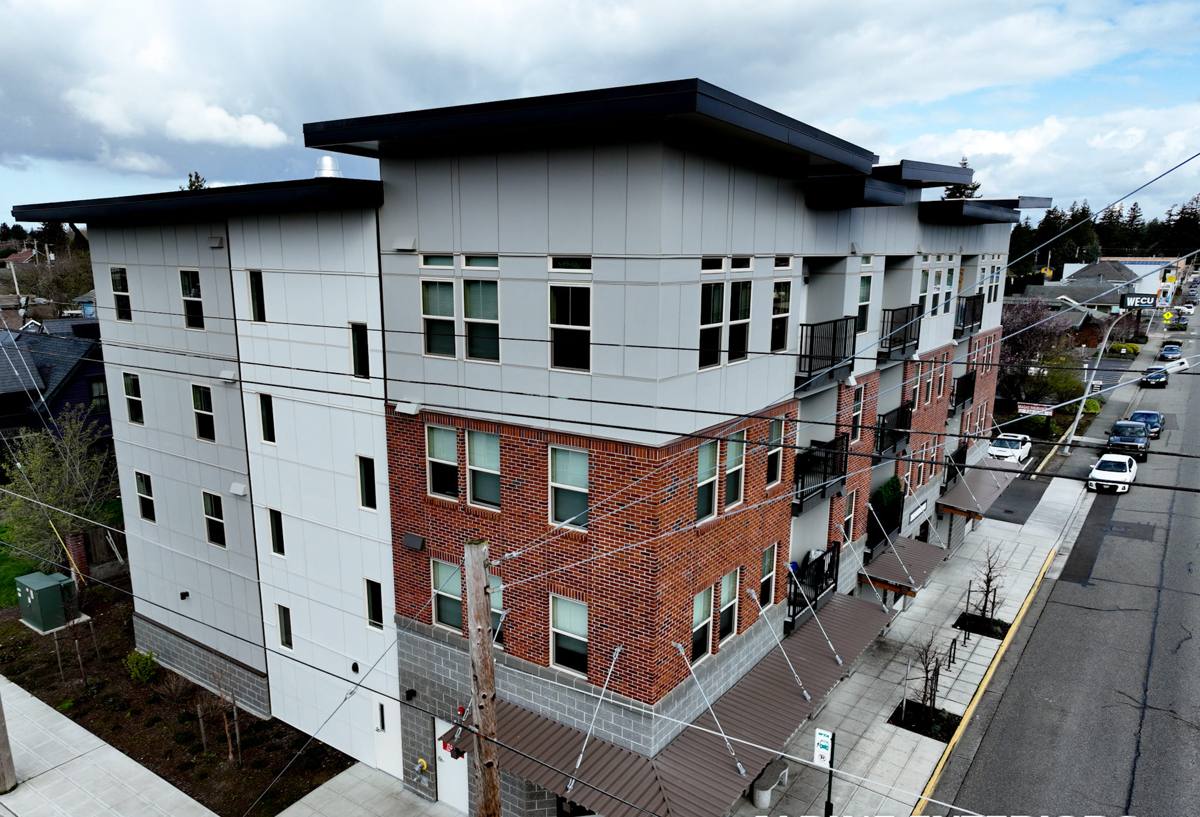
What Salt Air, Rain, and Moss Actually Do to a Wall
Salt air
Airborne salt is corrosive to metal and hard on paint film. Fasteners that aren't rated for coastal exposure can rust well before the siding itself shows any wear, and that rust telegraphs through as staining or eventually loosens the board. Painted wood and some composite sidings also chalk and fade faster under salt exposure than manufacturers' general climate ratings assume.
Driving rain
Wind off the water doesn't just fall on a wall, it drives into it — through laps, around trim, and into any gap in the weather barrier. A siding system that relies on caulk alone to keep water out will eventually fail here, because caulk is a maintenance item, not a permanent seal.
Moss and algae
Shaded, damp walls — common on Birch Point's tree-covered lots — are exactly where moss and algae get a foothold. Porous or absorbent siding materials hold that moisture at the surface, feeding growth. A hard, factory-finished surface that doesn't wick water gives moss far less to grow on.
Why James Hardie Fits This Environment
James Hardie fiber cement is engineered specifically for problems like these, and the company builds region-specific product lines for exactly this reason.
- Non-combustible core — fiber cement doesn't rot, warp, or feed insects, which matters on a material that's going to sit in constant moisture for months at a stretch.
- HZ10 engineered formulation — Hardie's HZ10 product line is built for wetter, milder climates like ours, with moisture and mold resistance suited to the Pacific Northwest rather than a dry-climate formula.
- ColorPlus factory finish — a baked-on finish applied and cured under controlled conditions holds color and sheds water far more consistently than field-applied paint, which matters when salt air is actively working against paint film.
- Dimensional stability — Hardie doesn't swell and shrink with moisture cycling the way wood-based or engineered-wood sidings do, so seams and fastener holes stay tight over time.
This is also why we don't install LP SmartSide, vinyl, primed spruce, cedar, or other fiber cement alternatives like Cemplank or Allura. Each of those has legitimate strengths in the right setting, but on a coastal, high-rain, shaded lot like the ones common around Birch Point, the trade-offs — moisture sensitivity, maintenance burden, or finish durability — are exactly the weaknesses this climate exploits. We'd rather install one product correctly than offer several and hope the wrong one holds up.
What a Correct Installation Involves Here
James Hardie siding performs to its rated lifespan only when it's installed to the manufacturer's specification — and in a wind-driven-rain environment, the details behind the boards matter as much as the boards themselves.
- A continuous, properly lapped weather-resistive barrier behind the siding, with no gaps at penetrations or transitions
- Correct flashing at every window, door, and roofline intersection, directing water out and down rather than behind the cladding
- Manufacturer-specified clearances from grade, roofing, and decks so the bottom edge of the siding never sits in standing water or splash-back
- Corrosion-resistant fasteners suited to coastal exposure, driven to the correct depth — not overdriven, which cracks the board's edge and opens a path for water
- A rainscreen gap where the wall assembly calls for one, so any moisture that does get behind the cladding can drain and dry instead of sitting against the sheathing
- Caulking used as a supplement to good flashing and lap technique, never as the only line of defense
Skip any one of these and you can still end up with premature failure even though the siding itself is rated for decades. This is where a lot of coastal siding problems actually start — not with the product, but with installation shortcuts that don't show up until a few winters of driving rain have gone by.
Our Process for a Birch Point Job
1. On-site assessment
We look at more than the visible siding — sheathing condition, existing flashing details, sun/shade exposure on each elevation, and any signs of past moisture intrusion around windows, corners, and the roofline.
2. Tear-off vs. overlay decision
If the existing wall assembly is sound, we can sometimes build the new Hardie system over it. If we find damaged sheathing, missing barrier, or evidence of trapped moisture — more common on shaded, salt-exposed walls — full tear-off is the honest recommendation, even when it's the less convenient answer.
3. Installation to spec
Weather barrier, flashing, fastening, and clearances installed per James Hardie's published requirements for our climate zone, not shortcuts to save a day of labor.
4. Final walkthrough
We check seams, caulk lines, trim transitions, and clearances before we call the job finished, and we go over basic care for the finish so you know what normal weathering looks like versus something worth a call.
Common Problems We Find on Coastal Homes
| Problem | Why It Happens Here |
|---|---|
| Rust streaking below fastener heads | Non-coastal-rated fasteners corroding faster in salt air |
| Moss buildup on north/west walls | Shade plus sustained moisture, especially on absorbent siding materials |
| Cracked board edges near corners | Overdriven nails during original installation |
| Water staining behind trim | Missing or reverse-lapped flashing letting driving rain track inward |
| Premature paint fading or chalking | Field-applied paint breaking down faster under salt exposure than a factory-cured finish |
What Affects the Cost of a Hardie Siding Job in This Area
| Factor | Why It Matters |
|---|---|
| Tear-off vs. overlay | Removing old siding and repairing sheathing adds labor but is sometimes unavoidable, especially where past moisture damage is found |
| Home size and wall complexity | More corners, dormers, and trim transitions mean more flashing detail work and cutting |
| Board profile and trim package | Lap width, trim style, and accessory pieces (corner boards, frieze boards) affect both material and labor |
| Site access | Waterfront and hillside lots around Birch Point can limit staging space and equipment access, affecting labor time |
| Color selection | Standard ColorPlus colors vs. custom order affects lead time and, sometimes, price |
We give straightforward, itemized estimates rather than a single number with no explanation — you should be able to see what you're paying for.
Living With Hardie Siding on a Salt-Air Property
One of the practical advantages of ColorPlus-finished Hardie in this environment is how little upkeep it asks for compared to painted alternatives. A simple checklist covers most of what a Birch Point homeowner needs to do:
- Rinse siding periodically with a garden hose to clear salt residue and airborne debris, especially on walls facing the water
- Keep gutters clear so overflow doesn't run down the wall face and feed moss growth
- Trim back vegetation that shades siding and keeps it damp longer than it needs to be
- Inspect caulk lines at trim and penetrations every year or two and re-caulk where it's cracked or pulled away
- Watch for any soft spots, staining, or fastener rust and call it in early rather than waiting
None of this is heavy maintenance — it's the kind of upkeep any exterior needs, and it's noticeably lighter than repainting cycles on wood or engineered-wood siding.
Why It Matters That We Already Work This Area
Blaine and the surrounding parts of Whatcom County have their own weather personality — the water proximity, the wind exposure, the tree cover that varies block to block. A crew that already works Birch Point isn't guessing at how a particular elevation handles driving rain or which walls tend to hold moss; that's information built up from doing the work here, not from a general Pacific Northwest playbook. It also means we're not learning local permitting or inspection expectations on your project — we already know what Whatcom County looks for.
If you're weighing a siding replacement on a Birch Point home, we're glad to walk the property with you, point out what we see, and give you a straightforward, no-pressure estimate — free, with no obligation. Use the form below to get started.