 Blaine Siding
 Why Birch Bay Roofs Wear Differently Than Roofs Inland
Birch Bay sits right on the water, and that changes what a roof deals with over its lifetime. Homes just a few miles inland in Whatcom County don't see the same combination of salt-laden air, wind-driven rain off the Strait of Georgia, and the long, damp moss season that Birch Bay gets almost every year. A roof that would hold up fine in a drier, more sheltered part of the county can age faster here if it wasn't built with these conditions in mind.
This isn't about scare tactics — it's about installing a roof correctly the first time so you're not fighting leaks, moss buildup, or premature material failure five or ten years down the road. A new roof installation in Birch Bay should be treated as a coastal install, not a generic one.
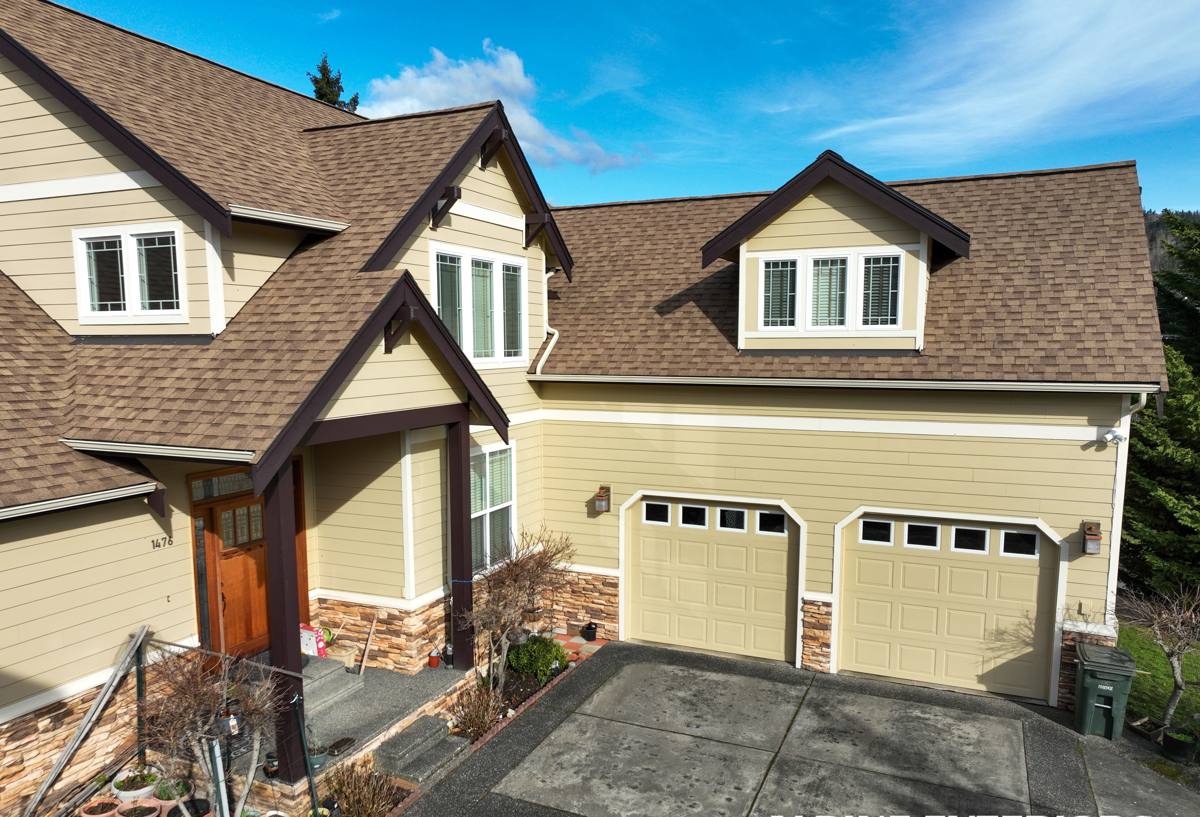
What Salt Air, Rain, and Moss Actually Do to a Roof
Salt Air and Metal Components
Salt in the air accelerates corrosion on any exposed metal — flashing, fasteners, vent caps, and gutter hardware included. Standard fasteners or lower-grade flashing can start showing rust streaks and pitting well before the shingles themselves are due for replacement. Once flashing corrodes and loses its seal, water finds a way in at valleys, chimneys, and roof-to-wall transitions long before the field of the roof shows any obvious problem.
Driving Rain and Wind
Birch Bay's exposure to wind coming off the water means rain doesn't always fall straight down — it gets pushed sideways under shingle edges, around vents, and into any gap that a properly-lapped, correctly-fastened roof system would otherwise shed. A roof installed for a calmer, more sheltered site can leave small vulnerabilities that only show themselves during a real windstorm, which is exactly when you don't want to discover them.
Moss Season
Whatcom County's moss season runs long, and Birch Bay's marine humidity keeps roofs damp for extended stretches, especially on north-facing slopes and under tree cover. Moss isn't just cosmetic — as it grows, it lifts shingle edges, holds moisture against the roof deck, and shortens the life of the material underneath it. A new roof is a chance to build in moss resistance from day one instead of treating it as an annual maintenance chore.
What a Correct New Roof Installation Involves Here
A proper installation for Birch Bay conditions isn't a different product line — it's the right details, done consistently, using materials and methods suited to a coastal, high-moisture environment.
Underlayment
We use synthetic underlayment rated for the exposure and duration this climate demands, with self-adhered ice-and-water membrane at the eaves, valleys, and any low-slope transitions where wind-driven rain is most likely to intrude. This is the layer that protects your home if wind ever drives moisture past the shingles themselves.
Flashing and Fasteners
Given the corrosion risk from salt air, flashing and fasteners matter more here than in a drier inland location. We favor corrosion-resistant metal flashing and fastener types at chimneys, skylights, sidewalls, and valleys, and we don't reuse old, pitted flashing just to save a step — it's one of the most common places a "new" roof starts leaking within a few years.
Ventilation
Balanced intake and exhaust ventilation keeps the underside of the roof deck dry and reduces condensation, which matters in a humid marine climate where trapped moisture from inside the house can be just as damaging as rain from outside. Poor ventilation also shortens shingle life from underneath, which is easy to miss until the roof is already failing.
Moss-Resistant Details
Where appropriate, we install zinc or copper strips near the ridge on shaded or north-facing slopes, which helps suppress new moss growth over time as rain washes trace metal ions down the roof plane. It's a small addition during installation that reduces how often you'll need to clean and treat the roof later.
Choosing the Right Material for a Birch Bay Roof
There's no single "best" roofing material for every home — it depends on your budget, your roof's exposure, and how much maintenance you want to take on. Here's how the common options actually compare under Birch Bay's specific conditions.
| Material | Salt Air / Wind Resistance | Moss Resistance | Typical Lifespan | Maintenance |
|---|---|---|---|---|
| Architectural asphalt shingle | Good with proper fastening and flashing | Moderate — benefits from zinc strips | 25–30 years | Periodic moss/debris removal |
| Standing seam metal | Very good when properly coated/fastened | High — sheds moss more easily | 40–50+ years | Low; occasional inspection |
| Cedar shake / shingle | Moderate — sensitive to constant moisture | Low without diligent upkeep | 20–30 years with maintenance | High; regular treatment needed |
| Synthetic composite shake | Good | Moderate to high | 30–50 years | Low to moderate |
We don't install cedar shake as a rule on this kind of site — not because it's a bad-looking product, but because in a humid, moss-prone marine environment it demands a level of ongoing treatment and moisture management that most homeowners don't want to keep up with, and the warranty structure on wood products reflects that maintenance dependency. Asphalt and metal both give Birch Bay homeowners a more predictable, lower-maintenance path when installed with the coastal details described above.
Our New Roof Installation Process
- On-site inspection and estimate — we walk the roof, check the decking condition where accessible, note exposure direction, tree cover, and existing moss or flashing issues, and give you a written estimate.
- Material selection — we go over the options above in the context of your budget, your roof's slope and exposure, and how much upkeep you want to take on.
- Tear-off and deck inspection — old roofing is removed down to the deck, and any soft, rotted, or water-damaged sheathing is identified and replaced before anything new goes down.
- Underlayment and flashing installation — synthetic underlayment, ice-and-water membrane at vulnerable points, and new corrosion-resistant flashing throughout.
- Roofing material installation — installed to manufacturer spec with attention to nailing pattern, exposure, and sealing at every penetration.
- Ventilation and moss-prevention details — intake/exhaust balance checked, zinc or copper strips added where the roof plan calls for them.
- Final walkthrough — we review the finished roof with you, including care and maintenance expectations specific to a Birch Bay property.
Signs Your Birch Bay Home Needs a New Roof, Not Just a Repair
- Shingles that are cupping, cracking, or losing granules across large sections rather than one isolated spot
- Persistent moss growth that comes back quickly after cleaning, especially on north-facing slopes
- Rusted or visibly corroded flashing around chimneys, vents, or valleys
- Daylight visible through the roof deck from the attic, or damp insulation after storms
- A roof approaching or past the end of its expected lifespan for its material type
- Multiple past repairs in different areas rather than one localized problem
- Sagging areas on the roofline, which can indicate deck or structural issues beneath the surface
If you're only seeing one or two of these and they're isolated, a repair may still make sense. When several of these show up together, or the roof is old enough that repairs are becoming a pattern, a full replacement is usually the more cost-effective path.
Cost Factors for New Roof Installation in Birch Bay
Every roof is priced based on its own specifics, but these are the factors that most affect what a Birch Bay project will cost:
| Factor | Why It Affects Cost |
|---|---|
| Roof size and pitch | More square footage and steeper pitches mean more material and more time/safety equipment on the job |
| Material choice | Asphalt, metal, and composite products vary significantly in material cost and installation labor |
| Number of tear-off layers | Removing multiple old layers of roofing adds labor and disposal cost |
| Deck condition | Rotted or water-damaged sheathing found during tear-off needs replacement before new roofing goes on |
| Flashing and ventilation upgrades | Coastal-grade flashing and added ventilation components cost more upfront but reduce future problems |
| Site access | Steep lots, tree cover, or limited driveway access can affect equipment staging and labor time |
We'll walk through these specifics with you during the estimate so you know exactly what's driving the number — not just a flat quote with no explanation behind it.
Why Hiring a Crew That Already Works Birch Bay Matters
A roofing crew that regularly works this stretch of Whatcom County already knows which details actually matter here — where wind-driven rain tends to find weak spots, which slopes hold moss the longest, and what flashing and fastener grades actually hold up against the salt air coming off the bay. That's different from a crew that mainly works drier, more sheltered inland areas and treats every job the same way. Local experience means fewer surprises during installation and a roof that's built for the conditions it will actually face, not a generic set of conditions.
If you're planning a new roof for a Birch Bay home, we're happy to come take a look, walk you through what we're seeing, and put together a straightforward, no-pressure estimate — no obligation, just a clear picture of your options. Use the form below to get started.