 Blaine Siding
 Why Custer Roofs Wear Differently Than Roofs Inland
Custer sits in a part of Whatcom County that takes weather from two directions at once: wet Pacific storms rolling in off the water, and long stretches of overcast, damp air that never quite dries out between rain events. Add in the salt-laden air that drifts inland off the bay near Blaine, and you've got a set of conditions that ages a roof faster than the same shingle would age fifty miles east of here. Metal fasteners corrode sooner. Moss and algae get a head start every fall and don't fully let go until late spring. And wind-driven rain, rather than straight-down rain, is what actually gets under poorly detailed shingles and flashing.
None of this means asphalt shingle roofing is a bad choice for Custer — it's still the most practical, cost-effective option for most homes here. It means the installation details matter more than they would in a drier climate, and cutting corners on underlayment, flashing, or ventilation shows up as a leak or a rotted deck years sooner than it would somewhere with an easier climate.
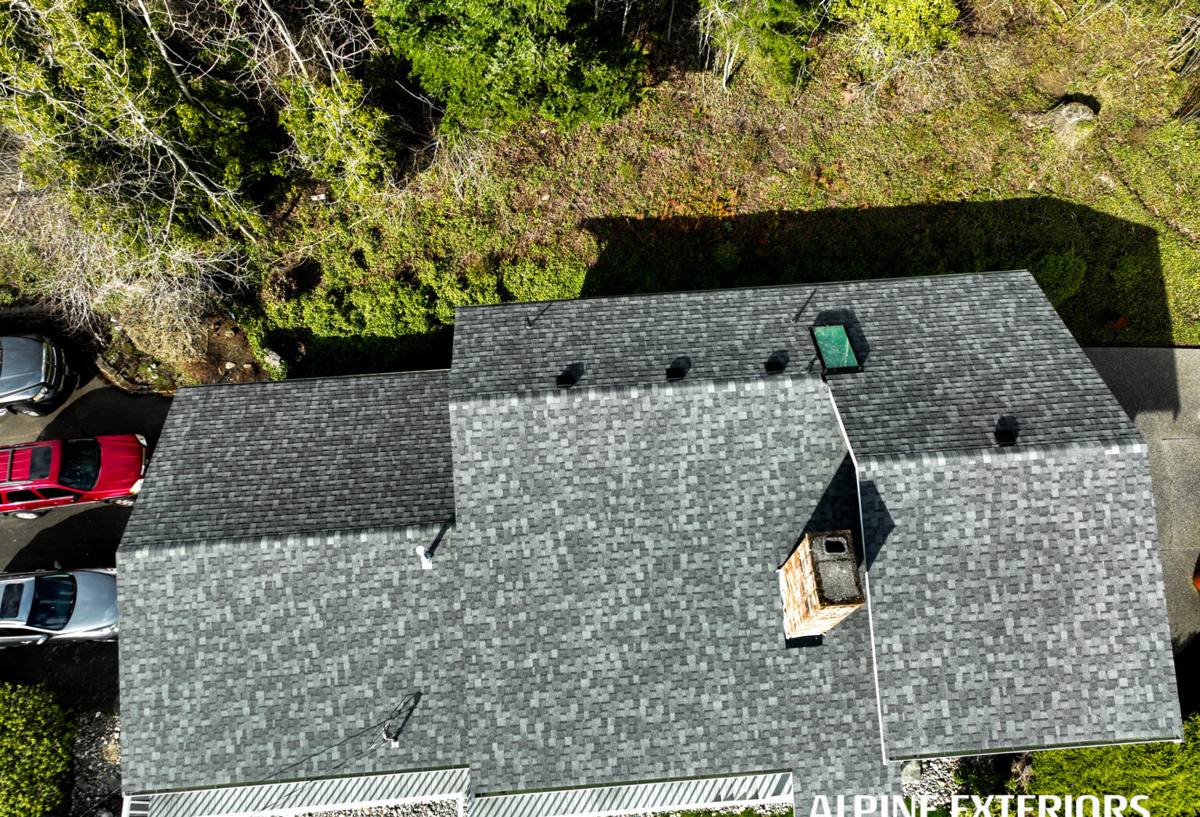
What a Correctly Installed Shingle Roof Needs Here
A shingle roof that's going to hold up under Custer's rain and salt exposure isn't built differently from a textbook installation — it just can't skip any of the steps that a rushed job skips.
Underlayment and Flashing That Actually Stop Wind-Driven Rain
Synthetic underlayment across the full deck, self-adhered ice-and-water membrane at eaves, valleys, and any roof-to-wall transition, and new step and counter-flashing at every penetration — chimneys, skylights, plumbing vents — are non-negotiable in this climate. Wind-driven rain doesn't fall straight; it gets pushed sideways and upward under shingle tabs, which is exactly what a properly lapped underlayment and correctly bent flashing are designed to stop. Reusing old flashing to save time is one of the more common shortcuts we see on roofs that get called back out for leaks within a few years.
Shingle Selection for Moss and Algae Resistance
Standard asphalt shingles will grow algae and moss in this climate — it's a matter of when, not if. Shingles rated for algae resistance (usually copper-granule blends) slow that process considerably and are worth the modest upcharge for almost every roof in the Blaine area. Wind rating matters too; we look for shingles rated to handle the gusts that come through during winter storms, not just the manufacturer's baseline rating.
Ventilation That Matches the Climate, Not Just the Code Minimum
Balanced intake and exhaust ventilation keeps the attic close to outdoor temperature and humidity, which reduces condensation on the underside of the deck. In a climate as damp as ours, under-ventilated attics are a common hidden cause of soft, rotted sheathing that only gets discovered during a tear-off. We check the existing ventilation on every job, not just when a homeowner asks.
Signs a Custer Roof Needs Attention
Most roof failures here don't happen suddenly — they show warning signs for a season or two first. Worth checking for:
- Granules collecting in gutters or piling up below downspout outlets
- Heavy moss mats or dark algae streaking, especially on shaded, north-facing slopes
- Shingles that are cupping, curling at the edges, or look buckled in a row
- Soft or spongy-feeling spots (have a roofer check this — don't walk a suspect roof yourself)
- Water stains or daylight visible in the attic near vents, valleys, or chimney flashing
- Shingles or tabs missing after a windstorm, particularly along ridges and rake edges
- A roof that's 18 to 20+ years old and has never had moss treatment or a resurfacing
Any one of these on its own might not mean an urgent problem, but two or three together usually mean it's time for an inspection rather than a wait-and-see approach.
Our Asphalt Shingle Roofing Process
We run the same process on every Custer roof, whether it's a straightforward re-roof or one with rot repairs involved:
- Inspection. We walk the roof and the attic, checking deck condition, existing ventilation, flashing points, and moss/algae extent.
- Written scope and estimate. You get a clear breakdown of materials, layers being removed, and any anticipated repair areas before work starts.
- Tear-off. Full removal down to the deck — we don't install over existing layers, since trapped moisture is already a risk in this climate without adding another layer to hide it.
- Deck repair. Any soft, delaminated, or rotted sheathing gets replaced before anything new goes down.
- Underlayment and flashing. Ice-and-water membrane at vulnerable areas, synthetic underlayment across the field, new flashing at all penetrations and transitions.
- Shingle installation. Manufacturer specs followed on nailing pattern and exposure — this is where wind resistance is won or lost.
- Ventilation check and correction. Intake and exhaust balanced to the attic's actual size and existing conditions.
- Cleanup and walk-through. Magnetic sweep for nails, debris hauled off, and a final walk of the roof and attic with you before we call it done.
What Drives the Cost of a Shingle Roof in Custer
Every roof is priced from its own specifics, but the same handful of factors move the number up or down on almost every job we quote in this area:
| Cost Factor | Why It Matters in Custer | Typical Impact |
|---|---|---|
| Roof pitch and access | Steeper roofs need more fall protection and slow down every stage of the work | Moderate to significant |
| Number of existing layers | Some older homes in the area have a roof installed over a roof; both have to come off | Adds labor and disposal cost |
| Decking condition | Moisture from moss cover and marginal ventilation can rot sheathing that isn't visible until tear-off | Variable, confirmed once we're on the roof |
| Shingle class | Algae-resistant, higher wind-rated shingles cost more per square than basic three-tab | Modest increase, fewer callbacks over time |
| Ventilation corrections | Many older roofs here are under-vented for how damp our air stays | Small addition, real long-term payoff |
| Flashing and detail work | Valleys, chimneys, and wall transitions are where wind-driven rain finds its way in | Labor-driven, not something to skip |
We'll walk through exactly which of these apply to your roof during the estimate — there's no reason to guess at a number before someone has actually been on your roof.
Moss and Algae Prevention Built Into the Job
Treating moss after it's established is a maintenance task; preventing it from taking hold in the first place is a design decision made during installation. On most Custer re-roofs, we install zinc or copper strips near the ridge — rain washing over them carries trace metal down the roof face and discourages moss and algae growth on the shingles below. We also make sure tree cover and shading are factored into shingle color and type where it's practical, since the shadiest slopes are always the first to grow moss and the last to dry out after a storm.
This isn't a substitute for the algae-resistant shingle itself — it's a second layer of prevention that costs little to add at install time and saves a homeowner from an annual moss-treatment bill down the road.
Why Hiring a Crew That Already Works Custer Matters
A shingle roof installed correctly in a dry climate can still fail early here if the crew doesn't already understand how this area's weather behaves. We work throughout Blaine and the surrounding Whatcom County communities, including Custer, so we already know which slopes tend to hold moss longest, how far wind-driven rain typically pushes under a poorly lapped shingle, and what Whatcom County's permitting and inspection process requires before we ever step on your roof. That local familiarity shows up in small decisions — where extra ice-and-water membrane goes, how much ventilation an older attic actually needs, which flashing details get reinforced — that a crew unfamiliar with the area might not think twice about.
It also matters for scheduling honesty. Roofing in this climate has a real weather window, and a local crew that works here year-round can tell you plainly when a project should wait for a drier stretch rather than pushing through a job in conditions that won't let materials seal properly.
Caring for a New Shingle Roof After Installation
A correctly installed roof still benefits from basic upkeep in this climate:
- Keep gutters clear so water isn't backing up under the eave edge during heavy rain
- Have moss or algae growth addressed early rather than letting it mat and hold moisture against the shingles
- Trim back overhanging branches that keep a section of roof shaded and slow to dry
- Schedule a walk-through inspection every few years, especially after a significant windstorm
None of this is intensive maintenance — it's the difference between a shingle roof that reaches its full expected lifespan and one that starts showing problems early because moisture had somewhere to sit.
If you're seeing early signs of wear on a Custer roof, or you're planning ahead for a replacement, we're happy to take a look and give you a straight answer about what your roof actually needs. Use the form below to request a free, no-pressure estimate.