 Blaine Siding
 Metal Roofing Built for Sumas Conditions
Homes around Sumas sit in a tough spot climate-wise. You're close enough to the water to catch salt-laden air drifting in off Puget Sound and the Strait of Georgia, far enough north to get the long, wet Whatcom County winters, and shaded enough by the surrounding tree cover that moss has all the time it needs to take hold. A roof out here isn't just shedding rain a few months a year — it's dealing with near-constant moisture, corrosive air, and shade-driven organic growth almost year-round. Metal roofing, installed correctly, handles that combination better than most other materials. Installed poorly, it fails in exactly the ways that matter most in this climate: at the fasteners, at the flashings, and at the seams.
This page is about what a metal roof needs to actually perform in Sumas — not a generic rundown of metal roofing in general. We work this area regularly, and the failures we get called out to fix follow a pretty consistent pattern tied directly to local conditions.
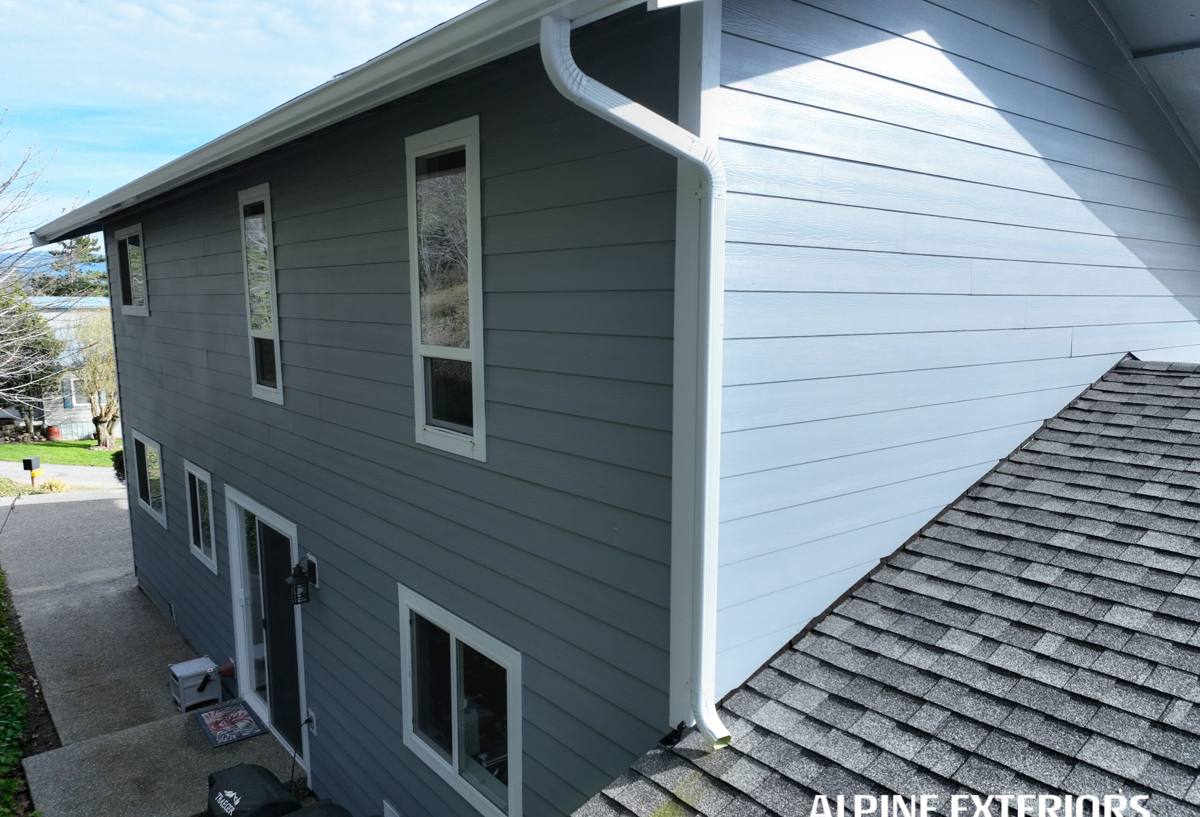
What Salt Air, Rain, and Moss Actually Do to a Roof Here
Salt Air and Corrosion
Airborne salt doesn't need to be blowing in off the water directly to cause problems — moist, salt-carrying air moves inland and settles on exposed metal, especially at fastener heads, cut edges, and any spot where a coating has been scratched or worn thin during installation. Over years, that's where corrosion starts. It's rarely the panel field that fails first; it's the exposed hardware and the edges nobody sealed properly.
Driving Rain
Whatcom County doesn't just get a lot of rain — a good share of it comes in sideways off wind driven storms. That matters because it pushes water into laps, seams, and penetrations that would stay dry in a straight-down rain. A metal roof's watertightness depends almost entirely on how the seams, flashing, and underlayment were detailed, not just on the panel material itself.
Moss and Shade
Tree cover around Sumas keeps roof surfaces damp and shaded for long stretches, which is exactly what moss and algae need to establish. Metal roofing resists moss far better than shingles or wood because there's no porous surface for spores to root into — but debris buildup in valleys, at panel laps, and around penetrations still traps moisture, and that's where growth gets started even on metal.
Panel and Coating Options That Make Sense Locally
Not every metal roofing product is a good match for a salt-influenced, high-moisture climate. Here's how the common options stack up for a Sumas home specifically:
| Option | Corrosion Resistance | Best Fit | Trade-Offs |
|---|---|---|---|
| Standing seam steel (Galvalume or Kynar-coated) | Very good with proper coating | Most Sumas homes; long-term low maintenance | Higher upfront cost, requires precise seaming |
| Exposed-fastener steel panels | Moderate — depends entirely on fastener quality | Outbuildings, shops, budget-driven projects | Fasteners need periodic inspection and eventual replacement |
| Aluminum panels | Excellent — doesn't rust | Homes closest to salt air exposure | Softer material, more careful handling during install |
| Uncoated or mill-finish steel | Poor in this climate | Not recommended here | Corrodes faster under salt air and constant moisture |
For most Sumas-area homes, a coated standing seam steel or aluminum panel is the right call. The concealed-fastener design is a real advantage here specifically because it removes the dozens of exposed screw penetrations that salt air and rain eventually work loose on exposed-fastener systems.
What a Correct Installation Actually Involves
The panel itself is only part of the system. A metal roof that holds up in this climate depends on details that don't show up in a sales brochure:
- A full synthetic underlayment (not just felt) rated for extended UV and moisture exposure, since panels sometimes sit uncovered longer than shingles during install
- Properly lapped and sealed flashing at every valley, wall transition, and penetration — this is where driving rain finds its way in
- Matched fastener and coating metals to prevent galvanic corrosion between dissimilar metals
- Correct panel expansion allowance, since temperature swings cause metal to move more than other roofing materials
- Ridge and eave ventilation detailing that doesn't trap moist air against the underside of the panels
- Clean, consistent seams on standing seam systems — hand-crimped or roll-formed on site, not just snapped together and left
Skipping any one of these doesn't usually cause a visible problem in year one. It shows up two, five, or ten years later as a leak at a valley, a rusted fastener streaking down a panel, or moss establishing in a debris pocket that never should have existed in the first place.
Managing Moss and Debris on a Metal Roof
Metal roofing is far lower-maintenance than shingles or wood shakes in a moss-heavy environment like this, but "low-maintenance" isn't "no-maintenance." The main thing that causes trouble on an otherwise good metal roof out here is debris accumulation — needles, leaves, and moss fragments settling in valleys and against any obstruction, holding moisture against the surface long after a rain has passed. A periodic check and clear-out of valleys and low points, especially heading into fall, keeps the roof doing what it's designed to do. We're happy to walk you through what that looks like for your specific roof layout during an estimate.
Our Process on Sumas Projects
1. On-Site Assessment
We walk the roof and attic where accessible, checking deck condition, current ventilation, and where past moisture or moss problems have shown up. Salt air exposure and shade patterns specific to your lot factor into panel and coating recommendations.
2. Straightforward Proposal
You get a clear scope covering panel type, underlayment, flashing details, and ventilation — not just a per-square-foot number. If your roof has tricky valleys or multiple penetrations, we tell you that up front, since those areas drive both cost and long-term performance.
3. Installation
Deck inspection and repair as needed, underlayment, then panels installed with attention to the flashing and fastening details covered above. We don't leave a deck exposed to weather longer than necessary given how much rain this area gets.
4. Walkthrough and Cleanup
We review the finished roof with you, including what routine debris clearing should look like given your property's tree cover, and clean the site thoroughly before we leave.
What Drives Cost on a Sumas Metal Roof
| Factor | Why It Matters Here |
|---|---|
| Roof complexity (valleys, dormers, penetrations) | More seams and flashing points mean more labor and more places driving rain can get in if done poorly |
| Panel and coating choice | Aluminum and premium coated steel cost more upfront but resist salt air corrosion longer |
| Deck condition | Long-term moisture exposure sometimes means deck repair is needed before panels go on |
| Access and roof pitch | Tree-covered, tighter lots common in this area can affect staging and material handling |
| Ventilation upgrades | Correcting poor attic ventilation adds cost but prevents moisture problems under the new roof |
We don't quote broad "per square foot" numbers without seeing the roof, because the factors above genuinely change the price more than the panel choice alone does. What we can say honestly: metal costs more upfront than asphalt shingles, but in a climate this hard on roofing, it's spreading that cost over a much longer service life with less maintenance in between.
Before You Hire — What to Check
- Ask specifically how they detail valleys and wall flashing, not just what panel brand they install
- Confirm the underlayment spec — felt alone isn't enough for this climate
- Ask about fastener and coating material compatibility to avoid galvanic corrosion
- Get clarity on ventilation — a sealed-up roof deck traps moisture regardless of the roofing material
- Ask whether they've worked in your specific area and understand the salt air and moss factors
Why Local Experience in This Area Matters
A metal roof installed to a generic spec will look fine on day one anywhere. Whether it still looks and performs fine in year eight in Sumas depends on whether the crew that installed it actually accounted for salt air corrosion, wind-driven rain, and moss-prone shade — the specific combination this part of Whatcom County deals with. We work in this area regularly, which means the flashing and fastener decisions we make aren't generic best practices pulled from a manual written for a drier climate — they're decisions shaped by what actually fails on roofs around here.
If you're weighing metal roofing for a home in or around Sumas, we're glad to come take a look and walk you through your options honestly — no pressure, no hard sell. Use the form below to request a free estimate.