 Blaine Siding
 Why Ferndale Roofs Take a Beating
Ferndale sits close enough to the water and open farmland that roofs here deal with a combination most inland homes never see: salt-laden air off the Strait of Georgia, wind that comes across open fields with nothing to slow it down, and long stretches of driving rain that can last for days. Add in a moss season that runs longer here than in drier parts of the state, and you have a roofing environment that punishes shortcuts. A roof that would be fine in a milder climate can develop real problems fast once wind gets under a weak edge or moss holds moisture against a shingle for months at a time.
Storm damage repair in this part of Whatcom County isn't just about patching what a single storm broke. It's about recognizing that the storm usually exposed a weakness that was already building — often from salt air corroding fasteners and flashing, or moss quietly working its way under shingle tabs. A repair that only addresses the visible damage and ignores the underlying cause tends to fail again in the next windstorm.
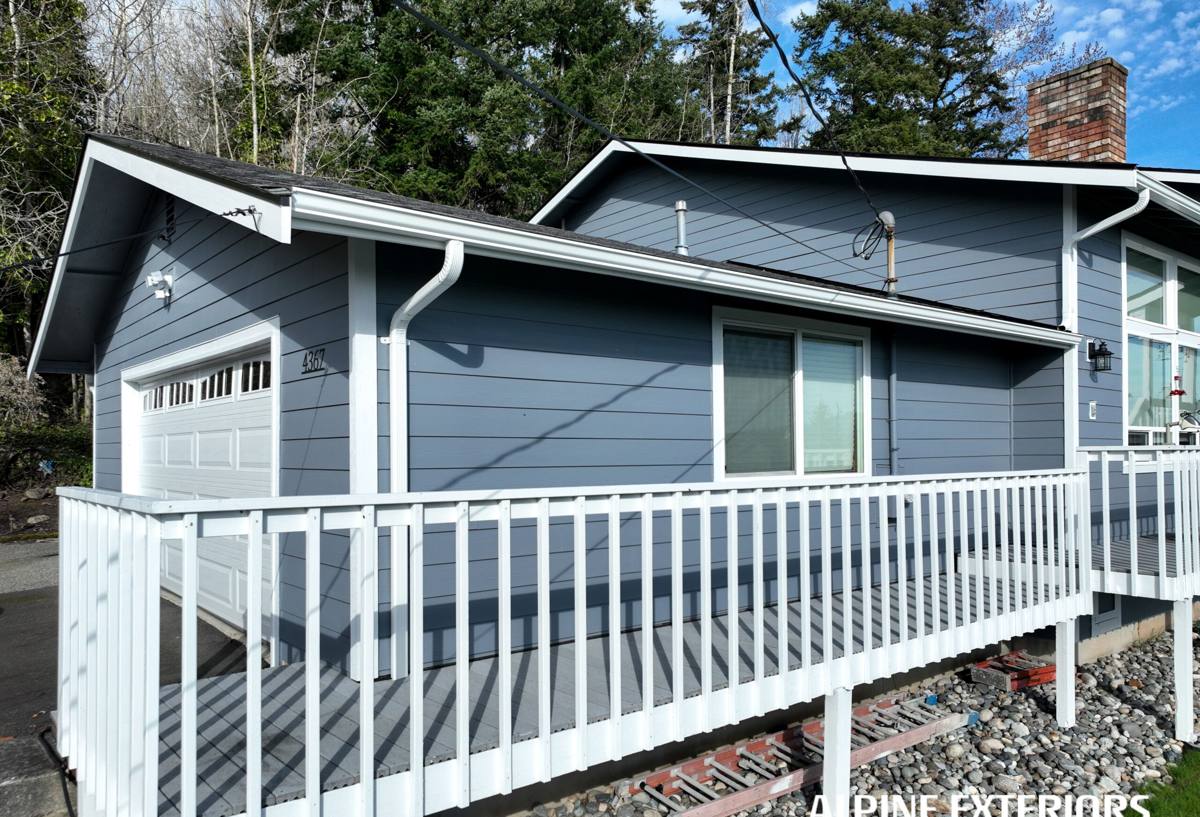
What Storm Damage Actually Looks Like
Wind Damage
Wind rarely rips a roof apart in one dramatic event. More often it lifts a shingle tab, breaks the seal, and lets the next rain get underneath. From the ground it can look like nothing happened. Up close, you'll see creased or curled shingles, tabs that are missing entirely, and granules stripped off in patches where wind-driven grit scoured the surface.
Rain and Moisture Intrusion
Driving rain finds every gap a straight-down rain would never reach. Flashing around chimneys, skylights, and wall-to-roof transitions is the most common failure point, especially once sealant has aged and cracked. Once water gets past flashing, it can travel a surprising distance before it shows up as a stain on a ceiling, which is why storm damage often looks worse once you open things up than it did from the driveway.
Moss-Related Damage
Moss doesn't cause damage the way wind does, but it sets the stage for it. Moss holds moisture against the shingle surface long after a storm has passed, which softens asphalt shingles, rots exposed wood trim, and can lift shingle edges enough for wind to get a grip on them. A storm that would have been a non-event on a clean roof can turn into a real repair on a roof with heavy moss growth.
Why Fast, Correct Repair Matters More Than It Seems
The visible damage after a storm is rarely the whole story. Water that gets past a compromised shingle or flashing detail travels along the underlayment and decking before it announces itself inside the house. Left alone through a few more rain events, that moisture can soften roof decking, saturate insulation, and start mold growth in the attic — none of which is cheap or quick to fix compared to the original roof repair. Getting a proper assessment soon after a storm, even if the damage looks minor, is almost always less expensive than waiting.
This is also where a rushed or incomplete repair causes problems later. A patch that covers the visible hole but doesn't address the flashing detail or the underlayment underneath it will often leak again in the next storm, sometimes in a different spot that's harder to trace.
Our Assessment and Repair Process
1. Inspection First, Not a Sales Pitch
We start with a full roof inspection, not just a look at the spot you're worried about. Storm damage tends to cluster on the windward slopes and around penetrations like vents and chimneys, but we check the whole roof because storms rarely damage just one area.
2. Documentation
If you're filing an insurance claim, we document what we find with clear notes and photos tied to specific areas of the roof. This matters because adjusters are working from a report, and a vague or incomplete one can lead to a lower payout or a denied claim for damage that's very real.
3. Temporary Protection
If there's an active leak or exposed decking, we get it covered before we leave, even if the full repair is scheduled for a later date. A tarp or temporary seal now can prevent a small problem from becoming a much bigger one during the next rain.
4. Scoped Repair Plan
We tell you what actually needs to happen — not the minimum to make the leak stop temporarily, and not more than the damage calls for. That means matching shingles where we can, replacing flashing where it's failed rather than just re-sealing it, and checking the decking underneath any area that's had sustained moisture exposure.
5. The Repair Itself
We remove damaged materials back to solid, dry decking, replace anything compromised, install new underlayment in the repaired section, and re-flash any penetrations in that area. We don't shingle over wet decking or reuse cracked flashing to save a step.
6. Cleanup and Final Check
Nails, old shingle debris, and packaging don't get left in your gutters or yard. We do a final walk-through so you know exactly what was done and why.
Repair or Replace? How We Decide
Not every storm-damaged roof needs a full replacement, and not every one should be patched. The right call depends on a handful of practical factors, not a sales quota.
| Factor | Leans Toward Repair | Leans Toward Replacement |
|---|---|---|
| Roof age | Under 10-12 years | Nearing or past expected shingle lifespan |
| Extent of damage | Isolated to one slope or area | Widespread across multiple slopes |
| Decking condition | Dry, solid underneath | Soft, rotted, or repeatedly saturated |
| Repair history | First significant repair | Third or fourth patch in the same areas |
| Shingle availability | Matching shingles still obtainable | Discontinued or badly mismatched |
We'll walk you through where your roof falls on these factors and give you an honest recommendation, including when a repair is genuinely the smarter financial move and full replacement isn't necessary yet.
Typical Cost Factors for Storm Repairs
Every roof and every storm is different, so we won't quote a number until we've actually looked at the damage. What we can tell you is what tends to move the price up or down.
| Type of Repair | What Drives the Cost |
|---|---|
| Wind-lifted shingles, small area | Usually the least expensive fix — often a few hundred dollars if decking is undamaged |
| Flashing replacement | Depends on how many penetrations and how much surrounding shingle has to come up |
| Decking replacement | Cost rises with how much wood needs to be cut out and replaced, and how it's accessed |
| Multi-area or whole-slope damage | Can approach the cost of a partial re-roof depending on square footage |
We give written estimates before any work starts, and we'll flag it clearly if we think a full re-roof is the more sensible path instead of patchwork repairs.
Materials and Methods We Use for This Climate
Salt air and near-constant moisture change what "correct" looks like here compared to a drier region. A few things we pay particular attention to on Ferndale-area repairs:
- Corrosion-resistant fasteners and flashing — salt air accelerates corrosion on standard fasteners, so we use materials rated for coastal exposure where the roof design calls for it.
- Ice-and-water shield at valleys and eaves — this self-adhering membrane gives extra protection in the spots where driving rain and moss buildup cause the most trouble.
- Proper attic and roof ventilation — trapped moisture inside a roof system speeds up rot and shingle failure from underneath, which matters in a climate this wet.
- Moss treatment as part of the repair, not an afterthought — a repair that leaves heavy moss growth in place is treating a symptom, not the cause.
We don't push a particular shingle brand as the only acceptable option. What matters more is correct installation — proper nailing pattern, correct overlap, sealed flashing — because even a premium shingle installed poorly will fail in this weather, and a mid-range shingle installed correctly will usually outlast it.
Working With Your Insurance Claim
Homeowners' policies generally cover sudden storm damage — wind, falling debris, wind-driven rain intrusion — but they typically don't cover damage from years of deferred maintenance or moss neglect. Part of an honest assessment is telling you which category your damage falls into, because that affects both your claim and the scope of repair we recommend.
We provide documentation you can hand directly to your adjuster, and we're available to walk the roof with them if that's useful. We don't inflate scope to chase a bigger insurance payout, and we won't write an estimate designed to hit a specific deductible number — we scope the repair to what the roof actually needs.
After the Repair: Preventing the Next Storm From Doing Worse
A storm repair is a good moment to get ahead of the next one. A few things worth doing on any Whatcom County roof, storm damage or not:
- Clear gutters and downspouts before the fall rains start, so water isn't backing up under the roof edge
- Have moss growth treated before it gets thick enough to lift shingle tabs
- Trim back tree limbs that overhang the roof — they're a common source of both debris damage and shade that keeps moss growing
- Check attic ventilation isn't blocked by insulation or debris
- Get a roof looked at after any significant windstorm, even if nothing looks obviously wrong from the ground
What to Do Right After a Storm
If you suspect storm damage, a few immediate steps protect both your home and your claim:
- Check for interior signs first — water stains, damp spots, or drafts — without going up on the roof yourself
- Photograph any visible exterior damage from the ground if it's safe to do so
- Cover any active interior leak with a bucket or tarp to limit damage while you arrange an inspection
- Call for an inspection before making permanent repairs, so damage can be documented for insurance purposes
- Avoid contractors who show up unsolicited after a storm asking for money upfront before any inspection
Why a Crew That Already Works Ferndale Matters
A roofing crew that regularly works in Ferndale and the surrounding Blaine area already knows what this climate does to a roof over time — where moss tends to build up fastest, which flashing details fail first under sustained wind-driven rain, and how salt air affects fastener choice. That local familiarity means fewer surprises during the inspection and a repair plan that accounts for what's actually coming next season, not just what broke this time.
It also means we're not driving in from out of the area chasing storm damage as a one-time job. We're around after the repair if something needs a second look, and we're building a reputation in this specific community, which keeps us honest about scope and pricing.
If a recent storm left you with damage — or you're just not sure whether what you're seeing needs attention — we're glad to take a look and give you a straight answer. Reach out for a free, no-pressure estimate using the form below.