 Blaine Siding
 Building Decks That Actually Hold Up in Nooksack
Nooksack sits in a part of Whatcom County where the weather doesn't do anything in half measures. Long stretches of driving rain, humid air off the water, and a moss season that seems to start earlier every year all put real stress on outdoor structures. A deck that's framed and finished for a dry climate will show problems here within a few seasons — soft spots underfoot, black staining between boards, rust bleeding from screw heads, and railings that start to wobble because a post base never had a chance to drain. A deck built correctly for this area handles all of that without drama, and that's the standard we build to on every custom deck project.
This page is about one thing: custom deck construction for homes in and around Nooksack. Not a general overview of decks everywhere — what actually matters for a deck that has to survive Whatcom County's wet season after wet season.
What Local Weather Does to an Ordinary Deck
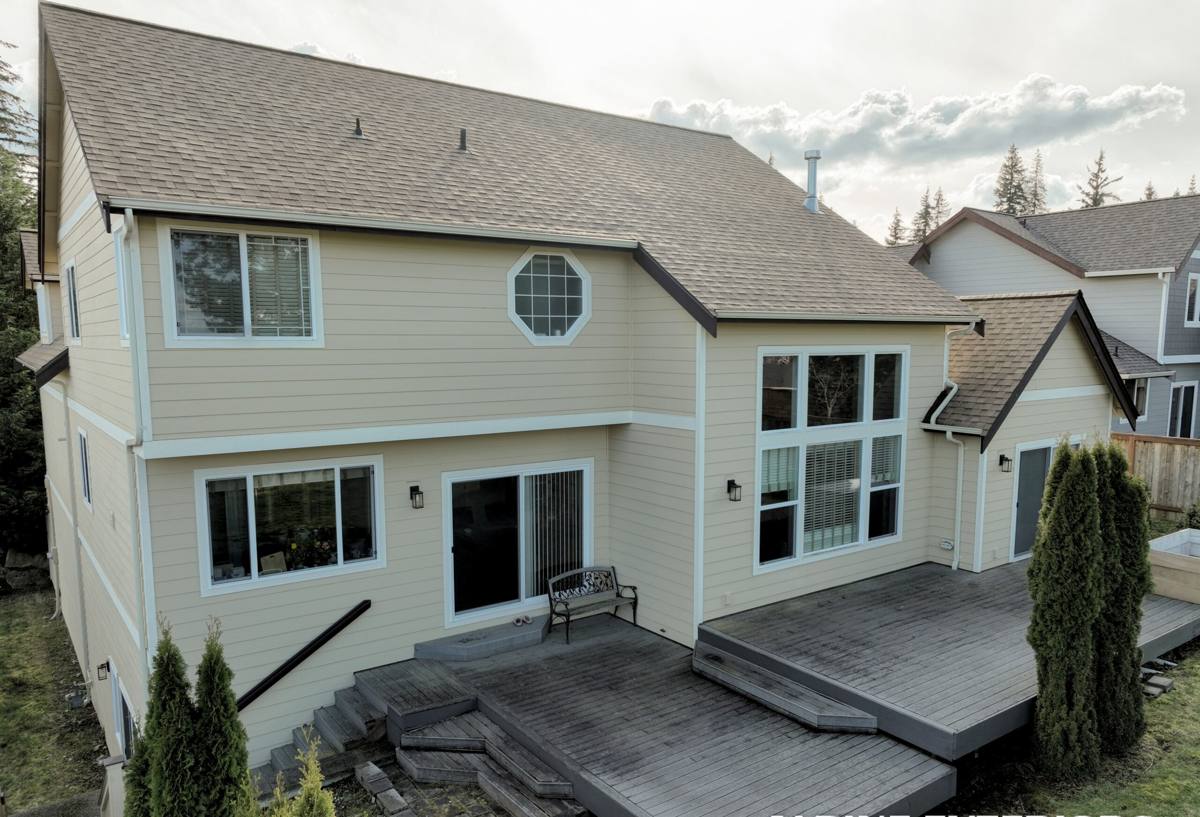
The combination of salt-tinged marine air, sustained rain, and shade from mature trees creates conditions that are hard on both the visible decking and the structure underneath it. A few specific failure points show up again and again on decks that weren't built with this in mind:
- Moss and algae growth on decking boards and stair treads, which makes surfaces slick and traps moisture against the wood.
- Rot at the ledger board where the deck attaches to the house — the single most common structural failure point on older decks in wet climates.
- Fastener corrosion from screws and nails that weren't rated for constant moisture exposure, leaving black streaks and weakened connections.
- Warped or cupped boards from wood that absorbs and releases moisture unevenly through the season.
- Standing water on footings and post bases that never get a chance to dry out between storms.
None of these are inevitable. They're the result of decks built to a generic standard instead of one that accounts for how much moisture this region actually sees.
What Correct Deck Construction Involves Here
Ledger Attachment and Flashing
The ledger board — where the deck bolts to the house framing — is where most rot-related deck failures start, and it's almost always because flashing was skipped or done poorly. We flash every ledger connection to shed water away from the house sheathing, and we use structural fasteners rated for exterior, high-moisture use rather than whatever was on the shelf. This one detail, done right, prevents the majority of the hidden rot problems we see when we're asked to inspect or rebuild an older deck.
Footings and Drainage
Post footings need to be set below frost depth and, just as important, in a way that lets water drain away instead of pooling around the base of the post. In low or shaded yards, that sometimes means adjusting footing placement or grading before a single board goes down. Skipping this step is invisible on installation day and expensive to fix later.
Framing Spacing and Airflow
Joist spacing that's tight enough for code but leaves no airflow underneath the deck traps moisture and accelerates rot from below — the side you don't see until it's a problem. We frame with enough clearance and, where the site allows it, ventilation to let the underside of the deck actually dry out between rain events.
Fasteners and Hardware
Every fastener on a deck built in this climate should be corrosion-resistant — stainless steel or coated fasteners rated for ground contact and constant moisture, not standard exterior screws that will streak and weaken within a few years. This is a small cost difference at build time and a large difference in how the deck looks and performs a decade in.
Choosing Decking Material for a Wet Climate
There's no single "best" decking material — there's a best material for your budget, your maintenance appetite, and how much shade and moisture your yard sees. Here's how the common options actually compare for a property like yours:
| Material | Moisture Behavior | Maintenance | Typical Lifespan |
|---|---|---|---|
| Pressure-treated lumber | Resists rot when properly sealed; needs re-sealing to stay ahead of moisture | Annual cleaning and periodic stain/seal | 15–20 years with upkeep |
| Cedar | Naturally rot-resistant, but surface graying and moss growth happen fast in shade | Regular cleaning, occasional oiling for appearance | 15–20 years with upkeep |
| Composite decking | Doesn't absorb water or rot, but can stay damp on the surface longer, encouraging surface algae if not cleaned | Periodic washing; no staining or sealing | 25–30 years, manufacturer-dependent |
| PVC decking | Fully moisture-resistant, best performance in constant wet/shade conditions | Lowest — occasional washing only | 25–30+ years |
For yards with heavy shade or limited sun exposure — common around Nooksack's tree cover — composite or PVC decking generally holds up with the least fuss, because they're not feeding the moss and mildew the way untreated wood surfaces can. For homeowners who want the look and feel of real wood and are willing to keep up with cleaning and sealing, cedar or treated lumber is still a solid choice — it just asks more of you over the life of the deck.
Railings, Stairs, and Code Compliance
Railings and stair systems take a different kind of abuse — they're handled constantly, they're often the first thing to loosen, and on wet stairs they're a real safety issue if the tread surface isn't right. We build railing and stair systems to current Washington building code for height, baluster spacing, and stair geometry, and we pay particular attention to non-slip tread surfaces given how often this area sees wet conditions. A deck that looks finished but wasn't pulled to permit, or wasn't inspected where required, is a liability you don't want to inherit — ask any contractor directly whether your project needs a permit before work starts, and get the answer in writing.
Our Process, Start to Finish
- On-site assessment. We look at your yard's drainage, sun/shade exposure, existing structure (if replacing a deck), and how you actually plan to use the space.
- Design and material selection. We walk through layout, decking material, and railing options with honest trade-offs on cost and maintenance — no upsell for its own sake.
- Permitting. We handle the permit process where one is required, so the finished deck is built to code and documented, not just built.
- Framing and structural work. Ledger flashing, footings, joists, and hardware — the parts that determine whether the deck lasts 10 years or 30.
- Decking, railing, and finish work. Final surfaces, stairs, and railing installed to spec.
- Walkthrough. We go over the finished deck with you, including what maintenance (if any) it needs going forward.
Keeping a Deck Looking Good Through Whatcom County Winters
Even a well-built deck needs some seasonal attention in this climate. A short annual routine keeps most problems from ever starting:
- Sweep leaves and debris off the deck surface regularly through fall — trapped organic matter is what feeds moss and mildew.
- Wash the surface at least once a year with a deck cleaner or mild detergent to knock back algae growth before it takes hold.
- Check for standing water after heavy rain — pooling in one spot usually means a drainage or slope issue worth addressing early.
- Inspect railings and stair connections for looseness once a year, especially before winter.
- For wood decking, re-seal or re-stain on the schedule the product calls for — skipping a cycle is when moisture starts winning.
Why It Matters That We Already Work in This Area
A deck contractor who mostly works drier inland areas, or who builds the same way regardless of location, doesn't always think about ledger flashing, footing drainage, or moss-resistant material the way a crew that works Whatcom County day in and day out does. We see what driving rain and long wet seasons actually do to decks around here — which failure points show up first, which materials hold up in shaded yards, and which shortcuts cost homeowners money a few years down the line. That's the experience we bring to every custom deck we build for a Nooksack property, not generic advice pulled from a manual written for a different climate.
Get a Straightforward Estimate
If you're planning a new custom deck or need to replace one that's showing its age, we're happy to come take a look, walk the site with you, and put together a straightforward estimate — no pressure, no hard sell. Use the form below to get started.