 Blaine Siding
 Why Birch Bay Roofs Wear Differently Than Roofs Inland
Birch Bay sits right on the water, and that changes what a roof has to survive. The same salt-laden air that makes the evenings smell like the beach also settles into fasteners, flashing seams, and any exposed metal edge, working corrosion faster than it would ten or fifteen miles inland. Add in wind-driven rain coming off the Strait of Georgia and a moss season that runs long and wet through most of the year in Whatcom County, and you've got three separate stresses hitting the same roof at once: salt, water intrusion, and organic growth.
None of that means metal roofing is a bad fit for Birch Bay — it's actually one of the better options for this exact environment, if it's specified and installed correctly. The problems we see out here almost never come from the material itself. They come from hardware, fasteners, or details that were fine for a drier, calmer site but weren't built for salt air and sideways rain.
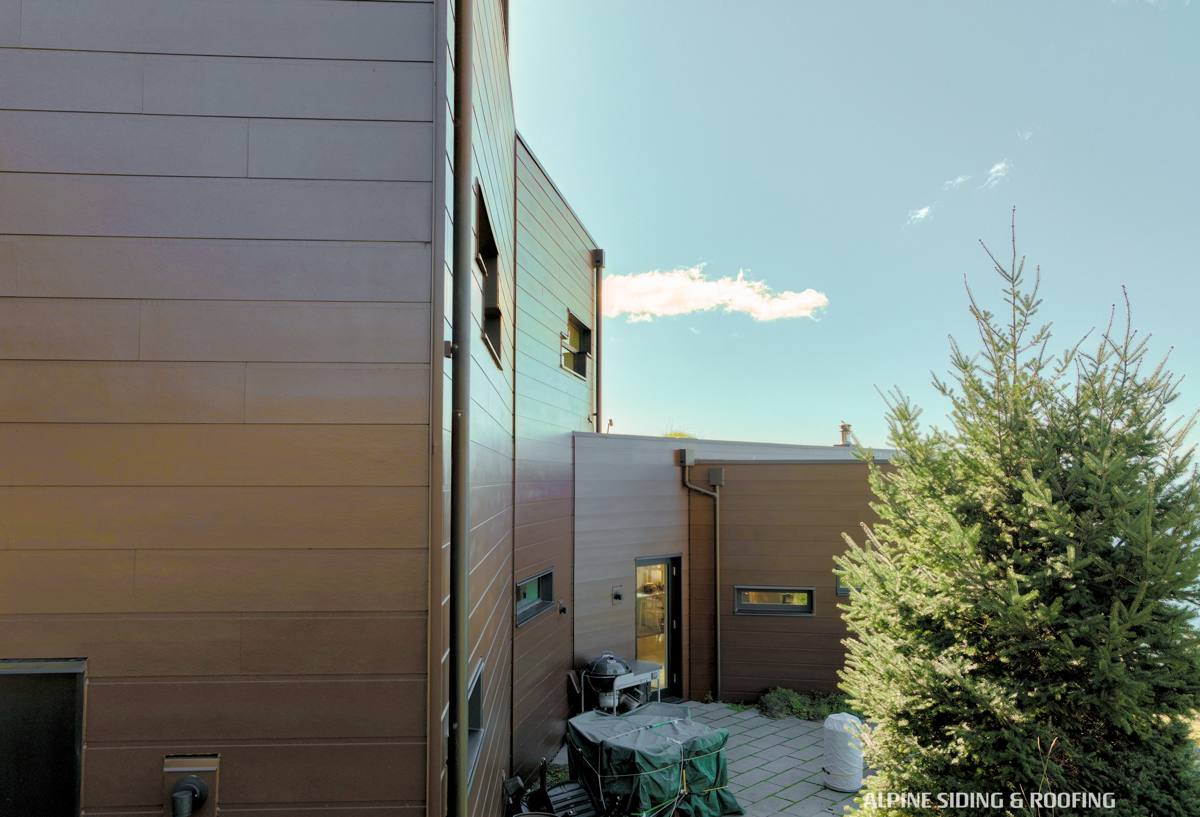
What a Metal Roof Actually Needs to Handle in This Environment
Salt Air and Corrosion
Bare or poorly coated steel fasteners, exposed cut edges, and dissimilar metals in contact with each other are where corrosion starts near the water. It's not usually the roof panel that fails first — it's the small stuff: screws, flashing clips, and valley metal that wasn't matched to the panel's coating chemistry.
Driving Rain
Wind off the water doesn't just fall on a roof, it pushes into it — up under laps, sideways through vents, and into any gap in the underlayment. A metal roof depends on its seams, laps, and penetration flashing to shed that water, not just the panel surface. Underlayment quality and how it's tied into valleys, chimneys, and wall transitions matter as much as the panel choice.
Moss and Organic Growth
Whatcom County's damp, mild winters keep moss and algae active for much of the year, especially on shaded, north-facing slopes and anywhere debris collects. Metal sheds moss better than most roofing materials because there's no rough surface for spores to grab onto, but valleys, flat-seam laps, and areas near overhanging trees still need airflow and periodic clearing to stay clean.
Metal Roofing Systems: What We Recommend and Why
Not every metal roofing system performs the same way in a coastal, high-moisture setting. We steer Birch Bay homeowners toward systems that minimize exposed fasteners and use coatings rated for marine or coastal exposure, because that's what actually holds up here.
| System | How It's Fastened | Coastal Performance | Typical Lifespan |
|---|---|---|---|
| Standing seam | Concealed clips, no exposed screws on the field | Best resistance to wind-driven rain and salt corrosion | 40-70 years |
| Exposed-fastener panel | Screws through the panel face with washers | Workable, but washers age faster in salt air and need eventual replacement | 25-40 years |
| Metal shingle/shake panels | Interlocking with hidden fasteners | Good moss shedding, moderate seam count near the water | 30-50 years |
Standing seam is our default recommendation for homes directly in Birch Bay or anywhere with a clear line to the water, simply because there's nothing on the field of the roof for salt spray to attack. Exposed-fastener panels can still be the right call on a budget re-roof or an outbuilding — we just make sure the fastener package is coastal-rated and set clear expectations on when those washers will need attention.
The Details That Separate a Correct Install From a Problem Roof
Fasteners and Flashing Hardware
Every screw, clip, and flashing piece needs to be rated for the environment it's going into, not just compatible with the panel. Near the water, that means stainless steel or coated fasteners matched to the panel's metal so you're not setting up galvanic corrosion between two dissimilar metals.
Underlayment
A synthetic, high-temp underlayment with taped or sealed seams gives the roof a second line of defense if wind-driven rain gets past the panel laps — which, in a storm off the Strait, it eventually will at some point in the roof's life. This is not the place to save money.
Valleys and Penetrations
Valleys collect the most water and the most debris, which makes them the most common failure point on any roof, metal included. Properly sized valley metal, correct overlap, and sealed penetrations around vents and chimneys matter more than the panel spec itself.
Ventilation
A roof deck that can't breathe traps moisture underneath the metal, which leads to condensation issues that have nothing to do with the roof surface and everything to do with the assembly beneath it. Balanced intake and exhaust ventilation is part of a correct metal roof install, not an optional upgrade.
What Drives the Cost of a Birch Bay Metal Roof
Metal roofing costs more upfront than asphalt shingles, and homeowners deserve a straight answer on why, and what actually moves the number.
| Cost Factor | Why It Matters |
|---|---|
| Panel system chosen | Standing seam runs higher than exposed-fastener panel due to labor and concealed-clip hardware |
| Roof complexity | More valleys, dormers, and penetrations mean more flashing labor and material |
| Tear-off vs. overlay | Removing old roofing and inspecting the deck adds cost but lets us fix rot or ventilation issues before they're covered up |
| Coating and gauge | Heavier gauge steel and marine-grade coatings cost more but last longer this close to the water |
| Access and pitch | Steeper roofs and tight lot access near the shoreline can add labor time |
We give a broad range during the first walkthrough and a firm number once we've seen the roof up close — no homeowner should be signing a contract off a phone estimate for a job this exposed to the weather.
Our Process on a Birch Bay Metal Roofing Project
- On-site inspection. We look at the existing roof, deck condition, ventilation, and how exposed the home is to wind and salt spray off the water.
- System recommendation. We walk you through which panel system and hardware package fits your home, your budget, and how close you are to the shoreline.
- Tear-off and deck check. Old roofing comes off, and we address any rot, soft spots, or ventilation gaps before anything new goes down.
- Underlayment and flashing. Sealed synthetic underlayment goes down first, followed by properly sized valley and penetration flashing.
- Panel installation. Panels go on with fasteners matched to the system, correct overlap, and attention to every seam that will face weather off the water.
- Final walkthrough. We go over the finished roof with you, including what routine maintenance it does and doesn't need.
Living With a Metal Roof Through Birch Bay's Moss Season
Metal roofing is genuinely low-maintenance compared to shingles, but "low-maintenance" isn't "no-maintenance," especially with the moss pressure Whatcom County sees for much of the year. A few habits keep a metal roof performing the way it's supposed to for decades:
- Clear debris out of valleys and off any flat-seam areas once or twice a year, especially after fall wind events
- Keep gutters and downspouts clear so water isn't backing up under the roof edge
- Trim back overhanging branches that keep shaded areas of the roof damp longer than the rest
- Do a visual check after major storms for lifted flashing or debris buildup around chimneys and vents
- Avoid pressure washing the panels — a soft rinse is enough, and high pressure can drive water under laps or strip coatings
None of this is heavy labor, but skipping it is how a well-installed roof still ends up with moss staining or a slow leak nobody notices until it's inside the attic.
Why a Crew That Already Works Birch Bay Matters
Metal roofing done right in a coastal setting isn't a different trade than metal roofing done inland — it's the same trade with less room for error. A crew that works Blaine and the Birch Bay shoreline regularly already knows which fastener packages hold up out here, which roof orientations catch the worst of the wind-driven rain, and where Whatcom County's permitting and code requirements apply to a re-roof versus a full tear-off. That's not something you learn from a spec sheet — it's something you learn from working this specific stretch of coastline job after job.
If you're weighing a metal roof for a home in Birch Bay, we're happy to walk the roof with you, talk through what your specific site is up against, and give you a straightforward estimate with no pressure to sign anything on the spot. Reach out through the form below to get started.