 Blaine Siding
 Siding Replacement Built for Grandview's Coastal Exposure
Grandview sits close enough to the water in Blaine to feel every mood of Whatcom County weather — the salt-laden wind off the strait, the long stretches of driving rain that roll in off the Pacific through fall and winter, and the shaded, damp corners where moss gets a foothold and never really leaves. Siding here doesn't fail the way it does in a dry inland climate. It fails from the outside in, through moisture cycling, salt exposure, and organic growth that most homeowners don't notice until paint is peeling or a wall feels soft underfoot.
A siding replacement in this neighborhood needs to be planned around those specific stresses, not treated as a generic exterior remodel. That means the right material, the right water management details behind the cladding, and installation that respects how this corner of Whatcom County actually behaves in a wet year.
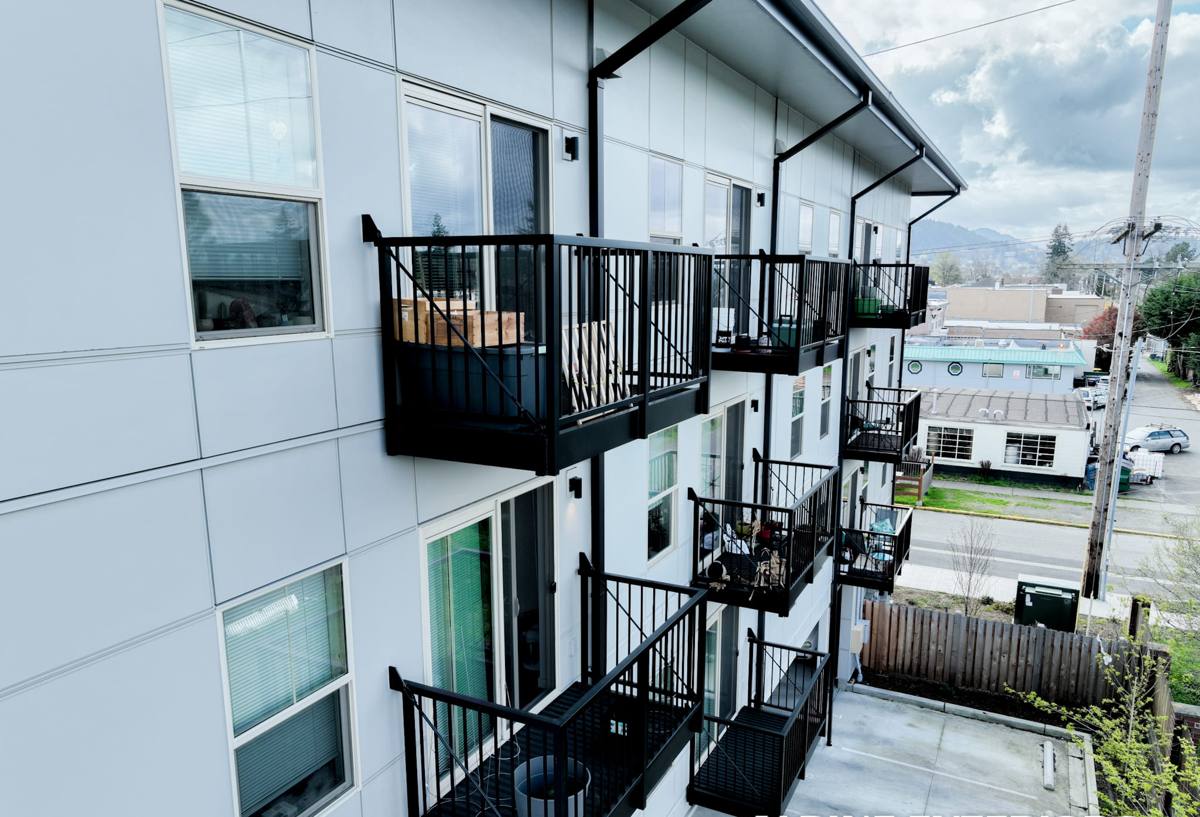
What Blaine's Marine Climate Does to Siding Over Time
Three things drive most of the siding problems we see on Grandview homes:
Salt Air
Proximity to Semiahmoo Bay and the Strait of Georgia means airborne salt is a constant, low-grade presence. It accelerates the breakdown of paint films, corrodes fasteners and metal trim, and works its way into any seam or crack in a siding surface. Materials that aren't engineered for coastal exposure tend to chalk, fade, or corrode faster here than the same product would fifty miles inland.
Driving Rain
Blaine's wind direction during winter storms often drives rain sideways into wall assemblies rather than straight down. That matters enormously for siding performance, because it stresses the laps, joints, and flashing details far more than a vertical rain event would. A siding system that isn't detailed for wind-driven rain will eventually let water behind the cladding, even if the surface material itself looks fine.
Moss and Sustained Dampness
The long moss season in this part of Whatcom County isn't just a roof issue. North-facing walls, areas under eaves with poor airflow, and siding near landscaping that stays wet all winter are prone to moss and algae growth. Beyond the cosmetic problem, sustained moisture against a wall surface is exactly the condition that causes rot in wood-based products and paint failure in lower-grade composites.
Signs a Grandview Home May Need Siding Replacement
Because coastal moisture damage often starts behind the siding before it's visible on the surface, it pays to look closely rather than wait for obvious failure.
- Paint that's peeling, bubbling, or chalking heavily, especially on walls facing the water or prevailing wind
- Soft or spongy spots when you press on siding, particularly near the bottom courses and around window trim
- Visible gaps, warping, or buckling at panel seams and corner boards
- Persistent moss or dark staining that returns quickly after cleaning
- Rising energy bills that suggest the wall assembly is no longer providing consistent insulation and air sealing
- Siding that's original to a home built more than 20-25 years ago, especially if it's never been fully replaced
- Interior signs like musty smells, peeling interior paint, or discoloration on walls that share an exterior with damaged siding
Any one of these on its own might be minor. Several together, especially on a home with real salt and rain exposure, usually mean the siding system as a whole is past the point where patching or repainting makes sense.
What a Correct Siding Replacement Involves
Replacing siding is not just swapping old panels for new ones. Done right, it's a chance to fix the water management details that likely contributed to the original failure.
Full Tear-Off and Wall Inspection
We remove the existing siding down to the sheathing so the wall can actually be inspected, not guessed at. This is where hidden rot, compromised sheathing, or old water intrusion gets found and addressed before anything new goes up. Covering over a damaged wall with new siding just resets the clock on the same failure.
Weather-Resistive Barrier and Flashing
A correctly installed weather-resistive barrier, properly lapped and sealed, combined with correct flashing at windows, doors, and roof-to-wall transitions, is what actually keeps wind-driven rain out of the wall assembly. This layer matters more in Blaine's climate than almost anywhere else in the region, because the rain here doesn't fall straight down where gravity alone would shed it.
Rainscreen and Drainage Details
Where conditions call for it, a drainage gap behind the siding lets any moisture that does get past the cladding dry out instead of sitting against the wall. This is a detail that pays for itself in a climate with as much sustained dampness as this one.
Material Selection
The cladding itself needs to hold up to salt exposure and repeated wet-dry cycling without degrading. This is the point where material choice stops being cosmetic and starts being structural to the home's long-term performance.
Why We Install Only James Hardie Fiber Cement Siding
We standardized on James Hardie fiber cement siding and don't install vinyl, LP SmartSide, Cemplank, Allura, or unfinished wood siding like primed spruce or cedar. That's a deliberate professional standard, not a sales pitch, and it's worth explaining honestly.
Vinyl siding is inexpensive and low-maintenance in mild climates, but it's a thin plastic product that can warp, crack in cold snaps, and fade under UV and salt exposure over time — and it doesn't offer the same fire resistance or rigidity as fiber cement. Engineered wood products like LP SmartSide perform reasonably well when installation and maintenance are perfect, but they're wood-based at the core, which means any breach in the coating or caulking gives moisture a path to swell and eventually rot the substrate — a real risk in a climate with this much sustained dampness. Unfinished cedar or primed spruce look good on day one but require an ongoing maintenance commitment (repainting, sealing, moss treatment) that most homeowners underestimate, especially on a home exposed to coastal salt air.
James Hardie fiber cement is non-combustible, doesn't support moss growth or absorb moisture the way wood-based products do, and comes with a factory-applied ColorPlus finish engineered to resist fading and chalking — a real advantage against salt air and UV exposure. Hardie's HZ5 product line is specifically engineered for climates with freeze-thaw cycling and moisture exposure, which describes this part of Whatcom County well. Backed by a strong transferable warranty and a long track record when installed to manufacturer spec, it's the product we're willing to put our name behind on a Blaine home.
Comparing Siding Options for a Grandview Home
| Material | Salt Air Resistance | Moisture/Rot Risk | Maintenance | Fire Resistance |
|---|---|---|---|---|
| James Hardie Fiber Cement | Strong — factory finish resists chalking and fading | Low — doesn't absorb moisture or rot | Low — no repainting cycle needed with ColorPlus | Non-combustible |
| Vinyl | Moderate — can fade and become brittle over time | Low rot risk, but can trap moisture behind panels if installed poorly | Low, but limited lifespan in harsh exposure | Combustible, can melt/warp near heat sources |
| Engineered Wood (LP SmartSide) | Moderate — coating can degrade with salt exposure | Higher — wood-based core swells and rots if moisture gets in | Moderate — coating and caulk need monitoring | Combustible |
| Unfinished Wood (cedar, primed spruce) | Weak — vulnerable to salt, UV, and moss without upkeep | Highest — natural wood absorbs moisture readily | High — regular sealing, painting, moss treatment | Combustible |
Cost Factors for a Grandview Siding Replacement
Every home is different, but the variables that actually move the price on a job in this area are consistent:
- Square footage and wall complexity — more corners, dormers, and trim details take more labor per square foot
- Condition of the sheathing underneath — hidden rot found during tear-off adds repair work, which is far cheaper to do now than to discover later
- Existing siding layers — homes with more than one prior layer of siding take longer to remove and dispose of
- Trim and accessory work — window and door trim, corner boards, and fascia often get replaced alongside the field siding
- Hardie plank profile and color — lap width and ColorPlus color selection affect material cost modestly
- Access and site conditions — steep lots, mature landscaping, or limited staging space can add time
We give homeowners an itemized estimate up front rather than a single lump number, so it's clear what's driving the cost and where there's flexibility.
Our Process, Start to Finish
- On-site evaluation — we walk the exterior, check for moisture damage, and talk through what we're seeing before recommending a scope of work
- Written estimate — a clear breakdown of materials, labor, and any repair work anticipated
- Tear-off and inspection — full removal of old siding and a real look at the sheathing and framing underneath
- Repair as needed — any rotted sheathing, framing, or old water damage gets addressed before new siding goes on
- Weather barrier and flashing installation — the layer that actually keeps Blaine's wind-driven rain out of the wall
- Hardie siding installation — installed to manufacturer specification, including fastening, clearances, and caulking details that protect the warranty
- Final walkthrough — we go over the finished work with the homeowner before calling the job done
Why a Crew That Already Works in Grandview Matters
A siding job in this part of Blaine isn't the same job as one twenty miles inland. A crew that already works Grandview homes knows which wall orientations take the worst of the wind-driven rain, understands how quickly moss reestablishes in shaded, damp areas, and doesn't need to relearn the local building department's expectations for water management details on every job. That familiarity shows up in fewer surprises during tear-off and a system that's actually built for the exposure this neighborhood gets, not a generic install lifted from a drier climate.
It also means a crew that's accountable locally — reachable if a question comes up after the job is done, and not disappearing once the invoice is paid. That kind of continuity matters more on the coast than most homeowners realize until they need it.
If your Grandview home is showing signs of siding wear, or you're just trying to plan ahead before the next wet season, we're happy to take a look and walk you through what we're seeing. Reach out for a free, no-pressure estimate using the form below.