 Blaine Siding
 Why Ferndale Siding Wears Differently Than Siding Inland
Ferndale sits close enough to Puget Sound and Bellingham Bay that homes here take on a mix of coastal and river-valley weather most inland Washington towns never deal with. Salt-laden air moves in off the water, the Nooksack lowlands hold humidity long after a storm passes, and Whatcom County's mild, wet winters mean exterior walls can stay damp for weeks at a stretch. That combination is hard on siding in ways that aren't always obvious from the curb.
Salt air accelerates corrosion on fasteners, flashing, and any metal trim that isn't rated for coastal exposure. Driving rain, especially in winter storms that come through sideways, finds every gap in flashing and caulking and pushes moisture behind the siding rather than just running down the face of it. And Ferndale's long, damp shoulder seasons give moss, algae, and mildew months of ideal growing conditions on north- and west-facing walls that don't get much direct sun. None of this is unique to any one house — it's the baseline every exterior in this area has to handle, year after year.
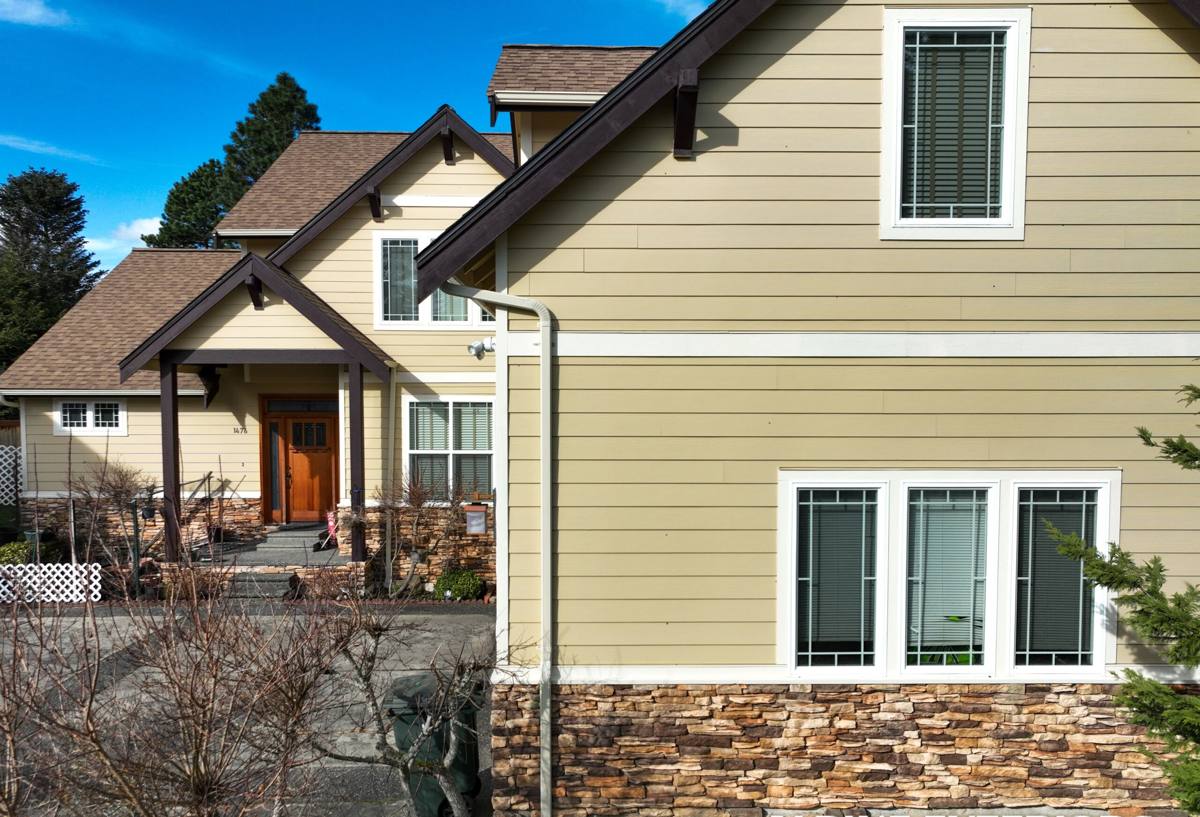
What That Means for a Ferndale Home's Siding
Siding that's fine in a drier climate can fail early here if it wasn't chosen or installed with this weather in mind. Wood-based products absorb moisture and swell, then dry and shrink, cycle after cycle — that movement is what eventually cracks paint, opens seams, and lets water in behind the material. Vinyl doesn't rot, but it flexes and can distort or crack in wind-driven rain and freeze events, and it can't be repainted to refresh a fading color. Even well-made products underperform if the water-resistive barrier, flashing, and fastening underneath weren't done correctly — and in a climate this wet, installation mistakes show up faster than they would somewhere drier.
That's the real lesson from working on homes throughout Whatcom County: siding failure here is rarely just "bad material." It's usually moisture finding a way in through a detail that was rushed, skipped, or not built for local conditions, and then having months of damp weather to do damage before anyone notices.
Signs a Ferndale Home Needs Siding Replacement, Not Just Repair
- Soft, spongy, or crumbling spots when you press on the siding, especially near the bottom courses or around windows
- Paint that keeps failing within a year or two of repainting, even with quality paint
- Persistent moss or algae growth that comes back within weeks of cleaning, particularly on shaded or north-facing walls
- Visible gaps, warping, or buckling panels, especially after a windy winter storm
- Rising energy bills with no other explanation, which can point to moisture-compromised insulation behind the siding
- Rust streaking from fasteners or trim, a sign the metal wasn't rated for salt-air exposure
- Soft trim boards or stained sheathing visible at outside corners, window returns, or below the water table
A few of these on their own might mean a targeted repair is enough. Several together, especially soft spots plus recurring moss and paint failure, usually mean moisture has been getting behind the siding for a while and a full replacement is the more honest recommendation.
Why We Install Only James Hardie Fiber Cement Here
We standardized on James Hardie fiber cement siding for every job we do, including here in Ferndale, and it's worth explaining why rather than just stating it. Fiber cement is non-combustible and dimensionally stable — it doesn't swell and shrink with humidity the way wood-based products do, which matters directly in a climate where the moisture level around a house barely lets up for months. It holds paint and factory finish far longer than wood substrates because it isn't moving underneath the coating the same way.
James Hardie's ColorPlus finish is baked on at the factory under controlled conditions, which gives it better fade and moisture resistance than most field-applied paint jobs, and it comes backed by a real, transferable finish warranty. Hardie also builds region-specific product lines engineered for different climate zones — its HZ5 line, built for colder and wetter regions, is a better match for Whatcom County's weather than a generic national product. We're not saying every other siding product is worthless; some perform reasonably well when installed with real care. We're saying that after years of doing this work in exactly this climate, fiber cement from a manufacturer that engineers for wet, coastal-influenced conditions gives homeowners the fewest surprises down the road, and that's the standard we've chosen to build every job around.
What We Don't Install, and Why That's Deliberate
We don't install vinyl, LP SmartSide, primed spruce, cedar, or other fiber cement brands like Cemplank or Allura. It's not that these products have no legitimate use anywhere — it's that each comes with a trade-off that shows up faster in this specific climate: wood-based products absorb moisture at cut edges and panel joints unless every single one is sealed perfectly and stays that way for decades; vinyl can't be refinished and tends to show its age through fading and distortion; and other fiber cement brands may not offer the same regional engineering or long-term warranty backing that we've come to trust from Hardie. We'd rather install one product exceptionally well, with crews who know its details cold, than offer five options and be mediocre at all of them.
What Correct Siding Replacement Actually Involves
The siding itself is only part of what protects a house. The work underneath it does most of the actual job, and it's where corners get cut on rushed installs.
Tear-Off and Substrate Check
We remove the old siding down to the sheathing and check for rot, soft spots, or existing moisture damage before anything new goes on. In a climate like this, it's common to find damage around windows, at the bottom of walls, or near roof-to-wall intersections that wasn't visible from outside. Any compromised sheathing gets replaced, not covered over.
Water-Resistive Barrier and Flashing
A correctly lapped weather-resistive barrier, properly integrated flashing at every window, door, and penetration, and correct kick-out flashing where roof lines meet walls are what actually keep driving rain out. This detail work matters more in Ferndale's wind-driven storms than in calmer inland conditions, because water is being pushed into gaps rather than just running past them.
Fasteners and Clearances
We use fasteners rated for coastal exposure to resist the corrosion that salt air accelerates, and we hold proper clearance between the bottom of the siding and grade, decks, or patios so splashback and standing moisture don't sit against the material. Hardie's own installation specs are strict about this for a reason.
Caulking, Trim, and Finish Details
Every joint, corner, and trim transition gets sealed with the correct products, and factory-finished panels are handled so the ColorPlus coating isn't damaged during installation. Sloppy cutting or handling here is how a good product ends up with a short-term problem it was never designed to have.
Our Process, Start to Finish
- Free on-site estimate — we walk the exterior with you, check for moisture damage, and talk through what your home actually needs
- Written scope and quote — a clear breakdown of the work, materials, and timeline, no vague allowances
- Tear-off and substrate inspection — old siding removed, sheathing checked and repaired as needed
- Weather barrier and flashing installation — the layer that does most of the actual water protection
- James Hardie siding installation — installed to manufacturer spec, with attention to fasteners, clearances, and joints
- Trim, caulking, and finish work — the details that determine how the job looks and holds up
- Final walkthrough — we go over the finished work with you before calling the job done
Comparing Siding Options for a Climate Like Ferndale's
| Material | Moisture Behavior in Wet Climates | Finish Longevity | Long-Term Fit for This Area |
|---|---|---|---|
| James Hardie Fiber Cement (HZ5) | Dimensionally stable, engineered for cold/wet regions | Factory ColorPlus finish, strong transferable warranty | Our standard for Whatcom County installs |
| Vinyl Siding | Doesn't rot, but can flex or distort in wind-driven rain | Fades over time, cannot be repainted | Lower upfront cost, weaker long-term appearance |
| Wood / Primed Spruce / Cedar | Absorbs moisture at joints and cut edges, prone to swelling | Needs regular repainting and sealing to hold up | High maintenance burden in a wet, humid climate |
| LP SmartSide | Engineered wood strand product, moisture-sensitive at edges | Factory finish, but wood-based core has different failure modes than fiber cement | Not our standard; different trade-offs than fiber cement |
What Drives the Cost of a Siding Replacement
Every home is different, so we won't quote a number without seeing the house, but these are the factors that actually move the price:
| Cost Factor | Why It Matters |
|---|---|
| Home size and wall complexity | More square footage, corners, and roof-to-wall intersections mean more material and labor |
| Substrate condition | Rot or moisture damage found during tear-off adds repair work before new siding goes on |
| Siding profile and trim selection | Lap width, trim style, and accent details affect material cost and install time |
| Access and site conditions | Tight lots, landscaping, or multi-story sections can affect labor and equipment needs |
| Existing window and door flashing | Older flashing that needs full replacement adds time versus flashing that's still sound |
The only way to get a real number is a walk-through, which is why our estimates are free and come with no pressure to commit on the spot.
Choosing a Contractor Who Actually Knows This Area
Siding contractors who mostly work drier or inland regions sometimes underbuild the weather-resistive barrier and flashing details, because those shortcuts don't fail as visibly somewhere with less driving rain. A crew that regularly works Ferndale and the surrounding Whatcom County coastline already knows where water tends to find its way in on homes like yours, and builds for it by default rather than learning it the hard way on your house.
- Ask what siding brand and product line they install, and why — a straight answer beats a sales pitch
- Ask how they handle flashing at windows, doors, and roof-to-wall intersections
- Ask whether they check and repair sheathing during tear-off, not just cover it up
- Ask about warranty coverage — both the material warranty and their own workmanship warranty
- Ask for a written, itemized quote rather than a vague lump-sum number
Caring for Your Siding After Installation
Correctly installed James Hardie siding needs very little upkeep, but a little seasonal attention keeps it looking right in this climate. Rinsing off moss and algae buildup once or twice a year, especially on shaded walls, keeps growth from taking hold. Keeping gutters clear prevents overflow from running down the siding face and staying wet longer than it should. And a quick visual check after major winter storms — looking for loose trim, gaps in caulking, or damaged flashing — catches small issues before Whatcom County's next wet season turns them into bigger ones.
If you're weighing a siding replacement for your Ferndale home, we're glad to come take a look, tell you honestly what condition your current siding is in, and walk you through what a correct James Hardie installation would involve for your house. Request a free, no-pressure estimate using the form below.