 Blaine Siding
 Custer's Roofs Work Harder Than Most
Custer sits close enough to the water that salt-laden air reaches roofs here even though the neighborhood itself feels inland and rural. Combine that with the driving, sideways rain that blows through Whatcom County during fall and winter storms, and a moss season that can run eight months or longer under the tree cover common to this area, and you get a roof that ages differently than one in a drier, sunnier climate. Repairs here aren't just about patching a hole — they're about understanding how moisture moves through a roof system that rarely gets a chance to fully dry out.
We work on roofs throughout the Blaine and Custer area regularly, which means we're not guessing at what causes damage locally. We're looking at the same moss growth patterns, the same wind-driven rain intrusion points, and the same aging composition shingles that show up on one property after another in this part of the county.
What "Roof Repair" Actually Covers
Roof repair is targeted work on a specific problem area — not a full tear-off and replacement. A correct repair fixes the cause of a leak or failure, not just the visible symptom, and blends into the surrounding roof so it doesn't stand out or create a new weak point. The most common repair calls we get in the Custer area fall into a few categories.
Moss-Related Shingle Damage
Moss doesn't just look bad — it holds moisture against the shingle surface and works its way under shingle edges as it grows, gradually lifting them and breaking the granule seal. Left long enough, this leads to soft spots, cupped shingles, and eventually leaks at the exact points where moss colonies have taken hold, usually on north-facing slopes and anywhere shaded by trees.
Flashing Failures
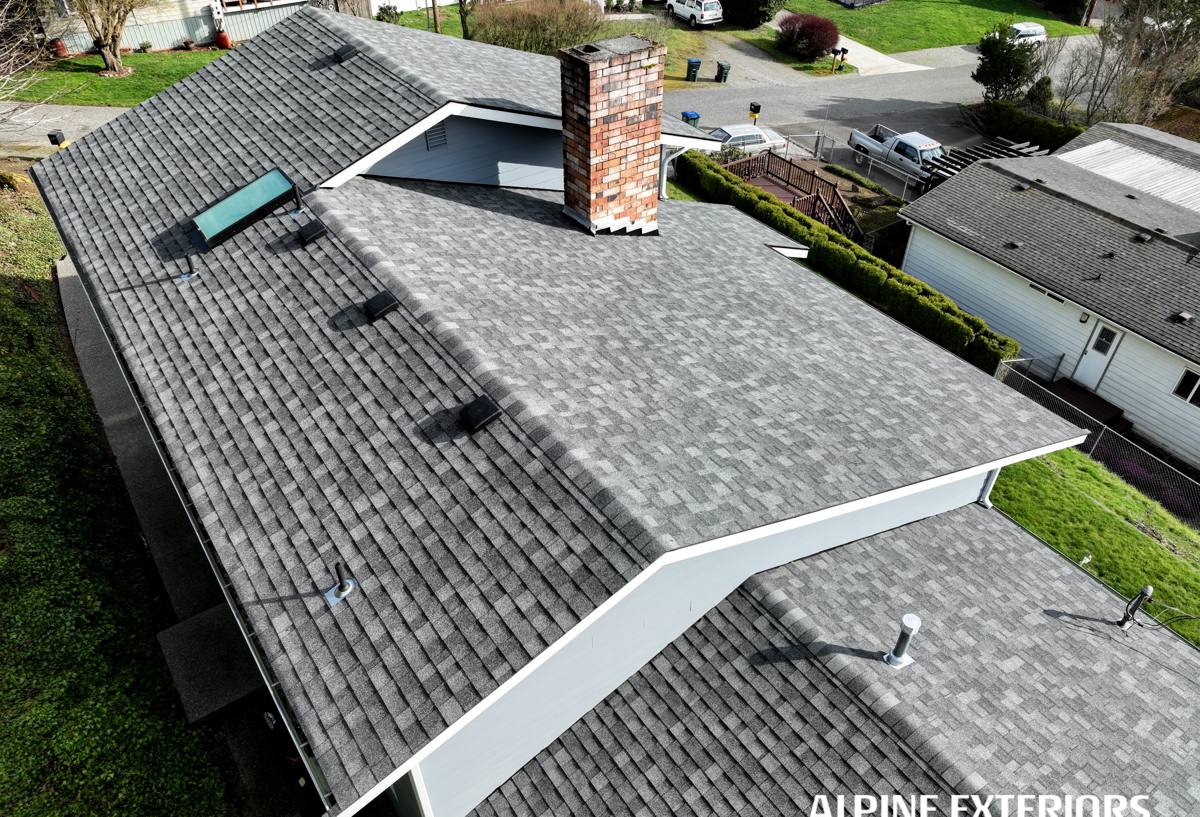
Flashing around chimneys, plumbing vents, skylights, and roof-to-wall transitions is almost always where leaks actually originate, even when the damage shows up somewhere else inside the house. Sealant dries out and cracks faster here because of the constant wet-dry cycling from repeated storms, and metal flashing can corrode over time from salt exposure.
Valley and Penetration Leaks
Roof valleys concentrate a huge volume of water during a heavy rain event, and any gap, misaligned shingle, or worn valley liner becomes a direct path for water into the attic. Punctures from satellite mounts, old antenna hardware, or storm debris cause similar isolated leaks that are usually straightforward to repair correctly if caught early.
What a Correct Repair Actually Involves
A lot of roof "repairs" fail within a year or two because they only address what's visible from the ground or from inside the attic during a rainstorm. Doing it right takes a few more steps.
- Walk the full roof surface, not just the area near the reported leak — water travels sideways under shingles before it shows up as a stain inside
- Trace the leak back to its actual entry point, which is often several feet from where the damage appears indoors
- Remove and replace damaged shingles, underlayment, and flashing as a unit rather than layering new material over compromised old material
- Match shingle color and profile as closely as possible so the repair doesn't leave an obvious patch
- Check and clear moss and debris from the surrounding area so the repair isn't undermined again within a season
- Confirm gutters and downspouts near the repair are draining properly, since backed-up water is a frequent contributor to the original damage
Our Process for a Custer Roof Repair
We keep the process straightforward because homeowners dealing with an active leak don't need more complexity added to their day.
1. Inspection and Diagnosis
We inspect the roof surface, attic (when accessible), flashing points, and moss coverage to identify every contributing issue, not just the one that prompted the call. A leak that seems small from inside can point to a larger moisture problem building underneath the shingles.
2. Honest Scope and Estimate
We tell you plainly whether this is a repair situation or whether the roof's overall condition means a repair would just be a short-term fix on a roof that's due for replacement. We'd rather lose a small repair job than have you pay for patchwork on a roof that needs bigger attention.
3. The Repair Itself
Work is done with materials matched to your existing roof system, proper flashing techniques, and attention to how water will move across that section going forward — not just how it looked the day it was installed.
4. Cleanup and Follow-Up
We clear debris and old material from the site and let you know what to watch for afterward, including any maintenance — like moss treatment — that will extend the life of the repair.
Repair vs. Replacement: How to Tell Which You Need
Most homeowners want to know upfront whether they're looking at a repair bill or a bigger conversation. These are the factors that usually decide it.
| Factor | Leans Toward Repair | Leans Toward Replacement |
|---|---|---|
| Age of roof | Under 12–15 years | Approaching or past expected lifespan |
| Extent of damage | Isolated to one area or slope | Spread across multiple slopes |
| Moss history | Recently treated, minor lift | Long-term untreated growth, widespread granule loss |
| Underlying decking | Solid, no soft spots | Soft, spongy, or visibly damaged decking |
| Flashing condition | Isolated corrosion or gaps | Widespread flashing failure throughout |
When damage is contained and the roof is otherwise sound, repair is the right call — both financially and practically. We'll always tell you honestly which category your roof falls into.
Materials We Repair With
Most Custer homes we work on are finished in composition (asphalt) shingle, with some metal roofing and a smaller number of cedar shake roofs. Repair materials need to match not just in appearance but in how they perform in this climate.
- Composition shingle: the most common material locally; repairs use matching weight and color shingles with properly integrated underlayment
- Metal roofing: repairs focus on seam integrity, fastener corrosion, and panel sealant — areas that salt air affects faster than an inland roof
- Cedar shake: repairs require individual shake replacement done carefully so the surrounding shakes aren't disturbed, since cedar in this climate needs consistent airflow to avoid trapped moisture
Our standard on flashing and sealant is to use materials rated for sustained wet exposure rather than general-purpose products, since a repair that works fine in a dry climate can fail here within a season or two if the material isn't suited to constant moisture cycling.
Moss: The Maintenance Item Most Roofs in This Area Need
Given how long moss season runs in Whatcom County, a one-time repair without an ongoing moss plan usually just delays the next leak. We treat moss removal as part of the repair conversation, not a separate upsell.
- Physically remove moss growth rather than just treating it chemically and leaving it in place
- Apply a moss treatment appropriate for the roofing material to slow regrowth
- Recommend zinc or copper strips near the ridge on shingle roofs prone to heavy moss return, where appropriate
- Check tree cover and suggest trimming back branches that keep sections of the roof shaded and damp longer than the rest
Signs You Need a Roof Repair Now, Not Later
Small roof problems in this climate don't stay small for long once wind-driven rain finds an opening. Watch for:
- Water stains on ceilings or in the attic, especially after a heavy storm
- Visible moss buildup, particularly on north-facing or shaded slopes
- Shingles that look cupped, curled, or are missing granules in patches
- Cracked or lifted flashing around chimneys, vents, or skylights
- Daylight visible through the roof deck from inside the attic
- Granules collecting in gutters or at the base of downspouts
Why It Matters to Hire a Crew That Already Works in Custer
Roof repair done by someone unfamiliar with this specific climate often misses the real cause of a problem. A crew that hasn't dealt with the moss cycle, salt exposure, or the way wind-driven rain finds its way through flashing here can end up treating symptoms instead of the source. We work this area regularly enough to know what tends to fail first, which slopes take the worst of the weather, and what a repair needs to hold up through another wet season rather than just through the next dry stretch.
If you're dealing with a leak, visible moss damage, or just want an honest read on a section of roof that's starting to look worn, we're glad to come take a look. Reach out for a free, no-pressure estimate using the form below.