 Blaine Siding
 Custer's Climate Is Harder on Siding Than It Looks
Custer sits inland just enough from Semiahmoo Bay and the Strait of Georgia that homeowners sometimes assume they're spared the worst of the marine weather that hits Blaine's waterfront directly. In practice, salt-laden air still moves through this part of Whatcom County on a regular basis, and it settles on siding, trim, and fasteners whether a house sits on the water or a few miles back from it. Combine that with the region's driving winter rain — the kind that comes in sideways on a west wind instead of straight down — and you have a climate that tests every seam, joint, and coating a siding product has.
Then there's shade and moisture retention. Custer's mix of rural tree lines, larger lots, and slower-drying microclimates means a lot of homes here hold dampness longer than a house in a more open, sun-exposed neighborhood. That's exactly the condition moss and mildew need to get established, and once moss takes hold on a wall it holds water against the surface almost permanently. Over a few seasons, that's enough to warp wood siding, delaminate poor-quality composite panels, and force premature paint failure on anything that isn't built to shed water and resist organic growth from the start.
None of this is exotic. It's just the normal cost of living in a coastal Pacific Northwest county, and it's exactly what James Hardie fiber cement siding was engineered to handle. This page covers what that looks like specifically for a Custer property — not generic siding advice, but what a correct James Hardie install involves given this area's salt exposure, rain load, and moss season, and why we install nothing else.
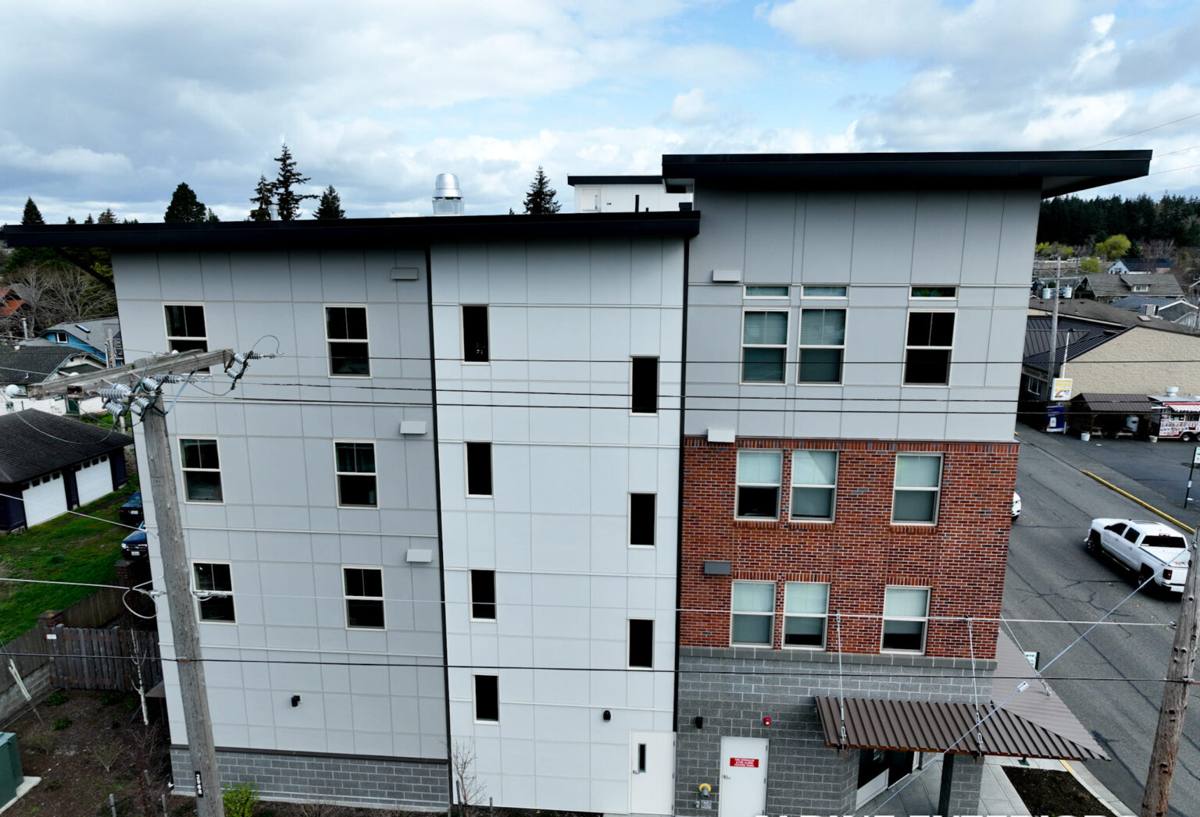
What "Correct" James Hardie Installation Means in Custer
Hardie siding's reputation is built on the material itself, but its real-world performance depends almost entirely on installation quality. A fiber cement product installed wrong will still fail in a wet climate — it just fails differently than wood or vinyl would. Here's what we hold to on every Custer job.
Rain Screen and Drainage Gap
James Hardie's own installation guidance calls for a drainage plane behind the siding in climates like ours — a small gap that lets any moisture that gets behind the panels drain and dry instead of sitting against the sheathing. Skipping this step is one of the most common corner-cuts in the industry, because it's invisible once the siding goes up and it doesn't cause visible problems for a year or two. In a house that sees Custer's rain volume, that gap is the difference between siding that dries out between storms and a wall assembly that stays damp all winter.
Fastening and Flashing
Every penetration — windows, doors, hose bibs, light fixtures, vents — needs proper flashing and sealant, and every fastener needs to land in the right spot with the right embedment. Overdriven nails crack the board's edge; underdriven ones leave gaps that trap water. In a salt-air environment, we also pay close attention to fastener material, since corrosion-resistant fasteners matter more here than they would inland.
Factory-Finished ColorPlus vs. Field Paint
James Hardie's ColorPlus finish is baked on at the factory under controlled conditions, which gives it a more consistent, UV- and moisture-resistant bond than siding painted on-site after installation. For a Custer home, that factory finish is doing real work against salt exposure and rain, not just providing color. We install ColorPlus product on nearly every job for that reason, and we cut and finish site-cut edges with Hardie's touch-up system so the color match and protection stay consistent at every joint.
Picking the Right Hardie Product Line for This Property
James Hardie makes several product lines, and the right mix depends on the house — its exposure, its architectural style, and which walls take the worst weather. We don't default to one product across every job; we walk the property first.
| Product | Best Use | Why It Fits Custer |
|---|---|---|
| HardiePlank Lap Siding | Primary wall covering, most home styles | Traditional lap profile sheds driving rain well and is the most common, best-tested option in this climate |
| HardiePanel Vertical Siding | Accent walls, gables, modern or farmhouse styles | Clean vertical lines drain quickly and hold up well on exposed gable ends |
| HardieShingle | Accent sections, dormers | Gives a cedar-shake look without the moisture and moss issues real cedar shingles develop here |
| HardieTrim | Corners, window and door surrounds, fascia | Matches the siding's moisture resistance so trim doesn't become the weak point in an otherwise correct install |
Most Custer homes also get evaluated for the HZ5 climate zone specification, which is Hardie's engineering designation for regions with more freeze-thaw cycling and moisture exposure than the mildest zones. Whatcom County generally falls in this range, and using the correctly rated product line matters more than most homeowners realize — it affects how the board is engineered to handle moisture cycling over decades, not just how it looks on day one.
Hardie vs. the Alternatives in a Marine Climate
We get asked why we only install James Hardie, especially since vinyl and engineered wood products are cheaper up front. Here's the honest comparison for a climate like Custer's — not a sales pitch, just how each material actually behaves in salt air, driving rain, and a long moss season.
| Factor | James Hardie Fiber Cement | Vinyl | Wood / Engineered Wood |
|---|---|---|---|
| Moisture behavior | Non-combustible, dimensionally stable, doesn't absorb and swell | Doesn't absorb water but can warp and gap in temperature swings | Absorbs moisture; prone to rot and swelling without diligent upkeep |
| Moss and mildew resistance | Factory finish resists organic growth; surface doesn't feed mold | Resists growth on the surface, but seams and channels trap debris | Organic material — moss and mildew take hold readily in our climate |
| Salt air durability | Coating engineered for UV and moisture exposure | Can chalk, fade, and become brittle over time | Finish breaks down faster; repainting cycle shortens near the coast |
| Maintenance | Periodic wash; repaint only if ever needed, often decades out | Low maintenance but limited repair options if damaged | Regular repainting/staining and rot inspection required |
| Expected lifespan (installed to spec) | 30+ years is common | 20-30 years, variable | 10-20 years before major maintenance or replacement |
Vinyl isn't a bad product in the abstract — it's inexpensive, low-maintenance in mild climates, and easy to install. Our issue is what happens to it specifically in a wet, wind-driven coastal climate over a couple of decades: it can't be repainted to refresh a fading finish, and it doesn't offer the impact or fire resistance Hardie does. Wood and engineered wood products like LP SmartSide bring real curb appeal, but they're organic materials that need consistent upkeep to survive a climate that's actively trying to grow moss on every damp surface. We'd rather put one product on a home that's engineered for exactly these conditions than ask a homeowner to manage a shorter maintenance cycle for the life of the house.
How We Work in Custer
Every project starts with a walk-around, not a quote pulled from a satellite photo. We look at which elevations take the worst weather, check the condition of the existing siding and sheathing, and flag anything — old water damage, undersized trim, missing flashing — that needs to be addressed before new siding goes up, not discovered after.
- On-site assessment of all exposures, existing damage, and drainage conditions
- Written scope covering product lines, colors, trim details, and any sheathing or moisture repairs
- Removal of old siding and inspection of the wall assembly underneath
- Weather-resistant barrier and drainage plane installation per Hardie's climate-zone specifications
- Hardie product installation with correct fastening, flashing, and factory-finished touch-up at every cut
- Final walkthrough covering care, warranty registration, and what to watch for over the first year
We don't skip the sheathing inspection step even when it adds time to the estimate. If we cover up rot or a failed moisture barrier, the new siding is only as good as what's underneath it — and in a climate that punishes shortcuts, that's the step that actually protects the investment.
Why a Crew That Already Works Custer Matters
Siding installation isn't identical everywhere. A crew that mostly works drier inland climates can install Hardie correctly on paper and still miss the details that matter here — drainage gap sizing, fastener corrosion resistance, or how much flashing overlap a west-facing wall actually needs when the rain comes in sideways. Working this specific pocket of Whatcom County repeatedly means we're not guessing at how a wall assembly will hold up through a Custer winter — we've already seen what happens when it's done right and what happens when it isn't.
It also means faster, more accurate estimates. We're not learning the area's weather patterns or typical lot conditions on a homeowner's dime — we already know what to look for on a first walk-around.
Moss, Mildew, and Long-Term Siding Care
Even the right product benefits from basic upkeep. Moss season in this part of the county tends to run long, and a little attention keeps siding looking and performing the way it should for decades.
- Rinse siding annually with a garden hose and soft brush — avoid high-pressure washing, which can force water behind panels or joints
- Trim back vegetation and tree branches that keep walls shaded and damp for extended periods
- Check and clear gutters before the fall rains so overflow doesn't run down the siding face
- Inspect caulking around windows, doors, and trim every couple of years and re-seal where it's cracked or pulled away
- Watch for any staining or discoloration at the base of walls, which can signal a drainage or grading issue rather than a siding problem
None of this is intensive, but skipping it on any siding product — Hardie included — shortens its effective life. The advantage of fiber cement is that these steps are about upkeep, not survival; the material itself isn't the weak point the way an organic material would be.
Cost Factors for a Custer Siding Project
We won't quote a number without seeing the house, but the honest cost drivers on most Custer projects come down to a handful of factors.
| Factor | Why It Moves the Price |
|---|---|
| Home size and wall complexity | More corners, gables, and trim details mean more labor and material cuts |
| Existing siding removal and disposal | Tear-off adds labor time versus a rare install over sound existing sheathing |
| Sheathing or moisture repairs found underneath | Rot or failed barriers found during removal need to be fixed before new siding goes on |
| Product line mix | Lap siding alone costs less than a job mixing panel, shingle, and trim accents |
| Color and finish choice | Standard ColorPlus colors are typically more cost-effective than custom field-painted finishes |
If you're weighing a Hardie install for a Custer property, we're glad to put together a free, no-pressure estimate — walk the house with you, point out anything we see, and give you a straight answer on scope and cost using the form below.